

 Preservatives(food)
 Flavors
 Acidulants
 Sweeteners
 Antioxidants
 Colorants(food)
 Nutraceutical Ingredients (food)
 Nutrient Supplements
 Emulsifiers
 Collectors
 Dust Suppressants
 Explosives and Blasting Agents
 Flocculants and Coagulants
 Frothers
 Leaching Agents
 pH Modifiers
 Precious Metal Extraction Agents
 Antioxidants(plastic)
 Colorants (Pigments, Dyes)
 Fillers and Reinforcements
 Flame Retardants
 Monomers
 Plasticizers
 Polymerization Initiators
 Stabilizers (UV, Heat)
 Antifoaming Agents
 Chelating Agents
 Coagulants and Flocculants
 Corrosion Inhibitors
 Disinfectants and Biocides
 Oxidizing Agents
 pH Adjusters
 Scale Inhibitors( water)
 Antioxidants(cosmetic)
 Emollients
 Oils
Oils Carrier Oills
 Essential Oils
 Humectants
 Preservatives
 Surfactants(cosmetic)
 Thickeners
 UV Filters
 Fragrance (Cosmetics)
 Fertilizers
 Soil Conditioners
 Plant Growth Regulators
 Animal Feed Additives
 Biostimulants
 Pesticides (Herbicides, Insecticides, Fungicides)
 Active Pharmaceutical Ingredients (APIs)
 Excipients
 Solvents(pharmaceutical)
 Antibiotics
 Antiseptics and Disinfectants
 Vaccine Adjuvants
 Nutraceutical Ingredients (pharmaceutical)
 Analgesics & Antipyretics
 Analytical Reagents
 Solvents(lab)
 Chromatography Chemicals
 Spectroscopy Reagents
 microbiology-and-cell-culture-reagents
 Molecular Biology Reagents
 Biochemical Reagents
 Inorganic and Organic Standards
 Laboratory Safety Chemicals
 Specialty Laboratory Chemicals(Special Laboratory Equipment)
 Demulsifiers
 Hydraulic Fracturing Fluids
 Scale Inhibitors(oil)
 Surfactants(oil)
 Drilling Fluids
 Dyes and Pigments
 Bleaching Agents
 Softening Agents
 Finishing Agents
 Antistatic Agents
 Admixtures
 Waterproofing Agents
 Sealants and Adhesives
 Curing Compounds
 Concrete Repair Chemicals
 Anti-Corrosion Coatings
 Surfactants(cleaning)
 Builders
 Enzymes
 Solvents (Cleaning)
 Electronic Chemicals
 Catalysts
 Lubricants
 Photographic Chemicals
 Refrigerants
 Automotive chemicals
 Pyrotechnic Chemicals
 Biodegradable Surfactants
 Bio-based Solvents
 Renewable Polymers
 Carbon Capture Chemicals
 Wastewater Treatment Chemicals
 Pigments
 Solvents(paint)
 Specialty Coatings
 Binders/Resins
 Additives
 Driers
 Anti-Corrosion Agents
 Functional Coatings
 Application-Specific Coatings
 Leavening Agents
 Dough Conditioners
 Flour Treatments
 Fat Replacers
 Decoratives
 Preservatives(baking)
 Plasticizers & Softeners
 Reinforcing Agents
 Adhesion Promoters
 Vulcanizing Agents
 Antidegradants
 Blowing Agents
 Fillers & Extenders
 Accelerators & Retarders
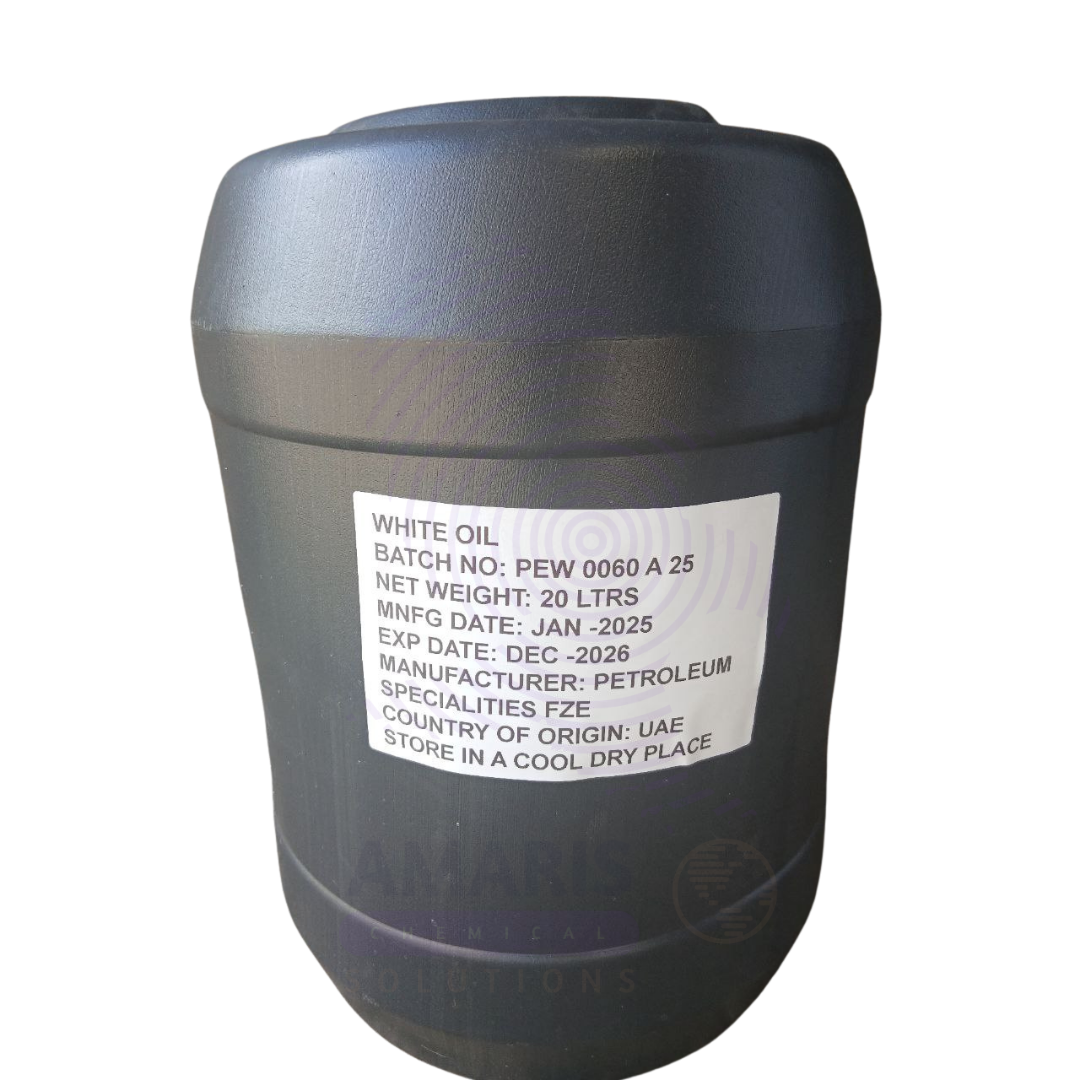



White Oil
Original price was: $ 2.11.$ 1.97Current price is: $ 1.97.
White Oil, also known as Mineral Oil or Liquid Paraffin, is a highly refined, clear, odorless, and tasteless petroleum-derived oil. It is composed of saturated aliphatic hydrocarbons and is available in various viscosity grades depending on the intended application. The product is extensively purified to remove aromatic hydrocarbons, sulfur compounds, and other impurities, making it suitable for use in personal care, pharmaceutical, food, and industrial applications. White Oil is prized for its excellent lubricity, moisture barrier function, chemical stability, and non-comedogenic properties.
White Oil supplied in a 162 kg drum format is typically used in bulk manufacturing and industrial-scale processing across multiple sectors.
White Oil
Primary Uses
- Cosmetics and Personal Care
- Used as an emollient and occlusive agent in lotions, creams, and ointments to prevent moisture loss
- Incorporated in baby oils, skin creams, and makeup removers for gentle, hypoallergenic moisturization
- Added to lip care products to create a protective barrier and improve spreadability
- Used in hair oils and scalp treatments for conditioning and shine without greasiness
- Blended into shaving creams and depilatory products for smooth glide and skin protection
- Applied in massage oils for its neutral feel and excellent slip
- Pharmaceutical and Medical Applications
- Used as a base for ointments, salves, and balms in topical drug formulations
- Functions as a laxative (food/pharma grade only) when taken orally under medical supervision
- Acts as a lubricant in medical devices and as a process aid in capsule manufacturing
- Employed in veterinary products for topical or internal treatments
Secondary Uses
- Food and Beverage Applications (Food Grade Only)
- Used as a release agent in baking pans, food handling equipment, and packaging machinery
- Serves as a coating agent for fruits and vegetables to preserve freshness
- Functions as a lubricant and defoaming agent in food processing
- Industrial and Technical Applications
- Used as a lubricant and hydraulic fluid in food-processing and textile machinery
- Acts as a dust suppressant and preservative in leather, textiles, and wood industries
- Applied in plastic, rubber, and polymer manufacturing as a plasticizer and mold release agent
- Used as a carrier fluid in agricultural chemicals and in aerosol formulations
- Incorporated in polishes, cleaners, and anti-rust coatings for delicate equipment
- Functions as a diluent in adhesives, sealants, and printing inks
- Textile and Leather Processing
- Used as a softening and finishing agent in textile and leather conditioning formulations
- Provides flexibility and sheen in leather goods during post-tanning treatment
1. Basic Identification Attributes
- Chemical Name: White Oil / Liquid Paraffin / Mineral Oil
- Common/Trade Name: White Oil
- INCI Name: Paraffinum Liquidum
- CAS Number: 8042-47-5
- HS Code: 2710.19
- Synonyms: Light Liquid Paraffin, Mineral Oil, Liquid Petroleum
2. Physical & Chemical Properties
- Physical State: Clear, colorless liquid
- Color & Odor: Odorless; colorless
- Solubility: Insoluble in water; soluble in oils and organic solvents
- Refractive Index: 1.460 – 1.480
- Specific Gravity: 0.820 – 0.890
- Viscosity: Varies by grade (light to heavy viscosity)
- Purity: Highly refined; free of aromatic and reactive hydrocarbons
3. Safety & Hazard Attributes
- GHS Classification: Not classified as hazardous (cosmetic/pharma grade)
- Toxicity: Low toxicity when used as directed; external use preferred unless food/pharma certified
- Exposure Limits: Refer to Safety Data Sheet (SDS) for occupational exposure guidelines
- Allergen Information: Hypoallergenic; does not contain fragrance or known allergens
4. Storage & Handling Attributes
- Storage Conditions: Store in tightly closed drums away from heat, light, and reactive chemicals
- Container Type: Food-grade or industrial-grade steel or HDPE drums (162 kg format)
- Shelf Life: 24 to 36 months under proper storage
- Handling Precautions: Prevent contamination; ensure good ventilation in processing areas
5. Regulatory & Compliance Attributes
- Available in grades compliant with:
- USP / BP / EP (Pharmaceutical)
- FDA 21 CFR 172.878 (Food)
- REACH, IFRA, and Cosmetic Ingredient Listings
- GMP-certified manufacturing (for cosmetic/pharma/food grades)
- Not classified as hazardous for transportation
6. Environmental & Health Impact
- Biodegradability: Not readily biodegradable; manage disposal per local regulations
- Ecotoxicity: Low under controlled use; avoid uncontrolled release into the environment
- Bioaccumulation: Not expected at normal exposure levels
Safety Handling Precautions
- PPE Required: Gloves, goggles, and lab coat for industrial handling
- Handling Guidelines: Use in well-ventilated areas; avoid prolonged inhalation of vapors
First Aid Measures
- Inhalation: Move to fresh air if vapors are irritating
- Skin Contact: Wash with soap and water; generally non-irritating
- Eye Contact: Rinse with water if introduced accidentally
- Ingestion: Seek medical advice if ingested; use only food/pharma grade for internal use
Firefighting Measures
- Fire Hazards: Combustible at high temperatures
- Extinguishing Media: Foam, dry chemical, CO₂, or water spray
- Special Precautions: Use protective gear; avoid inhaling fumes
- Hazardous Combustion Products: Carbon monoxide, carbon dioxide
Related products

Chlorinated Paraffin
Chlorinated paraffins are complex mixtures of polychlorinated n-alkanes produced by reacting chlorine gas with unbranched paraffin fractions derived from petroleum distillation. They appear as colorless or yellowish viscous liquids or solids depending on chain length and chlorine content. Chlorinated paraffins are classified based on carbon chain length into short-chain, medium-chain, and long-chain varieties. Technical grade chlorinated paraffins are manufactured for industrial applications including plasticizers, flame retardants, metalworking additives, and surface coatings. They exhibit excellent compatibility with polymers, high thermal stability, water resistance, and chemical resistance.
Dioctyl Adipate (DOA)
Dioctyl Adipate (DOA) is a clear, colorless, oily liquid that acts as a highly efficient, cold-resistant plasticizer. It is an organic compound produced from the reaction of adipic acid with 2-ethylhexanol. DOA is known for imparting excellent low-temperature flexibility and good lubricity to polymer systems. It is insoluble in water but dissolves readily in organic solvents. Technical grade Dioctyl Adipate is manufactured for industrial applications including plastic and rubber processing, coatings, and lubricants.
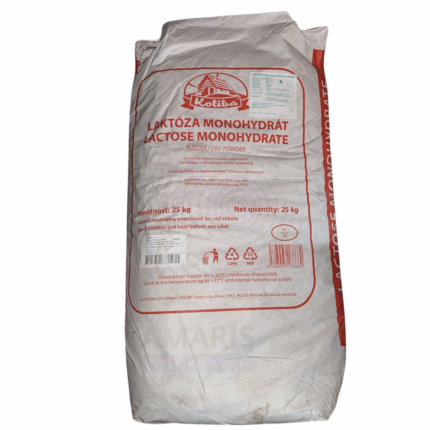
Lactose Monohydrate 200 Mesh
Lactose Monohydrate 200 Mesh is a fine, white, crystalline powder derived from milk sugar with a particle size of 200 mesh, indicating very fine granules. It is widely used in pharmaceutical, food, and confectionery industries as a filler, binder, and stabilizer. Lactose Monohydrate is valued for its excellent compressibility, low hygroscopicity, and compatibility with many active pharmaceutical ingredients (APIs). The monohydrate form contains one molecule of water, enhancing its stability and flow properties.
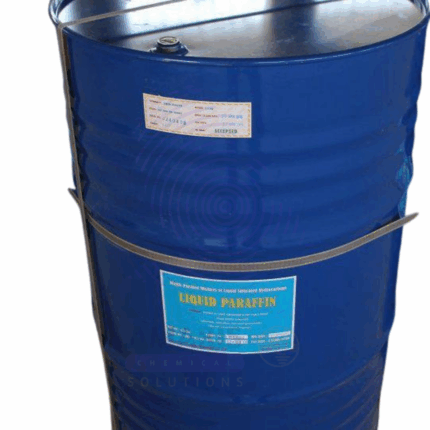
Liquid Paraffin
Liquid Paraffin, also known as mineral oil, is a clear, colorless, odorless, and tasteless petroleum-derived liquid hydrocarbon. It is composed primarily of saturated hydrocarbons and is highly refined to meet pharmaceutical and cosmetic grade standards. Liquid Paraffin is widely used for its lubricating, moisturizing, and protective properties. It is non-volatile, chemically stable, and insoluble in water, making it ideal for applications in personal care, pharmaceuticals, and industrial lubrication.
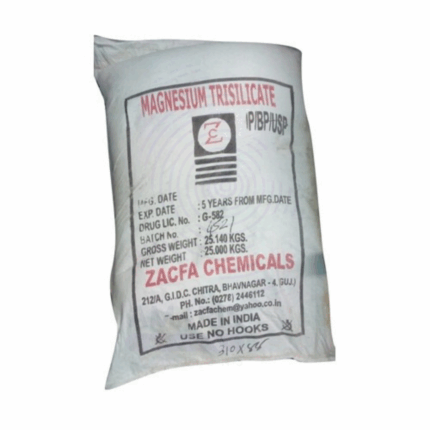
Magnesium Trisilicate BP
Magnesium Trisilicate BP is a fine, white to off-white, odorless powder used primarily as an antacid and adsorbent. It is a hydrated magnesium salt of orthosilicic acid with excellent acid-neutralizing capacity. Classified under the British Pharmacopoeia (BP), it meets pharmaceutical-grade purity standards. Its high surface area and adsorptive properties make it useful in treating gastrointestinal discomfort, as well as in various industrial and food applications. It is insoluble in water and alcohol but reacts slowly with dilute acids.

Polyvinyl Chloride PE Wax
Polyvinyl Chloride PE Wax is a polyethylene-based wax additive used in PVC formulations to improve processing, lubrication, and surface finish. It serves as an internal and external lubricant in both rigid and flexible PVC products, enhancing extrusion, molding, and calendaring operations. It also contributes to better dispersion of fillers and pigments, reduced friction, and improved thermal stability. PE Wax for PVC is available in powder, flake, or granule form and is valued for its compatibility, thermal resistance, and cost-effectiveness.
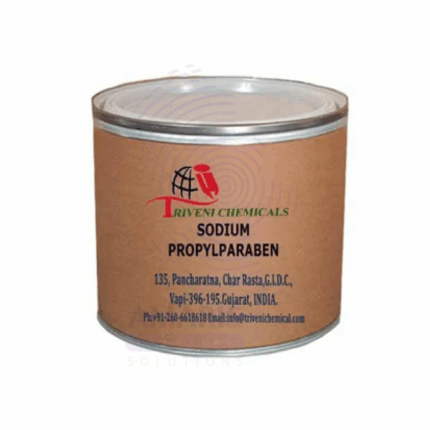
Propyl Paraben Sodium BP
Propyl Paraben Sodium BP is the sodium salt derivative of propyl paraben, widely used as an effective antimicrobial preservative. It offers improved water solubility compared to propyl paraben and is commonly employed in pharmaceutical, cosmetic, and food products to inhibit the growth of bacteria, molds, and yeasts, thereby extending shelf life and ensuring product safety.

Zinc Stearate
Zinc Stearate is a fine, white powder composed of zinc salts of stearic acid. It is a hydrophobic, non-toxic metal soap widely used as a lubricant, release agent, and stabilizer in plastics, rubber, paints, coatings, and personal care industries. Known for its excellent mold-release properties and compatibility with a range of polymers, Zinc Stearate offers thermal stability and processing efficiency across industrial applications.












