

 Preservatives(food)
 Flavors
 Acidulants
 Sweeteners
 Antioxidants
 Colorants(food)
 Nutraceutical Ingredients (food)
 Nutrient Supplements
 Emulsifiers
 Collectors
 Dust Suppressants
 Explosives and Blasting Agents
 Flocculants and Coagulants
 Frothers
 Leaching Agents
 pH Modifiers
 Precious Metal Extraction Agents
 Antioxidants(plastic)
 Colorants (Pigments, Dyes)
 Fillers and Reinforcements
 Flame Retardants
 Monomers
 Plasticizers
 Polymerization Initiators
 Stabilizers (UV, Heat)
 Antifoaming Agents
 Chelating Agents
 Coagulants and Flocculants
 Corrosion Inhibitors
 Disinfectants and Biocides
 Oxidizing Agents
 pH Adjusters
 Scale Inhibitors( water)
 Antioxidants(cosmetic)
 Emollients
 Oils
Oils Carrier Oills
 Essential Oils
 Humectants
 Preservatives
 Surfactants(cosmetic)
 Thickeners
 UV Filters
 Fragrance (Cosmetics)
 Fertilizers
 Soil Conditioners
 Plant Growth Regulators
 Animal Feed Additives
 Biostimulants
 Pesticides (Herbicides, Insecticides, Fungicides)
 Active Pharmaceutical Ingredients (APIs)
 Excipients
 Solvents(pharmaceutical)
 Antibiotics
 Antiseptics and Disinfectants
 Vaccine Adjuvants
 Nutraceutical Ingredients (pharmaceutical)
 Analgesics & Antipyretics
 Analytical Reagents
 Solvents(lab)
 Chromatography Chemicals
 Spectroscopy Reagents
 microbiology-and-cell-culture-reagents
 Molecular Biology Reagents
 Biochemical Reagents
 Inorganic and Organic Standards
 Laboratory Safety Chemicals
 Specialty Laboratory Chemicals(Special Laboratory Equipment)
 Demulsifiers
 Hydraulic Fracturing Fluids
 Scale Inhibitors(oil)
 Surfactants(oil)
 Drilling Fluids
 Dyes and Pigments
 Bleaching Agents
 Softening Agents
 Finishing Agents
 Antistatic Agents
 Admixtures
 Waterproofing Agents
 Sealants and Adhesives
 Curing Compounds
 Concrete Repair Chemicals
 Anti-Corrosion Coatings
 Surfactants(cleaning)
 Builders
 Enzymes
 Solvents (Cleaning)
 Electronic Chemicals
 Catalysts
 Lubricants
 Photographic Chemicals
 Refrigerants
 Automotive chemicals
 Pyrotechnic Chemicals
 Biodegradable Surfactants
 Bio-based Solvents
 Renewable Polymers
 Carbon Capture Chemicals
 Wastewater Treatment Chemicals
 Pigments
 Solvents(paint)
 Specialty Coatings
 Binders/Resins
 Additives
 Driers
 Anti-Corrosion Agents
 Functional Coatings
 Application-Specific Coatings
 Leavening Agents
 Dough Conditioners
 Flour Treatments
 Fat Replacers
 Decoratives
 Preservatives(baking)
 Plasticizers & Softeners
 Reinforcing Agents
 Adhesion Promoters
 Vulcanizing Agents
 Antidegradants
 Blowing Agents
 Fillers & Extenders
 Accelerators & Retarders



Ferrous Sulphide Extra Pure
Original price was: $ 19.00.$ 18.76Current price is: $ 18.76.
Ferrous Sulphide Extra Pure is a high-purity, dark grey to black solid compound primarily used in laboratory demonstrations, especially for generating hydrogen sulphide (H₂S) gas when reacted with dilute acids. This reaction is a classic example in inorganic chemistry for studying gas evolution and the properties of sulfide compounds. Beyond educational uses, ferrous sulphide is also employed in analytical testing and in certain metallurgical and industrial processes where controlled sulfur introduction is required. Its high purity ensures minimal interference from impurities, making it ideal for precise scientific applications. The compound should be handled in a well-ventilated area and stored in tightly sealed containers to avoid moisture exposure and the release of toxic gases.
Ferrous Sulphide Extra Pure
Primary Uses
- Hydrogen sulfide (H₂S) generation:
Reacts with dilute acids (like HCl) to produce hydrogen sulfide gas, commonly used in qualitative inorganic analysis of metal cations. - Demonstrations of gas evolution reactions:
Ideal for experiments illustrating double displacement and acid–sulfide reactions in educational settings. - Sulfur analysis and preparation studies:
Used as a sulfur-containing compound in analytical studies involving sulfur quantification or extraction.
Secondary Uses
- Study of sulfide minerals and geochemistry:
Helps simulate natural ore formation or decomposition processes in environmental or geological experiments. - Teaching decomposition and oxidation reactions:
Oxidizes in air to form iron oxide and sulfur dioxide—used to illustrate principles of thermodynamics and redox chemistry. - Precursor for synthesizing other iron-sulfur compounds:
Useful in the preparation of complex sulfides or coordination compounds in synthetic chemistry labs.
1. Basic Identification Attributes
- Chemical Name: Ferrous Sulphide
- Synonyms: Iron(II) sulfide, Iron monosulfide
- Chemical Formula: FeS
- Molecular Weight: 87.91 g/mol
- Grade: Extra Pure (Laboratory Reagent Grade)
- Appearance: Black to dark gray powder or lumps
- Odor: Rotten egg smell (due to trace H₂S release in moist air)
2. Physical & Chemical Properties
- Solubility: Insoluble in water; reacts slowly with acids
- Melting Point: ~1194°C
- Density: ~4.84 g/cm³
- Stability: Stable in dry air but decomposes in moist conditions
- Reactivity: Reacts with acids to produce hydrogen sulfide gas (H₂S)
3. Safety & Hazard Attributes
- GHS Classification:
- Harmful if swallowed or inhaled
- Releases toxic gas in contact with acids
- Hazard Statements:
- H302: Harmful if swallowed
- H331: Toxic if inhaled (H₂S release)
- H314: Causes severe skin burns and eye damage (on acid reaction)
- PPE Requirements:
- Lab coat
- Chemical-resistant gloves
- Safety goggles
- Dust mask or respirator if powder is airborne
- First Aid Measures:
- Inhalation: Move to fresh air; administer oxygen if breathing is difficult
- Skin Contact: Wash immediately with soap and water
- Eye Contact: Rinse thoroughly with water for at least 15 minutes
- Ingestion: Do not induce vomiting; seek immediate medical attention
4. Storage & Handling Attributes
- Storage Conditions:
- Store in tightly sealed containers
- Keep dry and away from acids or moisture
- Store in a well-ventilated area
- Handling Notes:
- Avoid creating dust
- Do not allow contact with acids
- Wash hands thoroughly after handling
5. Regulatory & Compliance Attributes
- CAS Number: 1317-37-9
- EC Number: 215-268-7
- UN Number: Not classified for transport under normal lab use
- Hazard Class: Not regulated, but caution is advised due to potential H₂S release
- Packaging Group: Not applicable
6. Laboratory Applications
- Primary Uses:
- Source of sulfide ion in inorganic reactions
- Demonstrations of metal-sulfur reactions
- Reactivity experiments with acids producing hydrogen sulfide
- Secondary Uses:
- Teaching material in redox and precipitation reactions
- Starting material for preparation of other iron or sulfur compounds
- Thermochemical studies and metallurgical education
SAFETY PRECAUTIONS
- Releases toxic and foul-smelling H₂S gas when reacting with acids
- H₂S is flammable and toxic – proper ventilation is essential
- Avoid inhalation, skin contact, and acid exposure unless under a fume hood
Storage:
- Keep in a sealed container, in a dry, cool, and well-ventilated area
- Protect from moisture, acids, and oxidizing agents
FIRST AID MEASURES
- Inhalation (H₂S): Move to fresh air immediately; seek urgent medical attention
- Skin Contact: Wash with soap and water
- Eye Contact: Flush with water for several minutes; consult physician
- Ingestion: Do not induce vomiting; rinse mouth and get medical help immediately
Related products
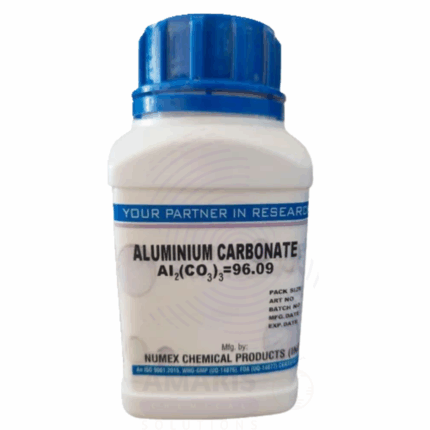
Aluminium Carbonate Extra Pure
Aluminium Carbonate Extra Pure is a high-purity, white, odorless powder primarily used as a reagent in laboratory settings for analytical and research applications. Though not commonly stable under standard conditions, it is valued in controlled experimental procedures involving the study of aluminum compounds, buffer systems, and inorganic reactions. Its extra pure grade ensures low levels of contaminants, making it suitable for precise qualitative and quantitative analysis. Due to its sensitivity to moisture and tendency to decompose into aluminum hydroxide and carbon dioxide, it must be handled with care and stored in airtight containers under dry conditions to maintain chemical integrity during laboratory use.
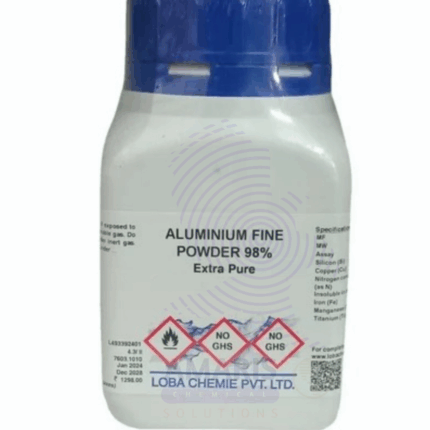
Aluminium Metal Fine Extra Pure
Aluminium Metal Fine Extra Pure is a high-purity, silvery-grey powder composed of finely divided aluminum particles, ideal for precision laboratory work and specialized chemical reactions. Known for its high surface area and excellent reactivity, it is widely used in thermite reactions, metallurgical experiments, and the synthesis of aluminum-based compounds. Its fine particle size enhances its role as a reducing agent in organic and inorganic chemistry, as well as in combustion and pyrotechnic research. The extra pure grade ensures minimal trace impurities, supporting consistent and accurate results in sensitive analytical and preparative procedures. Due to its flammability and potential for dust explosions, it must be handled with caution in well-ventilated areas and stored in sealed, moisture-free containers.
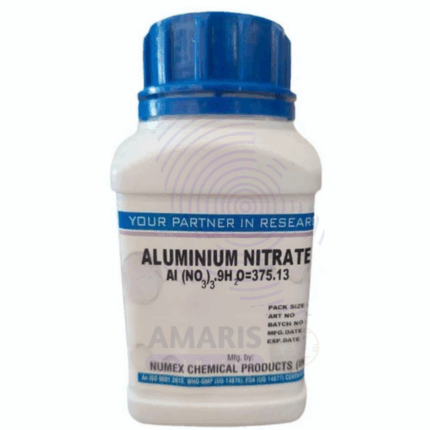
Aluminium Nitrate Extra Pure
Aluminium Nitrate Extra Pure is a high-purity, white crystalline compound that is highly soluble in water and widely used in laboratory chemistry for analytical, synthesis, and research purposes. It serves as a reliable source of aluminum ions in solution, making it valuable in qualitative analysis, coordination chemistry, and materials science studies. This compound is often utilized in the preparation of other aluminum salts, as a nitrating agent, and in controlled oxidation reactions. Its extra pure grade guarantees minimal interference from contaminants, ensuring accurate, reproducible results in sensitive experimental work. Aluminium Nitrate should be stored in tightly sealed containers, away from moisture and incompatible substances, due to its oxidizing nature and hygroscopicity.
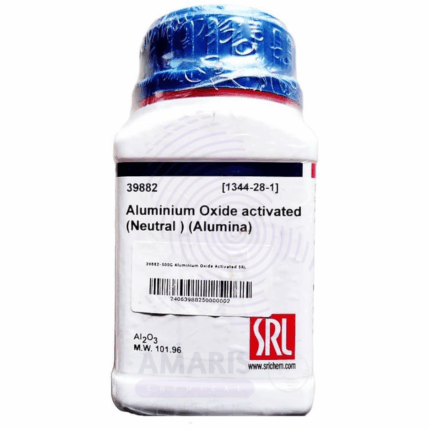
Aluminium Oxide Active Neutral Extra Pure
Aluminium Oxide Active Neutral Extra Pure is a high-purity, fine white powder known for its high surface area and neutral pH, making it ideal for chromatography, adsorption, and catalyst support in laboratory research. Its active form ensures excellent capacity for separating and purifying organic compounds without altering their chemical structure, especially in column chromatography applications. Commonly used in analytical, organic synthesis, and material science laboratories, it provides consistent performance in adsorption studies, drying of solvents, and reaction monitoring. The extra pure grade ensures extremely low levels of impurities, suitable for high-precision experimental work. To maintain its activity, it should be stored in airtight containers away from moisture and reactive chemicals.
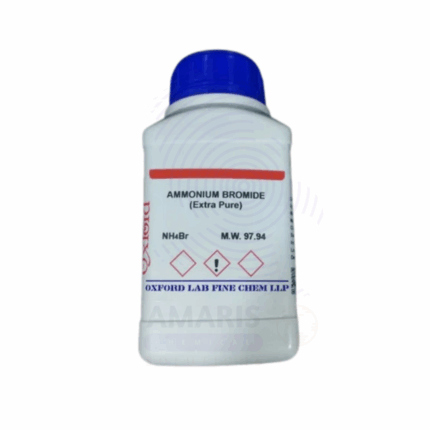
Ammonium Bromide Extra Pure
Ammonium Bromide Extra Pure is a high-purity, white crystalline powder highly soluble in water, widely used in laboratory settings for analytical, photographic, and synthetic applications. It serves as a reliable source of bromide ions in chemical reactions and is commonly used in preparing photographic emulsions, corrosion inhibitors, and certain pharmaceuticals. In analytical chemistry, it is employed in qualitative and quantitative analysis involving halide ion detection. The extra pure grade ensures minimal contamination, making it ideal for sensitive research and high-precision work. To preserve its stability and prevent moisture uptake, it should be stored in well-sealed containers in a cool, dry environment.
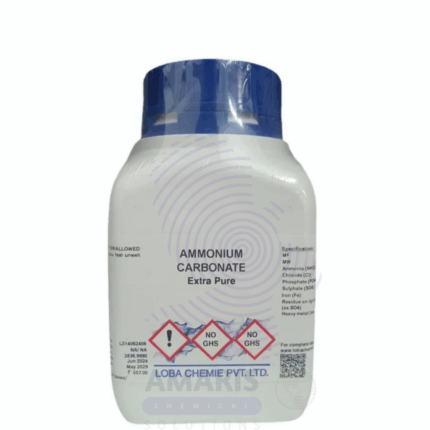
Ammonium Carbonate Extra Pure
Ammonium Carbonate Extra Pure is a high-quality, white crystalline solid widely used across various scientific, industrial, and food-related applications. Manufactured to stringent purity standards, this compound is ideal for laboratories and processes that demand high-grade reagents. With its characteristic ammonia-like odor and ability to decompose upon heating, ammonium carbonate plays a versatile role in both chemical reactions and physical processes.
In aqueous solution, ammonium carbonate breaks down into ammonium bicarbonate and ammonium carbamate, further releasing ammonia (NH₃) and carbon dioxide (CO₂) upon heating. This property makes it especially useful in applications that require controlled gas release or temporary pH modification.
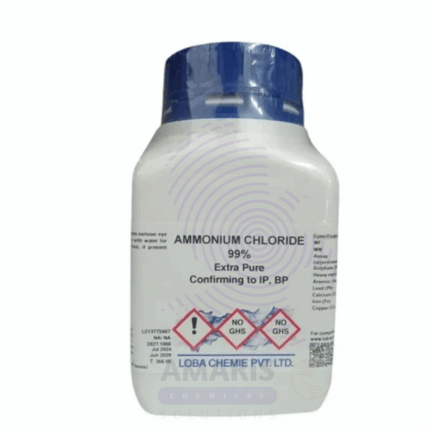
Ammonium Chloride Extra Pure
Ammonium Chloride Extra Pure is a high-purity, white crystalline salt widely used in laboratory chemistry as a source of ammonium ions and chloride ions for analytical, inorganic, and biochemical applications. It plays a key role in preparing buffer solutions, especially in conjunction with ammonia, and is commonly used in qualitative analysis, electrochemical studies, and metal treatment experiments. In addition, it serves as a reagent in synthesis reactions and as a nitrogen source in microbial culture media. The extra pure grade ensures high consistency and minimal contaminants, making it suitable for precise and sensitive laboratory work. It should be stored in a cool, dry place in well-sealed containers to maintain stability and prevent moisture absorption.
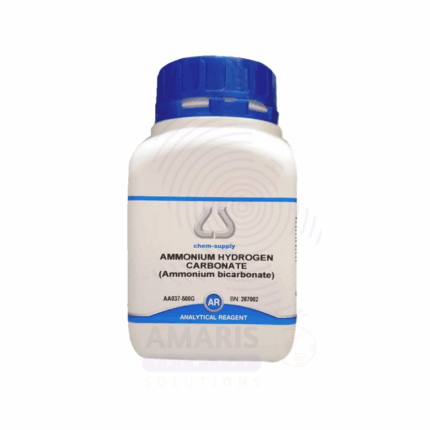
Ammonium Hydrogen Carbonate Extra Pure
Ammonium Hydrogen Carbonate Extra Pure, also known as ammonium bicarbonate, is a high-purity, white crystalline powder widely used in laboratory settings as a buffering agent, leavening agent, and source of ammonia and carbon dioxide in thermal decomposition studies. It is particularly useful in analytical chemistry for preparing buffer solutions and in gas evolution experiments due to its ability to decompose readily upon heating. In protein and enzyme work, it serves as a volatile buffer compatible with mass spectrometry. The extra pure grade ensures minimal contamination, supporting accurate and reproducible results in sensitive applications. It should be stored in tightly sealed containers in a cool, dry environment to prevent premature decomposition and loss of efficacy.












