

 Preservatives(food)
 Flavors
 Acidulants
 Sweeteners
 Antioxidants
 Colorants(food)
 Nutraceutical Ingredients (food)
 Nutrient Supplements
 Emulsifiers
 Collectors
 Dust Suppressants
 Explosives and Blasting Agents
 Flocculants and Coagulants
 Frothers
 Leaching Agents
 pH Modifiers
 Precious Metal Extraction Agents
 Antioxidants(plastic)
 Colorants (Pigments, Dyes)
 Fillers and Reinforcements
 Flame Retardants
 Monomers
 Plasticizers
 Polymerization Initiators
 Stabilizers (UV, Heat)
 Antifoaming Agents
 Chelating Agents
 Coagulants and Flocculants
 Corrosion Inhibitors
 Disinfectants and Biocides
 Oxidizing Agents
 pH Adjusters
 Scale Inhibitors( water)
 Antioxidants(cosmetic)
 Emollients
 Oils
Oils Carrier Oills
 Essential Oils
 Humectants
 Preservatives
 Surfactants(cosmetic)
 Thickeners
 UV Filters
 Fragrance (Cosmetics)
 Fertilizers
 Soil Conditioners
 Plant Growth Regulators
 Animal Feed Additives
 Biostimulants
 Pesticides (Herbicides, Insecticides, Fungicides)
 Active Pharmaceutical Ingredients (APIs)
 Excipients
 Solvents(pharmaceutical)
 Antibiotics
 Antiseptics and Disinfectants
 Vaccine Adjuvants
 Nutraceutical Ingredients (pharmaceutical)
 Analgesics & Antipyretics
 Analytical Reagents
 Solvents(lab)
 Chromatography Chemicals
 Spectroscopy Reagents
 microbiology-and-cell-culture-reagents
 Molecular Biology Reagents
 Biochemical Reagents
 Inorganic and Organic Standards
 Laboratory Safety Chemicals
 Specialty Laboratory Chemicals(Special Laboratory Equipment)
 Demulsifiers
 Hydraulic Fracturing Fluids
 Scale Inhibitors(oil)
 Surfactants(oil)
 Drilling Fluids
 Dyes and Pigments
 Bleaching Agents
 Softening Agents
 Finishing Agents
 Antistatic Agents
 Admixtures
 Waterproofing Agents
 Sealants and Adhesives
 Curing Compounds
 Concrete Repair Chemicals
 Anti-Corrosion Coatings
 Surfactants(cleaning)
 Builders
 Enzymes
 Solvents (Cleaning)
 Electronic Chemicals
 Catalysts
 Lubricants
 Photographic Chemicals
 Refrigerants
 Automotive chemicals
 Pyrotechnic Chemicals
 Biodegradable Surfactants
 Bio-based Solvents
 Renewable Polymers
 Carbon Capture Chemicals
 Wastewater Treatment Chemicals
 Pigments
 Solvents(paint)
 Specialty Coatings
 Binders/Resins
 Additives
 Driers
 Anti-Corrosion Agents
 Functional Coatings
 Application-Specific Coatings
 Leavening Agents
 Dough Conditioners
 Flour Treatments
 Fat Replacers
 Decoratives
 Preservatives(baking)
 Plasticizers & Softeners
 Reinforcing Agents
 Adhesion Promoters
 Vulcanizing Agents
 Antidegradants
 Blowing Agents
 Fillers & Extenders
 Accelerators & Retarders


Spatula plastic
Original price was: $ 2.50.$ 2.32Current price is: $ 2.32.
Plastic Spatulas are versatile laboratory tools designed for safely handling, transferring, and mixing small quantities of powders, granules, and liquids. Made from chemically resistant, durable plastic materials, these spatulas resist corrosion from most laboratory reagents and are lightweight for easy handling. They come in various sizes and shapes, often featuring flat or slightly curved blades to facilitate scooping and scraping. Plastic spatulas are essential in chemical, pharmaceutical, biological, and research laboratories for precise sample manipulation and contamination-free operations.
Spatula plastic
Primary Uses
- Laboratory Applications
- Transfer and measure small amounts of powdered chemicals or reagents.
- Scrape and collect residues from containers or surfaces.
- Mix and homogenize small samples during preparation or analysis.
- Handle biological samples or pharmaceutical powders with minimal contamination risk.
- Facilitate weighing and sample preparation in analytical and research settings.
Secondary Uses
- Used in educational laboratories for safe and convenient chemical handling.
- Employed in food science labs for sample handling.
- Applicable in cosmetic and personal care labs for small-batch mixing and formulation.
1.Basic Identification Attributes
- Material: Chemically resistant plastic (e.g., polypropylene, polyethylene).
- Design: Flat or curved blade with a handle for easy grip.
- Sizes: Available in various lengths and blade widths depending on application.
2.Physical & Chemical Properties
- Chemical Resistance: Resistant to acids, bases, solvents, and aqueous solutions.
- Durability: Lightweight but sturdy for repeated use.
- Non-reactive: Does not contaminate or react with most chemicals handled.
3.Safety & Hazard Attributes
- Non-toxic and safe to handle under normal laboratory conditions.
- Smooth edges reduce risk of cuts or injuries.
4.Storage & Handling Attributes
- Store in clean, dry environments to maintain cleanliness.
- Clean thoroughly after use to avoid cross-contamination.
5.Regulatory & Compliance Attributes
- Manufactured according to laboratory quality and safety standards.
- Suitable for GLP and GMP compliant laboratories.
6.Environmental & Health Impact
- Plastic components may not be biodegradable; recycling encouraged where possible.
- Low health risk with proper handling.
Safety Handling Precautions
- Use PPE such as gloves to avoid contamination.
- Avoid excessive force to prevent breakage or deformation.
First Aid Measures
- For minor injuries, clean affected area and seek medical attention if needed.
Firefighting Measures
- Plastic material is combustible; use appropriate extinguishing methods (e.g., CO₂, dry chemical).
Related products
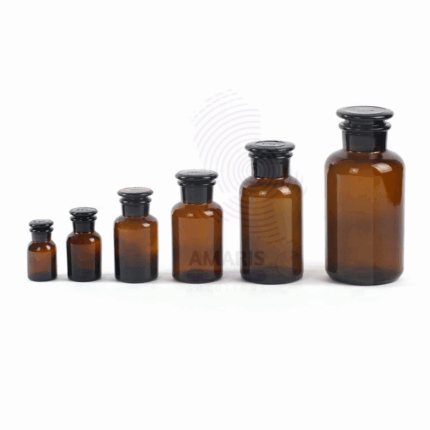
Amber laboratory reagent bottles
Amber Laboratory Reagent Bottles are high-quality glass containers designed specifically for storing light-sensitive reagents and chemicals in laboratory settings. The amber color provides effective protection against ultraviolet (UV) and visible light that can degrade sensitive compounds. These bottles feature durable construction with chemical-resistant glass and secure closures to maintain sample integrity and prevent contamination. Commonly used in chemical, pharmaceutical, and research laboratories, Amber Laboratory Reagent Bottles ensure safe, reliable storage and handling of a wide range of reagents.
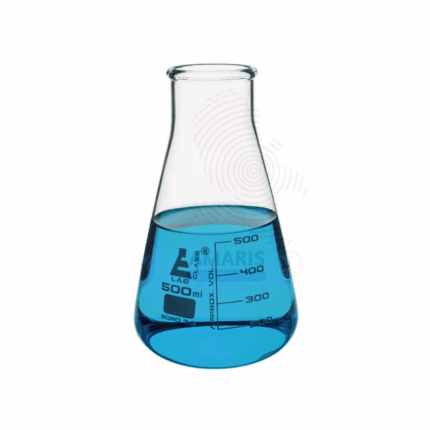
conical flask
Conical flasks, also known as Erlenmeyer flasks, are widely used laboratory glassware characterized by a flat bottom, conical body, and a narrow neck. Made typically from borosilicate glass, they are designed to hold, mix, and heat liquids safely. The narrow neck helps reduce evaporation and splashing during experiments. Conical flasks are essential for titrations, culturing microorganisms, and general solution preparation in laboratories and industrial settings.

Cork Borer Set Sharpener
The Cork Borer Set Sharpener is a specialized tool designed for honing and maintaining the cutting edges of cork borers. Essential for extending the life and performance of laboratory cork borers, this sharpener typically features a conical or tapered grinding surface made of hardened steel or fine abrasive material. It ensures precision cutting by restoring sharpness, which is critical for clean, accurate boring through rubber stoppers, corks, and similar materials. Durable and easy to use, it is a vital accessory in laboratory maintenance kits.

Cork to fit boiling tube cork
Cork to fit boiling tube cork is a precision-cut natural or synthetic cork designed to seal boiling tubes securely in laboratory settings. These corks provide an airtight seal while resisting mild heat and chemical exposure typically encountered in general lab procedures. They help prevent contamination, evaporation, or spillage of contents during storage, gentle heating, or experimental handling. Available in various diameters, these corks are essential for maintaining experimental integrity in both research and industrial laboratories.

Cork to fit boiling tube cork stopper
Cork to Fit Boiling Tube Cork Stopper is a precision-manufactured stopper made from natural or synthetic cork, designed specifically to fit standard boiling tubes. It ensures a snug, secure closure that prevents leaks, contamination, or evaporation during laboratory procedures. These stoppers are essential in both routine and specialized lab applications where temporary sealing of test vessels is required. With good compressibility, mild chemical resistance, and reliable sealing properties, the stopper is a staple in laboratory glassware accessories.
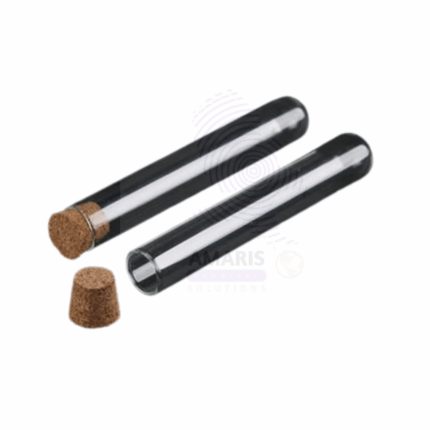
Cork to fit test tube
Cork to Fit Test Tube is a conical sealing component made from natural or synthetic cork, designed specifically to fit snugly into standard laboratory test tubes. It ensures a tight seal that prevents contamination, limits evaporation, and maintains sample integrity during storage or handling. Due to its compressible and chemically resistant structure, it is ideal for routine laboratory operations and industrial testing processes. These corks are available in various sizes to accommodate a wide range of test tube diameters and are compatible with both glass and plastic tubes.
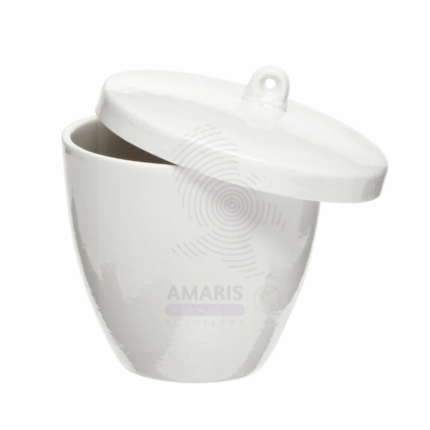
Crucible with lid
Crucible with Lid is a heat-resistant container used in laboratories and industries to heat, melt, or calcine substances at very high temperatures. Typically made from materials such as porcelain, alumina, or graphite, these crucibles can withstand thermal shock and chemical corrosion. The accompanying lid helps contain the sample, minimize contamination, and reduce material loss during heating or combustion processes.
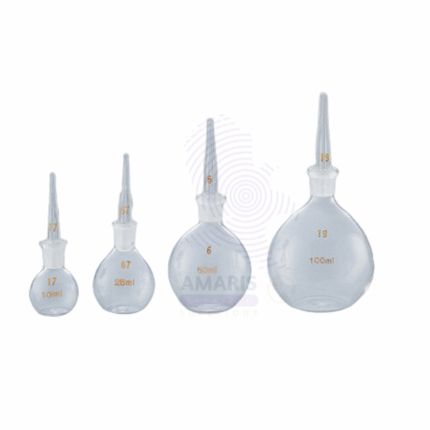
Density Bottle
The Density Bottle is a precision glassware device used for determining the density of liquids by measuring a known volume and mass. Typically made from high-quality borosilicate glass, the bottle features a tight-fitting stopper with a capillary hole to allow excess liquid to escape, ensuring volume accuracy. It is commonly used in laboratory settings for experiments in physical chemistry, materials science, and industrial quality control processes. The device provides a reliable method for comparing the density of various substances with high repeatability.












