

 Preservatives(food)
 Flavors
 Acidulants
 Sweeteners
 Antioxidants
 Colorants(food)
 Nutraceutical Ingredients (food)
 Nutrient Supplements
 Emulsifiers
 Collectors
 Dust Suppressants
 Explosives and Blasting Agents
 Flocculants and Coagulants
 Frothers
 Leaching Agents
 pH Modifiers
 Precious Metal Extraction Agents
 Antioxidants(plastic)
 Colorants (Pigments, Dyes)
 Fillers and Reinforcements
 Flame Retardants
 Monomers
 Plasticizers
 Polymerization Initiators
 Stabilizers (UV, Heat)
 Antifoaming Agents
 Chelating Agents
 Coagulants and Flocculants
 Corrosion Inhibitors
 Disinfectants and Biocides
 Oxidizing Agents
 pH Adjusters
 Scale Inhibitors( water)
 Antioxidants(cosmetic)
 Emollients
 Oils
Oils Carrier Oills
 Essential Oils
 Humectants
 Preservatives
 Surfactants(cosmetic)
 Thickeners
 UV Filters
 Fertilizers
 Soil Conditioners
 Plant Growth Regulators
 Animal Feed Additives
 Biostimulants
 Pesticides (Herbicides, Insecticides, Fungicides)
 Active Pharmaceutical Ingredients (APIs)
 Excipients
 Solvents(pharmaceutical)
 Antibiotics
 Antiseptics and Disinfectants
 Vaccine Adjuvants
 Nutraceutical Ingredients (pharmaceutical)
 Analgesics & Antipyretics
 Analytical Reagents
 Solvents(lab)
 Chromatography Chemicals
 Spectroscopy Reagents
 microbiology-and-cell-culture-reagents
 Molecular Biology Reagents
 Biochemical Reagents
 Inorganic and Organic Standards
 Laboratory Safety Chemicals
 Specialty Laboratory Chemicals(Special Laboratory Equipment)
 Demulsifiers
 Hydraulic Fracturing Fluids
 Scale Inhibitors(oil)
 Surfactants(oil)
 Drilling Fluids
 Dyes and Pigments
 Bleaching Agents
 Softening Agents
 Finishing Agents
 Antistatic Agents
 Admixtures
 Waterproofing Agents
 Sealants and Adhesives
 Curing Compounds
 Concrete Repair Chemicals
 Anti-Corrosion Coatings
 Surfactants(cleaning)
 Builders
 Enzymes
 Solvents (Cleaning)
 Fragrances (Cleaning)
 Electronic Chemicals
 Catalysts
 Lubricants
 Photographic Chemicals
 Refrigerants
 Automotive chemicals
 Pyrotechnic Chemicals
 Biodegradable Surfactants
 Bio-based Solvents
 Renewable Polymers
 Carbon Capture Chemicals
 Wastewater Treatment Chemicals
 Pigments
 Solvents(paint)
 Specialty Coatings
 Binders/Resins
 Additives
 Driers
 Anti-Corrosion Agents
 Functional Coatings
 Application-Specific Coatings
 Leavening Agents
 Dough Conditioners
 Flour Treatments
 Fat Replacers
 Decoratives
 Preservatives(baking)
 Plasticizers & Softeners
 Reinforcing Agents
 Adhesion Promoters
 Vulcanizing Agents
 Antidegradants
 Blowing Agents
 Fillers & Extenders
 Accelerators & Retarders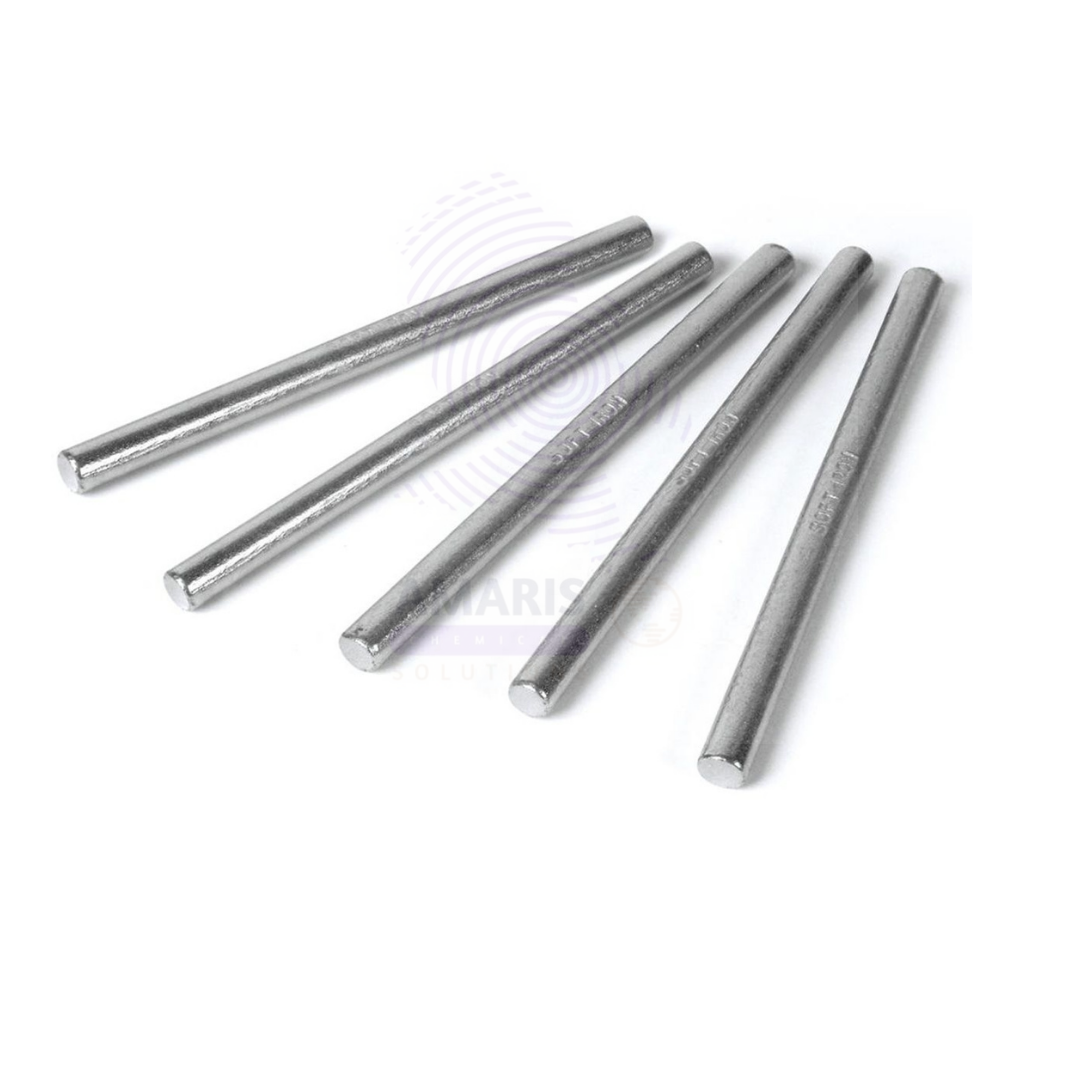

Soft iron rod
Original price was: $ 8.06.$ 7.98Current price is: $ 7.98.
Soft Iron Rods are magnetic laboratory apparatus made from highly pure iron characterized by low carbon content, which gives them excellent magnetic permeability and low coercivity. These rods are widely used in physics and electrical laboratories for experiments involving magnetism, electromagnetism, and induction. Their softness allows them to be easily magnetized and demagnetized, making them ideal for use as cores in electromagnets, transformers, and magnetic field demonstrations. Soft iron rods are durable, corrosion-resistant when properly treated, and come in various lengths and diameters to suit different experimental needs.
Soft iron rod
Primary Uses
- Laboratory Applications
- Serve as cores for electromagnets to enhance magnetic field strength.
- Demonstrate magnetic induction and field lines in physics experiments.
- Used in transformer and inductor core studies for electromagnetic applications.
- Facilitate experiments on magnetic permeability and hysteresis loops.
- Aid in studying magnetic shielding and flux concentration.
Secondary Uses
- Applied in industrial research related to magnetic materials and device design.
- Utilized in electrical engineering laboratories for prototype testing.
1.Basic Identification Attributes
- Material: High purity soft iron with low carbon content.
- Shape: Cylindrical rods of varying lengths and diameters.
- Finish: Often coated or painted to resist corrosion.
2.Physical & Chemical Properties
- Magnetic Permeability: High, allowing efficient magnetization.
- Coercivity: Low, enabling easy magnetization and demagnetization cycles.
- Mechanical Strength: Durable yet malleable for laboratory use.
3.Safety & Hazard Attributes
- Handle carefully to avoid injury from sharp ends.
- Proper storage to prevent rust or corrosion if uncoated.
4.Storage & Handling Attributes
- Store in dry conditions to prevent oxidation.
- Use protective gloves during handling to avoid cuts and contamination.
5.Regulatory & Compliance Attributes
- Manufactured to meet laboratory equipment standards.
- Suitable for GLP and GMP laboratory environments.
6.Environmental & Health Impact
- Recyclable metal, environmentally friendly when properly disposed of.
- Minimal health risk when handled with standard laboratory safety practices.
Safety Handling Precautions
- Wear gloves to prevent cuts and contamination.
- Avoid exposure to moisture to minimize rusting.
First Aid Measures
- For cuts, clean wound and seek medical attention if necessary.
Firefighting Measures
- Non-flammable metal.
- Use appropriate fire suppression for surrounding materials if involved in fire.
Related products

Bare Enamelled Copper Wire
Bare Enamelled Copper Wire is a high-quality electrical conductor coated with a thin layer of insulating enamel. It is widely used in electrical and electronic applications where insulation and durability are required without adding bulk. The enamel coating provides excellent resistance to heat, abrasion, and chemicals, making it suitable for winding coils, transformers, motors, and inductors. The bare enamelled copper wire ensures efficient conductivity combined with insulation properties, ideal for both laboratory research and industrial manufacturing processes.
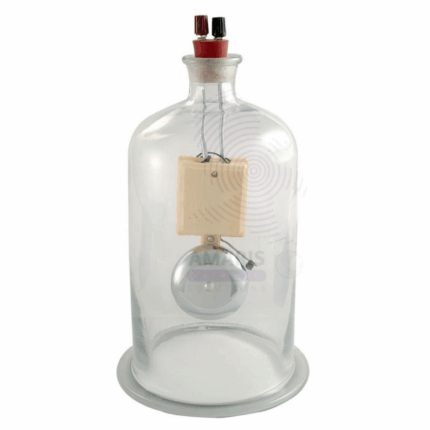
Bell in Vacuum
Bell in Vacuum is a crucial component used in vacuum systems to create an airtight seal and protect sensitive equipment from atmospheric contamination. Typically made of durable, corrosion-resistant materials, it forms part of vacuum chambers or devices requiring controlled environments. The bell ensures the maintenance of vacuum integrity by preventing air ingress, making it essential for experiments and industrial processes that depend on low-pressure or vacuum conditions.
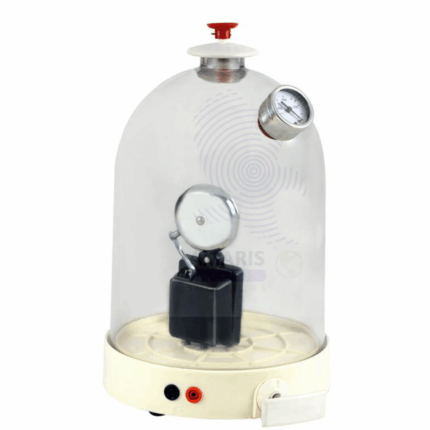
Bell in Vacuum with Air Pump with Plate
Bell in Vacuum with Air Pump with Plate is an integrated vacuum apparatus used to create and maintain low-pressure environments for laboratory and industrial applications. This assembly includes a vacuum bell, an air pump to evacuate air from the chamber, and a sturdy plate to support or seal samples or components during vacuum processes. Designed for durability and reliability, it is widely used in experiments requiring controlled atmospheric pressure, including vacuum filtration, drying, and physical science demonstrations.
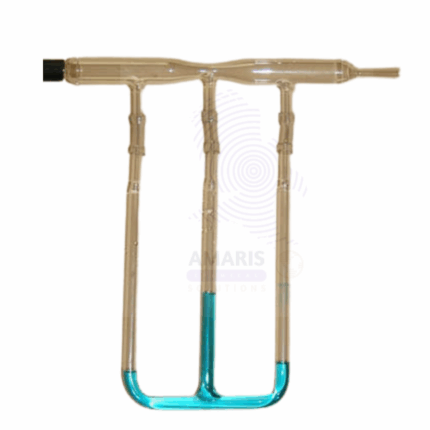
Bernoulli Tube Apparatus
Bernoulli Tube Apparatus is a precision-engineered device designed to demonstrate and analyze the principles of fluid dynamics, specifically Bernoulli’s theorem. It consists of a transparent, variable-diameter horizontal tube equipped with multiple pressure tap points connected to manometer tubes. This allows for the visual observation and quantitative measurement of pressure, velocity, and flow relationships as fluid moves through different cross-sectional areas. Commonly used in laboratory and industrial fluid mechanics testing, it helps validate theoretical predictions in controlled experimental conditions.
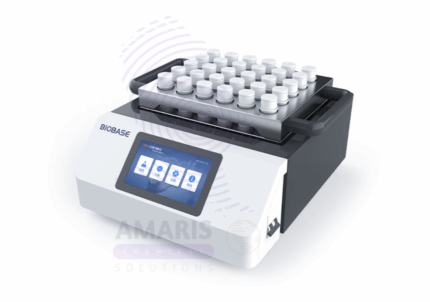
Bio-Waste Digester Kit
The Bio-Waste Digester Kit (1 Liter) is a compact, ready-to-use microbial solution designed to accelerate the decomposition of organic waste through natural biodegradation. This kit contains a high-activity blend of non-pathogenic microorganisms and enzymes capable of breaking down a wide range of biodegradable materials including food scraps, plant matter, and organic sludge. It is formulated for efficient use in laboratory-scale digestion experiments as well as small-scale industrial or institutional bio-waste treatment systems. The product supports environmentally responsible waste management by reducing organic load, minimizing odors, and converting waste into more manageable byproducts such as methane, carbon dioxide, and stabilized compost.
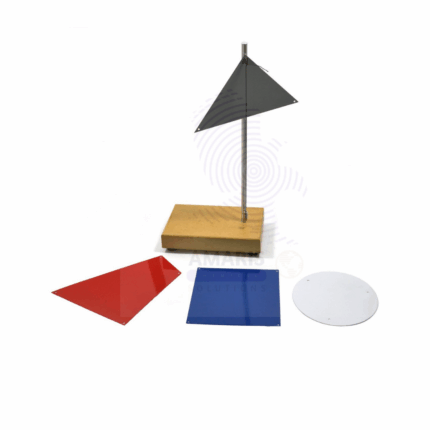
Centre of Gravity apparatus
The Centre of Gravity Apparatus is a precision instrument designed to demonstrate and measure the center of gravity of various objects. It consists of a rigid frame, adjustable clamps, and pointers that help identify the balance point of irregular shapes and composite bodies. Widely used in physics laboratories and industrial training, this apparatus aids in understanding the principles of equilibrium, stability, and moments. Its sturdy construction ensures accurate and repeatable measurements essential for educational and quality control purposes.
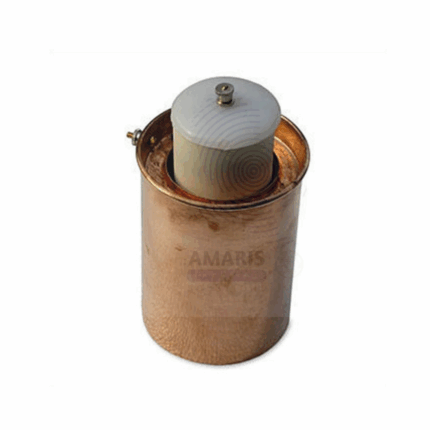
Daniel cell
The Daniel Cell is a classic electrochemical cell consisting of zinc and copper electrodes immersed in their respective sulfate solutions and connected by a salt bridge. It generates electrical energy through redox reactions and is used primarily for educational and laboratory demonstrations in electrochemistry.
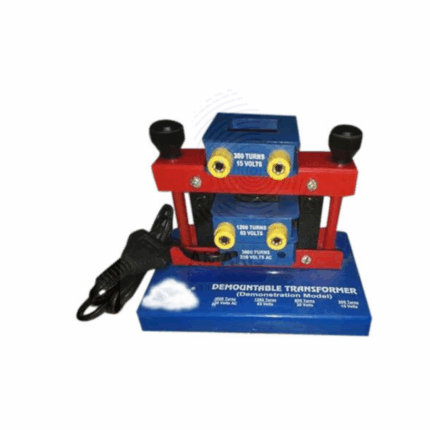
Demonstration transformer
The Demonstration Transformer is an educational and laboratory device designed to illustrate the principles of electromagnetic induction, voltage transformation, and mutual inductance. Typically composed of a laminated iron core with interchangeable primary and secondary coils, it allows for hands-on experiments involving step-up and step-down voltage transformation. Ideal for both laboratory demonstrations and industrial training settings, it supports a range of voltage and current inputs and can safely demonstrate real-time transformer behavior using AC power sources.












