

 Preservatives(food)
 Flavors
 Acidulants
 Sweeteners
 Antioxidants
 Colorants(food)
 Nutraceutical Ingredients (food)
 Nutrient Supplements
 Emulsifiers
 Collectors
 Dust Suppressants
 Explosives and Blasting Agents
 Flocculants and Coagulants
 Frothers
 Leaching Agents
 pH Modifiers
 Precious Metal Extraction Agents
 Antioxidants(plastic)
 Colorants (Pigments, Dyes)
 Fillers and Reinforcements
 Flame Retardants
 Monomers
 Plasticizers
 Polymerization Initiators
 Stabilizers (UV, Heat)
 Antifoaming Agents
 Chelating Agents
 Coagulants and Flocculants
 Corrosion Inhibitors
 Disinfectants and Biocides
 Oxidizing Agents
 pH Adjusters
 Scale Inhibitors( water)
 Antioxidants(cosmetic)
 Emollients
 Oils
Oils Carrier Oills
 Essential Oils
 Humectants
 Preservatives
 Surfactants(cosmetic)
 Thickeners
 UV Filters
 Fragrance (Cosmetics)
 Fertilizers
 Soil Conditioners
 Plant Growth Regulators
 Animal Feed Additives
 Biostimulants
 Pesticides (Herbicides, Insecticides, Fungicides)
 Active Pharmaceutical Ingredients (APIs)
 Excipients
 Solvents(pharmaceutical)
 Antibiotics
 Antiseptics and Disinfectants
 Vaccine Adjuvants
 Nutraceutical Ingredients (pharmaceutical)
 Analgesics & Antipyretics
 Analytical Reagents
 Solvents(lab)
 Chromatography Chemicals
 Spectroscopy Reagents
 microbiology-and-cell-culture-reagents
 Molecular Biology Reagents
 Biochemical Reagents
 Inorganic and Organic Standards
 Laboratory Safety Chemicals
 Specialty Laboratory Chemicals(Special Laboratory Equipment)
 Demulsifiers
 Hydraulic Fracturing Fluids
 Scale Inhibitors(oil)
 Surfactants(oil)
 Drilling Fluids
 Dyes and Pigments
 Bleaching Agents
 Softening Agents
 Finishing Agents
 Antistatic Agents
 Admixtures
 Waterproofing Agents
 Sealants and Adhesives
 Curing Compounds
 Concrete Repair Chemicals
 Anti-Corrosion Coatings
 Surfactants(cleaning)
 Builders
 Enzymes
 Solvents (Cleaning)
 Electronic Chemicals
 Catalysts
 Lubricants
 Photographic Chemicals
 Refrigerants
 Automotive chemicals
 Pyrotechnic Chemicals
 Biodegradable Surfactants
 Bio-based Solvents
 Renewable Polymers
 Carbon Capture Chemicals
 Wastewater Treatment Chemicals
 Pigments
 Solvents(paint)
 Specialty Coatings
 Binders/Resins
 Additives
 Driers
 Anti-Corrosion Agents
 Functional Coatings
 Application-Specific Coatings
 Leavening Agents
 Dough Conditioners
 Flour Treatments
 Fat Replacers
 Decoratives
 Preservatives(baking)
 Plasticizers & Softeners
 Reinforcing Agents
 Adhesion Promoters
 Vulcanizing Agents
 Antidegradants
 Blowing Agents
 Fillers & Extenders
 Accelerators & Retarders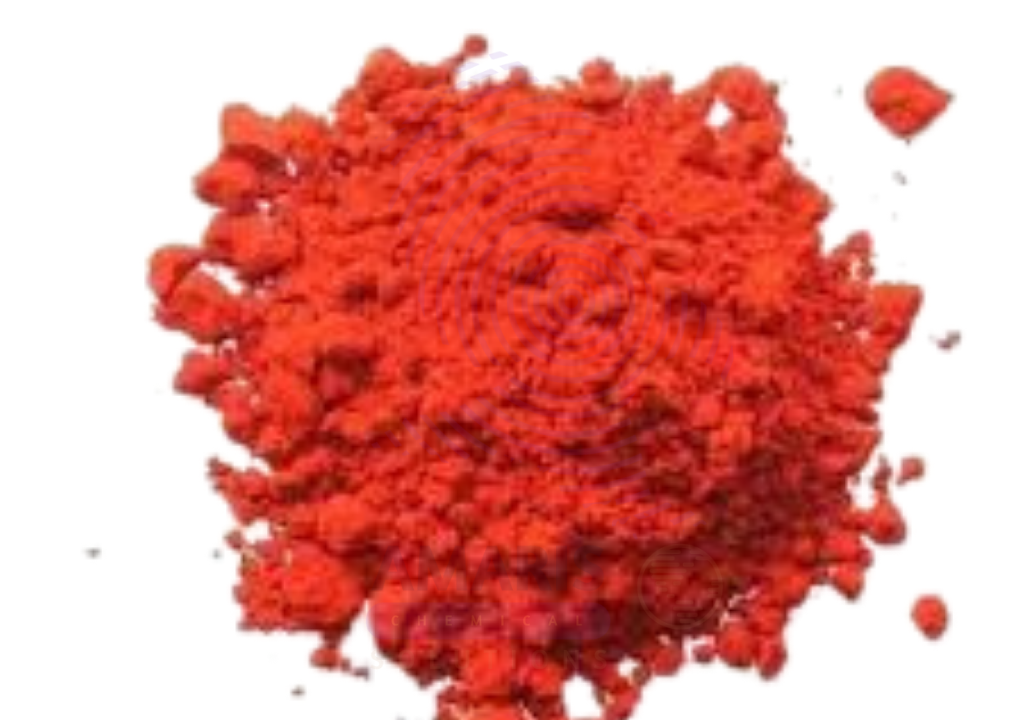

Reactive Orange HeR
Reactive Orange HeR is a mono-functional, high-exhaust class reactive dye designed for dyeing and printing of cellulosic fibers, particularly cotton and viscose. It reacts covalently with hydroxyl groups on cellulose under alkaline conditions, resulting in excellent wash, light, and perspiration fastness. Known for its brilliant orange shade, Reactive Orange HeR offers high fixation efficiency, compatibility with other HE dyes, and suitability across multiple dyeing methods such as exhaust, pad-batch, and pad-dry-cure processes.
Reactive Orange HeR
Primary Uses
- Textile Dyeing Industry
- Used for dyeing cotton, viscose, lyocell, and their blends using high-exhaust methods.
- Applied in package dyeing, yarn dyeing, and fabric dyeing, especially in industries requiring brilliant and durable orange shades.
- Suitable for home textiles like towels, curtains, and bedsheets, as well as garments and uniforms requiring consistent coloration.
- Commonly used in continuous dyeing operations for large-scale production.
- Textile Printing
- Employed in rotary and flatbed screen printing for bright orange designs on natural fiber fabrics.
- Compatible with reactive printing pastes in multi-color designs requiring long-lasting color fastness.
Secondary Uses
- Custom Shade Development
- Used in formulation of reactive dye blends to create custom shades for seasonal fashion or branding requirements.
- Handcraft & Artisan Textiles
- Applied in small-batch and artisan dyeing, including batik and tie-dye, due to its vibrant hue and good reproducibility.
- Educational and Laboratory Use
- Used in academic settings for training in textile chemistry, dye performance testing, and fastness assessments.
- Blended Fabrics
- Can be used with auxiliaries to dye cotton-polyester or cotton-elastane blends, controlling migration and fixation.
1. Basic Identification Attributes
- Chemical Name (IUPAC): Varies by manufacturer; typically mono-reactive derivative of azo dyes
- Common/Trade Name: Reactive Orange HeR
- CAS Number: Proprietary/formulation-specific
- HS Code: 3204.16.00
- Synonyms: Orange HE-R; High-exhaust reactive orange; Mono-reactive orange dye
2. Physical & Chemical Properties
- Physical State: Powder or granular form
- Color & Odor: Bright orange; odorless or faint characteristic odor
- Solubility: Soluble in water
- pH Stability: Works optimally in alkaline medium (pH 10–11) during fixation
- Heat Stability: Stable at standard dyeing temperatures (up to ~80°C)
3. Safety & Hazard Attributes
- GHS Classification: May cause skin and eye irritation; avoid inhalation of dust
- Toxicity: Low toxicity when used in industrial applications
- Exposure Limits: No specific limits; handle with general chemical safety practices
4. Storage & Handling Attributes
- Storage Conditions: Store in a dry, well-ventilated area away from moisture, heat, and direct sunlight
- Container Type: Moisture-proof polyethylene-lined fiber drums or bags
- Shelf Life: 12–24 months under proper storage
- Handling Precautions: Use dust extraction and wear protective equipment during handling
5. Regulatory & Compliance Attributes
- Compliant with Oeko-Tex® Standard 100 (if specified by supplier)
- May be compliant with REACH, ZDHC MRSL, and other global textile chemical standards
- APEO- and formaldehyde-free variants may be available for sustainable dyeing processes
6. Environmental & Health Impact
- Biodegradability: Limited; requires treatment before wastewater discharge
- Ecotoxicity: Potentially harmful to aquatic organisms if discharged untreated
- Bioaccumulation: Low
- Wastewater Treatment: Requires dye removal systems (e.g., activated carbon, flocculation, or oxidation treatment)
Safety Handling Precautions
- PPE Required: Gloves, goggles, dust mask recommended
- Handling Guidelines: Avoid contact with eyes, skin, and clothing; avoid breathing dust
- Storage Measures: Keep containers tightly closed and stored in a cool, dry, and well-ventilated area
First Aid Measures
- Inhalation: Remove to fresh air; seek medical attention if symptoms appear
- Skin Contact: Wash thoroughly with soap and water; remove contaminated clothing
- Eye Contact: Rinse with plenty of water for at least 15 minutes; get medical attention if irritation persists
- Ingestion: Rinse mouth with water; do not induce vomiting; seek immediate medical help
Firefighting Measures
- Fire Hazards: Not highly flammable but may decompose at high temperatures
- Extinguishing Media: Use dry chemical, CO₂, foam, or water mist
- Special Precautions: Use protective equipment and self-contained breathing apparatus
- Hazardous Combustion Products: May release carbon monoxide, carbon dioxide, and nitrogen oxides
Related products
Acid Black 210
Acid Black 210 is a high-performance, metal-complex acid dye specifically engineered for deep black shades with exceptional wet fastness properties. This chromium-based dye belongs to the 1:2 metal complex dye class, offering superior molecular stability and fiber affinity. The powder formulation delivers consistent, vibrant coloration for synthetic polyamide fibers and protein-based textiles, with optimized characteristics for industrial dyeing processes. Its molecular structure features multiple sulfonic acid groups that ensure excellent water solubility and penetration, while the metal complex formation provides enhanced light and wash fastness compared to non-metalized acid dyes.
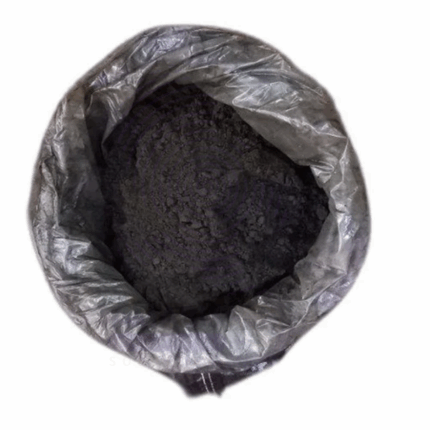
Black 5
Black 5, also known as Acid Black 5 or CI 20470, is a synthetic dye commonly used in various industries for its deep, rich black to bluish-black color. It belongs to the azo dye family and is typically supplied as a fine powder or granules in industrial packaging, such as 25kg bags. Black 5 is water-soluble and exhibits excellent stability in acidic conditions, making it ideal for applications in textiles, personal care, and some food and pharmaceutical formulations where permitted.
This dye offers high tinctorial strength, consistent batch-to-batch quality, and compatibility with other dyes for custom blends. It is used both for its standalone dark color and to darken or tone other dye shades.
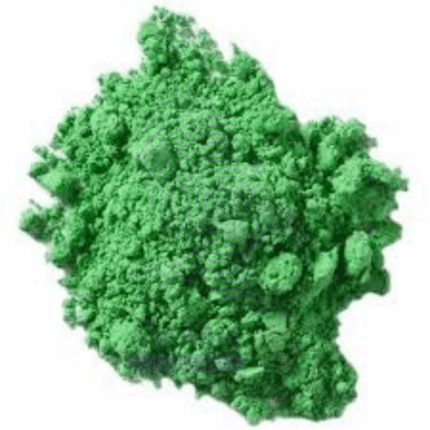
Green Pigment
Green Pigment is a concentrated dispersion of green pigment particles in a suitable carrier, designed for use in a variety of industrial and commercial applications. Known for its vivid green color and excellent stability, this pigment offers good resistance to heat, light, and chemicals. It is widely employed in plastics, coatings, inks, and other manufacturing processes where vibrant, durable green coloration is required.
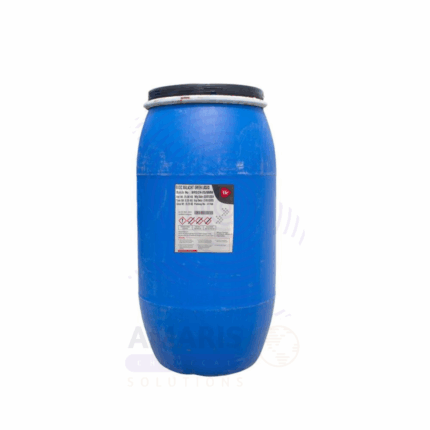
Malachite Green
Malachite Green is a synthetic organic compound classified as a triarylmethane dye. It appears as a green crystalline powder with a brilliant metallic sheen and is highly soluble in water and alcohol. While originally developed as a textile dye, Malachite Green is widely used in aquaculture, microbiology, and histology due to its antifungal, antibacterial, and staining properties. It is typically available in two forms: the oxalate and hydrochloride salts. Although effective in many industrial and biological applications, its use in food and veterinary contexts is restricted or banned in several countries due to toxicity concerns.
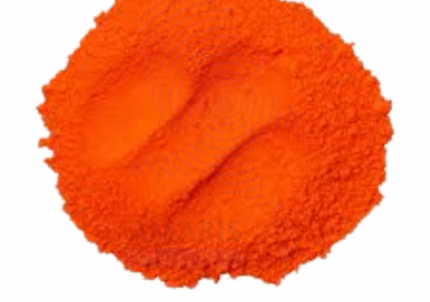
Pigment Orange
Pigment Orange is a concentrated dispersion of synthetic orange pigment particles in a suitable carrier, designed to deliver bright, vivid orange coloration. It offers excellent stability, heat resistance, and chemical inertness, making it suitable for diverse industrial applications including paints, plastics, inks, and coatings. This pigment ensures consistent color strength and durability across a variety of substrates.
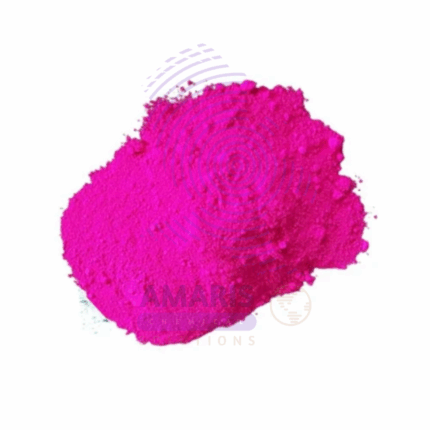
Pink Dye
Pink Dye is a synthetic dye formulation offering a vibrant pink coloration with a 6% dye concentration. It exhibits excellent affinity for protein fibers such as wool, silk, and nylon, providing bright and consistent pink hues. The dye is water-soluble under acidic conditions and is commonly used in textile dyeing, leather processing, and specialty applications requiring durable and vivid pink color. It also demonstrates good fastness to washing, light, and perspiration.
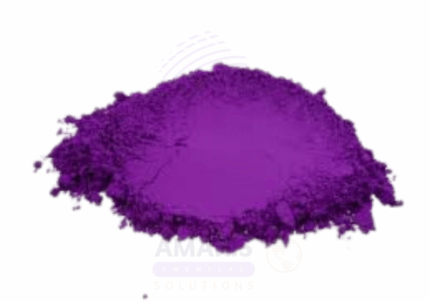
Purple Pigment
Purple Pigment is a colorant formulation containing 10% concentrated purple pigment dispersed in a carrier matrix. It is used to impart purple coloration in a wide range of applications, offering excellent color stability, UV resistance, and compatibility with various substrates. This pigment preparation is widely utilized in plastics, coatings, inks, textiles, cosmetics, and construction materials, where consistent hue and dispersion are essential.
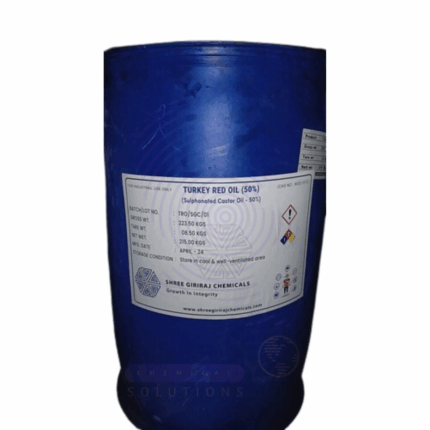
Turkey Red Oil (Sulphated Castor Oil)
Turkey Red Oil (Sulphated Castor Oil), also known as Sulphated Castor Oil, is a water-soluble derivative of castor oil produced by the sulfonation of castor oil. It appears as a viscous, amber to dark brown liquid with excellent emulsifying, detergent, and wetting properties. Turkey Red Oil is widely used as a natural surfactant and emulsifier in various industrial and personal care applications. It is known for its biodegradability, mildness, and ability to stabilize oil-in-water emulsions. Traditionally used in textile processing as a softener and lubricant, it now finds broad usage in cosmetics, detergents, leather processing, and cleaning products due to its unique functional attributes.












