

 Preservatives(food)
 Flavors
 Acidulants
 Sweeteners
 Antioxidants
 Colorants(food)
 Nutraceutical Ingredients (food)
 Nutrient Supplements
 Emulsifiers
 Collectors
 Dust Suppressants
 Explosives and Blasting Agents
 Flocculants and Coagulants
 Frothers
 Leaching Agents
 pH Modifiers
 Precious Metal Extraction Agents
 Antioxidants(plastic)
 Colorants (Pigments, Dyes)
 Fillers and Reinforcements
 Flame Retardants
 Monomers
 Plasticizers
 Polymerization Initiators
 Stabilizers (UV, Heat)
 Antifoaming Agents
 Chelating Agents
 Coagulants and Flocculants
 Corrosion Inhibitors
 Disinfectants and Biocides
 Oxidizing Agents
 pH Adjusters
 Scale Inhibitors( water)
 Antioxidants(cosmetic)
 Emollients
 Oils
Oils Carrier Oills
 Essential Oils
 Humectants
 Preservatives
 Surfactants(cosmetic)
 Thickeners
 UV Filters
 Fragrance (Cosmetics)
 Fertilizers
 Soil Conditioners
 Plant Growth Regulators
 Animal Feed Additives
 Biostimulants
 Pesticides (Herbicides, Insecticides, Fungicides)
 Active Pharmaceutical Ingredients (APIs)
 Excipients
 Solvents(pharmaceutical)
 Antibiotics
 Antiseptics and Disinfectants
 Vaccine Adjuvants
 Nutraceutical Ingredients (pharmaceutical)
 Analgesics & Antipyretics
 Analytical Reagents
 Solvents(lab)
 Chromatography Chemicals
 Spectroscopy Reagents
 microbiology-and-cell-culture-reagents
 Molecular Biology Reagents
 Biochemical Reagents
 Inorganic and Organic Standards
 Laboratory Safety Chemicals
 Specialty Laboratory Chemicals(Special Laboratory Equipment)
 Demulsifiers
 Hydraulic Fracturing Fluids
 Scale Inhibitors(oil)
 Surfactants(oil)
 Drilling Fluids
 Dyes and Pigments
 Bleaching Agents
 Softening Agents
 Finishing Agents
 Antistatic Agents
 Admixtures
 Waterproofing Agents
 Sealants and Adhesives
 Curing Compounds
 Concrete Repair Chemicals
 Anti-Corrosion Coatings
 Surfactants(cleaning)
 Builders
 Enzymes
 Solvents (Cleaning)
 Electronic Chemicals
 Catalysts
 Lubricants
 Photographic Chemicals
 Refrigerants
 Automotive chemicals
 Pyrotechnic Chemicals
 Biodegradable Surfactants
 Bio-based Solvents
 Renewable Polymers
 Carbon Capture Chemicals
 Wastewater Treatment Chemicals
 Pigments
 Solvents(paint)
 Specialty Coatings
 Binders/Resins
 Additives
 Driers
 Anti-Corrosion Agents
 Functional Coatings
 Application-Specific Coatings
 Leavening Agents
 Dough Conditioners
 Flour Treatments
 Fat Replacers
 Decoratives
 Preservatives(baking)
 Plasticizers & Softeners
 Reinforcing Agents
 Adhesion Promoters
 Vulcanizing Agents
 Antidegradants
 Blowing Agents
 Fillers & Extenders
 Accelerators & Retarders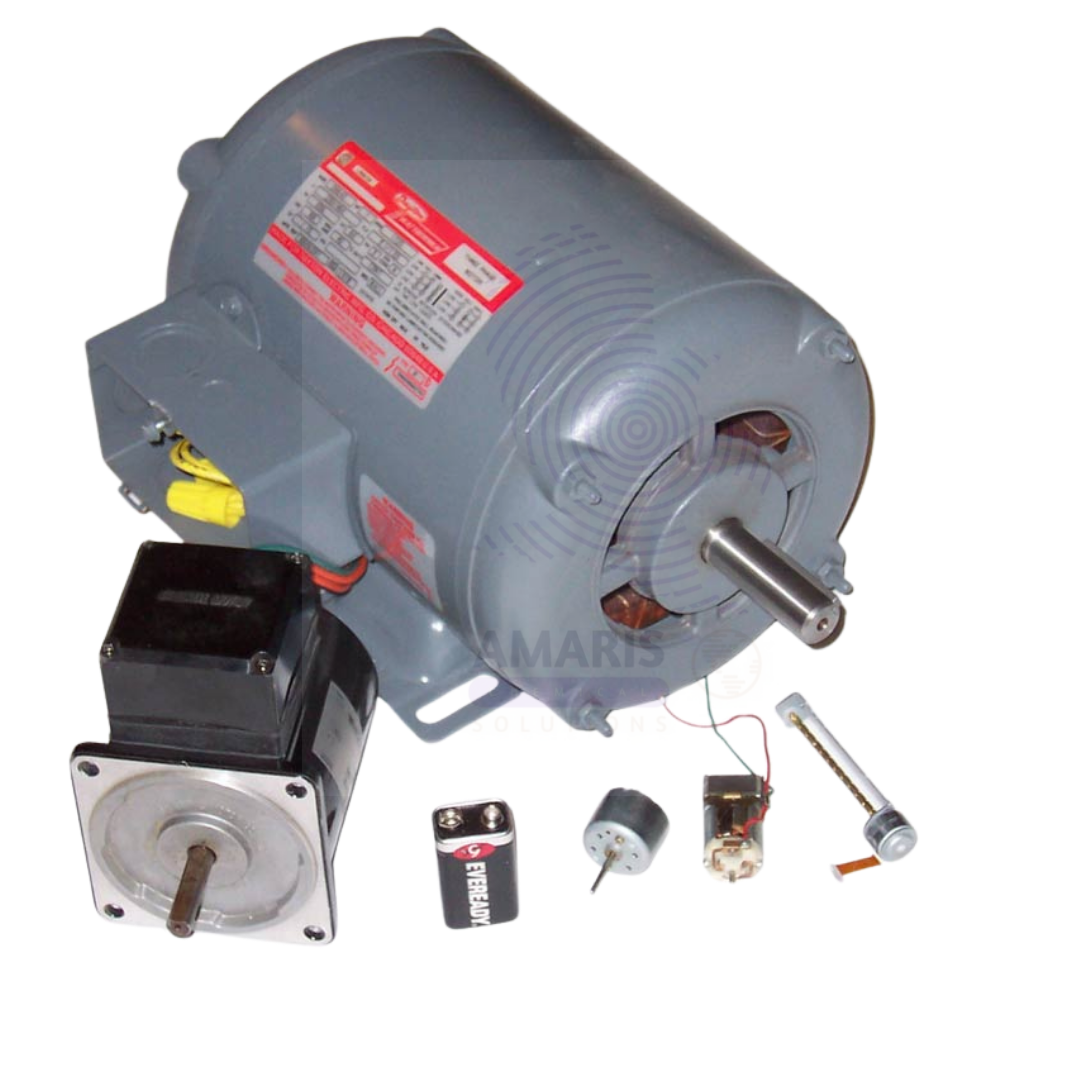




Electric Motor
Original price was: $ 14.40.$ 14.35Current price is: $ 14.35.
Electric Motor is an electromechanical device that converts electrical energy into mechanical energy through the interaction of magnetic fields and current-carrying conductors. Commonly used in industrial machinery, laboratory equipment, and household appliances, electric motors come in various types such as AC, DC, synchronous, and induction motors. Constructed from components including stator, rotor, bearings, and windings, these motors provide reliable and efficient rotational motion essential for powering pumps, fans, compressors, and other mechanical systems. Electric motors are fundamental in automation, manufacturing, and scientific research due to their precision, efficiency, and adaptability to various power sources and load requirements.
Electric Motor
Primary Uses
- Industrial Equipment
- Drives machinery such as pumps, compressors, conveyors, and mixers in manufacturing and processing plants.
- Household Appliances
- Powers devices including fans, refrigerators, washing machines, and air conditioners.
- Automation and Robotics
- Provides precise motion control in automated systems and robotic arms.
- Transportation
- Used as propulsion motors in electric vehicles, trains, and other transport systems.
- HVAC Systems
- Powers fans and blowers for heating, ventilation, and air conditioning systems.
Secondary Uses
- Educational and Research Applications
- Used in laboratories and technical training centers to demonstrate electromagnetic and motor principles.
- Renewable Energy
- Serves as generators or motors in wind turbines, hydroelectric plants, and solar tracking systems.
- Prototype Development
- Employed in design and testing of new motor technologies and applications.
- Material Handling
- Drives cranes, hoists, and other material handling equipment in warehouses and ports.
- Energy Efficiency Research
- Used for experimental setups focused on improving motor performance and reducing power consumption.
1.Basic Identification Attributes
- Components: Stator, rotor, bearings, windings, shaft, and housing.
- Material: Copper windings, steel laminations, insulating materials, and cast metal housing.
- Types: AC motors, DC motors, synchronous motors, induction motors.
2.Physical & Chemical Properties
- Converts electrical energy to mechanical rotation with high efficiency.
- Operates under various voltage and current ratings depending on design.
- Thermal resistance to manage heat generated during operation.
- Durable construction suited for continuous operation and variable loads.
3.Safety & Hazard Attributes
- Electrical hazard risks including shocks and short circuits; proper insulation required.
- Moving parts present mechanical hazards; guards recommended during operation.
- Heat generation can cause burns if touched during or after operation.
4.Storage & Handling Attributes
- Store in dry, dust-free environments to prevent corrosion and insulation damage.
- Handle with care to avoid mechanical damage to windings and bearings.
- Inspect regularly for wear and lubrication of moving parts.
5.Regulatory & Compliance Attributes
- Manufactured according to IEC and other international electrical standards.
- Compliant with energy efficiency regulations and safety certifications (CE, UL).
- Suitable for use in GMP and technical laboratory settings.
6.Environmental & Health Impact
- Designed for energy-efficient operation reducing environmental footprint.
- Contains recyclable metals and materials for sustainable disposal.
- Contributes to reduced emissions when used in electric transportation and renewable energy.
Safety Handling Precautions
- Ensure motor is properly grounded and wired before operation.
- Use appropriate PPE when handling electrical connections.
- Avoid contact with moving parts during operation.
First Aid Measures
- For electrical shock, disconnect power and seek immediate medical assistance.
- Treat burns by cooling the affected area and obtaining medical care if needed.
- For mechanical injuries, clean wounds and seek medical attention if severe.
Firefighting Measures
- Use CO2 or dry powder extinguishers for electrical fires.
- Avoid water as it may conduct electricity and cause shock hazards.
- Remove power source if safe before firefighting.
Related products
Atomic Model Set
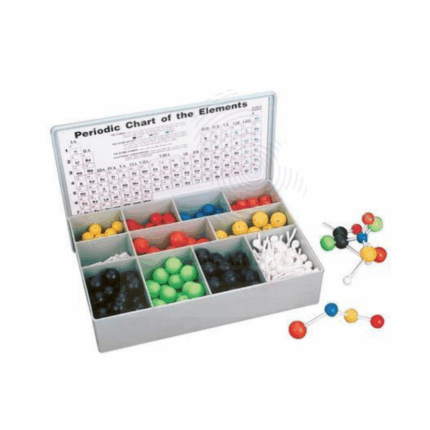
The Atomic Model Set is an educational tool designed to visually demonstrate the structure of atoms and molecules. It consists of color-coded balls representing protons, neutrons, and electrons, connected by rods to simulate atomic bonds. This set is widely used in classrooms, laboratories, and training centers to aid in the teaching of atomic theory, molecular geometry, chemical bonding, and related concepts. Made from durable plastic materials, the set provides a hands-on, interactive experience that enhances understanding of complex scientific principles.
Banana Plug
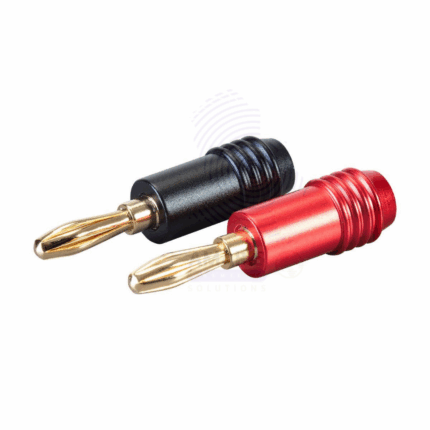
The Banana Plug is a single-wire electrical connector used to join wires to equipment in testing, measuring, and laboratory applications. It features a cylindrical metal pin with a spring mechanism to ensure a secure and reliable connection. The plug is widely used for quick and easy connections in electronic testing devices, audio systems, and laboratory instruments. Made from high-conductivity metals such as brass or copper and often gold- or nickel-plated for corrosion resistance, the Banana Plug provides consistent electrical conductivity and durability.
Barlows Wheel Apparatus
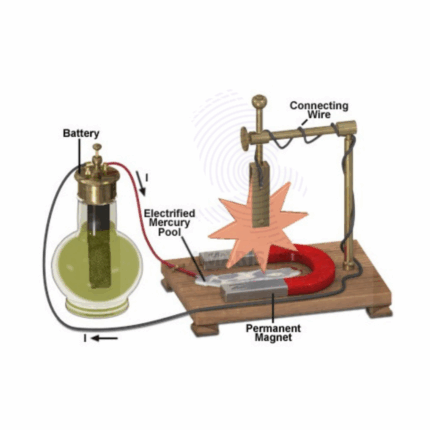
Barlows Wheel Apparatus is a classic physics demonstration device used to illustrate electromagnetic effects, specifically the principles of electric motors and the interaction between magnetic fields and electric current. It consists of a rotating wheel in contact with an electric circuit and a magnetic field, demonstrating motion generated by electromagnetic forces. The apparatus is widely used in educational laboratories to teach fundamental concepts of electromagnetism and motor action, as well as in industrial training for understanding motor components and operation.

Boyle’s Law Apparatus
Boyle’s Law Apparatus is a precision laboratory instrument designed to demonstrate and verify Boyle’s Law, which states that the pressure of a given mass of gas is inversely proportional to its volume at constant temperature. The apparatus typically consists of a sealed cylinder with a movable piston or syringe, pressure gauge, and volume scale, allowing students and researchers to observe and measure the relationship between pressure and volume in gases. It is widely used in educational and research laboratories to teach fundamental gas laws and perform experimental validation of theoretical principles.
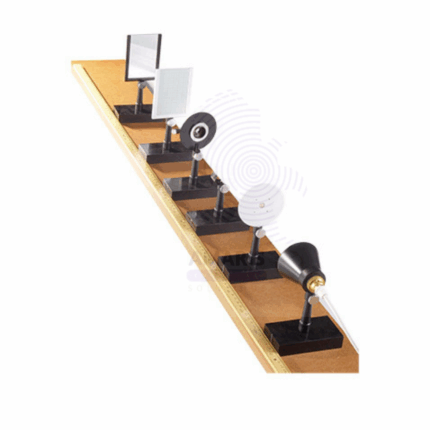
Complete optical bench
Product Description
Complete Optical Bench is a precision laboratory apparatus designed to facilitate experiments involving optics, such as the study of lenses, mirrors, light refraction, reflection, and focal lengths. It consists of a rigid, graduated base rail with movable holders for optical components like lenses, mirrors, prisms, and light sources. The modular design allows flexible setup of various optical experiments, making it an essential tool in physics laboratories for teaching and research.
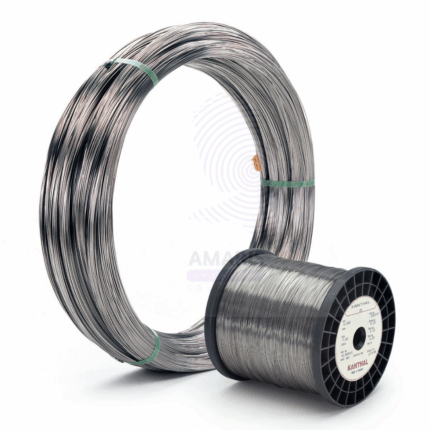
Constantine wire
Constantine Wire is an alloy wire composed primarily of copper, nickel, and zinc, known for its high electrical conductivity, corrosion resistance, and durability. It is widely used in electrical applications requiring reliable conduction and mechanical strength. The wire exhibits excellent resistance to oxidation and mechanical wear, making it suitable for various laboratory and industrial uses.
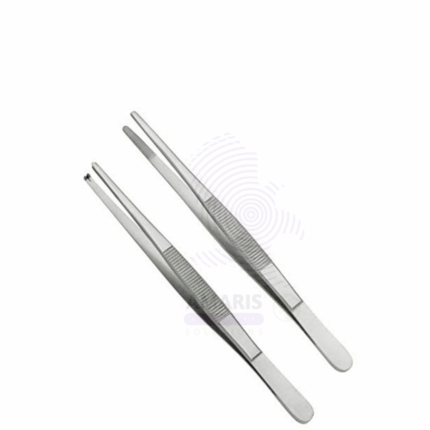
Dissecting Forceps
Dissecting Forceps are precision hand tools designed for grasping, holding, and manipulating tissues or small objects during dissection or surgical procedures. Typically made from high-quality stainless steel or surgical-grade metal, these forceps offer durability, corrosion resistance, and ease of sterilization. They come in various shapes and sizes, including straight or curved tips, serrated or smooth jaws, to suit different dissection needs in medical, veterinary, biological research, and educational settings. Their ergonomic design allows fine control and minimizes tissue damage during delicate operations.
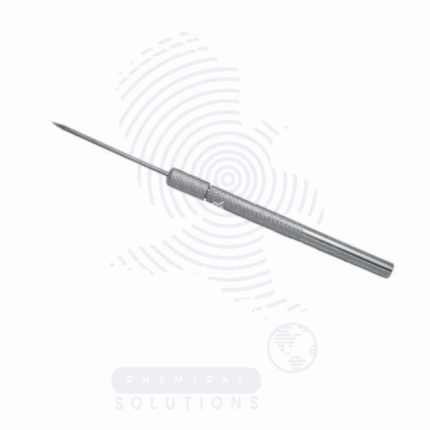
Dissecting Needle
A Dissecting Needle is a fine, pointed instrument used in biological and medical dissections to tease apart tissues, separate layers, and manipulate small structures. Typically constructed from stainless steel or surgical-grade metal, the needle has a sharp tip mounted on a rigid handle, providing precision and control during delicate procedures. Dissecting needles are essential tools in anatomy labs, research facilities, and surgical settings for detailed tissue work, facilitating clearer visibility and accurate separation without causing unnecessary damage.












