

 Preservatives(food)
 Flavor Enhancers
 Acidulants
 Sweeteners
 Antioxidants
 Colorants(food)
 Nutraceutical Ingredients (food)
 Nutrient Supplements
 Emulsifiers
 Collectors
 Dust Suppressants
 Explosives and Blasting Agents
 Flocculants and Coagulants
 Frothers
 Leaching Agents
 pH Modifiers
 Precious Metal Extraction Agents
 Antioxidants(plastic)
 Colorants (Pigments, Dyes)
 Fillers and Reinforcements
 Flame Retardants
 Monomers
 Plasticizers
 Polymerization Initiators
 Stabilizers (UV, Heat)
 Antifoaming Agents
 Chelating Agents
 Coagulants and Flocculants
 Corrosion Inhibitors
 Disinfectants and Biocides
 Oxidizing Agents
 pH Adjusters
 Scale Inhibitors( water)
 Antioxidants(cosmetic)
 Emollients
 Fragrances and Essential Oils
 Humectants
 Preservatives
 Surfactants(cosmetic)
 Thickeners
 UV Filters
 Fertilizers
 Soil Conditioners
 Plant Growth Regulators
 Animal Feed Additives
 Biostimulants
 Pesticides (Herbicides, Insecticides, Fungicides)
 Active Pharmaceutical Ingredients (APIs)
 Excipients
 Solvents(pharmaceutical)
 Antibiotics
 Antiseptics and Disinfectants
 Vaccine Adjuvants
 Nutraceutical Ingredients (pharmaceutical)
 Analgesics & Antipyretics
 Analytical Reagents
 Solvents(lab)
 Chromatography Chemicals
 Spectroscopy Reagents
 microbiology-and-cell-culture-reagents
 Molecular Biology Reagents
 Biochemical Reagents
 Inorganic and Organic Standards
 Laboratory Safety Chemicals
 Specialty Laboratory Chemicals(Special Laboratory Equipment)
 Demulsifiers
 Hydraulic Fracturing Fluids
 Scale Inhibitors(oil)
 Surfactants(oil)
 Drilling Fluids
 Dyes and Pigments
 Bleaching Agents
 Softening Agents
 Finishing Agents
 Antistatic Agents
 Admixtures
 Waterproofing Agents
 Sealants and Adhesives
 Curing Compounds
 Concrete Repair Chemicals
 Anti-Corrosion Coatings
 Surfactants(cleaning)
 Builders
 Enzymes
 Solvents (Cleaning)
 Fragrances
 Electronic Chemicals
 Catalysts
 Lubricants
 Photographic Chemicals
 Refrigerants
 Automotive chemicals
 Pyrotechnic Chemicals
 Biodegradable Surfactants
 Bio-based Solvents
 Renewable Polymers
 Carbon Capture Chemicals
 Wastewater Treatment Chemicals
 Pigments
 Solvents(paint)
 Specialty Coatings
 Binders/Resins
 Additives
 Driers
 Anti-Corrosion Agents
 Functional Coatings
 Application-Specific Coatings
 Leavening Agents
 Dough Conditioners
 Flour Treatments
 Fat Replacers
 Decoratives
 Preservatives(baking)
 Plasticizers & Softeners
 Reinforcing Agents
 Adhesion Promoters
 Vulcanizing Agents
 Antidegradants
 Blowing Agents
 Fillers & Extenders
 Accelerators & Retarders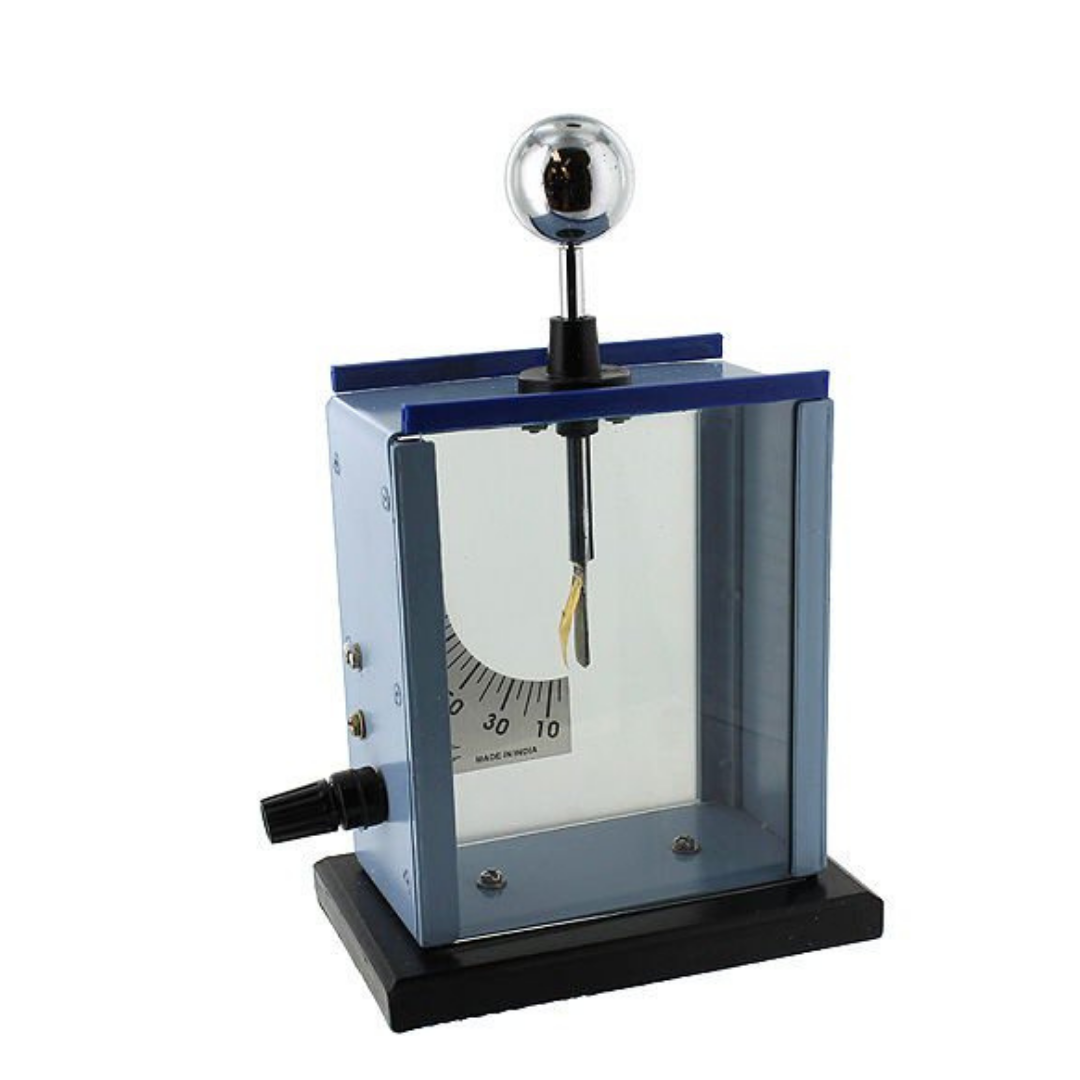


Gold Leaf Electroscope
Original price was: $ 15.99.$ 15.87Current price is: $ 15.87.
Gold Leaf Electroscope is a sensitive scientific instrument used to detect and measure electric charge. It consists of a metal rod connected to two thin gold leaves enclosed within a glass container. When the rod becomes charged, the leaves repel each other due to like charges, indicating the presence and relative magnitude of electric charge. Gold Leaf Electroscopes are widely used in physics education, research, and experimental demonstrations to study static electricity and charge properties. The gold leaves provide high conductivity and flexibility, ensuring precise detection of electrical phenomena.
Gold Leaf Electroscope
Primary Uses
- Educational and Laboratory Applications
- Detecting and demonstrating the presence of static electric charge in physics experiments.
- Measuring the polarity and relative strength of electric charges.
- Teaching basic principles of electrostatics and charge interactions in educational settings.
- Investigating electrical properties of materials and charge distribution.
- Used in research laboratories for qualitative charge detection.
Secondary Uses
- Research and Technical Applications
- Calibration and testing of other electrical measurement devices.
- Demonstrating electrostatic phenomena in demonstrations and science exhibitions.
- Supporting experiments in atmospheric electricity studies.
1.Basic Identification Attributes
- Components: Metal rod, thin gold leaves, glass enclosure, insulated base.
- Material: Conductive metals with gold leaf for high sensitivity.
2.Physical & Chemical Properties
- Gold leaves provide excellent conductivity and flexibility.
- Glass enclosure allows visibility while protecting delicate leaves.
3.Safety & Hazard Attributes
- Fragile glass enclosure requires careful handling.
- Gold leaf is delicate and can be damaged by rough handling.
4.Storage & Handling Attributes
- Store in a stable, dust-free environment to avoid contamination and damage.
- Handle gently to preserve gold leaf integrity.
5.Regulatory & Compliance Attributes
- Manufactured following laboratory equipment standards.
6.Environmental & Health Impact
- Minimal environmental impact; gold is recyclable and inert.
- Proper disposal of damaged parts recommended.
Safety Handling Precautions
- Avoid mechanical shocks to prevent breakage.
- Use gloves when handling to avoid contamination of gold leaves.
First Aid Measures
- Treat cuts from glass carefully and seek medical attention if necessary.
Firefighting Measures
- Non-flammable; extinguish fires in surrounding areas as appropriate.
Related products
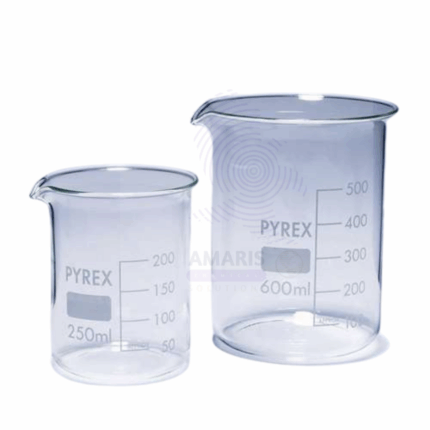
Beaker Pyrex
Beaker Pyrex is a high-quality laboratory container made from borosilicate glass known for its excellent thermal resistance, chemical durability, and mechanical strength. It is widely used for mixing, heating, and holding liquids in laboratories and industrial applications. Pyrex beakers can withstand rapid temperature changes without cracking, making them ideal for heating and cooling processes. They feature clear, transparent walls with easy-to-read graduated markings for volume measurement.

Borosilicate Glass Tubings
Borosilicate Glass Tubings are high-quality glass tubes made from borosilicate material, known for excellent thermal resistance and chemical durability. These tubes are used extensively in laboratories and industries for transporting gases and liquids, conducting experiments, and fabricating custom glass apparatus. Their high resistance to thermal shock and chemical corrosion makes them ideal for harsh lab environments and industrial processes. Available in various diameters and lengths, these tubings can be cut or bent to suit specific experimental setups.
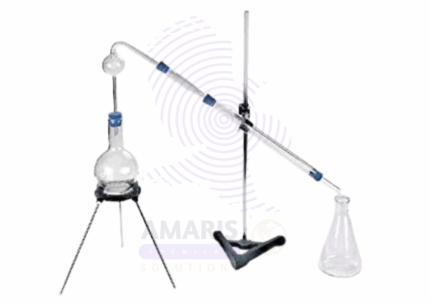
Complete Liebigs Distillation Apparatus
Complete Liebigs Distillation Apparatus is a classic laboratory setup used for the distillation of liquids by heating and subsequent condensation. It consists of a distillation flask, Liebig condenser, receiving flask, and necessary connecting joints. The Liebig condenser efficiently cools vapor back into liquid form using a water jacket. This apparatus is widely used in chemistry labs for purifying liquids, separating mixtures, and studying boiling points.
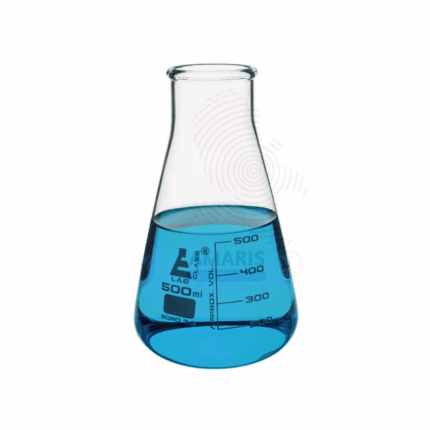
conical flask
Conical flasks, also known as Erlenmeyer flasks, are widely used laboratory glassware characterized by a flat bottom, conical body, and a narrow neck. Made typically from borosilicate glass, they are designed to hold, mix, and heat liquids safely. The narrow neck helps reduce evaporation and splashing during experiments. Conical flasks are essential for titrations, culturing microorganisms, and general solution preparation in laboratories and industrial settings.

Distillation Apparatus
Distillation Apparatus is a laboratory setup designed for the separation, purification, and collection of liquid mixtures based on differences in boiling points. It typically consists of components such as a distillation flask, condenser, receiving flask, and connecting tubes, often made from chemically resistant borosilicate glass. This apparatus allows controlled heating, vaporization, condensation, and collection of volatile substances. Widely used in chemical laboratories, pharmaceutical manufacturing, food and beverage processing, and research, the distillation apparatus is essential for isolating pure liquids, removing impurities, and analyzing complex mixtures.
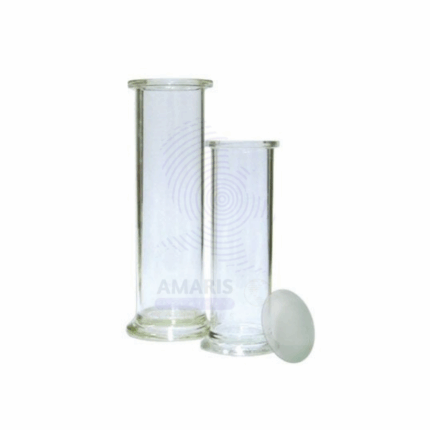
Gas Jar with Lid
Gas Jar with Lid is a durable, chemically resistant container designed for the collection, storage, and measurement of gases in laboratory settings. Typically made from high-quality borosilicate glass or plastic, the gas jar comes with a tight-fitting lid—often equipped with ports or holes—to ensure an airtight seal and facilitate gas transfer or measurement. This apparatus is essential for conducting gas collection experiments safely and accurately, preventing contamination and gas loss. Widely used in educational, research, and industrial laboratories, gas jars with lids enable efficient handling of gases such as oxygen, hydrogen, carbon dioxide, and other experimental gases.
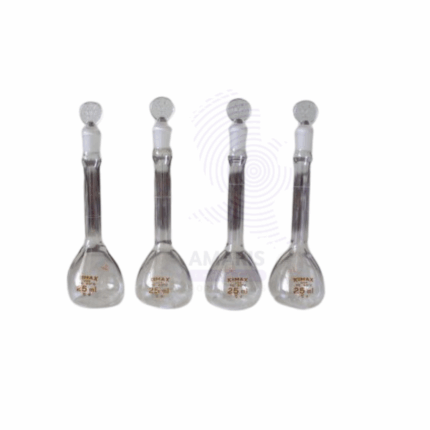
laboratory glass Volumetric flask with glass stopper
Laboratory Glass Volumetric Flask with Glass Stopper is a precision laboratory container used for preparing and measuring exact volumes of liquid solutions. Made from chemically resistant borosilicate glass, it features a flat bottom and a narrow neck with a precise calibration mark. The glass stopper ensures an airtight seal, preventing evaporation or contamination. Essential in analytical chemistry, pharmaceutical labs, and research, this flask allows accurate dilution, standard solution preparation, and volumetric analysis with high reliability and chemical stability.
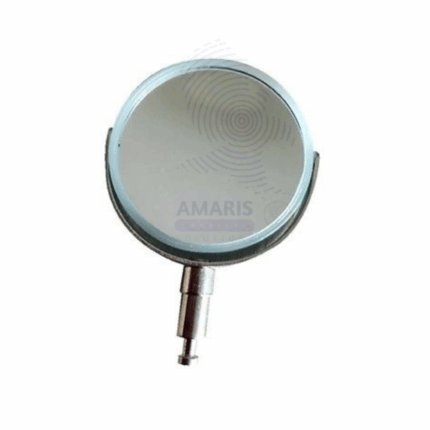
Microscope mirror
A Microscope Mirror is an optical accessory used to direct and focus external light onto the specimen being examined under a microscope. Traditionally mounted beneath the microscope stage, the mirror reflects ambient or artificial light upward through the condenser and specimen to illuminate the sample. Microscope mirrors typically have one flat and one concave reflective surface, allowing users to adjust the intensity and focus of the light beam. Made from highly polished glass or metal with reflective coatings, these mirrors are essential in microscopes lacking built-in illumination systems or as backup lighting aids. They enhance visibility, contrast, and detail, making them valuable in educational, medical, and research laboratory settings.












