

 Preservatives(food)
 Flavors
 Acidulants
 Sweeteners
 Antioxidants
 Colorants(food)
 Nutraceutical Ingredients (food)
 Nutrient Supplements
 Emulsifiers
 Collectors
 Dust Suppressants
 Explosives and Blasting Agents
 Flocculants and Coagulants
 Frothers
 Leaching Agents
 pH Modifiers
 Precious Metal Extraction Agents
 Antioxidants(plastic)
 Colorants (Pigments, Dyes)
 Fillers and Reinforcements
 Flame Retardants
 Monomers
 Plasticizers
 Polymerization Initiators
 Stabilizers (UV, Heat)
 Antifoaming Agents
 Chelating Agents
 Coagulants and Flocculants
 Corrosion Inhibitors
 Disinfectants and Biocides
 Oxidizing Agents
 pH Adjusters
 Scale Inhibitors( water)
 Antioxidants(cosmetic)
 Emollients
 Oils
Oils Carrier Oills
 Essential Oils
 Humectants
 Preservatives
 Surfactants(cosmetic)
 Thickeners
 UV Filters
 Fragrance (Cosmetics)
 Fertilizers
 Soil Conditioners
 Plant Growth Regulators
 Animal Feed Additives
 Biostimulants
 Pesticides (Herbicides, Insecticides, Fungicides)
 Active Pharmaceutical Ingredients (APIs)
 Excipients
 Solvents(pharmaceutical)
 Antibiotics
 Antiseptics and Disinfectants
 Vaccine Adjuvants
 Nutraceutical Ingredients (pharmaceutical)
 Analgesics & Antipyretics
 Analytical Reagents
 Solvents(lab)
 Chromatography Chemicals
 Spectroscopy Reagents
 microbiology-and-cell-culture-reagents
 Molecular Biology Reagents
 Biochemical Reagents
 Inorganic and Organic Standards
 Laboratory Safety Chemicals
 Specialty Laboratory Chemicals(Special Laboratory Equipment)
 Demulsifiers
 Hydraulic Fracturing Fluids
 Scale Inhibitors(oil)
 Surfactants(oil)
 Drilling Fluids
 Dyes and Pigments
 Bleaching Agents
 Softening Agents
 Finishing Agents
 Antistatic Agents
 Admixtures
 Waterproofing Agents
 Sealants and Adhesives
 Curing Compounds
 Concrete Repair Chemicals
 Anti-Corrosion Coatings
 Surfactants(cleaning)
 Builders
 Enzymes
 Solvents (Cleaning)
 Electronic Chemicals
 Catalysts
 Lubricants
 Photographic Chemicals
 Refrigerants
 Automotive chemicals
 Pyrotechnic Chemicals
 Biodegradable Surfactants
 Bio-based Solvents
 Renewable Polymers
 Carbon Capture Chemicals
 Wastewater Treatment Chemicals
 Pigments
 Solvents(paint)
 Specialty Coatings
 Binders/Resins
 Additives
 Driers
 Anti-Corrosion Agents
 Functional Coatings
 Application-Specific Coatings
 Leavening Agents
 Dough Conditioners
 Flour Treatments
 Fat Replacers
 Decoratives
 Preservatives(baking)
 Plasticizers & Softeners
 Reinforcing Agents
 Adhesion Promoters
 Vulcanizing Agents
 Antidegradants
 Blowing Agents
 Fillers & Extenders
 Accelerators & Retarders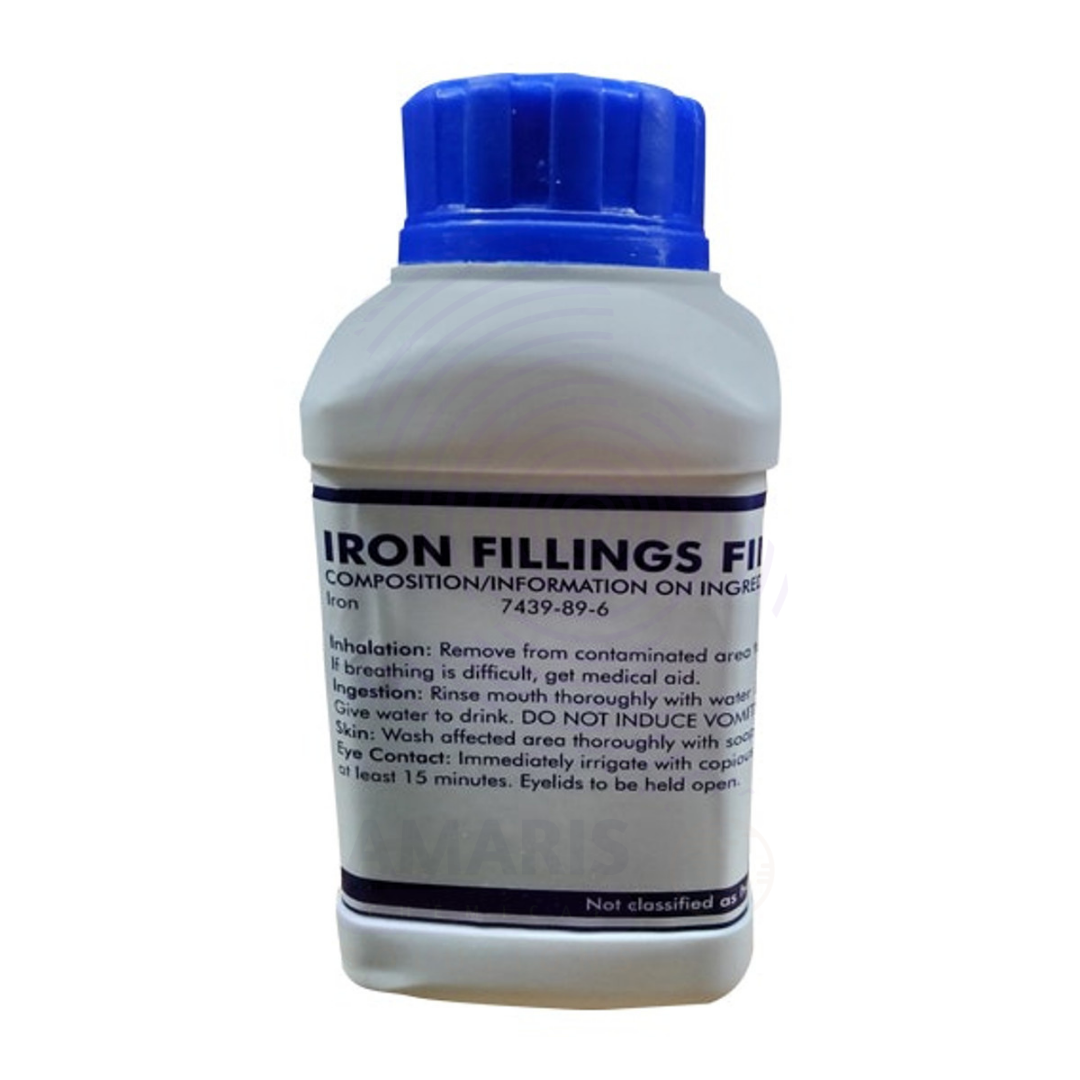



Iron Fillings Extra Pure
Original price was: $ 19.75.$ 19.67Current price is: $ 19.67.
Iron Fillings Extra Pure consist of finely divided iron particles produced from high-grade iron, offering high purity and excellent reactivity. These filings are widely used in educational laboratories for demonstrating magnetic field lines and for experiments involving magnetism and ferromagnetism. In chemical reactions, they serve as a convenient source of iron for redox and displacement reactions. Their consistent particle size and minimal impurities make them suitable for analytical applications, metallurgical studies, and various industrial processes where controlled iron content is required. Iron fillings should be stored in a dry environment to prevent oxidation and rust formation.
Iron Fillings Extra Pure
Primary Uses
- Magnetism Demonstrations:
Widely used in physics labs to visually demonstrate magnetic field lines and the effect of magnetic poles using magnets and iron filings. - Redox and Corrosion Experiments:
Used in chemistry labs to study oxidation, reduction, and rust formation under various atmospheric or chemical conditions. - Thermite Reactions:
Acts as the iron source in exothermic thermite experiments when reacted with aluminum powder, producing molten iron and demonstrating energetic redox chemistry.
Secondary Uses
- Catalytic Studies:
Used in reaction kinetics or catalysis experiments as a surface for specific redox or decomposition reactions (e.g., in hydrogen peroxide breakdown). - Separation Techniques Practice:
Employed in mechanical separation exercises, particularly in educational settings to show how magnetic separation works in mixtures. - Material Science Education:
Utilized for metal analysis, structure comparison, and particle morphology studies in metallurgy and materials science curricula.
1. Basic Identification Attributes
- Product Name: Iron Fillings
- Chemical Name: Iron (Fe)
- Grade: Extra Pure
- Formula: Fe
- Appearance: Gray metallic particles or shavings
- Odor: Odorless
2. Composition
- Iron (Fe): ≥99% (metallic form)
- Impurities: Trace elements such as carbon, manganese, or silica (negligible in Extra Pure grade)
- Particle Size: Fine, irregular metallic filings
3. Physical & Chemical Properties
- Melting Point: ~1538 °C
- Boiling Point: ~2862 °C
- Density: ~7.87 g/cm³
- Solubility: Insoluble in water
- Magnetism: Strongly magnetic
- Stability: Stable in dry air but oxidizes slowly when exposed to moisture
4. Safety & Hazard Attributes
- GHS Classification:
⚠️ Not classified as hazardous, but may pose a dust or fire hazard if particles are airborne. - PPE Requirements:
- Safety goggles
- Gloves
- Dust mask or respirator (when grinding or in powder form)
- Lab coat
- First Aid Measures:
- Inhalation: Move to fresh air; seek medical attention if irritation occurs
- Skin Contact: Wash with soap and water
- Eye Contact: Rinse with water for several minutes
- Ingestion: Rinse mouth; seek medical help
- Fire Hazards:
- Finely divided filings may be flammable; use dry sand or Class D fire extinguisher
- Avoid water on burning metal
5. Storage & Handling Attributes
- Storage Conditions:
- Store in a dry, airtight container
- Avoid exposure to moisture to prevent rusting
- Keep away from strong acids and oxidizers
- Handling Tips:
- Handle with care to avoid creating fine airborne dust
- Clean up spills promptly to avoid slipping or contamination
6. Laboratory Applications
- Primary Uses:
- Demonstrating magnetic properties of metals
- Reactivity experiments with acids (e.g., HCl to form FeCl₂ and H₂ gas)
- Redox reaction demonstrations
- Synthesis of iron salts
- Education in electrochemical series and single displacement reactions
- Secondary Uses:
- Simulations of meteorite or planetary core material
- Visualizing magnetic field lines when used with magnets
- Component in thermite mixtures for combustion studies
- Creating iron oxide pigments via controlled oxidation
SAFETY PRECAUTIONS
Personal Protective Equipment (PPE):
- Wear a lab coat, nitrile gloves, and safety goggles.
- Use a dust mask or respirator if dust or fine particles are generated.
Handling:
- Avoid creating or inhaling dust.
- Keep away from strong oxidizers and acids.
- Avoid contact with skin and eyes.
- Wash hands thoroughly after handling.
Storage:
- Store in a dry, cool, and well-ventilated place.
- Keep the container tightly closed to avoid moisture exposure.
- Avoid contact with moisture to prevent rusting.
FIRST AID MEASURES
Inhalation:
- Move to fresh air.
- Seek medical attention if respiratory symptoms persist.
Skin Contact:
- Wash skin with soap and water.
- Remove contaminated clothing.
- Get medical advice if irritation occurs.
Eye Contact:
- Rinse cautiously with water for several minutes.
- Remove contact lenses if present and easy to do.
- Continue rinsing and seek medical help if needed.
Ingestion:
- Rinse mouth with water.
- Do not induce vomiting.
- Seek medical attention if large quantities are ingested or symptoms develop.
FIRE FIGHTING MEASURES
Flammability:
- Iron filings are not flammable but may ignite when finely divided and exposed to flame or high heat.
Extinguishing Media:
- Use dry sand, Class D fire extinguisher, or dry powder.
- Do NOT use water or CO₂, as it may react with hot metal.
Hazardous Combustion Products:
- May emit iron oxides.
Firefighter Protection:
- Wear full protective gear and a self-contained breathing apparatus (SCBA).
Avoid using water-based extinguishers on burning metal.
Related products
Ferric Nitrate Extra Pure
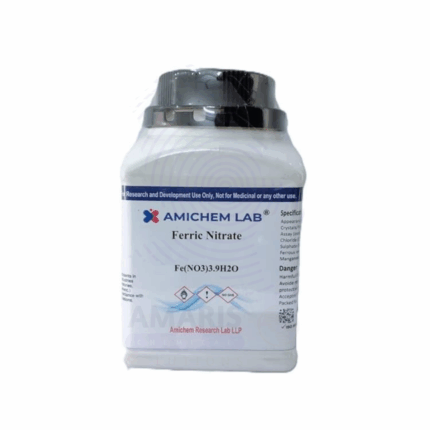
Ferric Nitrate Extra Pure is a high-purity iron(III) salt (Fe(NO₃)₃) commonly used in analytical chemistry, inorganic synthesis, and qualitative analysis. In the lab, it serves as an oxidizing agent and a source of ferric ions in solution. It’s also employed in the preparation of coordination compounds, as a catalyst, and in various colorimetric tests. Its extra pure grade ensures low levels of contaminants, making it suitable for precision laboratory applications.
Potassium Carbonate Extra Pure
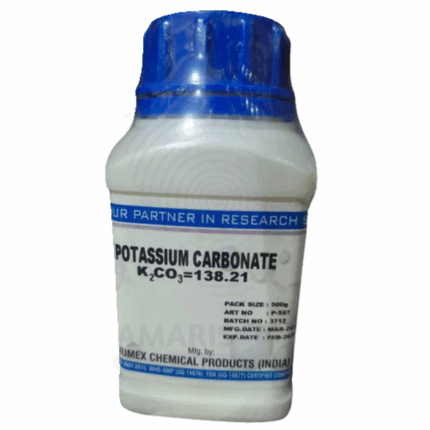
Potassium Carbonate Extra Pure is a high-purity, white, hygroscopic, water-soluble salt with the chemical formula K₂CO₃. It is known for its alkaline properties and exceptional solubility in water, forming a strongly basic solution that is widely used in laboratory and industrial processes. Its Extra Pure grade ensures it meets stringent standards for research, analytical, and high-spec formulation work.
This compound is essential in buffer preparation, pH adjustment, and titration analysis in laboratory chemistry. It also serves as a drying agent for certain solvents and gases due to its moisture-absorbing nature. In industrial applications, Potassium Carbonate is a key ingredient in the manufacture of glass, soaps, and dyes, and is also used in fermentation processes to control acidity. In the food industry, it functions as a food additive (E501), commonly used as a buffering or raising agent in baking.
To maintain its quality, Potassium Carbonate Extra Pure should be stored in a tightly sealed container, in a dry and cool environment, away from acids and moisture, as it readily absorbs water and carbon dioxide from the air. Proper handling using protective gloves and eye protection is advised, especially in concentrated solutions, due to its caustic nature.
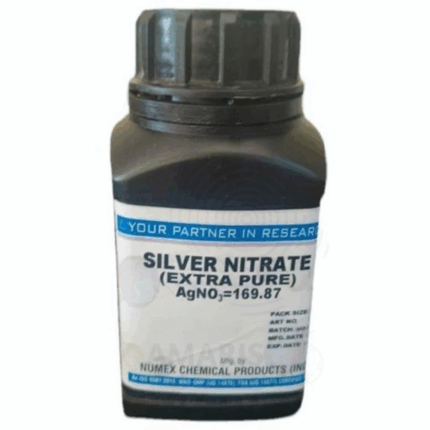
Silver Nitrate Extra Pure
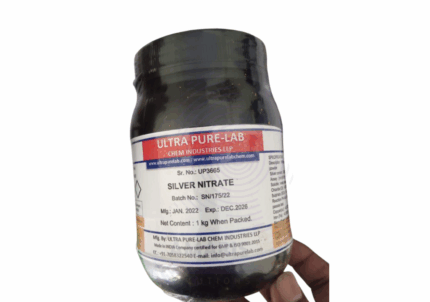
Silver Nitrate Extra Pure is a high-purity, colorless to white crystalline solid widely used in analytical chemistry, medical treatments, and photography. Known as lunar caustic, it serves as a key reagent for detecting halides and as an antiseptic agent. Its high solubility in water and sensitivity to light requires careful storage in dark, sealed containers. The Extra Pure grade ensures minimal impurities for precision work.
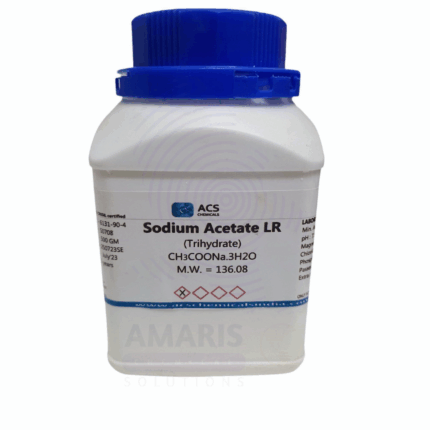
Sodium Acetate Trihydrate Extra Pure
Sodium Acetate Trihydrate Extra Pure is a white crystalline solid with the formula C₂H₃NaO₂·3H₂O. It serves primarily as a buffering agent in laboratory and biochemical applications and is widely used in food as a preservative and flavor enhancer (E262). This compound is essential in molecular biology for protein and nucleic acid precipitation and serves as a stabilizer in pharmaceutical and cosmetic formulations. It should be stored dry and handled with proper protective equipment due to its mildly irritating nature.
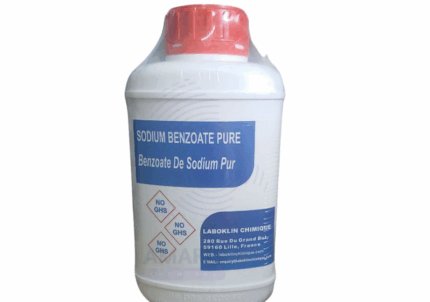
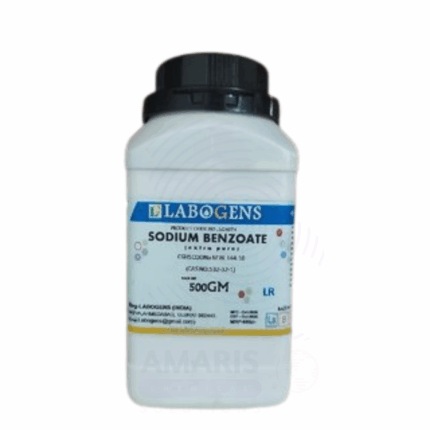
Sodium Benzoate Extra Pure
Sodium Benzoate Extra Pure is a white crystalline powder used primarily as a food preservative (E211) and antimicrobial agent. It is widely applied in food, pharmaceutical, and cosmetic industries to prevent microbial growth and extend shelf life. Its stable and non-toxic nature makes it suitable for various laboratory and industrial applications. Proper storage and handling are recommended to maintain its purity and prevent irritation.

Sodium Dihydrogen Phosphate Extra Pure
Sodium Dihydrogen Phosphate Extra Pure is a white, water-soluble crystalline compound commonly used as a buffering agent in analytical and biochemical applications. It offers precise pH control in phosphate buffer systems, making it ideal for lab-scale titrations, enzyme reactions, and chromatography. Due to its high solubility and consistent purity, it is also widely used in pharmaceutical formulations, food processing (as E339), and electrolyte replacement therapies. Its Extra Pure grade ensures reliability in sensitive chemical and biological procedures.

Sodium Formate Extra Pure
Sodium Formate Extra Pure is a white crystalline powder known for its high purity and excellent solubility in water. It is extensively used as a buffering agent and mild reducing agent in laboratory and pharmaceutical applications. Industrially, it plays a significant role in leather tanning, corrosion inhibition, textile dyeing, and environmentally friendly de-icing formulations. Its versatility extends to agricultural, environmental, food, cosmetic, and cleaning industries, making it a valuable compound for diverse chemical processes. Proper storage in sealed containers away from moisture and acids is critical to preserve its quality and stability.

Sodium Hexametaphosphate Extra Pure
Sodium Hexametaphosphate Extra Pure is a white, odorless, water-soluble powder composed of condensed phosphate units. It serves as a powerful sequestrant, dispersing agent, and water softener with wide applications in water treatment, food processing, detergents, ceramics, and laboratory settings. Its ability to chelate metal ions and prevent scale formation makes it invaluable in industrial processes. The Extra Pure grade ensures suitability for high-spec analytical and food-grade applications. Proper storage in dry, sealed containers is essential to maintain its quality and effectiveness.












