

 Preservatives(food)
 Flavors
 Acidulants
 Sweeteners
 Antioxidants
 Colorants(food)
 Nutraceutical Ingredients (food)
 Nutrient Supplements
 Emulsifiers
 Collectors
 Dust Suppressants
 Explosives and Blasting Agents
 Flocculants and Coagulants
 Frothers
 Leaching Agents
 pH Modifiers
 Precious Metal Extraction Agents
 Antioxidants(plastic)
 Colorants (Pigments, Dyes)
 Fillers and Reinforcements
 Flame Retardants
 Monomers
 Plasticizers
 Polymerization Initiators
 Stabilizers (UV, Heat)
 Antifoaming Agents
 Chelating Agents
 Coagulants and Flocculants
 Corrosion Inhibitors
 Disinfectants and Biocides
 Oxidizing Agents
 pH Adjusters
 Scale Inhibitors( water)
 Antioxidants(cosmetic)
 Emollients
 Oils
Oils Carrier Oills
 Essential Oils
 Humectants
 Preservatives
 Surfactants(cosmetic)
 Thickeners
 UV Filters
 Fragrance (Cosmetics)
 Fertilizers
 Soil Conditioners
 Plant Growth Regulators
 Animal Feed Additives
 Biostimulants
 Pesticides (Herbicides, Insecticides, Fungicides)
 Active Pharmaceutical Ingredients (APIs)
 Excipients
 Solvents(pharmaceutical)
 Antibiotics
 Antiseptics and Disinfectants
 Vaccine Adjuvants
 Nutraceutical Ingredients (pharmaceutical)
 Analgesics & Antipyretics
 Analytical Reagents
 Solvents(lab)
 Chromatography Chemicals
 Spectroscopy Reagents
 microbiology-and-cell-culture-reagents
 Molecular Biology Reagents
 Biochemical Reagents
 Inorganic and Organic Standards
 Laboratory Safety Chemicals
 Specialty Laboratory Chemicals(Special Laboratory Equipment)
 Demulsifiers
 Hydraulic Fracturing Fluids
 Scale Inhibitors(oil)
 Surfactants(oil)
 Drilling Fluids
 Dyes and Pigments
 Bleaching Agents
 Softening Agents
 Finishing Agents
 Antistatic Agents
 Admixtures
 Waterproofing Agents
 Sealants and Adhesives
 Curing Compounds
 Concrete Repair Chemicals
 Anti-Corrosion Coatings
 Surfactants(cleaning)
 Builders
 Enzymes
 Solvents (Cleaning)
 Electronic Chemicals
 Catalysts
 Lubricants
 Photographic Chemicals
 Refrigerants
 Automotive chemicals
 Pyrotechnic Chemicals
 Biodegradable Surfactants
 Bio-based Solvents
 Renewable Polymers
 Carbon Capture Chemicals
 Wastewater Treatment Chemicals
 Pigments
 Solvents(paint)
 Specialty Coatings
 Binders/Resins
 Additives
 Driers
 Anti-Corrosion Agents
 Functional Coatings
 Application-Specific Coatings
 Leavening Agents
 Dough Conditioners
 Flour Treatments
 Fat Replacers
 Decoratives
 Preservatives(baking)
 Plasticizers & Softeners
 Reinforcing Agents
 Adhesion Promoters
 Vulcanizing Agents
 Antidegradants
 Blowing Agents
 Fillers & Extenders
 Accelerators & Retarders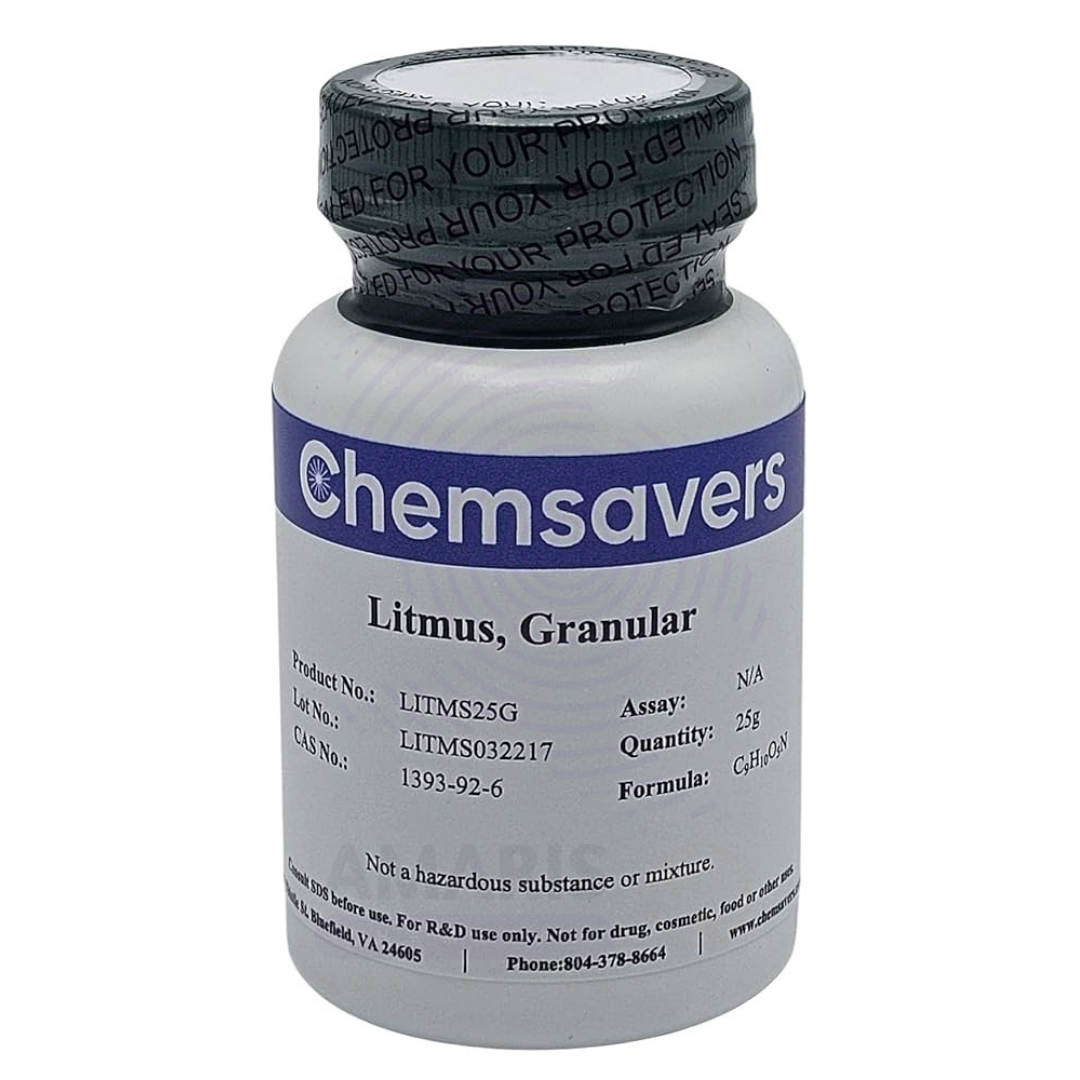


Litmus Granular Extra Pure
Original price was: $ 17.80.$ 17.67Current price is: $ 17.67.
Litmus Granular Extra Pure is a premium-grade pH indicator widely used in laboratories for acid-base testing and educational demonstrations. Derived from natural sources like lichens, this granular form offers a stable, easy-to-handle format suitable for preparing litmus solutions or impregnating test papers. In acidic environments, it turns red, while in alkaline conditions, it turns blue, providing a clear visual response. Its high purity ensures reliable and repeatable results across various applications in chemistry, biology, and environmental testing. Store in a tightly sealed container away from moisture and direct sunlight to preserve its effectiveness.
Litmus Granular Extra Pure
Primary Uses
- Acid-Base Indicator:
- Primarily used as a pH indicator to distinguish between acidic (red) and alkaline (blue) environments in solution.
- Qualitative pH Testing:
- Common in laboratories for quick identification of pH conditions in various chemical and biological samples.
Secondary Uses
- Educational Demonstrations:
- Widely used in schools and universities for teaching pH concepts and acid-base reactions.
- Buffer Solution Testing:
- Occasionally used to test the efficacy of buffer solutions during formulation and stability studies.
- Environmental Sampling:
- Applied in field kits for soil and water pH testing where precise digital meters are not available.
1. Basic Identification Attributes
- Chemical Name: Litmus Granular
- Synonyms: Litmus reagent, Litmus dye
- Appearance: Granular, dark purple to blue solid
- Odor: Odorless
- Solubility: Soluble in water and alcohol
- Grade: Extra Pure (suitable for analytical and educational use)
2. Safety & Hazard Attributes
- GHS Classification: Not classified as hazardous under normal laboratory use
- Hazard Statements: None under typical concentrations
- Precautionary Statements:
- P280: Wear protective gloves and eye protection during handling
- P262: Avoid contact with eyes and prolonged skin contact
- Personal Protective Equipment (PPE):
- Standard lab coat, gloves, safety goggles
- First Aid Measures:
- Inhalation: Move to fresh air; unlikely hazard in solid form
- Skin Contact: Wash with soap and water
- Eye Contact: Rinse with clean water for several minutes
- Ingestion: Rinse mouth; not considered highly toxic, but seek advice if symptoms appear
- Fire Hazards:
- Not flammable
- Use water spray, dry chemical, or CO₂ for extinguishing surrounding fire
3. Storage & Handling Attributes
- Storage Conditions:
- Store in a tightly sealed container
- Keep in a cool, dry place away from strong oxidizers and moisture
- Avoid excessive exposure to light
- Handling Tips:
- Use in well-ventilated area
- Prevent formation of dust
4. Laboratory Applications
- Primary Uses:
- Acid-base indicator: Changes color depending on pH
- Red in acidic solutions (pH < 4.5)
- Blue in alkaline solutions (pH > 8.3)
- Used in qualitative tests to determine pH conditions of solutions
- Acid-base indicator: Changes color depending on pH
- Secondary Uses:
- Educational demonstrations in chemistry labs
- Manufacture of litmus paper
- Colorimetric experiments for pH mapping or titrations
SAFETY PRECAUTIONS
Personal Protective Equipment (PPE):
- Wear a lab coat, nitrile gloves, and safety goggles.
- Use a dust mask if handling in powder or granular form to avoid inhalation.
Handling:
- Avoid contact with eyes, skin, and clothing.
- Prevent formation of dust.
- Wash hands thoroughly after handling.
Storage:
- Store in a cool, dry, and well-ventilated area.
- Keep the container tightly closed when not in use.
- Protect from moisture and strong acids or alkalis.
FIRST AID MEASURES
Inhalation:
- Move the person to fresh air.
- Seek medical attention if any respiratory discomfort occurs.
Skin Contact:
- Wash thoroughly with soap and water.
- Remove and wash contaminated clothing.
- Seek medical attention if irritation develops.
Eye Contact:
- Rinse cautiously with plenty of water for several minutes.
- Remove contact lenses if present and easy to do.
- Continue rinsing and consult a medical professional if irritation persists.
Ingestion:
- Rinse mouth with water.
- Do not induce vomiting.
- Seek medical attention if symptoms develop.
FIRE FIGHTING MEASURES
Flammability:
- Not classified as flammable, but may burn at high temperatures.
Extinguishing Media:
- Use water spray, dry chemical, foam, or CO₂ as appropriate for surrounding materials.
Hazardous Combustion Products:
- May emit carbon oxides and organic fumes upon decomposition.
Firefighter Protection:
- Use self-contained breathing apparatus (SCBA).
- Wear full protective firefighting gear.
Related products
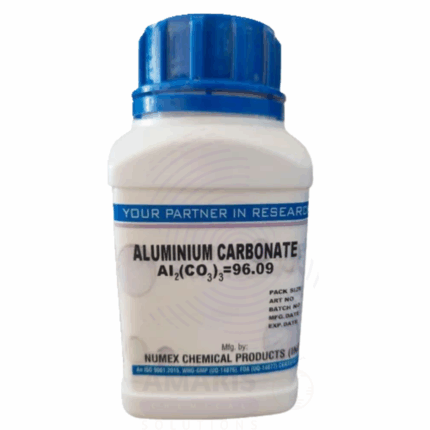
Aluminium Carbonate Extra Pure
Aluminium Carbonate Extra Pure is a high-purity, white, odorless powder primarily used as a reagent in laboratory settings for analytical and research applications. Though not commonly stable under standard conditions, it is valued in controlled experimental procedures involving the study of aluminum compounds, buffer systems, and inorganic reactions. Its extra pure grade ensures low levels of contaminants, making it suitable for precise qualitative and quantitative analysis. Due to its sensitivity to moisture and tendency to decompose into aluminum hydroxide and carbon dioxide, it must be handled with care and stored in airtight containers under dry conditions to maintain chemical integrity during laboratory use.
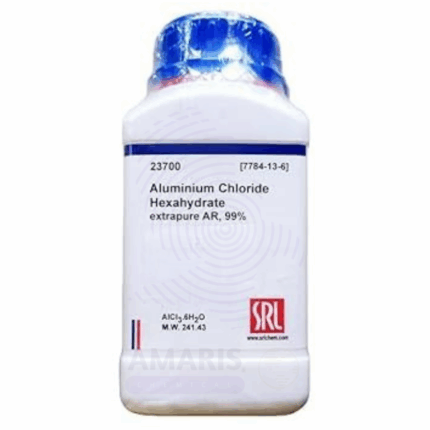
Aluminium Chloride Hydrated Extra Pure
Aluminium Chloride Hydrated Extra Pure is a high-purity, white to pale yellow crystalline compound containing bound water molecules, making it less reactive than its anhydrous counterpart but still highly effective in various laboratory applications. It is commonly used in aqueous-phase reactions, coordination chemistry, and as a reagent for studying aluminum ion behavior in solution. The hydrated form offers enhanced stability and ease of handling, making it suitable for educational experiments, buffer formulations, and inorganic synthesis where precise aluminum content is required. Its extra pure grade ensures minimal interference from impurities, supporting accurate and reproducible results in analytical and research settings. Proper storage in a cool, dry place is essential to prevent further hydration or contamination.
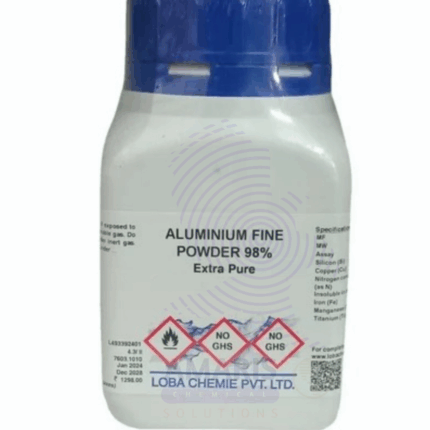
Aluminium Metal Fine Extra Pure
Aluminium Metal Fine Extra Pure is a high-purity, silvery-grey powder composed of finely divided aluminum particles, ideal for precision laboratory work and specialized chemical reactions. Known for its high surface area and excellent reactivity, it is widely used in thermite reactions, metallurgical experiments, and the synthesis of aluminum-based compounds. Its fine particle size enhances its role as a reducing agent in organic and inorganic chemistry, as well as in combustion and pyrotechnic research. The extra pure grade ensures minimal trace impurities, supporting consistent and accurate results in sensitive analytical and preparative procedures. Due to its flammability and potential for dust explosions, it must be handled with caution in well-ventilated areas and stored in sealed, moisture-free containers.
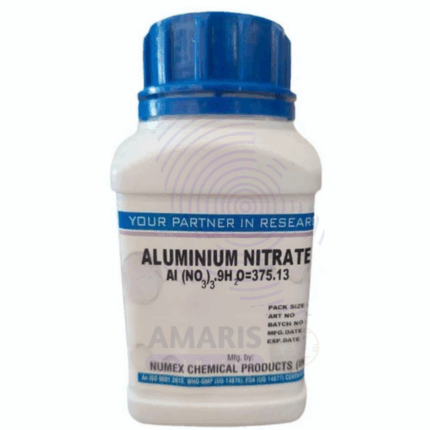
Aluminium Nitrate Extra Pure
Aluminium Nitrate Extra Pure is a high-purity, white crystalline compound that is highly soluble in water and widely used in laboratory chemistry for analytical, synthesis, and research purposes. It serves as a reliable source of aluminum ions in solution, making it valuable in qualitative analysis, coordination chemistry, and materials science studies. This compound is often utilized in the preparation of other aluminum salts, as a nitrating agent, and in controlled oxidation reactions. Its extra pure grade guarantees minimal interference from contaminants, ensuring accurate, reproducible results in sensitive experimental work. Aluminium Nitrate should be stored in tightly sealed containers, away from moisture and incompatible substances, due to its oxidizing nature and hygroscopicity.
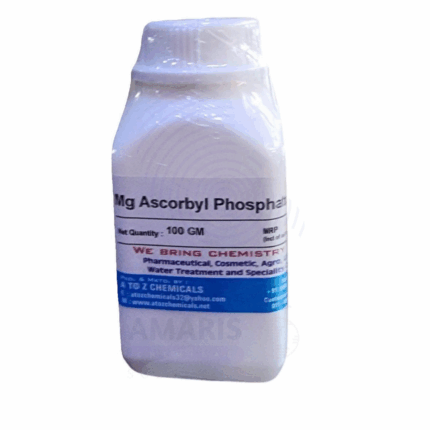
Magnesium Ascorbyl Phosphate Extra Pure
Magnesium Ascorbyl Phosphate Extra Pure is a highly stable, water-soluble derivative of Vitamin C, widely appreciated for its exceptional antioxidant properties and gentle skin compatibility. Commonly used in cosmetic and dermatological formulations, it helps brighten the skin, reduce hyperpigmentation, and support collagen synthesis—making it a valuable ingredient in anti-aging and skin-repair treatments. Its stability against oxidation allows it to retain potency longer than pure ascorbic acid, especially in aqueous solutions. With pharmaceutical and cosmetic grade purity, this compound is ideal for use in serums, lotions, and creams targeting a healthy, radiant complexion.
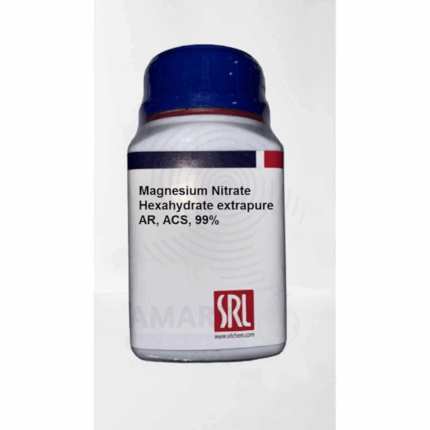
Magnesium Nitrate Hexahydrate Extra Pure
Magnesium Nitrate Hexahydrate Extra Pure is a crystalline compound known for its high solubility in water and exceptional purity, making it suitable for both laboratory and industrial applications. In analytical chemistry, it is commonly used as a reagent for preparing standard solutions and as a source of magnesium ions in various experimental procedures. Its oxidizing properties make it valuable in pyrotechnics and fertilizer formulations, where it provides essential nutrients for plant growth. This compound is also employed in ceramic production, textile treatments, and catalyst preparations, where a consistent, high-quality nitrate source is required. Its extra pure grade ensures minimal contamination, essential for high-precision work.
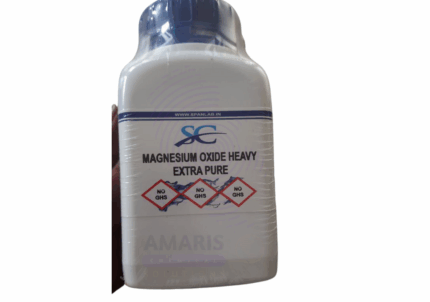
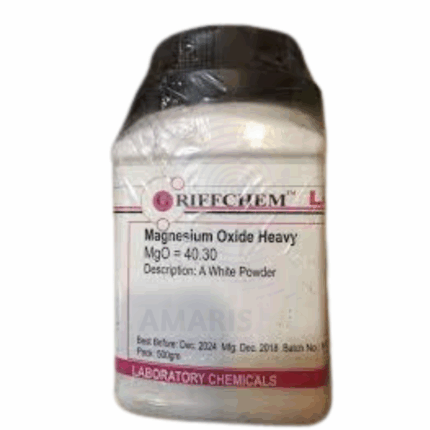
Magnesium Oxide Heavy Extra Pure
Magnesium Oxide Heavy Extra Pure is a high-purity, dense white powder prized for its excellent thermal stability, high melting point, and chemical inertness. It is widely used in laboratory applications as a standard reagent, pH adjuster, and desiccant. In pharmaceuticals, it functions as an antacid and a magnesium supplement, while in industrial processes, it is essential for producing refractory materials, ceramics, and insulating products due to its high heat resistance. The "heavy" form refers to its higher bulk density, making it particularly useful in applications where volume constraints are critical. Its extra pure grade ensures it meets the stringent demands of high-precision research and formulation work.
![Nickel Sulphate [NiSO4(H2O)6] Extra Pure Amaris Chemicals](https://amarischemicalsolutions.com/wp-content/uploads/2025/08/Nickel-Sulphate-NiSO4H2O6-Extra-Pure-Amaris-Chemicals-430x430.png)
Nickel Sulphate Extra Pure
Nickel Sulphate Extra Pure is a crystalline, green-colored compound of high purity, widely utilized in analytical, electrochemical, and industrial applications. It is primarily used in electroplating processes to deposit a uniform layer of nickel onto metal surfaces, enhancing corrosion resistance and aesthetic appeal. Its consistent composition makes it ideal for high-precision electroforming and battery component manufacturing, especially in nickel-cadmium and nickel-metal hydride batteries.
In laboratories, it serves as a reagent for chemical analysis, particularly in qualitative and quantitative detection of nickel ions. It is also involved in catalyst production, ceramic coloring, and metal surface treatment. The Extra Pure grade guarantees minimal impurities, ensuring reliable performance in sensitive experimental setups. Due to its toxic and irritant nature, it should be handled with appropriate personal protective equipment and stored in a cool, dry place in tightly closed containers.












