

 Preservatives(food)
 Flavor Enhancers
 Acidulants
 Sweeteners
 Antioxidants
 Colorants(food)
 Nutraceutical Ingredients (food)
 Nutrient Supplements
 Emulsifiers
 Collectors
 Dust Suppressants
 Explosives and Blasting Agents
 Flocculants and Coagulants
 Frothers
 Leaching Agents
 pH Modifiers
 Precious Metal Extraction Agents
 Antioxidants(plastic)
 Colorants (Pigments, Dyes)
 Fillers and Reinforcements
 Flame Retardants
 Monomers
 Plasticizers
 Polymerization Initiators
 Stabilizers (UV, Heat)
 Antifoaming Agents
 Chelating Agents
 Coagulants and Flocculants
 Corrosion Inhibitors
 Disinfectants and Biocides
 Oxidizing Agents
 pH Adjusters
 Scale Inhibitors( water)
 Antioxidants(cosmetic)
 Emollients
 Fragrances and Essential Oils
 Humectants
 Preservatives
 Surfactants(cosmetic)
 Thickeners
 UV Filters
 Fertilizers
 Soil Conditioners
 Plant Growth Regulators
 Animal Feed Additives
 Biostimulants
 Pesticides (Herbicides, Insecticides, Fungicides)
 Active Pharmaceutical Ingredients (APIs)
 Excipients
 Solvents(pharmaceutical)
 Antibiotics
 Antiseptics and Disinfectants
 Vaccine Adjuvants
 Nutraceutical Ingredients (pharmaceutical)
 Analgesics & Antipyretics
 Analytical Reagents
 Solvents(lab)
 Chromatography Chemicals
 Spectroscopy Reagents
 microbiology-and-cell-culture-reagents
 Molecular Biology Reagents
 Biochemical Reagents
 Inorganic and Organic Standards
 Laboratory Safety Chemicals
 Specialty Laboratory Chemicals(Special Laboratory Equipment)
 Demulsifiers
 Hydraulic Fracturing Fluids
 Scale Inhibitors(oil)
 Surfactants(oil)
 Drilling Fluids
 Dyes and Pigments
 Bleaching Agents
 Softening Agents
 Finishing Agents
 Antistatic Agents
 Admixtures
 Waterproofing Agents
 Sealants and Adhesives
 Curing Compounds
 Concrete Repair Chemicals
 Anti-Corrosion Coatings
 Surfactants(cleaning)
 Builders
 Enzymes
 Solvents (Cleaning)
 Fragrances
 Electronic Chemicals
 Catalysts
 Lubricants
 Photographic Chemicals
 Refrigerants
 Automotive chemicals
 Pyrotechnic Chemicals
 Biodegradable Surfactants
 Bio-based Solvents
 Renewable Polymers
 Carbon Capture Chemicals
 Wastewater Treatment Chemicals
 Pigments
 Solvents(paint)
 Specialty Coatings
 Binders/Resins
 Additives
 Driers
 Anti-Corrosion Agents
 Functional Coatings
 Application-Specific Coatings
 Leavening Agents
 Dough Conditioners
 Flour Treatments
 Fat Replacers
 Decoratives
 Preservatives(baking)
 Plasticizers & Softeners
 Reinforcing Agents
 Adhesion Promoters
 Vulcanizing Agents
 Antidegradants
 Blowing Agents
 Fillers & Extenders
 Accelerators & Retarders
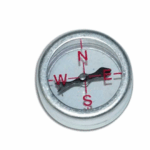


Manometer on stand
Original price was: $ 27.20.$ 27.09Current price is: $ 27.09.
The Manometer on Stand is a precision laboratory instrument used to measure pressure differences in gases or liquids. It consists of a U-shaped or straight tube partially filled with a liquid (commonly mercury, water, or oil) mounted securely on a stable stand for ease of use and accurate readings. The manometer operates based on the principle of balancing pressure against the height of the liquid column. It is widely used in physics and engineering laboratories for experiments involving fluid mechanics, gas laws, and pressure calibration. The stand provides stability and convenient placement during measurements.
Manometer on stand
Primary Uses
- Laboratory and Educational Applications
- Measuring pressure differences in gases and liquids.
- Demonstrating fluid pressure principles and gas laws in physics education.
- Calibrating and testing pressure sensors and gauges.
- Conducting experiments on atmospheric pressure and vacuum systems.
- Monitoring pressure in closed systems during laboratory experiments.
Secondary Uses
- Industrial and Research Applications
- Pressure testing in industrial fluid systems.
- Used in HVAC and mechanical engineering laboratories.
- Research involving fluid dynamics and pressure-related phenomena.
1.Basic Identification Attributes
- Material: Transparent glass or plastic tube filled with a suitable liquid.
- Stand: Stable, usually metal or plastic, providing secure mounting.
- Design: U-shaped or straight tube type depending on application.
2.Physical & Chemical Properties
- Liquid Fill: Mercury, water, oil, or other suitable fluids with known density.
- Transparency: Clear tube for easy liquid level observation.
- Durability: Resistant to typical laboratory handling; fragile if glass.
3.Safety & Hazard Attributes
- Handle with care due to fragile glass components.
- Mercury-filled manometers require careful handling due to toxicity risks.
4.Storage & Handling Attributes
- Store in a stable, vibration-free environment.
- Protect from breakage and contamination.
- Use appropriate PPE when handling mercury or hazardous liquids.
5.Regulatory & Compliance Attributes
- Compliant with laboratory safety and handling standards for hazardous materials.
6.Environmental & Health Impact
- Mercury-containing units require proper disposal to prevent environmental contamination.
- Other liquid-filled manometers are generally environmentally safe with proper disposal.
Safety Handling Precautions
- Use gloves and eye protection when handling mercury or other hazardous fluids.
- Avoid spills and clean immediately if they occur.
First Aid Measures
- In case of mercury exposure, follow chemical spill protocols and seek medical advice.
- For cuts or glass breakage injuries, clean and treat wounds promptly.
Firefighting Measures
- Non-flammable.
- Use appropriate extinguishing agents for surrounding materials if fire occurs.
Related products
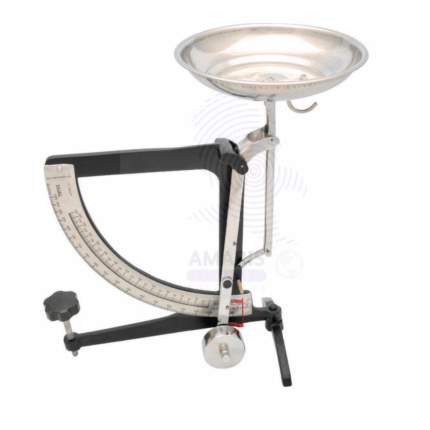
Balance lever
The Balance Lever is a mechanical device used to measure weight or force through a system of levers and fulcrums. Designed for precision and durability, it provides accurate weighing without the need for electrical power, making it ideal for basic laboratory use, educational demonstrations, and situations where electronic balances are impractical. The lever balance operates on the principle of equilibrium and mechanical advantage, offering reliable performance in a variety of settings. Constructed from sturdy materials, it ensures long-lasting service and consistent accuracy.
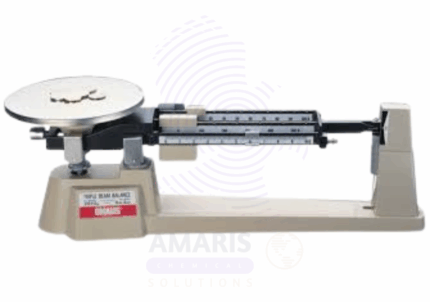
Balance Mechanical Ohaus Triple Beam
The Balance Mechanical Ohaus Triple Beam is a precision manual weighing instrument designed for laboratory and industrial environments requiring accurate measurement of various sample masses. Featuring three adjustable beams for incremental weight measurement, it offers ease of calibration and durability with a robust metal construction. This mechanical balance operates without electricity, making it ideal for environments where power supply may be limited. Its reliable and repeatable measurements support diverse applications from research to quality control.

Bar Breaking Apparatus
The Bar Breaking Apparatus is a mechanical testing device used to determine the breaking strength and mechanical properties of materials, particularly bars and rods, in laboratory and industrial settings. It applies controlled force to a specimen until it fractures, providing critical data for quality control, material research, and compliance with industry standards. Constructed from robust metals with precise force application mechanisms, this apparatus ensures reliable, repeatable results essential for material characterization and safety assessments.
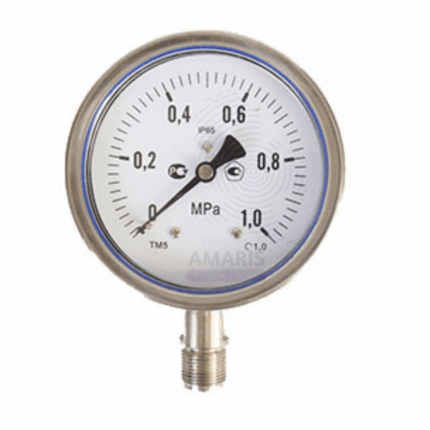
Bourdan Gauge
The Bourdon Gauge is a mechanical pressure measuring instrument widely used to measure medium to high pressure of gases and liquids in various laboratory and industrial applications. It consists of a curved, hollow metal tube which straightens as pressure increases, causing a pointer to move over a calibrated scale for easy reading. Known for its durability, reliability, and precision, the Bourdon Gauge is essential in pressure monitoring, process control, and safety systems. It operates without electrical power, making it ideal for harsh environments.

Concave and convex lens
Concave and Convex Lenses are essential optical components used to manipulate light by refraction. A convex lens is thicker at the center and converges light rays to a focal point, while a concave lens is thinner at the center and diverges light rays. These lenses are fundamental in various scientific experiments, optical instruments, and educational demonstrations to study image formation, focal length, magnification, and light behavior. Manufactured with high-quality optical glass or plastic, they offer clarity and precision necessary for laboratory and industrial applications.
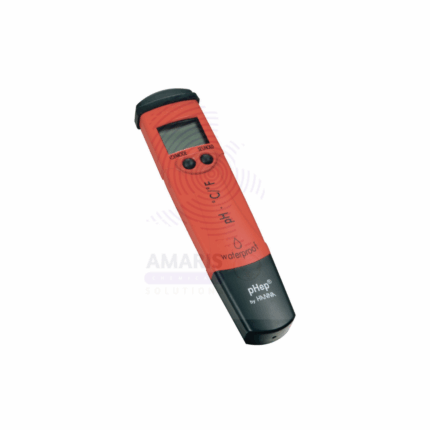
Digital pH Meter
A Digital pH Meter is a high-precision instrument designed to measure the acidity or alkalinity of liquid samples with accuracy and ease. Utilizing an electrode and electronic circuitry, it measures the voltage difference caused by hydrogen ion activity in a solution and converts it into a pH value displayed digitally. These devices are available in various formats—handheld, benchtop, waterproof, or pen-style—and often include advanced features such as automatic temperature compensation (ATC), backlit displays, auto-calibration, and data logging capabilities. Digital pH meters are vital tools across laboratories, environmental monitoring setups, industrial production lines, agricultural operations, food and beverage manufacturing, and water treatment facilities. They ensure reliable pH readings for maintaining chemical balance, compliance, and product quality in numerous applications.
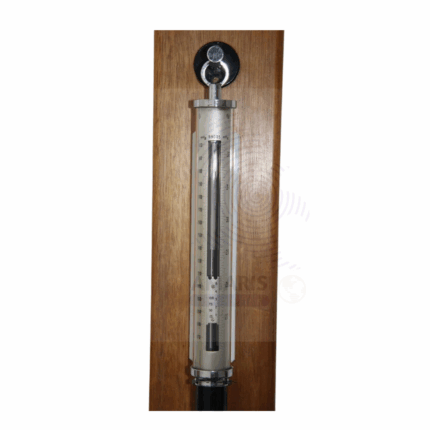
Fortin Barometer with Mercury
Fortin Barometer with Mercury is a precision instrument used to measure atmospheric pressure with high accuracy. Named after its inventor, Jean Nicolas Fortin, this barometer features a mercury column enclosed in a glass tube, mounted vertically with a cistern at the base. A screw-adjusted ivory point is used to align the mercury level at the reference point, ensuring consistent and accurate readings. The device includes a vernier scale for fine measurements and is enclosed in a protective casing for safe handling. Commonly used in meteorological studies, physics laboratories, and calibration settings, the Fortin Barometer is essential for barometric pressure determination and experimental demonstrations.

Litmus paper red
Litmus paper red is a specialized pH indicator paper impregnated with red litmus dye derived from natural lichens. It serves as a quick and reliable qualitative tool for detecting alkaline (basic) conditions in various liquids and substances. Upon contact with an alkaline solution, the red paper undergoes a distinct color change to blue, signaling a pH above approximately 8.3. In neutral or acidic solutions, the paper retains its red color. This simple yet essential laboratory reagent is widely used in chemistry, biology, environmental science, clinical diagnostics, food industry, and educational settings for rapid acidity and alkalinity testing without the need for sophisticated instrumentation.
Red litmus paper is highly valued for its ease of use, portability, and cost-effectiveness, making it ideal for field testing, classroom demonstrations, and routine lab work. It provides immediate visual feedback, which is crucial for quick decision-making during experiments, quality control processes, and environmental monitoring. Packaged typically in convenient strips or sheets within moisture-proof packets, the paper is protected from contamination and degradation, ensuring long shelf life and consistent performance.












