Preservatives(food)
 Flavor Enhancers
 Acidulants
 Sweeteners
 Antioxidants
 Colorants(food)
 Nutraceutical Ingredients (food)
 Nutrient Supplements
 Emulsifiers
 Collectors
 Dust Suppressants
 Explosives and Blasting Agents
 Flocculants and Coagulants
 Frothers
 Leaching Agents
 pH Modifiers
 Precious Metal Extraction Agents
 Antioxidants(plastic)
 Colorants (Pigments, Dyes)
 Fillers and Reinforcements
 Flame Retardants
 Monomers
 Plasticizers
 Polymerization Initiators
 Stabilizers (UV, Heat)
 Antifoaming Agents
 Chelating Agents
 Coagulants and Flocculants
 Corrosion Inhibitors
 Disinfectants and Biocides
 Oxidizing Agents
 pH Adjusters
 Scale Inhibitors( water)
 Antioxidants(cosmetic)
 Emollients
 Fragrances and Essential Oils
 Humectants
 Preservatives
 Surfactants(cosmetic)
 Thickeners
 UV Filters
 Fertilizers
 Soil Conditioners
 Plant Growth Regulators
 Animal Feed Additives
 Biostimulants
 Pesticides (Herbicides, Insecticides, Fungicides)
 Active Pharmaceutical Ingredients (APIs)
 Excipients
 Solvents(pharmaceutical)
 Antibiotics
 Antiseptics and Disinfectants
 Vaccine Adjuvants
 Nutraceutical Ingredients (pharmaceutical)
 Analgesics & Antipyretics
 Analytical Reagents
 Solvents(lab)
 Chromatography Chemicals
 Spectroscopy Reagents
 microbiology-and-cell-culture-reagents
 Molecular Biology Reagents
 Biochemical Reagents
 Inorganic and Organic Standards
 Laboratory Safety Chemicals
 Specialty Laboratory Chemicals(Special Laboratory Equipment)
 Demulsifiers
 Hydraulic Fracturing Fluids
 Scale Inhibitors(oil)
 Surfactants(oil)
 Drilling Fluids
 Dyes and Pigments
 Bleaching Agents
 Softening Agents
 Finishing Agents
 Antistatic Agents
 Admixtures
 Waterproofing Agents
 Sealants and Adhesives
 Curing Compounds
 Concrete Repair Chemicals
 Anti-Corrosion Coatings
 Surfactants(cleaning)
 Builders
 Enzymes
 Solvents (Cleaning)
 Fragrances
 Electronic Chemicals
 Catalysts
 Lubricants
 Photographic Chemicals
 Refrigerants
 Automotive chemicals
 Pyrotechnic Chemicals
 Biodegradable Surfactants
 Bio-based Solvents
 Renewable Polymers
 Carbon Capture Chemicals
 Wastewater Treatment Chemicals
 Pigments
 Solvents(paint)
 Specialty Coatings
 Binders/Resins
 Additives
 Driers
 Anti-Corrosion Agents
 Functional Coatings
 Application-Specific Coatings
 Leavening Agents
 Dough Conditioners
 Flour Treatments
 Fat Replacers
 Decoratives
 Preservatives(baking)
 Plasticizers & Softeners
 Reinforcing Agents
 Adhesion Promoters
 Vulcanizing Agents
 Antidegradants
 Blowing Agents
 Fillers & Extenders
 Accelerators & Retarders


Mineral Lick Rock Salt Extra Pure
Original price was: $ 20.21.$ 20.13Current price is: $ 20.13.
Mineral Lick Rock Salt Extra Pure is a high-purity, natural crystalline salt product specially processed for scientific, veterinary, and nutritional applications. Composed primarily of sodium chloride (NaCl), this form of rock salt may also contain trace essential minerals such as calcium, magnesium, and potassium in controlled amounts. Its extra pure grade ensures minimal contaminants, making it ideal for controlled laboratory experiments, animal nutrition studies, and formulation testing where purity and consistency are critical.
In agricultural research and veterinary science, Mineral Lick is commonly used to study electrolyte balance, mineral supplementation, and livestock behavior related to mineral intake. The solid, stable nature of the product allows for long shelf life and ease of handling, and it may also be used in comparative tests involving natural versus synthetic mineral supplements. For best results, it should be stored in a dry, cool place away from moisture.
Mineral Lick Rock Salt Extra Pure
Primary Uses
- Animal Nutrition and Health Supplement
- Provided to livestock (cattle, sheep, goats) and wildlife as a free-choice nutritional supplement to fulfill their dietary requirement for sodium and chloride, which are essential for nerve function, muscle contraction, and maintaining fluid balance.
- Used as a carrier for other essential trace minerals; the salt base encourages consumption, ensuring animals intake supplemental selenium, cobalt, zinc, or magnesium that may be deficient in their forage.
- Foundation for Homemade Mineral Blocks
- Serves as the primary ingredient for creating customized, farm-scale mineral blocks. The salt is ground, mixed with specific mineral powders, molasses as a binder, and then compressed to create tailored nutritional supplements for different herds and seasonal needs.
- Palatability Enhancer in Animal Feed
- Incorporated in small, measured quantities into total mixed rations (TMR) or grain mixes to improve the taste and intake of feed, ensuring animals consume a balanced diet and maintain adequate hydration.
- Wildlife Management and Attraction
- Established at designated sites in natural habitats, parks, or hunting grounds to attract and support the health of wild herbivores such as deer, elk, and moose. This helps in concentrating wildlife for observation, photography, or population management studies.
Secondary Uses
- Natural Brine Preparation for Food Curing
- Dissolved in water to create a high-purity brine solution for traditional meat curing and preservation processes, such as making corned beef or curing hams, where its “extra pure” grade ensures no unwanted impurities affect the food product.
- Electrolyte Component in Laboratory Zoology
- Used to prepare physiologically balanced saline solutions or rehydration electrolytes for studies involving amphibians, reptiles, or certain invertebrates, mimicking their natural body fluids in a controlled research environment.
- Demonstrations of Solubility and Erosion
- Employed in educational settings to visually demonstrate the principles of solubility, dissolution rates, and crystal geometry. Large pieces can be used in long-term experiments to show the effects of water erosion on rock formations.
- Base for Traditional Thermoregulatory Studies
- Used in classic experiments, such as measuring the metabolic rate of small mammals or birds, where salt is provided as a controlled part of the diet to study its effect on water consumption and thermoregulation under varying environmental conditions.
| PACK SIZE |
500 grams Plastic Tin |
|---|
1. Basic Identification Attributes
- Chemical Name: Sodium Chloride (commonly known as Rock Salt, Mineral Lick)
- CAS Number: 7647-14-5
- HS Code: 2501.00.10 (Natural sodium chloride, rock salt)
- Molecular Formula: NaCl
- Synonyms: Rock Salt, Halite, Common Salt, Mineral Lick Salt, Sodium Chloride
2. Physical & Chemical Properties
- Physical State: Solid (crystalline blocks or lumps)
- Color & Odor: White to grayish; odorless
- Boiling Point: 1,413 °C
- Melting Point: 801 °C
- Density: ~2.17 g/cm³
- Solubility: Soluble in water; insoluble in most organic solvents
- pH Level: Neutral (7.0 for 1% solution)
- Vapor Pressure: Not applicable (non-volatile solid)
- Flash Point: Not applicable (non-flammable)
- Autoignition Temperature: Not applicable
- Viscosity: Not applicable
3. Safety & Hazard Attributes
- Hazard Class (GHS): Not classified as hazardous
- NFPA Ratings:
- Health: 1
- Flammability: 0
- Reactivity: 0
- Exposure Limits:
- OSHA PEL: Not established
- ACGIH TLV: Not established
- Reactivity: Stable; may react with strong acids to release hydrogen chloride gas
4. Storage & Handling Attributes
- Storage Conditions: Store in a dry, well-ventilated area; protect from moisture
- Incompatible Materials: Strong acids (e.g., sulfuric acid), strong oxidizers
- Container Type: Polyethylene bags, plastic drums, fiberboard containers
- Shelf Life: Indefinite if stored properly
- Special Handling Requirements: Wear gloves and safety goggles in dusty environments; avoid inhalation of dust
5. Regulatory & Compliance Attributes
- Regulatory Status:
- EPA: Not listed as a hazardous substance
- REACH: Registered
- OSHA: Not regulated as hazardous
- DOT: Not a hazardous material for transport
- Hazard Symbols: None required under GHS
- Transportation Restrictions: UN Number – Not regulated; not classified as dangerous goods
- Waste Disposal Method: Dispose in accordance with local and national regulations; non-hazardous waste classification
6. Environmental & Health Impact
- Ecotoxicity: High concentrations may be harmful to aquatic life due to salinity stress
- Persistence in Environment: Persistent; does not degrade but may dilute in water systems
- Carcinogenicity/Mutagenicity: Not classified as carcinogenic or mutagenic
- Biodegradability: Not biodegradable; naturally occurring inorganic compound
SAFETY PRECAUTIONS
Personal Protective Equipment (PPE):
- Wear a lab coat, nitrile gloves, and safety goggles.
- Use a dust mask if handling powder or crushed form.
Handling:
- Avoid inhaling dust and contact with eyes.
- Handle with clean, dry tools.
- Wash hands thoroughly after handling.
Storage:
- Store in a dry, cool, and well-ventilated place.
- Keep the container tightly sealed to prevent moisture absorption.
- Avoid exposure to acids or highly humid environments.
FIRST AID MEASURES
Inhalation:
- Move people to fresh air.
- Seek medical attention if breathing becomes difficult.
Skin Contact:
- Wash skin with water.
- Remove contaminated clothing.
- Seek medical advice if irritation develops.
Eye Contact:
- Rinse immediately with plenty of water.
- Remove contact lenses if present.
- Continue rinsing and seek medical advice if irritation persists.
Ingestion:
- Rinse mouth with water.
- Do not induce vomiting.
- Seek medical attention if symptoms appear.
FIRE FIGHTING MEASURES
Flammability:
- Non-flammable material.
Extinguishing Media:
- Use any suitable media for surrounding fire (e.g., water spray, foam, dry chemical, CO₂).
Hazardous Combustion Products:
- Not applicable—does not burn.
Firefighter Protection:
- Standard protective equipment; no special precautions required.
Related products
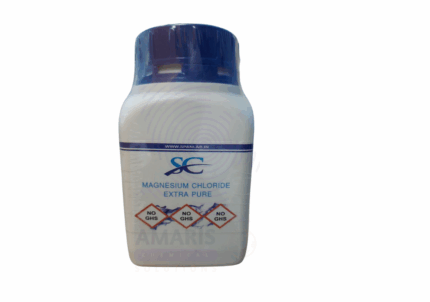
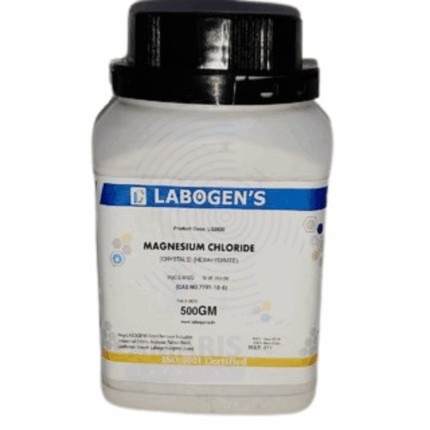
Magnesium Chloride Extra Pure
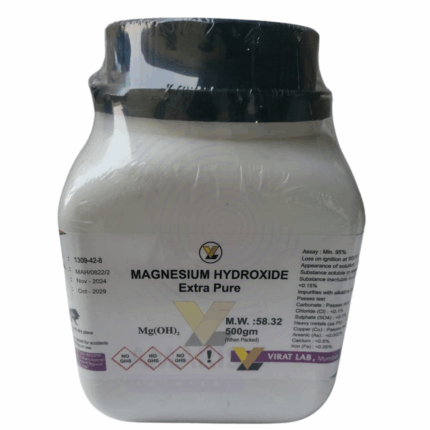
Magnesium Hydroxide Heavy Extra Pure
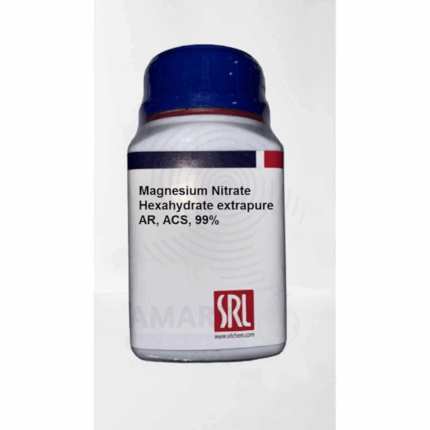
Magnesium Nitrate Hexahydrate Extra Pure
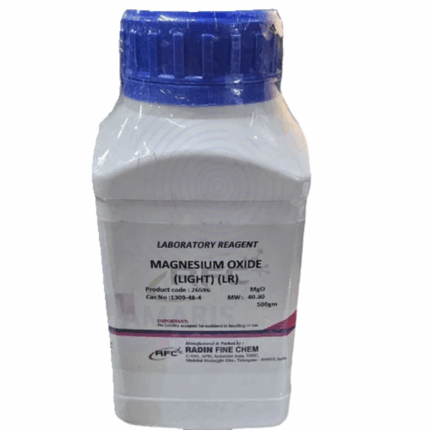
Magnesium Oxide Light Powder Extra Pure
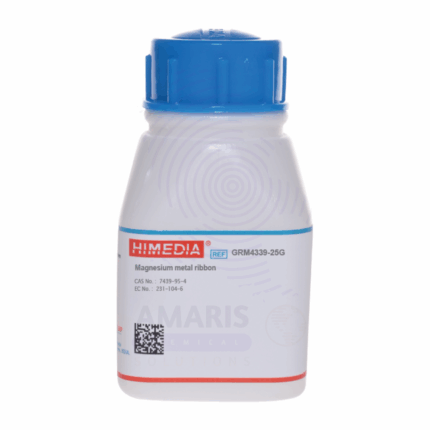
Magnesium Ribbon Extra Pure