

 Preservatives(food)
 Flavors
 Acidulants
 Sweeteners
 Antioxidants
 Colorants(food)
 Nutraceutical Ingredients (food)
 Nutrient Supplements
 Emulsifiers
 Collectors
 Dust Suppressants
 Explosives and Blasting Agents
 Flocculants and Coagulants
 Frothers
 Leaching Agents
 pH Modifiers
 Precious Metal Extraction Agents
 Antioxidants(plastic)
 Colorants (Pigments, Dyes)
 Fillers and Reinforcements
 Flame Retardants
 Monomers
 Plasticizers
 Polymerization Initiators
 Stabilizers (UV, Heat)
 Antifoaming Agents
 Chelating Agents
 Coagulants and Flocculants
 Corrosion Inhibitors
 Disinfectants and Biocides
 Oxidizing Agents
 pH Adjusters
 Scale Inhibitors( water)
 Antioxidants(cosmetic)
 Emollients
 Oils
Oils Carrier Oills
 Essential Oils
 Humectants
 Preservatives
 Surfactants(cosmetic)
 Thickeners
 UV Filters
 Fragrance (Cosmetics)
 Fertilizers
 Soil Conditioners
 Plant Growth Regulators
 Animal Feed Additives
 Biostimulants
 Pesticides (Herbicides, Insecticides, Fungicides)
 Active Pharmaceutical Ingredients (APIs)
 Excipients
 Solvents(pharmaceutical)
 Antibiotics
 Antiseptics and Disinfectants
 Vaccine Adjuvants
 Nutraceutical Ingredients (pharmaceutical)
 Analgesics & Antipyretics
 Analytical Reagents
 Solvents(lab)
 Chromatography Chemicals
 Spectroscopy Reagents
 microbiology-and-cell-culture-reagents
 Molecular Biology Reagents
 Biochemical Reagents
 Inorganic and Organic Standards
 Laboratory Safety Chemicals
 Specialty Laboratory Chemicals(Special Laboratory Equipment)
 Demulsifiers
 Hydraulic Fracturing Fluids
 Scale Inhibitors(oil)
 Surfactants(oil)
 Drilling Fluids
 Dyes and Pigments
 Bleaching Agents
 Softening Agents
 Finishing Agents
 Antistatic Agents
 Admixtures
 Waterproofing Agents
 Sealants and Adhesives
 Curing Compounds
 Concrete Repair Chemicals
 Anti-Corrosion Coatings
 Surfactants(cleaning)
 Builders
 Enzymes
 Solvents (Cleaning)
 Electronic Chemicals
 Catalysts
 Lubricants
 Photographic Chemicals
 Refrigerants
 Automotive chemicals
 Pyrotechnic Chemicals
 Biodegradable Surfactants
 Bio-based Solvents
 Renewable Polymers
 Carbon Capture Chemicals
 Wastewater Treatment Chemicals
 Pigments
 Solvents(paint)
 Specialty Coatings
 Binders/Resins
 Additives
 Driers
 Anti-Corrosion Agents
 Functional Coatings
 Application-Specific Coatings
 Leavening Agents
 Dough Conditioners
 Flour Treatments
 Fat Replacers
 Decoratives
 Preservatives(baking)
 Plasticizers & Softeners
 Reinforcing Agents
 Adhesion Promoters
 Vulcanizing Agents
 Antidegradants
 Blowing Agents
 Fillers & Extenders
 Accelerators & Retarders
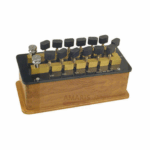

Resistance Coil
Original price was: $ 6.19.$ 6.08Current price is: $ 6.08.
Resistance Coil is a fundamental laboratory apparatus consisting of a wire coil made from materials with a known resistance, typically nichrome or similar alloys. It is widely used in physics and electrical engineering laboratories to study electrical resistance, heating effects, and circuit behavior. The coil’s wire length and thickness determine its resistance value, enabling controlled experiments involving Ohm’s Law, Joule heating, and energy dissipation. Resistance Coils are designed to withstand electrical current and heat without significant degradation, making them ideal for demonstrations, experiments, and calibration tasks in laboratory settings.
RESISTANCE COIL
Primary Uses
- Laboratory Applications
- Used to demonstrate and study electrical resistance and Ohm’s Law.
- Facilitates experiments on the relationship between resistance, current, and voltage.
- Demonstrates Joule heating effect in physics experiments.
- Serves as a heating element in controlled laboratory heating experiments.
- Utilized in calibration of electrical measuring instruments.
Secondary Uses
- Used in research for material resistivity and thermal properties.
- Applied in prototype development and testing of electrical circuits.
1.Basic Identification Attributes
- Material: Usually stainless steel, aluminum, or durable plastic.
- Shape: Flat, thin, rectangular or slightly curved blade attached to a handle.
- Size: Small and lightweight for precise control.
- Finish: Smooth, polished surface to prevent powder adherence.
2.Physical & Chemical Properties
- Chemical Resistance: Resistant to most laboratory chemicals (metal or plastic grade dependent).
- Durability: Sturdy yet lightweight for ease of use.
- Surface: Smooth and non-porous to prevent sample contamination.
3.Safety & Hazard Attributes
- Sharp edges may cause minor cuts; handle carefully.
- Must be cleaned regularly to avoid cross-contamination.
4.Storage & Handling Attributes
- Store in a clean, dry place to prevent corrosion (if metal).
- Clean thoroughly after each use with suitable solvents or detergents.
- Inspect for damage or corrosion before use.
5.Regulatory & Compliance Attributes
- Manufactured to laboratory equipment standards.
- Suitable for use in GMP and GLP compliant laboratories.
6.Environmental & Health Impact
- Materials are generally recyclable (metal/plastic).
- Durable design reduces frequent replacement and waste.
Safety Handling Precautions
- Avoid direct contact when energized to prevent burns.
- Use appropriate electrical safety measures during experiments.
First Aid Measures
- In case of burns, cool the area with water and seek medical attention if severe.
- For cuts from wire, clean wound and apply first aid.
Firefighting Measures
- Non-flammable material; use appropriate extinguishers for surrounding combustible materials.
- Avoid water on electrical fires; use CO2 or dry powder extinguishers.
Related products
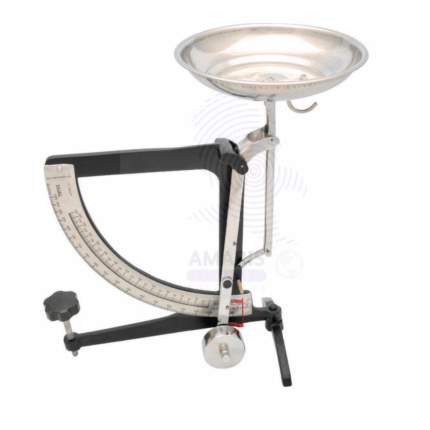
Balance lever
The Balance Lever is a mechanical device used to measure weight or force through a system of levers and fulcrums. Designed for precision and durability, it provides accurate weighing without the need for electrical power, making it ideal for basic laboratory use, educational demonstrations, and situations where electronic balances are impractical. The lever balance operates on the principle of equilibrium and mechanical advantage, offering reliable performance in a variety of settings. Constructed from sturdy materials, it ensures long-lasting service and consistent accuracy.
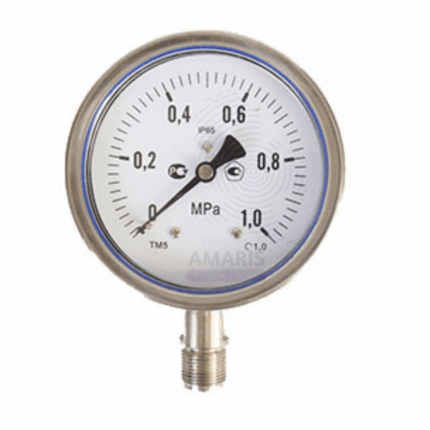
Bourdan Gauge
The Bourdon Gauge is a mechanical pressure measuring instrument widely used to measure medium to high pressure of gases and liquids in various laboratory and industrial applications. It consists of a curved, hollow metal tube which straightens as pressure increases, causing a pointer to move over a calibrated scale for easy reading. Known for its durability, reliability, and precision, the Bourdon Gauge is essential in pressure monitoring, process control, and safety systems. It operates without electrical power, making it ideal for harsh environments.
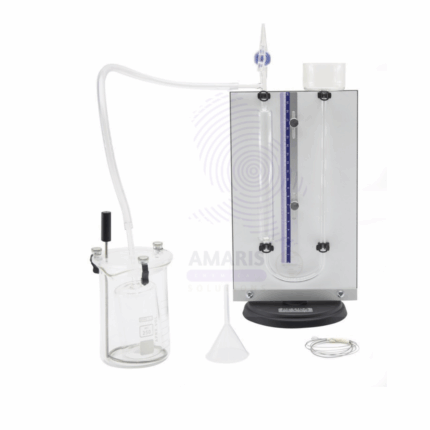
Charles law apparatus
Product Description
Charles Law Apparatus is a scientific device used to demonstrate and study Charles's Law, which states that the volume of a gas is directly proportional to its temperature at constant pressure. The apparatus typically consists of a sealed container connected to a graduated tube or syringe, allowing measurement of gas volume changes as temperature varies. It is widely used in physics and chemistry laboratories for educational and experimental purposes, helping users understand gas behavior under thermal changes.
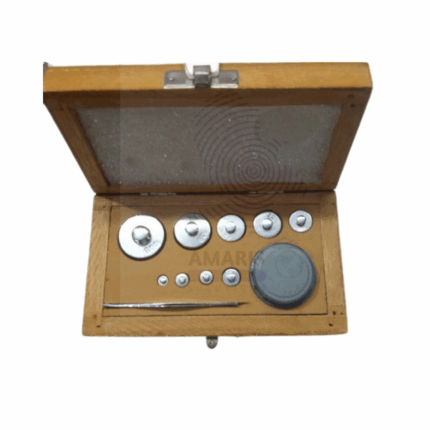
Chemical balance weight box
The Chemical Balance Weight Box is a sturdy, protective container designed to store and organize standard balance weights used for chemical and laboratory measurements. Made from durable materials like wood, metal, or plastic, it ensures the secure keeping of precision weights, protecting them from dust, moisture, and damage. It is essential for maintaining the accuracy and longevity of laboratory weights.
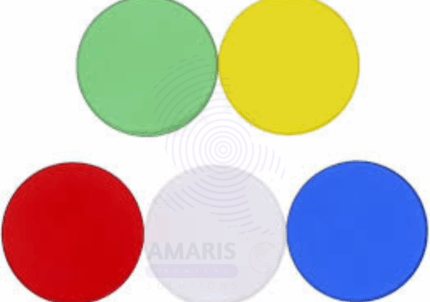
Color Filters
Color Filters are optical components designed to selectively transmit light of specific wavelengths while absorbing or reflecting others. These filters are used in various laboratory and industrial applications to isolate particular colors for scientific experiments, photography, microscopy, and optical analysis. Manufactured from high-quality glass or plastic materials, color filters ensure consistent performance with minimal distortion and high durability.

Concave mirrors
Product Description
Concave Mirrors are curved reflective surfaces that converge light rays to a focal point. They are widely used in scientific experiments and optical devices to focus light and form real or virtual images depending on the object's position relative to the focal length. Made from high-quality polished glass or metal with a reflective coating, these mirrors provide precise image formation essential for laboratory and industrial applications in optics and physics.
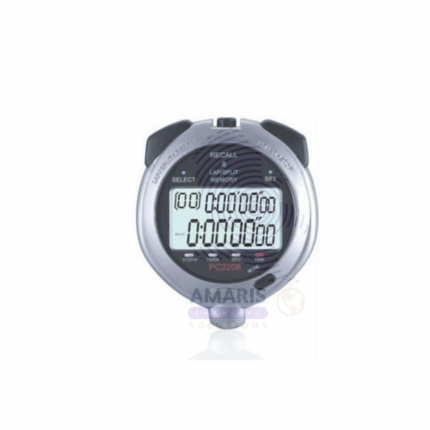
Laboratory stop watch
The Laboratory Stop Watch is a precision timing device used in laboratories to accurately measure time intervals during experiments and processes. Designed for reliability and ease of use, it features start, stop, and reset functions, often with digital or analog displays. This stopwatch is essential for kinetic studies, reaction timing, process control, and any experiment requiring precise time measurement. Durable and portable, it is suitable for various scientific, educational, and industrial laboratory applications.

Whetstone Bridge With Pencil Jockey
The Whetstone Bridge with Pencil Jockey is a precision electrical instrument used to measure unknown electrical resistances by balancing two legs of a bridge circuit. It consists of a robust base, a wire or slide wire of known resistance, and a movable contact known as the pencil jockey to slide along the wire for accurate balancing. This apparatus is widely used in physics and electrical engineering laboratories for teaching and research purposes, helping students and technicians to understand the principles of Wheatstone bridge circuits and precise resistance measurements.












