

 Preservatives(food)
 Flavors
 Acidulants
 Sweeteners
 Antioxidants
 Colorants(food)
 Nutraceutical Ingredients (food)
 Nutrient Supplements
 Emulsifiers
 Collectors
 Dust Suppressants
 Explosives and Blasting Agents
 Flocculants and Coagulants
 Frothers
 Leaching Agents
 pH Modifiers
 Precious Metal Extraction Agents
 Antioxidants(plastic)
 Colorants (Pigments, Dyes)
 Fillers and Reinforcements
 Flame Retardants
 Monomers
 Plasticizers
 Polymerization Initiators
 Stabilizers (UV, Heat)
 Antifoaming Agents
 Chelating Agents
 Coagulants and Flocculants
 Corrosion Inhibitors
 Disinfectants and Biocides
 Oxidizing Agents
 pH Adjusters
 Scale Inhibitors( water)
 Antioxidants(cosmetic)
 Emollients
 Oils
Oils Carrier Oills
 Essential Oils
 Humectants
 Preservatives
 Surfactants(cosmetic)
 Thickeners
 UV Filters
 Fertilizers
 Soil Conditioners
 Plant Growth Regulators
 Animal Feed Additives
 Biostimulants
 Pesticides (Herbicides, Insecticides, Fungicides)
 Active Pharmaceutical Ingredients (APIs)
 Excipients
 Solvents(pharmaceutical)
 Antibiotics
 Antiseptics and Disinfectants
 Vaccine Adjuvants
 Nutraceutical Ingredients (pharmaceutical)
 Analgesics & Antipyretics
 Analytical Reagents
 Solvents(lab)
 Chromatography Chemicals
 Spectroscopy Reagents
 microbiology-and-cell-culture-reagents
 Molecular Biology Reagents
 Biochemical Reagents
 Inorganic and Organic Standards
 Laboratory Safety Chemicals
 Specialty Laboratory Chemicals(Special Laboratory Equipment)
 Demulsifiers
 Hydraulic Fracturing Fluids
 Scale Inhibitors(oil)
 Surfactants(oil)
 Drilling Fluids
 Dyes and Pigments
 Bleaching Agents
 Softening Agents
 Finishing Agents
 Antistatic Agents
 Admixtures
 Waterproofing Agents
 Sealants and Adhesives
 Curing Compounds
 Concrete Repair Chemicals
 Anti-Corrosion Coatings
 Surfactants(cleaning)
 Builders
 Enzymes
 Solvents (Cleaning)
 Fragrances (Cleaning)
 Electronic Chemicals
 Catalysts
 Lubricants
 Photographic Chemicals
 Refrigerants
 Automotive chemicals
 Pyrotechnic Chemicals
 Biodegradable Surfactants
 Bio-based Solvents
 Renewable Polymers
 Carbon Capture Chemicals
 Wastewater Treatment Chemicals
 Pigments
 Solvents(paint)
 Specialty Coatings
 Binders/Resins
 Additives
 Driers
 Anti-Corrosion Agents
 Functional Coatings
 Application-Specific Coatings
 Leavening Agents
 Dough Conditioners
 Flour Treatments
 Fat Replacers
 Decoratives
 Preservatives(baking)
 Plasticizers & Softeners
 Reinforcing Agents
 Adhesion Promoters
 Vulcanizing Agents
 Antidegradants
 Blowing Agents
 Fillers & Extenders
 Accelerators & Retarders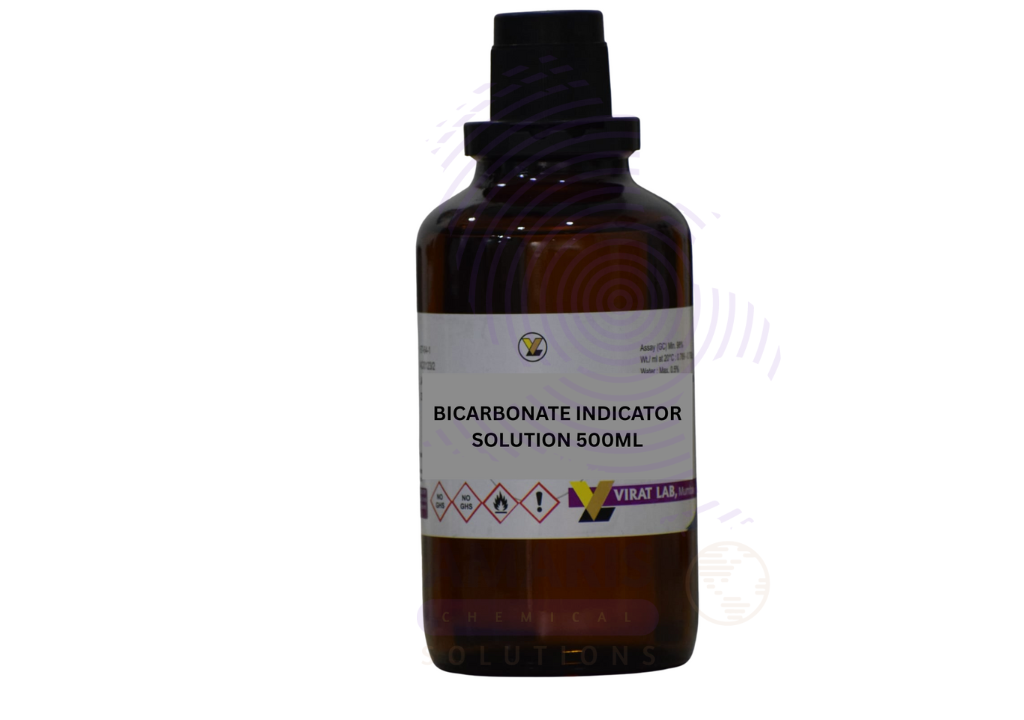


Bicarbonate Indicator
Bicarbonate Indicator is a specialized liquid reagent formulated to visually signal changes in bicarbonate concentration, typically through colorimetric shifts in response to pH variations. It is commonly used in laboratory analyses of carbon dioxide and bicarbonate buffering systems, especially in biological, environmental, and chemical experiments. This indicator provides immediate visual cues for acid-base reactions involving bicarbonate ions, making it essential for studies in respiratory physiology, water quality testing, and biochemical buffering systems.
Bicarbonate Indicator
Primary Uses
- Laboratory Applications
- Used in titrations and buffering system studies to indicate bicarbonate ion presence.
- Applied in physiological experiments analyzing CO₂ transport and pH balance.
- Employed in environmental testing to monitor water alkalinity and carbonate equilibrium.
- Supports educational demonstrations of acid-base buffering and gas exchange systems.
Secondary Uses
- Industrial Applications
- Used in quality control of water treatment processes involving bicarbonate levels.
- Applied in beverage and food industry labs to monitor pH-related stability in products.
- Utilized in aquaculture for maintaining stable water chemistry and pH balance.
- Integrated into pilot testing of carbonate-based formulations in chemical production.
1.Basic Identification Attributes
- Component Type: Liquid chemical indicator
- Volume: 500 ml
- Function: Colorimetric indicator for bicarbonate concentration and pH shift detection
2.Physical & Chemical Properties
- Physical State: Liquid
- Color: Varies depending on formulation (typically changes with pH)
- Solubility: Fully soluble in water
- pH Range: Effective over a specific range (commonly near neutral to slightly alkaline)
- Odor: Mild or odorless
3.Safety & Hazard Attributes
- GHS Classification: May cause mild skin or eye irritation; avoid prolonged exposure
- Toxicity: Low when used as directed; not for ingestion
- Allergen Information: No known allergens
- Exposure Limits: Use with adequate ventilation; avoid aerosol formation
4.Storage & Handling Attributes
- Storage Conditions: Store in a cool, dry place away from sunlight and strong acids or bases
- Handling Precautions: Wear gloves and protective eyewear when handling; close container tightly after use
5.Regulatory & Compliance Attributes
- Manufactured in accordance with laboratory chemical safety standards
- Complies with standard lab reagent formulation and labeling regulations
6.Environmental & Health Impact
- Biodegradability: Moderate; follow proper disposal protocols
- Ecotoxicity: Low when used and disposed properly
- Bioaccumulation: Not expected under normal use
Safety Handling Precautions
- PPE Required: Gloves, lab coat, safety goggles
- Handling Guidelines: Avoid contact with eyes and skin; do not inhale vapors
First Aid Measures
- Inhalation: Move to fresh air; seek medical attention if irritation persists
- Skin Contact: Wash with soap and water
- Eye Contact: Rinse cautiously with water for several minutes
- Ingestion: Do not induce vomiting; seek immediate medical help
Firefighting Measures
- Fire Hazards: Non-flammable
- Extinguishing Media: Use water spray, dry chemical, foam, or CO₂
- Special Precautions: Use protective equipment for surrounding fire
- Hazardous Combustion Products: May produce CO₂ and trace carbon compounds
Related products
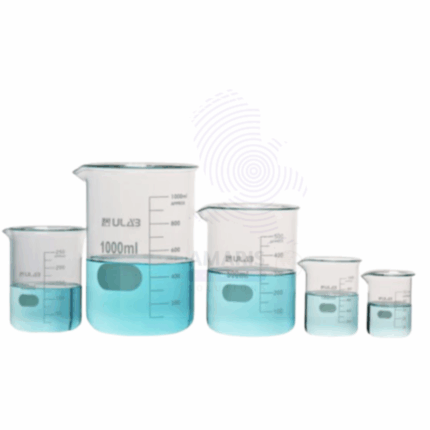
Beaker Hysil
Beaker Hysil is a high-quality borosilicate glass laboratory beaker known for its excellent thermal resistance, chemical durability, and mechanical strength. It is designed for use in various scientific and industrial laboratory applications requiring heating, mixing, and measuring of liquids. The clear, transparent body allows easy observation of contents, and graduated markings provide approximate volume measurements. Beaker Hysil is widely used in educational, research, and industrial laboratories.
Beaker Plastic
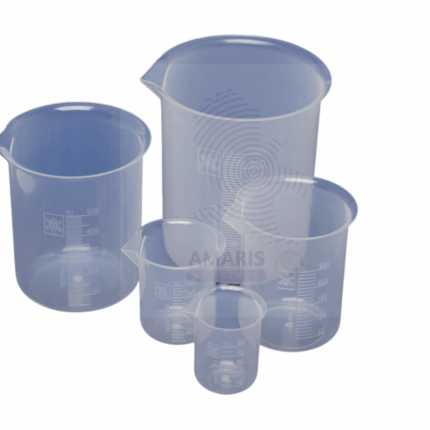
Beaker Plastic is a durable laboratory container made from high-quality, chemical-resistant plastic materials such as polypropylene or polystyrene. It is designed for mixing, measuring, and holding liquids in laboratory and industrial settings. The plastic beaker offers lightweight, shatter-resistant performance, making it ideal for routine lab work, sample preparation, and general handling of non-corrosive chemicals. It features clear or translucent walls with graduated markings for approximate volume measurement.
Combustion Boat
Product Description
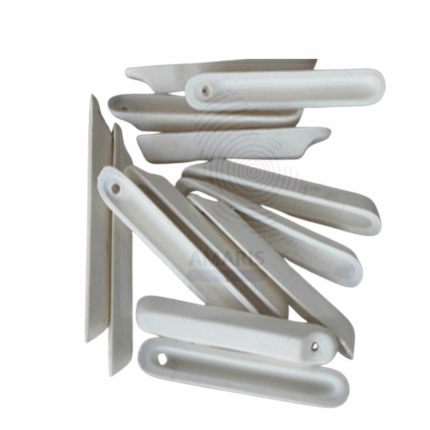
The Combustion Boat is a small, heat-resistant container typically made of porcelain or quartz, designed to hold samples during combustion analysis. It is used primarily in laboratories to contain solid or powdered samples that are subjected to high temperatures for elemental analysis, especially in organic and inorganic chemistry. The boat withstands extreme temperatures without reacting with the sample, ensuring accurate and uncontaminated results.
Cork borer set
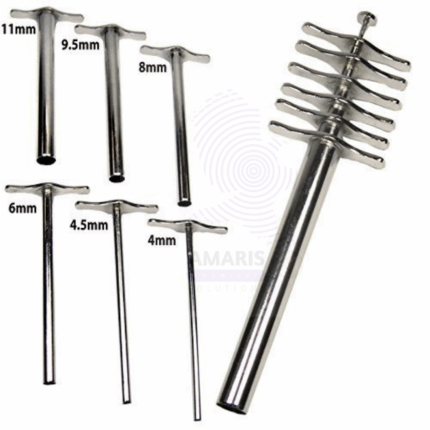
The Cork Borer Set is a precision instrument set used in laboratories for cutting uniform cylindrical holes through corks, rubber stoppers, and soft polymers. Typically made of durable stainless steel, the set includes multiple hollow borers of varying diameters with sharpened edges, along with a cleaning rod or handle. It is essential for creating accurate openings to insert glass tubing or thermometers into stoppers for experimental setups involving sealed vessels or distillation systems.

Cork Borer Set Sharpener
The Cork Borer Set Sharpener is a specialized tool designed for honing and maintaining the cutting edges of cork borers. Essential for extending the life and performance of laboratory cork borers, this sharpener typically features a conical or tapered grinding surface made of hardened steel or fine abrasive material. It ensures precision cutting by restoring sharpness, which is critical for clean, accurate boring through rubber stoppers, corks, and similar materials. Durable and easy to use, it is a vital accessory in laboratory maintenance kits.
Cork to fit test tube
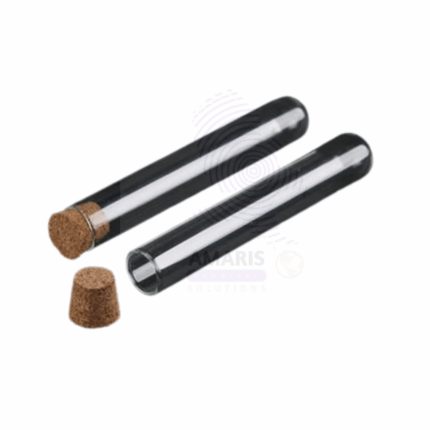
Cork to Fit Test Tube is a conical sealing component made from natural or synthetic cork, designed specifically to fit snugly into standard laboratory test tubes. It ensures a tight seal that prevents contamination, limits evaporation, and maintains sample integrity during storage or handling. Due to its compressible and chemically resistant structure, it is ideal for routine laboratory operations and industrial testing processes. These corks are available in various sizes to accommodate a wide range of test tube diameters and are compatible with both glass and plastic tubes.
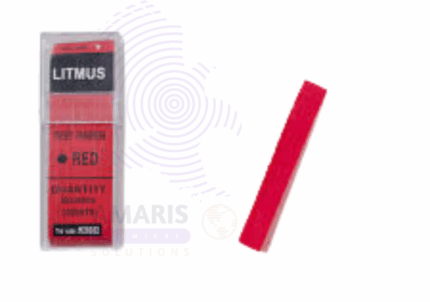
Litmus paper red
Litmus paper red is a specialized pH indicator paper impregnated with red litmus dye derived from natural lichens. It serves as a quick and reliable qualitative tool for detecting alkaline (basic) conditions in various liquids and substances. Upon contact with an alkaline solution, the red paper undergoes a distinct color change to blue, signaling a pH above approximately 8.3. In neutral or acidic solutions, the paper retains its red color. This simple yet essential laboratory reagent is widely used in chemistry, biology, environmental science, clinical diagnostics, food industry, and educational settings for rapid acidity and alkalinity testing without the need for sophisticated instrumentation.
Red litmus paper is highly valued for its ease of use, portability, and cost-effectiveness, making it ideal for field testing, classroom demonstrations, and routine lab work. It provides immediate visual feedback, which is crucial for quick decision-making during experiments, quality control processes, and environmental monitoring. Packaged typically in convenient strips or sheets within moisture-proof packets, the paper is protected from contamination and degradation, ensuring long shelf life and consistent performance.
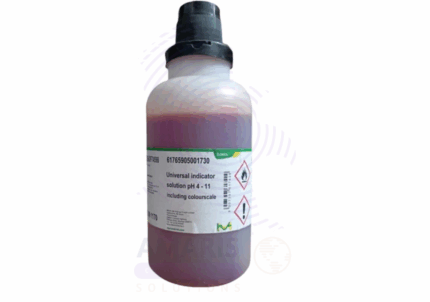
Universal Solution Indicator pH 4-11
Universal Solution Indicator pH 4-11 is a specialized liquid reagent formulated to measure pH values within the range of 4 to 11. This indicator solution contains a blend of dyes that exhibit distinct color changes corresponding to pH levels in this specific range, making it ideal for applications where mid-range acidity and alkalinity detection is required. The solution is widely used in laboratories, environmental testing, and educational demonstrations for accurate and quick pH assessment of aqueous solutions.












