

 Preservatives(food)
 Flavors
 Acidulants
 Sweeteners
 Antioxidants
 Colorants(food)
 Nutraceutical Ingredients (food)
 Nutrient Supplements
 Emulsifiers
 Collectors
 Dust Suppressants
 Explosives and Blasting Agents
 Flocculants and Coagulants
 Frothers
 Leaching Agents
 pH Modifiers
 Precious Metal Extraction Agents
 Antioxidants(plastic)
 Colorants (Pigments, Dyes)
 Fillers and Reinforcements
 Flame Retardants
 Monomers
 Plasticizers
 Polymerization Initiators
 Stabilizers (UV, Heat)
 Antifoaming Agents
 Chelating Agents
 Coagulants and Flocculants
 Corrosion Inhibitors
 Disinfectants and Biocides
 Oxidizing Agents
 pH Adjusters
 Scale Inhibitors( water)
 Antioxidants(cosmetic)
 Emollients
 Oils
Oils Carrier Oills
 Essential Oils
 Humectants
 Preservatives
 Surfactants(cosmetic)
 Thickeners
 UV Filters
 Fertilizers
 Soil Conditioners
 Plant Growth Regulators
 Animal Feed Additives
 Biostimulants
 Pesticides (Herbicides, Insecticides, Fungicides)
 Active Pharmaceutical Ingredients (APIs)
 Excipients
 Solvents(pharmaceutical)
 Antibiotics
 Antiseptics and Disinfectants
 Vaccine Adjuvants
 Nutraceutical Ingredients (pharmaceutical)
 Analgesics & Antipyretics
 Analytical Reagents
 Solvents(lab)
 Chromatography Chemicals
 Spectroscopy Reagents
 microbiology-and-cell-culture-reagents
 Molecular Biology Reagents
 Biochemical Reagents
 Inorganic and Organic Standards
 Laboratory Safety Chemicals
 Specialty Laboratory Chemicals(Special Laboratory Equipment)
 Demulsifiers
 Hydraulic Fracturing Fluids
 Scale Inhibitors(oil)
 Surfactants(oil)
 Drilling Fluids
 Dyes and Pigments
 Bleaching Agents
 Softening Agents
 Finishing Agents
 Antistatic Agents
 Admixtures
 Waterproofing Agents
 Sealants and Adhesives
 Curing Compounds
 Concrete Repair Chemicals
 Anti-Corrosion Coatings
 Surfactants(cleaning)
 Builders
 Enzymes
 Solvents (Cleaning)
 Fragrances (Cleaning)
 Electronic Chemicals
 Catalysts
 Lubricants
 Photographic Chemicals
 Refrigerants
 Automotive chemicals
 Pyrotechnic Chemicals
 Biodegradable Surfactants
 Bio-based Solvents
 Renewable Polymers
 Carbon Capture Chemicals
 Wastewater Treatment Chemicals
 Pigments
 Solvents(paint)
 Specialty Coatings
 Binders/Resins
 Additives
 Driers
 Anti-Corrosion Agents
 Functional Coatings
 Application-Specific Coatings
 Leavening Agents
 Dough Conditioners
 Flour Treatments
 Fat Replacers
 Decoratives
 Preservatives(baking)
 Plasticizers & Softeners
 Reinforcing Agents
 Adhesion Promoters
 Vulcanizing Agents
 Antidegradants
 Blowing Agents
 Fillers & Extenders
 Accelerators & Retarders

Calamus Oil Extra Pure
Original price was: $ 18.00.$ 17.20Current price is: $ 17.20.
Calamus Oil Extra Pure is a high-purity essential oil extracted from the roots of Acorus calamus, valued in laboratory research for its complex composition of aromatic compounds, including asarone and other volatile constituents. In scientific studies, it is often used for phytochemical analysis, antimicrobial testing, and natural product chemistry. Researchers explore its potential bioactive properties, such as antioxidant, neuroprotective, and insecticidal effects. The extra pure grade ensures high consistency, low residue, and minimal contamination, making it suitable for analytical applications. It should be stored in amber glass containers, away from light and heat, to preserve its stability and aromatic integrity.
Calamus Oil Extra Pure
Primary Uses
- Phytochemical Analysis
- Studied for its essential oil profile, particularly via GC-MS (Gas Chromatography–Mass Spectrometry) to identify compounds like asarone and calamenene.
- Natural Product Research
- Used in screening for bioactive compounds with potential antimicrobial, antifungal, or antioxidant properties.
- Toxicological Studies
- Investigated for the presence of β-asarone, which has been associated with potential carcinogenic effects, making it a compound of interest in safety and toxicology testing.
- Standard Reference Material
- Utilized as a reference for quality control of herbal extracts, perfumes, and traditional medicine formulations.
Secondary Uses
- Teaching Aid in Natural Product Chemistry
- Used to illustrate extraction techniques, chromatographic separation, and bioassay testing in educational labs.
- Flavor and Fragrance Research
- Employed in studying aromatic compound behavior, especially for projects dealing with volatile oils or botanical extracts.
- Formulation Testing in Cosmetic/Pharma R&D
- Sometimes included in experimental formulations to test compatibility, stability, or efficacy of natural oils.
| PACK SIZE | 500ml |
|---|
1. Basic Identification Attributes
- Chemical Name: Calamus Oil
- CAS Number: 8013-80-1
- HS Code: 3301.29.90
- Botanical Source: Acorus calamus (rhizome)
- Main Constituents: β-asarone, α-asarone, calamene, eugenol, isoasarone
- Grade: Extra Pure (laboratory standard essential oil)
2. Physical & Chemical Properties
- Appearance: Yellow to light brown, oily liquid
- Odor: Warm, spicy, woody, and aromatic (similar to cinnamon)
- Solubility:
- Insoluble in water
- Soluble in ethanol, diethyl ether, and oils
- Boiling Point: Approx. 282 °C (varies with composition)
- Density: ~0.95–1.10 g/cm³
- Refractive Index: ~1.500 – 1.525
- Flash Point: ~88 °C
- Viscosity: Medium
3. Safety & Hazard Attributes
- GHS Classification:
- Skin Sensitizer (Category 1)
- Carcinogenicity (Category 2) – due to β-asarone content
- Hazard Statements:
- H317: May cause an allergic skin reaction
- H351: Suspected of causing cancer (from β-asarone)
- NFPA Ratings:
- Health: 2
- Flammability: 2
- Reactivity: 0
4. Storage & Handling Attributes
- Storage Conditions:
- Store in a cool, dark place in amber glass bottles
- Protect from light and air (oxidation risk)
- Handling Precautions:
- Avoid skin contact and inhalation of vapors
- Use gloves and proper ventilation or fume hood
- Packaging: Amber glass bottle with airtight cap
- Incompatibilities: Oxidizing agents, light, heat
5. Regulatory & Compliance Attributes
- Regulatory Status:
- Restricted in food and cosmetics due to β-asarone’s potential carcinogenicity
- Not intended for human consumption in lab-grade form
- Transport Classification:
- Not typically regulated under UN transport codes unless flammability threshold is exceeded
- Waste Disposal:
- Absorb with inert material and dispose via hazardous waste channel
6. Environmental & Health Impact
- Toxicity:
- β-asarone is hepatotoxic and potentially carcinogenic
- Avoid ingestion or prolonged dermal exposure
- Biodegradability:
- Partially biodegradable; requires regulated disposal
- Environmental Hazards:
- Harmful in aquatic environments in large amounts
SAFETY PRECAUTIONS
- Personal Protective Equipment (PPE):
- Use nitrile gloves, safety goggles, and a lab coat.
- Work in a well-ventilated area or under a fume hood to avoid inhaling vapors.
- Handling:
- Avoid contact with eyes and skin.
- Do not breathe vapors or mists.
- Handle with care as the oil may contain β-asarone, a potentially carcinogenic compound.
- Storage:
- Store in a cool, dry, and well-ventilated area.
- Keep container tightly closed and protected from light and heat.
- Store away from strong oxidizing agents.
- Incompatibilities:
- Strong oxidizers, acids, and alkalis.
FIRST AID MEASURES
- Inhalation:
- Remove to fresh air.
- Get medical attention if symptoms like coughing, dizziness, or respiratory discomfort occur.
- Skin Contact:
- Immediately wash with soap and water.
- Remove contaminated clothing.
- Seek medical advice if irritation or allergic reaction develops.
- Eye Contact:
- Rinse cautiously with water for at least 15 minutes.
- Seek medical attention.
- Ingestion:
- Do NOT induce vomiting.
- Rinse mouth.
- Call a poison center or physician immediately.
FIRE FIGHTING MEASURES
- Flammability:
- Flammable liquid and vapor.
- Extinguishing Media:
- Use foam, dry chemical, carbon dioxide (CO₂).
- Do not use water jets, as they may spread the fire.
- Hazardous Combustion Products:
- Carbon monoxide (CO), carbon dioxide (CO₂), acrid fumes.
- Firefighting Instructions:
- Wear full protective clothing and self-contained breathing apparatus (SCBA).
- Cool containers with water spray to prevent pressure build-up and explosion risk.
Related products
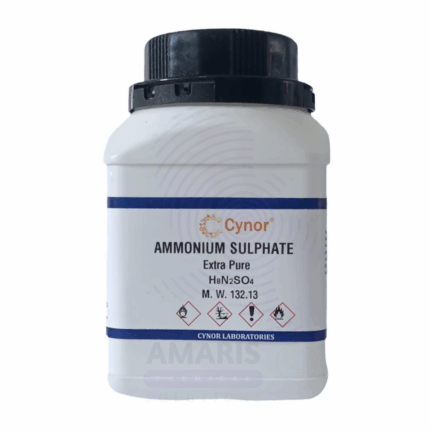
Ammonium Sulphate Extra Pure
Ammonium Sulphate Extra Pure is a high-purity, white crystalline compound widely used in laboratory settings for biochemical, analytical, and inorganic chemistry applications. It is especially renowned for its role in protein purification through salting-out techniques, where it helps to selectively precipitate proteins without denaturing them. In analytical chemistry, it is used as a source of ammonium and sulfate ions in standard solution preparation and as a supporting electrolyte in various reactions. Its extra pure grade guarantees minimal contaminants, making it suitable for sensitive experiments and research involving enzymes, buffers, and molecular biology. It should be stored in a tightly sealed container in a cool, dry environment to prevent caking and moisture absorption.
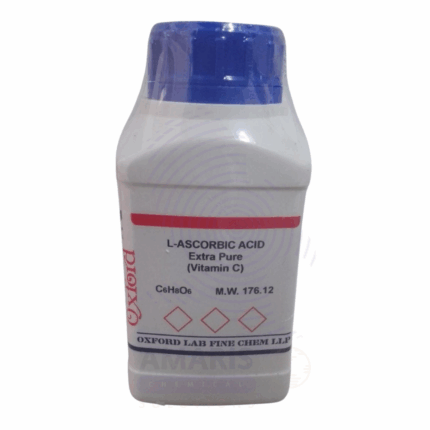
Ascorbic Acid Extra Pure
Ascorbic Acid Extra Pure, commonly known as Vitamin C, is a high-purity, white to slightly yellow crystalline powder widely used in laboratory settings for analytical, biochemical, and pharmaceutical research. It functions as a potent reducing agent and antioxidant, making it valuable in redox titrations, radical scavenging assays, and studies of oxidative stress and enzyme activity. Ascorbic acid is also used in food chemistry experiments and as a stabilizer in formulations prone to oxidation. The extra pure grade ensures minimal contaminants, supporting precise and reproducible results in sensitive applications. It should be stored in tightly sealed containers, protected from light, heat, and moisture to preserve its stability and effectiveness.
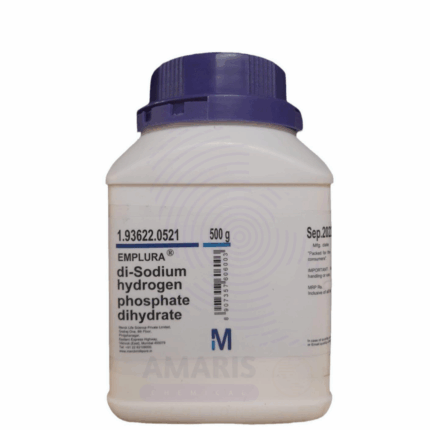
Disodium Hydrogen Phosphate Dihydrate Extra Pure
Disodium Hydrogen Phosphate Dihydrate Extra Pure is a laboratory-grade chemical widely utilized as a buffering agent and pH stabilizer in analytical chemistry, molecular biology, and biochemical research. It is commonly used in the preparation of phosphate buffer solutions, supporting the maintenance of optimal conditions for enzyme activity and cell culture. This dihydrate form ensures accurate hydration levels for reliable solution formulation. Its high purity makes it suitable for sensitive lab applications requiring minimal interference from impurities. The compound should be kept tightly sealed in a dry environment to preserve its integrity and reactivity.
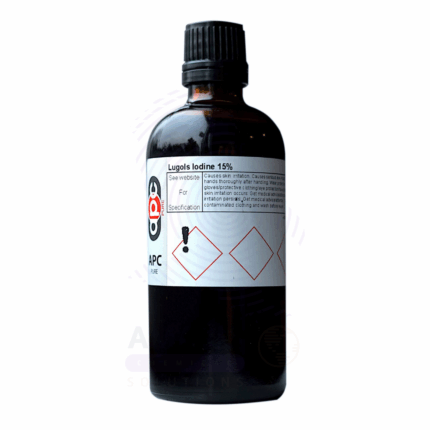
Lugols Iodine Extra Pure
Lugols Iodine Extra Pure is a superior-grade aqueous solution composed of elemental iodine and potassium iodide, known for its wide-ranging applications in laboratories, microscopy, and medical diagnostics. Valued for its strong staining properties, it is commonly used in biology to identify starch in plant cells and as a general-purpose cellular stain to enhance visibility under a microscope. Its extra pure formulation ensures high clarity, minimal impurities, and consistent results in sensitive applications. Additionally, it plays a role in preparing specimens, sterilization procedures, and certain medical antiseptic practices. Store tightly sealed, away from light and heat, to preserve potency.
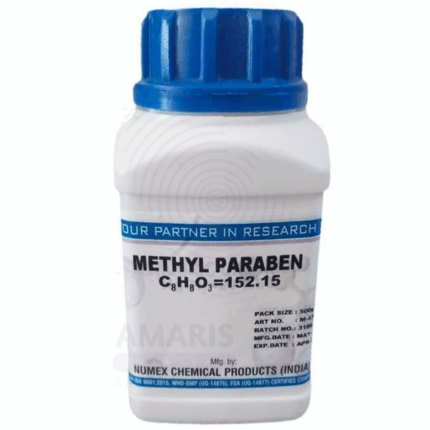
Methyl Paraben Extra Pure
Methyl Paraben Extra Pure is a high-purity chemical widely used as a preservative in pharmaceuticals, cosmetics, personal care products, and food applications. It is valued for its strong antimicrobial and antifungal properties, helping to extend the shelf life of various formulations by preventing the growth of bacteria and mold. In laboratories, it is commonly employed in microbiological media and analytical standards. Its excellent stability across a broad pH range, combined with low toxicity and high efficacy even at low concentrations, makes it a preferred choice in sensitive applications. This extra pure grade ensures consistent quality and performance for critical uses.
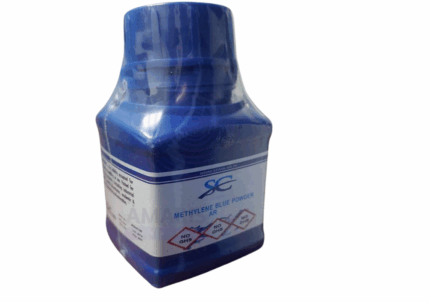
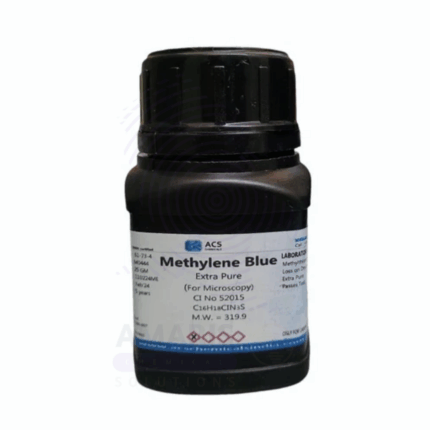
Methylene Blue Powder Extra Pure
Methylene Blue Powder Extra Pure is a high-grade dye with diverse laboratory and industrial applications. It is widely used as a biological stain in microscopy for highlighting cellular structures such as nuclei, bacteria, and parasites, particularly in blood smear and bacteriological studies. In chemistry, it serves as a redox indicator due to its distinct color change properties, and in aquaculture, it acts as a treatment for fungal and bacterial infections in fish. Its extra pure formulation ensures maximum staining clarity, minimal contamination, and reliable results in research, diagnostics, and educational settings.
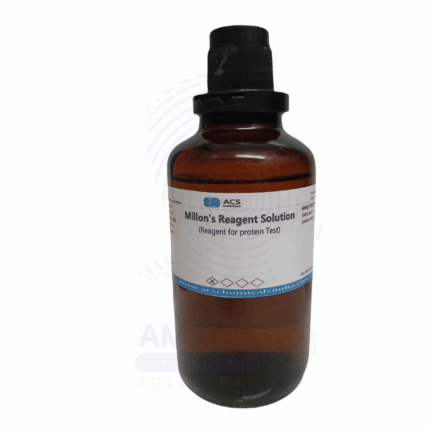
Millions Reagent Extra Pure
Millions Reagent Extra Pure is a specialized analytical solution primarily used to detect phenolic amino acids, particularly tyrosine, in proteins. It functions by producing a reddish-brown coloration when heated with compounds containing phenol groups, making it highly valuable in biochemical testing and protein analysis. This reagent is a mixture of mercury(I) and mercury(II) nitrates in nitric acid, and its high purity ensures sharp, interference-free results, especially in sensitive laboratory experiments or educational demonstrations.
Due to its toxic and corrosive nature, proper handling is essential. It must be used in a fume hood with appropriate personal protective equipment such as gloves, goggles, and lab coats. Millon’s Reagent remains a reliable and well-established tool for identifying proteins with tyrosine residues and is commonly found in chemical, clinical, and educational labs.

Mineral Lick Rock Salt Extra Pure
Mineral Lick Rock Salt Extra Pure is a high-purity, natural crystalline salt product specially processed for scientific, veterinary, and nutritional applications. Composed primarily of sodium chloride (NaCl), this form of rock salt may also contain trace essential minerals such as calcium, magnesium, and potassium in controlled amounts. Its extra pure grade ensures minimal contaminants, making it ideal for controlled laboratory experiments, animal nutrition studies, and formulation testing where purity and consistency are critical.
In agricultural research and veterinary science, Mineral Lick is commonly used to study electrolyte balance, mineral supplementation, and livestock behavior related to mineral intake. The solid, stable nature of the product allows for long shelf life and ease of handling, and it may also be used in comparative tests involving natural versus synthetic mineral supplements. For best results, it should be stored in a dry, cool place away from moisture.












