

 Preservatives(food)
 Flavors
 Acidulants
 Sweeteners
 Antioxidants
 Colorants(food)
 Nutraceutical Ingredients (food)
 Nutrient Supplements
 Emulsifiers
 Collectors
 Dust Suppressants
 Explosives and Blasting Agents
 Flocculants and Coagulants
 Frothers
 Leaching Agents
 pH Modifiers
 Precious Metal Extraction Agents
 Antioxidants(plastic)
 Colorants (Pigments, Dyes)
 Fillers and Reinforcements
 Flame Retardants
 Monomers
 Plasticizers
 Polymerization Initiators
 Stabilizers (UV, Heat)
 Antifoaming Agents
 Chelating Agents
 Coagulants and Flocculants
 Corrosion Inhibitors
 Disinfectants and Biocides
 Oxidizing Agents
 pH Adjusters
 Scale Inhibitors( water)
 Antioxidants(cosmetic)
 Emollients
 Oils
Oils Carrier Oills
 Essential Oils
 Humectants
 Preservatives
 Surfactants(cosmetic)
 Thickeners
 UV Filters
 Fragrance (Cosmetics)
 Fertilizers
 Soil Conditioners
 Plant Growth Regulators
 Animal Feed Additives
 Biostimulants
 Pesticides (Herbicides, Insecticides, Fungicides)
 Active Pharmaceutical Ingredients (APIs)
 Excipients
 Solvents(pharmaceutical)
 Antibiotics
 Antiseptics and Disinfectants
 Vaccine Adjuvants
 Nutraceutical Ingredients (pharmaceutical)
 Analgesics & Antipyretics
 Analytical Reagents
 Solvents(lab)
 Chromatography Chemicals
 Spectroscopy Reagents
 microbiology-and-cell-culture-reagents
 Molecular Biology Reagents
 Biochemical Reagents
 Inorganic and Organic Standards
 Laboratory Safety Chemicals
 Specialty Laboratory Chemicals(Special Laboratory Equipment)
 Demulsifiers
 Hydraulic Fracturing Fluids
 Scale Inhibitors(oil)
 Surfactants(oil)
 Drilling Fluids
 Dyes and Pigments
 Bleaching Agents
 Softening Agents
 Finishing Agents
 Antistatic Agents
 Admixtures
 Waterproofing Agents
 Sealants and Adhesives
 Curing Compounds
 Concrete Repair Chemicals
 Anti-Corrosion Coatings
 Surfactants(cleaning)
 Builders
 Enzymes
 Solvents (Cleaning)
 Electronic Chemicals
 Catalysts
 Lubricants
 Photographic Chemicals
 Refrigerants
 Automotive chemicals
 Pyrotechnic Chemicals
 Biodegradable Surfactants
 Bio-based Solvents
 Renewable Polymers
 Carbon Capture Chemicals
 Wastewater Treatment Chemicals
 Pigments
 Solvents(paint)
 Specialty Coatings
 Binders/Resins
 Additives
 Driers
 Anti-Corrosion Agents
 Functional Coatings
 Application-Specific Coatings
 Leavening Agents
 Dough Conditioners
 Flour Treatments
 Fat Replacers
 Decoratives
 Preservatives(baking)
 Plasticizers & Softeners
 Reinforcing Agents
 Adhesion Promoters
 Vulcanizing Agents
 Antidegradants
 Blowing Agents
 Fillers & Extenders
 Accelerators & Retarders


Buchner Funnel
Original price was: $ 25.63.$ 25.54Current price is: $ 25.54.
The Buchner Funnel is a laboratory filtration device used for vacuum filtration processes. It typically consists of a flat, perforated plate covered with a filter paper, housed in a cylindrical funnel. Made from porcelain, glass, or plastic, the Buchner Funnel allows for rapid filtration by applying vacuum suction, which speeds up the separation of solids from liquids. It is widely used in chemical, biological, and pharmaceutical laboratories for efficient solid-liquid separation during sample preparation, purification, and analysis.
Buchner Funnel
Primary Uses
- Laboratory Applications
- Used for vacuum filtration to separate solids from liquids in chemical synthesis.
- Employed in biological labs for filtering cell cultures or precipitates.
- Utilized in pharmaceutical labs for sample purification and analysis.
- Assists in preparing samples for further testing by removing particulate matter.
- Supports quantitative filtration in gravimetric analysis.
Secondary Uses
- Industrial Applications
- Used in quality control labs for filtration of raw materials and intermediates.
- Employed in small-scale production settings for rapid filtration processes.
- Applied in environmental testing labs for water and soil sample preparation.
1.Basic Identification Attributes
- Instrument Type: Filtration Funnel
- Material: Porcelain, borosilicate glass, or durable plastic
- Design: Flat perforated plate with funnel body
2.Physical & Chemical Properties
- Chemical Resistance: Resistant to most acids, bases, and solvents
- Heat Resistance: Suitable for moderate laboratory temperatures
- Size: Various diameters available to fit different filtration needs
3.Safety & Hazard Attributes
- Mechanical Risk: Handle carefully to avoid breakage, especially if glass or porcelain
- Toxicity: Non-toxic materials
- Allergens: None identified
4.Storage & Handling Attributes
- Store in a clean, dry place to avoid contamination
- Handle with care to prevent chipping or cracking
5.Regulatory & Compliance Attributes
- Manufactured according to laboratory equipment standards
- Compliant with relevant safety and quality guidelines
6.Environmental & Health Impact
- Reusable with proper cleaning
- Materials recyclable depending on type (glass/porcelain)
Safety Handling Precautions
- Use gloves when handling to avoid cuts if broken
- Avoid excessive force during filtration setup
First Aid Measures
- In case of cuts, clean wound and seek medical attention if necessary
- No chemical hazards involved
Firefighting Measures
- Non-flammable device
- No special firefighting requirements
Related products
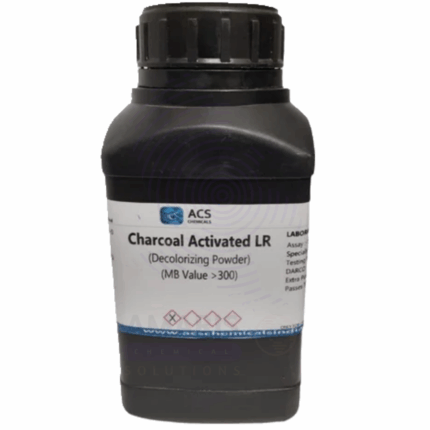
Charcoal Decolourising Powder Extra Pure
Charcoal Decolourising Powder Extra Pure is a high-grade activated carbon used in laboratory settings for purification and clarification processes. Its exceptional adsorptive properties make it ideal for removing color impurities, organic contaminants, and unwanted residues from chemical solutions, solvents, and extracts. This extra pure form is especially suited for sensitive analytical work, pharmaceutical preparations, and biochemical applications where high purity and minimal contamination are critical. It is commonly used in filtration experiments and in the refinement of reagents and compounds. The powder should be handled in a dry environment and stored in airtight containers to maintain its effectiveness.
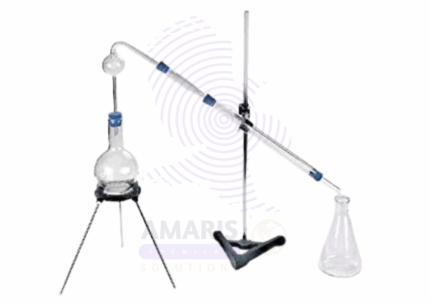
Complete Liebigs Distillation Apparatus
Complete Liebigs Distillation Apparatus is a classic laboratory setup used for the distillation of liquids by heating and subsequent condensation. It consists of a distillation flask, Liebig condenser, receiving flask, and necessary connecting joints. The Liebig condenser efficiently cools vapor back into liquid form using a water jacket. This apparatus is widely used in chemistry labs for purifying liquids, separating mixtures, and studying boiling points.
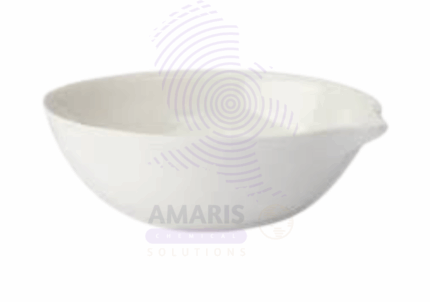
Evaporation Dish
Evaporation Dish is a shallow laboratory container typically made from chemically resistant materials such as porcelain, borosilicate glass, or metal. It is designed to hold liquids for evaporation processes where solvents are removed by heating, leaving behind solid residues or concentrated solutions. The dish provides a wide surface area to facilitate rapid evaporation and is widely used in chemical, pharmaceutical, and educational laboratories. Its durable construction allows it to withstand thermal stress and chemical exposure during repetitive heating and cooling cycles.
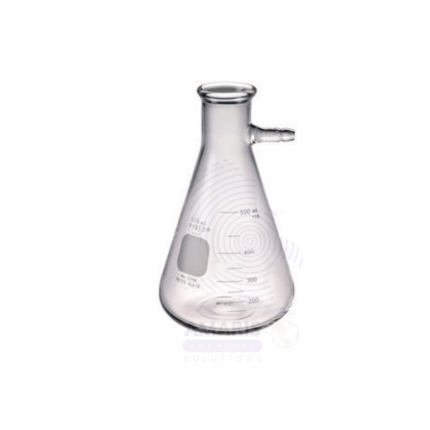
Filter Flask
Filter Flask is a specially designed laboratory glass vessel, typically made from chemically resistant borosilicate glass, featuring a thick-walled body and a side arm for connection to vacuum sources. It is used in vacuum filtration procedures to collect filtrates efficiently while providing durability and chemical resistance. The side arm allows attachment to vacuum pumps or aspirators to create suction, speeding up the filtration process. Filter flasks are essential in chemical, biological, and pharmaceutical labs for separating solids from liquids, clarifying solutions, and sample preparation.

Force Pump
Force Pump is a mechanical device designed to transfer fluids by applying manual force through a piston or plunger mechanism. Unlike lift pumps that only raise liquids to limited heights, force pumps are capable of delivering fluids at higher pressures and over greater vertical distances. Constructed from corrosion-resistant metal or durable plastic, force pumps are widely used in educational demonstrations, physics experiments, and small-scale fluid transfer systems. This apparatus illustrates fundamental hydraulic principles and is essential in laboratories, training workshops, and prototype testing environments.

Siphon Pump
Siphon Pump is a manual laboratory apparatus designed for transferring liquids from one container to another using the principle of siphoning. Made from chemically resistant materials such as rubber tubing and plastic or glass components, siphon pumps provide an easy and safe method for liquid transfer without the need for power sources. They are commonly used in laboratories to transfer solvents, reagents, and other fluids with precision and control, minimizing spills and contamination. Available in various sizes and configurations, siphon pumps are essential for fluid handling in research, medical, and industrial laboratories.

Vacuum and air pressure pump combined
The Vacuum and Air Pressure Pump Combined is a versatile laboratory device designed to generate both vacuum and positive air pressure within experimental setups. This dual-function pump efficiently supports a wide range of laboratory applications requiring controlled pressure environments. Constructed with durable materials and precision engineering, it offers reliable performance, easy operation, and compatibility with various laboratory instruments such as filtration units, desiccators, and pressure chambers. The combined pump is essential for fluid transfer, filtration, degassing, and pressure regulation tasks in chemical, biological, medical, and industrial laboratories.

Visking Tube
Visking Tube is a high-quality dialysis tubing made from regenerated cellulose, designed for laboratory use in separation and diffusion experiments. This semi-permeable membrane allows the selective passage of small molecules and ions while retaining larger molecules, making it ideal for dialysis, osmosis, and molecular weight determination studies. The tubing is durable, chemically resistant, and flexible, facilitating easy handling and secure sealing during experiments. Commonly used in biochemistry, molecular biology, and clinical laboratories, Visking Tube 1 Metre is essential for applications requiring molecular separation and purification.












