

 Preservatives(food)
 Flavors
 Acidulants
 Sweeteners
 Antioxidants
 Colorants(food)
 Nutraceutical Ingredients (food)
 Nutrient Supplements
 Emulsifiers
 Collectors
 Dust Suppressants
 Explosives and Blasting Agents
 Flocculants and Coagulants
 Frothers
 Leaching Agents
 pH Modifiers
 Precious Metal Extraction Agents
 Antioxidants(plastic)
 Colorants (Pigments, Dyes)
 Fillers and Reinforcements
 Flame Retardants
 Monomers
 Plasticizers
 Polymerization Initiators
 Stabilizers (UV, Heat)
 Antifoaming Agents
 Chelating Agents
 Coagulants and Flocculants
 Corrosion Inhibitors
 Disinfectants and Biocides
 Oxidizing Agents
 pH Adjusters
 Scale Inhibitors( water)
 Antioxidants(cosmetic)
 Emollients
 Oils
Oils Carrier Oills
 Essential Oils
 Humectants
 Preservatives
 Surfactants(cosmetic)
 Thickeners
 UV Filters
 Fragrance (Cosmetics)
 Fertilizers
 Soil Conditioners
 Plant Growth Regulators
 Animal Feed Additives
 Biostimulants
 Pesticides (Herbicides, Insecticides, Fungicides)
 Active Pharmaceutical Ingredients (APIs)
 Excipients
 Solvents(pharmaceutical)
 Antibiotics
 Antiseptics and Disinfectants
 Vaccine Adjuvants
 Nutraceutical Ingredients (pharmaceutical)
 Analgesics & Antipyretics
 Analytical Reagents
 Solvents(lab)
 Chromatography Chemicals
 Spectroscopy Reagents
 microbiology-and-cell-culture-reagents
 Molecular Biology Reagents
 Biochemical Reagents
 Inorganic and Organic Standards
 Laboratory Safety Chemicals
 Specialty Laboratory Chemicals(Special Laboratory Equipment)
 Demulsifiers
 Hydraulic Fracturing Fluids
 Scale Inhibitors(oil)
 Surfactants(oil)
 Drilling Fluids
 Dyes and Pigments
 Bleaching Agents
 Softening Agents
 Finishing Agents
 Antistatic Agents
 Admixtures
 Waterproofing Agents
 Sealants and Adhesives
 Curing Compounds
 Concrete Repair Chemicals
 Anti-Corrosion Coatings
 Surfactants(cleaning)
 Builders
 Enzymes
 Solvents (Cleaning)
 Electronic Chemicals
 Catalysts
 Lubricants
 Photographic Chemicals
 Refrigerants
 Automotive chemicals
 Pyrotechnic Chemicals
 Biodegradable Surfactants
 Bio-based Solvents
 Renewable Polymers
 Carbon Capture Chemicals
 Wastewater Treatment Chemicals
 Pigments
 Solvents(paint)
 Specialty Coatings
 Binders/Resins
 Additives
 Driers
 Anti-Corrosion Agents
 Functional Coatings
 Application-Specific Coatings
 Leavening Agents
 Dough Conditioners
 Flour Treatments
 Fat Replacers
 Decoratives
 Preservatives(baking)
 Plasticizers & Softeners
 Reinforcing Agents
 Adhesion Promoters
 Vulcanizing Agents
 Antidegradants
 Blowing Agents
 Fillers & Extenders
 Accelerators & Retarders



Chromatogram Paper
Chromatogram Paper is a specialized high-quality absorbent paper used primarily in chromatography techniques for the separation and analysis of chemical substances. Manufactured to have consistent texture and porosity, it facilitates effective migration of solvents and analytes, allowing clear and reproducible chromatographic patterns. Widely utilized in laboratories for qualitative and quantitative chemical analysis, Chromatogram Paper is essential for research, quality control, and educational purposes.
Chromatogram Paper
Primary Uses
- Laboratory Applications
- Employed as a stationary phase in paper chromatography to separate mixtures of organic and inorganic compounds.
- Used in biochemical assays for identifying amino acids, sugars, and pigments.
- Supports qualitative analysis of compounds through spot tests and visualization techniques.
- Used in analytical chemistry for environmental sample testing and drug screening.
- Industrial Applications
- Applied in quality control labs for analyzing product purity and consistency.
- Used in pharmaceutical industry for preliminary separation of chemical compounds.
Secondary Uses
- Other Industrial and Commercial Uses
- Utilized in educational institutions for teaching chromatographic techniques.
- Used in research and development settings for preliminary compound separation
1.Basic Identification Attributes
- Product Type: Chromatography Paper
- Material: High-purity cellulose fiber
- Grade: Uniform texture and porosity for reproducible results
2.Physical & Chemical Properties
- Thickness: Standardized for solvent migration
- Absorbency: High absorbency with uniform capillary action
- Color: Usually white or off-white
- Compatibility: Suitable with aqueous and organic solvents
3.Safety & Hazard Attributes
- Flammability: Combustible paper material
- Toxicity: Non-toxic under normal handling
- Allergens: None identified
4.Storage & Handling Attributes
- Storage Conditions: Store in dry, cool, dust-free environment
- Handling Precautions: Handle with clean, dry hands or gloves to avoid contamination
5.Regulatory & Compliance Attributes
- Manufactured under laboratory-grade quality standards
- Suitable for regulated laboratory testing environments
6.Environmental & Health Impact
- Biodegradable cellulose material
- Minimal environmental impact if disposed of properly
Safety Handling Precautions
- Avoid ignition sources near the paper
- Use gloves when handling to avoid contamination
First Aid Measures
- Not applicable; no inherent chemical hazards
Firefighting Measures
- Fire Hazard: Paper is combustible
- Extinguishing Media: Water spray, foam, dry chemical
Related products
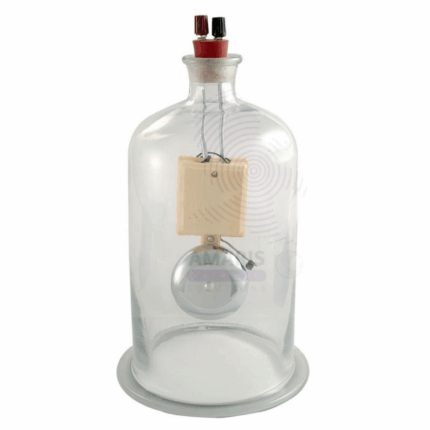
Bell in Vacuum
Bell in Vacuum is a crucial component used in vacuum systems to create an airtight seal and protect sensitive equipment from atmospheric contamination. Typically made of durable, corrosion-resistant materials, it forms part of vacuum chambers or devices requiring controlled environments. The bell ensures the maintenance of vacuum integrity by preventing air ingress, making it essential for experiments and industrial processes that depend on low-pressure or vacuum conditions.
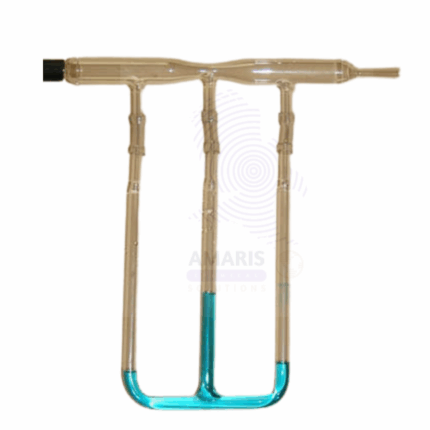
Bernoulli Tube Apparatus
Bernoulli Tube Apparatus is a precision-engineered device designed to demonstrate and analyze the principles of fluid dynamics, specifically Bernoulli’s theorem. It consists of a transparent, variable-diameter horizontal tube equipped with multiple pressure tap points connected to manometer tubes. This allows for the visual observation and quantitative measurement of pressure, velocity, and flow relationships as fluid moves through different cross-sectional areas. Commonly used in laboratory and industrial fluid mechanics testing, it helps validate theoretical predictions in controlled experimental conditions.

Boyle’s Law Apparatus
Boyle’s Law Apparatus is a precision laboratory instrument designed to demonstrate and verify Boyle’s Law, which states that the pressure of a given mass of gas is inversely proportional to its volume at constant temperature. The apparatus typically consists of a sealed cylinder with a movable piston or syringe, pressure gauge, and volume scale, allowing students and researchers to observe and measure the relationship between pressure and volume in gases. It is widely used in educational and research laboratories to teach fundamental gas laws and perform experimental validation of theoretical principles.
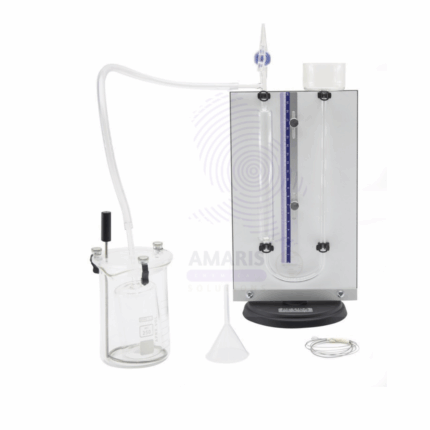
Charles law apparatus
Product Description
Charles Law Apparatus is a scientific device used to demonstrate and study Charles's Law, which states that the volume of a gas is directly proportional to its temperature at constant pressure. The apparatus typically consists of a sealed container connected to a graduated tube or syringe, allowing measurement of gas volume changes as temperature varies. It is widely used in physics and chemistry laboratories for educational and experimental purposes, helping users understand gas behavior under thermal changes.
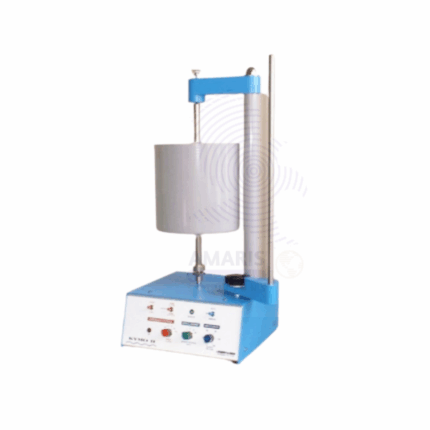
complete kymograph equipment
Complete Kymograph Equipment is a precision instrument used primarily in physiology and biological research to record changes in pressure, motion, or other physiological phenomena over time. It consists of a rotating drum wrapped with a recording paper and various attachments such as levers, pens, and sensors to capture mechanical movements or biological signals. This equipment is essential for experiments involving muscle contractions, blood pressure measurements, and other dynamic biological processes.
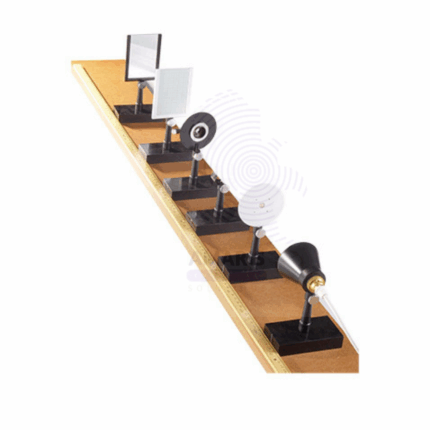
Complete optical bench
Product Description
Complete Optical Bench is a precision laboratory apparatus designed to facilitate experiments involving optics, such as the study of lenses, mirrors, light refraction, reflection, and focal lengths. It consists of a rigid, graduated base rail with movable holders for optical components like lenses, mirrors, prisms, and light sources. The modular design allows flexible setup of various optical experiments, making it an essential tool in physics laboratories for teaching and research.
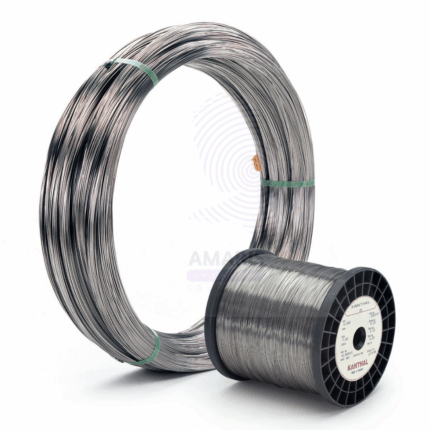
Constantine wire
Constantine Wire is an alloy wire composed primarily of copper, nickel, and zinc, known for its high electrical conductivity, corrosion resistance, and durability. It is widely used in electrical applications requiring reliable conduction and mechanical strength. The wire exhibits excellent resistance to oxidation and mechanical wear, making it suitable for various laboratory and industrial uses.
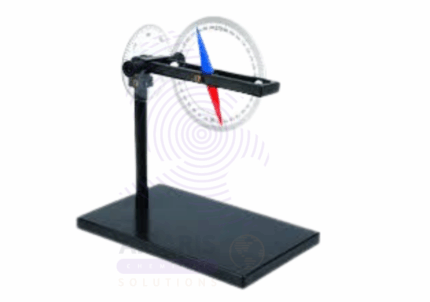
Dip Needle
A Dip Needle is a finely balanced magnetic needle used to measure the magnetic dip or inclination angle of the Earth’s magnetic field. Mounted to pivot freely in a vertical plane, the needle aligns itself with the Earth’s magnetic field lines, enabling precise determination of the angle between the horizontal plane and magnetic field direction. Dip Needles are essential instruments in geophysics, navigation, and laboratory studies of magnetism. They provide crucial data for mapping magnetic variations, compass calibration, and educational demonstrations. Typically constructed with magnetized steel or alloy, dip needles are designed for sensitivity and durability in field and lab environments.












