

 Preservatives(food)
 Flavor Enhancers
 Acidulants
 Sweeteners
 Antioxidants
 Colorants(food)
 Nutraceutical Ingredients (food)
 Nutrient Supplements
 Emulsifiers
 Collectors
 Dust Suppressants
 Explosives and Blasting Agents
 Flocculants and Coagulants
 Frothers
 Leaching Agents
 pH Modifiers
 Precious Metal Extraction Agents
 Antioxidants(plastic)
 Colorants (Pigments, Dyes)
 Fillers and Reinforcements
 Flame Retardants
 Monomers
 Plasticizers
 Polymerization Initiators
 Stabilizers (UV, Heat)
 Antifoaming Agents
 Chelating Agents
 Coagulants and Flocculants
 Corrosion Inhibitors
 Disinfectants and Biocides
 Oxidizing Agents
 pH Adjusters
 Scale Inhibitors( water)
 Antioxidants(cosmetic)
 Emollients
 Fragrances and Essential Oils
 Humectants
 Preservatives
 Surfactants(cosmetic)
 Thickeners
 UV Filters
 Fertilizers
 Soil Conditioners
 Plant Growth Regulators
 Animal Feed Additives
 Biostimulants
 Pesticides (Herbicides, Insecticides, Fungicides)
 Active Pharmaceutical Ingredients (APIs)
 Excipients
 Solvents(pharmaceutical)
 Antibiotics
 Antiseptics and Disinfectants
 Vaccine Adjuvants
 Nutraceutical Ingredients (pharmaceutical)
 Analgesics & Antipyretics
 Analytical Reagents
 Solvents(lab)
 Chromatography Chemicals
 Spectroscopy Reagents
 microbiology-and-cell-culture-reagents
 Molecular Biology Reagents
 Biochemical Reagents
 Inorganic and Organic Standards
 Laboratory Safety Chemicals
 Specialty Laboratory Chemicals(Special Laboratory Equipment)
 Demulsifiers
 Hydraulic Fracturing Fluids
 Scale Inhibitors(oil)
 Surfactants(oil)
 Drilling Fluids
 Dyes and Pigments
 Bleaching Agents
 Softening Agents
 Finishing Agents
 Antistatic Agents
 Admixtures
 Waterproofing Agents
 Sealants and Adhesives
 Curing Compounds
 Concrete Repair Chemicals
 Anti-Corrosion Coatings
 Surfactants(cleaning)
 Builders
 Enzymes
 Solvents (Cleaning)
 Fragrances
 Electronic Chemicals
 Catalysts
 Lubricants
 Photographic Chemicals
 Refrigerants
 Automotive chemicals
 Pyrotechnic Chemicals
 Biodegradable Surfactants
 Bio-based Solvents
 Renewable Polymers
 Carbon Capture Chemicals
 Wastewater Treatment Chemicals
 Pigments
 Solvents(paint)
 Specialty Coatings
 Binders/Resins
 Additives
 Driers
 Anti-Corrosion Agents
 Functional Coatings
 Application-Specific Coatings
 Leavening Agents
 Dough Conditioners
 Flour Treatments
 Fat Replacers
 Decoratives
 Preservatives(baking)
 Plasticizers & Softeners
 Reinforcing Agents
 Adhesion Promoters
 Vulcanizing Agents
 Antidegradants
 Blowing Agents
 Fillers & Extenders
 Accelerators & Retarders


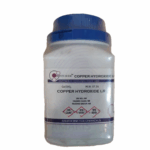


Copper powder Extra Pure
Original price was: $ 17.65.$ 17.56Current price is: $ 17.56.
Copper Powder Extra Pure is a fine, reddish-brown metallic powder used extensively in laboratory applications involving redox reactions, catalysis, and the synthesis of organometallic compounds. Its high purity ensures minimal interference from contaminants, making it suitable for analytical studies, electrochemical experiments, and educational demonstrations of metal reactivity and conductivity. This powder also serves as a reducing agent in specific chemical reactions and is often utilized in material science research for investigating particle behavior and surface area effects. It should be handled in a dry, inert environment and stored in tightly sealed containers to prevent oxidation.
Copper powder Extra Pure
Primary Uses
- Reagent in Redox Reactions
- Commonly used in single displacement or metal-acid reactions to demonstrate oxidation of copper to Cu²⁺.
- Catalyst in Organic Synthesis
- Acts as a surface catalyst in coupling reactions (e.g., Ullmann reaction) and reduction reactions.
- Source of Copper Ions in Inorganic Preparations
- Used to prepare various copper salts (e.g., copper nitrate, copper sulfate) by controlled reactions with acids.
- Material for Electrochemical Studies
- Used in electrode fabrication and galvanic cell setups for teaching and research on metallic conductivity and redox behavior.
Secondary Uses
- Demonstration of Combustion and Reactivity
- In powdered form, copper can be ignited in oxygen to demonstrate metal combustion and oxide layer formation.
- Microstructural Studies
- Applied in metallurgical labs to study particle size, sintering, and surface area effects on reactivity.
- Thermal Conductivity Experiments
- Used to compare the conductivity of metals in physics or chemistry experiments.
- Synthesis of Nanomaterials
- Acts as a precursor for copper oxide nanoparticles in laboratory-scale nanochemistry.
| PACK SIZE | 500 grams Plastic Tin |
|---|
1. Basic Identification Attributes
- Chemical Name: Copper (powder)
- CAS Number: 7440-50-8
- Chemical Formula: Cu
- Molar Mass: 63.55 g/mol
- Synonyms: Electrolytic copper, Copper metal powder
2. Physical & Chemical Properties
- Appearance: Reddish-brown metallic powder
- Odor: Odorless
- Particle Size: Typically fine to ultra-fine (varies by grade)
- Solubility:
- Insoluble in water
- Soluble in nitric acid and hot concentrated sulfuric acid
- Melting Point: ~1083 °C
- Boiling Point: ~2562 °C
- Electrical Conductivity: High
- Thermal Conductivity: High
3. Safety & Hazard Attributes
- GHS Classification:
- ⚠️ Warning
- H302: Harmful if swallowed
- H410: Very toxic to aquatic life with long-lasting effects
- Fire Hazard:
- Dust may be combustible; avoid dust cloud formation
- NFPA Ratings:
- Health: 1
- Flammability: 1
- Reactivity: 1
- First Aid Measures:
- Inhalation: Move to fresh air; seek medical advice
- Skin Contact: Wash thoroughly with soap and water
- Eye Contact: Rinse with water for at least 15 minutes
- Ingestion: Do not induce vomiting; seek medical attention
4. Storage & Handling Attributes
- Storage Conditions:
- Store in a cool, dry, well-ventilated area
- Protect from moisture and strong oxidizers
- Handling Advice:
- Minimize dust generation
- Use spark-proof tools if fine powder is airborne
- Container Recommendations: Airtight plastic or metal containers
5. Regulatory & Compliance Attributes
- EINECS Number: 231-159-6
- REACH Status: Registered
- UN Number: Not regulated for transport in bulk
6. Applications in Laboratory & Industry
- Laboratory Use:
- Reducing agent in chemical reactions
- Catalyst or catalyst precursor
- Metal ion standard in analytical chemistry
- Other Uses:
- Electrical and electronic applications
- Metallurgy and alloying
- Antimicrobial and conductive coatings
- Additive in 3D printing (metal powders)
SAFETY PRECAUTIONS
- PPE Required:
- Lab coat
- Safety goggles
- Nitrile gloves
- Dust mask or respirator if powder is airborne
- Handling:
- Avoid creating dust clouds
- Keep away from ignition sources—fine copper powder is combustible
- Handle in a fume hood or well-ventilated area
- Ground containers when transferring powder
- Storage:
- Store in tightly sealed containers
- Keep away from oxidizing agents, acids, and moisture
- Store in a cool, dry, fireproof location
FIRST AID MEASURES
- Inhalation:
- Move person to fresh air
- Seek medical attention if symptoms develop (e.g., metal fume fever)
- Skin Contact:
- Wash with soap and water
- Seek medical help if irritation occurs
- Eye Contact:
- Rinse immediately with water for at least 15 minutes
- Get medical attention if irritation persists
- Ingestion:
- Rinse mouth
- Seek immediate medical help
- Do not induce vomiting unless instructed by a professional
FIREFIGHTING MEASURES
- Flammability: Combustible as a fine powder
- Explosion Risk: Dust-air mixtures can be explosive
- Suitable Extinguishing Media:
- Use dry powder, Class D extinguisher, or sand
- DO NOT use water or CO₂—may react violently
- Firefighter Protection:
- Wear full protective gear and a self-contained breathing apparatus (SCBA)
Related products
Acetone Extra Pure
Acetone Extra Pure is a highly volatile, flammable, and colorless liquid widely used as a powerful solvent in laboratory and industrial applications. Known for its exceptional ability to dissolve a wide range of substances, it is commonly employed for cleaning laboratory glassware, thinning resins, and removing organic residues. In the cosmetics and pharmaceutical industries, acetone is used in nail polish removers and formulation processes. Its high evaporation rate and purity make it suitable for analytical procedures and synthesis work, especially where contaminant-free solvents are essential. With a distinct odor and low boiling point, Acetone Extra Pure is an indispensable reagent for both routine and specialized chemical operations.
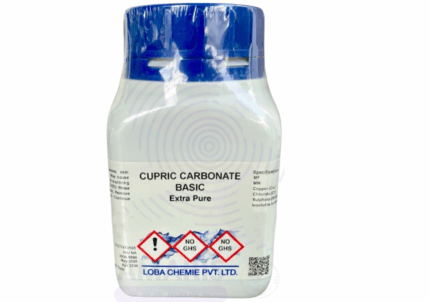
Cupric Carbonate Extra Pure
Cupric Carbonate Extra Pure is a fine, green, high-purity compound used in laboratories for inorganic synthesis, analytical chemistry, and educational demonstrations. It serves as a reliable source of copper ions in reactions and decomposes upon heating to form copper oxide, making it useful for studying thermal decomposition. In qualitative analysis, it is employed to observe characteristic reactions of copper salts. Its extra pure grade ensures minimal interference from impurities, supporting accurate experimental outcomes. Cupric carbonate should be handled in a dry environment and stored in tightly sealed containers to prevent degradation and maintain stability.
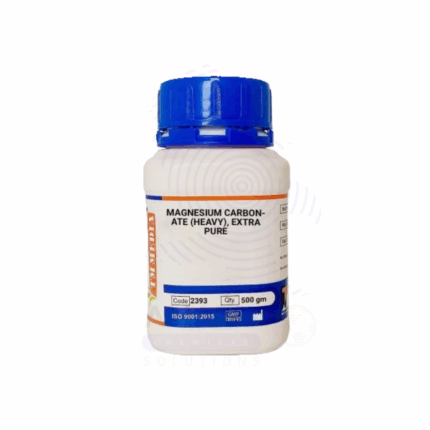
Magnesium Carbonate Heavy Extra Pure
Magnesium Carbonate Heavy Extra Pure is a denser, high-purity grade of magnesium carbonate known for its exceptional stability, low solubility in water, and high absorbent capacity. It is widely used in pharmaceutical formulations as an antacid and magnesium supplement, and in food processing as an anti-caking agent and food additive. Its heavier bulk density makes it ideal for industrial uses such as in rubber and plastic manufacturing, where it serves as a reinforcing filler. In cosmetics, it contributes to moisture control in powders and skin care products. It is also valued in laboratories for analytical applications where precision and consistency are essential.
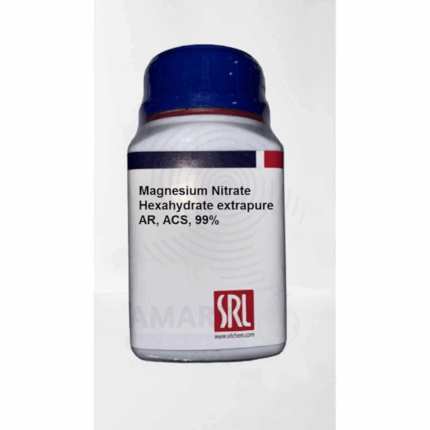
Magnesium Nitrate Hexahydrate Extra Pure
Magnesium Nitrate Hexahydrate Extra Pure is a crystalline compound known for its high solubility in water and exceptional purity, making it suitable for both laboratory and industrial applications. In analytical chemistry, it is commonly used as a reagent for preparing standard solutions and as a source of magnesium ions in various experimental procedures. Its oxidizing properties make it valuable in pyrotechnics and fertilizer formulations, where it provides essential nutrients for plant growth. This compound is also employed in ceramic production, textile treatments, and catalyst preparations, where a consistent, high-quality nitrate source is required. Its extra pure grade ensures minimal contamination, essential for high-precision work.
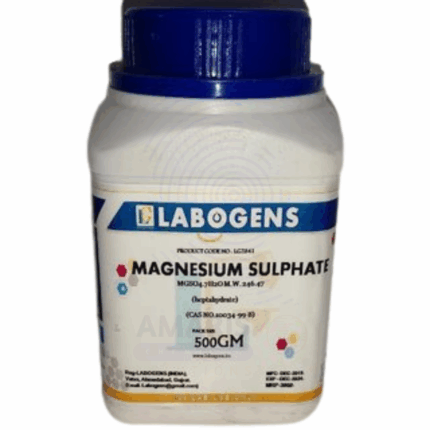
Magnesium Sulphate Extra Pure
Magnesium Sulphate Extra Pure is a high-purity, inorganic compound commonly appearing as a white crystalline powder or granules. It is primarily valued in laboratories for its role as a source of magnesium ions in chemical analysis and biological experiments. This compound is widely used in buffer preparation, dehydration processes, and precipitation reactions due to its excellent solubility in water. In addition to lab applications, it also serves purposes in pharmaceutical formulations, cosmetics, and agriculture as a magnesium supplement. Its extra pure grade ensures minimal impurities, making it suitable for sensitive research and analytical tasks.
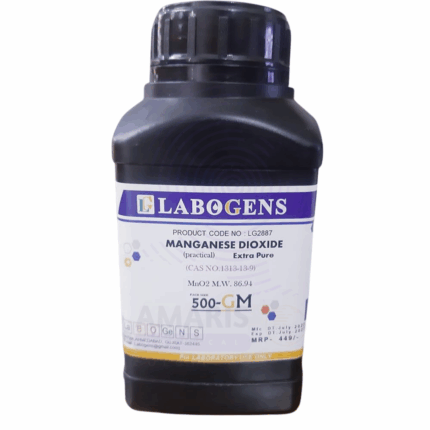
Manganese Dioxide Extra Pure
Manganese Dioxide Extra Pure is a high-purity, dark brown or black powder widely used in laboratories and industrial processes for its strong oxidizing properties. In analytical chemistry, it serves as an effective oxidizing agent and is often involved in the decomposition of hydrogen peroxide and other redox reactions. It is also used in the preparation of oxygen and chlorine gases in laboratory settings. Beyond the lab, manganese dioxide plays a crucial role in battery manufacturing, particularly in dry cell batteries, and in ceramics and glass production for coloring and decolorizing. Its consistent purity makes it ideal for sensitive experiments and formulations.
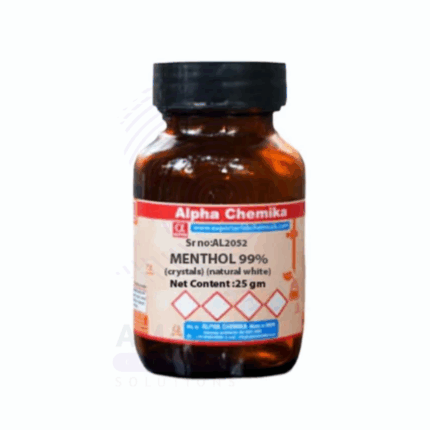
Menthol Crystals Extra Pure
Menthol Crystals Extra Pure are colorless to white, needle-like crystals derived from peppermint or other mint oils and refined to the highest purity. Known for their strong, refreshing minty aroma, they are widely used in pharmaceutical, cosmetic, and personal care formulations. These crystals provide a cooling sensation on the skin and mucous membranes, making them a common ingredient in balms, liniments, throat lozenges, and inhalants. In laboratories, menthol crystals are also used in sensory studies and product development. Their purity ensures consistent performance and minimal interference in sensitive formulations.
Methyl Orange Disodium Salt Extra Pure
Methyl Orange Disodium Salt Extra Pure is a high-purity pH indicator commonly used in titrations and analytical chemistry to determine acidity levels. It exhibits a sharp color change from red in acidic environments to yellow in alkaline conditions, typically within the pH range of 3.1 to 4.4. This disodium salt form ensures excellent solubility in water, making it especially reliable for use in aqueous solutions. Its stability and sensitivity make it ideal for laboratory applications involving strong acid–base reactions, particularly in titrations of mineral acids. Methyl Orange Disodium Salt Extra Pure is a trusted choice for consistent and accurate results in both educational and professional lab settings.












