

 Preservatives(food)
 Flavor Enhancers
 Acidulants
 Sweeteners
 Antioxidants
 Colorants(food)
 Nutraceutical Ingredients (food)
 Nutrient Supplements
 Emulsifiers
 Collectors
 Dust Suppressants
 Explosives and Blasting Agents
 Flocculants and Coagulants
 Frothers
 Leaching Agents
 pH Modifiers
 Precious Metal Extraction Agents
 Antioxidants(plastic)
 Colorants (Pigments, Dyes)
 Fillers and Reinforcements
 Flame Retardants
 Monomers
 Plasticizers
 Polymerization Initiators
 Stabilizers (UV, Heat)
 Antifoaming Agents
 Chelating Agents
 Coagulants and Flocculants
 Corrosion Inhibitors
 Disinfectants and Biocides
 Oxidizing Agents
 pH Adjusters
 Scale Inhibitors( water)
 Antioxidants(cosmetic)
 Emollients
 Fragrances and Essential Oils
 Humectants
 Preservatives
 Surfactants(cosmetic)
 Thickeners
 UV Filters
 Fertilizers
 Soil Conditioners
 Plant Growth Regulators
 Animal Feed Additives
 Biostimulants
 Pesticides (Herbicides, Insecticides, Fungicides)
 Active Pharmaceutical Ingredients (APIs)
 Excipients
 Solvents(pharmaceutical)
 Antibiotics
 Antiseptics and Disinfectants
 Vaccine Adjuvants
 Nutraceutical Ingredients (pharmaceutical)
 Analgesics & Antipyretics
 Analytical Reagents
 Solvents(lab)
 Chromatography Chemicals
 Spectroscopy Reagents
 microbiology-and-cell-culture-reagents
 Molecular Biology Reagents
 Biochemical Reagents
 Inorganic and Organic Standards
 Laboratory Safety Chemicals
 Specialty Laboratory Chemicals(Special Laboratory Equipment)
 Demulsifiers
 Hydraulic Fracturing Fluids
 Scale Inhibitors(oil)
 Surfactants(oil)
 Drilling Fluids
 Dyes and Pigments
 Bleaching Agents
 Softening Agents
 Finishing Agents
 Antistatic Agents
 Admixtures
 Waterproofing Agents
 Sealants and Adhesives
 Curing Compounds
 Concrete Repair Chemicals
 Anti-Corrosion Coatings
 Surfactants(cleaning)
 Builders
 Enzymes
 Solvents (Cleaning)
 Fragrances
 Electronic Chemicals
 Catalysts
 Lubricants
 Photographic Chemicals
 Refrigerants
 Automotive chemicals
 Pyrotechnic Chemicals
 Biodegradable Surfactants
 Bio-based Solvents
 Renewable Polymers
 Carbon Capture Chemicals
 Wastewater Treatment Chemicals
 Pigments
 Solvents(paint)
 Specialty Coatings
 Binders/Resins
 Additives
 Driers
 Anti-Corrosion Agents
 Functional Coatings
 Application-Specific Coatings
 Leavening Agents
 Dough Conditioners
 Flour Treatments
 Fat Replacers
 Decoratives
 Preservatives(baking)
 Plasticizers & Softeners
 Reinforcing Agents
 Adhesion Promoters
 Vulcanizing Agents
 Antidegradants
 Blowing Agents
 Fillers & Extenders
 Accelerators & Retarders

Deionizer Elga Can
Original price was: $ 116.22.$ 116.02Current price is: $ 116.02.
Deionizer Elga Can is a compact, high-efficiency water purification cartridge designed for laboratory and industrial use. It contains mixed-bed ion exchange resins that effectively remove dissolved ionic contaminants, producing high-purity deionized water. This unit is ideal for applications requiring ultrapure water free from minerals, salts, and other charged impurities. The Elga Can is designed for easy integration into existing water systems and is widely used in analytical, biochemical, and industrial processes that demand controlled water quality.
Deionizer Elga Can
Primary Uses
- Laboratory Applications
Produces deionized water for use in preparing analytical reagents and buffers.
• Supports biochemical experiments requiring low-conductivity water.
• Used in cleaning glassware and instruments to avoid mineral residue.
• Supplies water for spectroscopic and chromatographic analysis procedures.
Secondary Uses
- Industrial Applications
Supplies high-purity water for electronics manufacturing and circuit board rinsing.
• Used in pharmaceutical and cosmetic production lines requiring contaminant-free water.
• Integrated into water loops for boiler feed and cooling systems.
• Assists in quality control processes where mineral contamination affects results.
1.Basic Identification Attributes
• Product Type: Deionizing Cartridge
• Brand: Elga
• Function: Removal of ionic contaminants from water
• Composition: Mixed-bed ion exchange resin
2.Physical & Chemical Properties
• Appearance: Sealed plastic canister filled with resin beads
• Capacity: Varies by model; typically several liters
• Flow Rate: Suitable for low to medium throughput
• Output Water Conductivity: ≤0.1 µS/cm (depending on input quality)
3.Safety & Hazard Attributes
• Toxicity: Non-toxic under normal use
• Allergen Information: None known
• Mechanical Risk: Pressurized water systems may pose leak hazards if improperly installed
4.Storage & Handling Attributes
• Storage Conditions: Store in dry, cool conditions; avoid freezing
• Handling Precautions: Do not expose to direct sunlight or physical damage
• Container Type: Hard plastic sealed casing
5.Regulatory & Compliance Attributes
• Compliant with laboratory and industrial water purification standards
• Suitable for GMP-compliant manufacturing environments
6.Environmental & Health Impact
• Resin disposal must comply with local waste treatment regulations
• Product is non-reactive and inert under normal use
Safety Handling Precautions
• Ensure proper installation to avoid leaks
• Wear gloves when replacing spent cartridges
• Label system to prevent use with incompatible liquids
First Aid Measures
• Inhalation: Not applicable
• Skin Contact: Rinse with water if irritation occurs
• Eye Contact: Rinse thoroughly if resin particles contact eyes
• Ingestion: Not intended for consumption; seek medical advice if ingested
Firefighting Measures
• Fire Hazard: Minimal; resin material is slow-burning
• Extinguishing Media: Water spray, dry chemical, foam
• Special Precautions: Avoid inhalation of combustion fumes in enclosed spaces
Related products
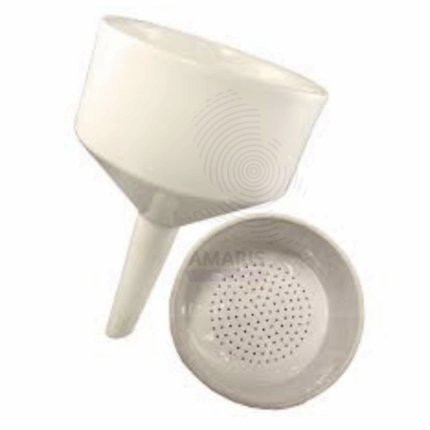
Buchner Funnel
The Buchner Funnel is a laboratory filtration device used for vacuum filtration processes. It typically consists of a flat, perforated plate covered with a filter paper, housed in a cylindrical funnel. Made from porcelain, glass, or plastic, the Buchner Funnel allows for rapid filtration by applying vacuum suction, which speeds up the separation of solids from liquids. It is widely used in chemical, biological, and pharmaceutical laboratories for efficient solid-liquid separation during sample preparation, purification, and analysis.
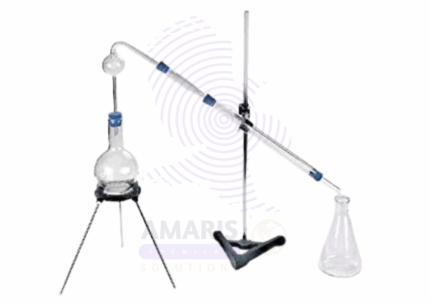
Complete Liebigs Distillation Apparatus
Complete Liebigs Distillation Apparatus is a classic laboratory setup used for the distillation of liquids by heating and subsequent condensation. It consists of a distillation flask, Liebig condenser, receiving flask, and necessary connecting joints. The Liebig condenser efficiently cools vapor back into liquid form using a water jacket. This apparatus is widely used in chemistry labs for purifying liquids, separating mixtures, and studying boiling points.
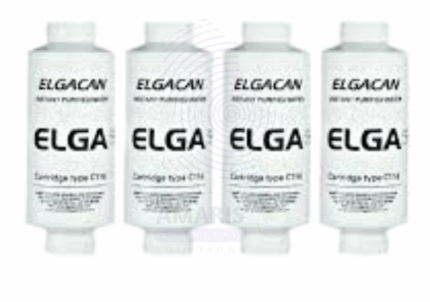
Deionizer With 4 Elga Cans
Deionizer with 4 Elga Cans is a high-capacity water purification system engineered for continuous production of deionized water in laboratory and industrial environments. The system uses four Elga mixed-bed ion exchange cartridges working in parallel or series to ensure extended operation, high throughput, and superior water quality. It removes dissolved ions and minerals effectively, producing ultra-low conductivity water ideal for sensitive analytical, biochemical, and production processes. The modular setup allows for easy replacement and maintenance, making it a reliable solution for facilities with high-purity water demands.
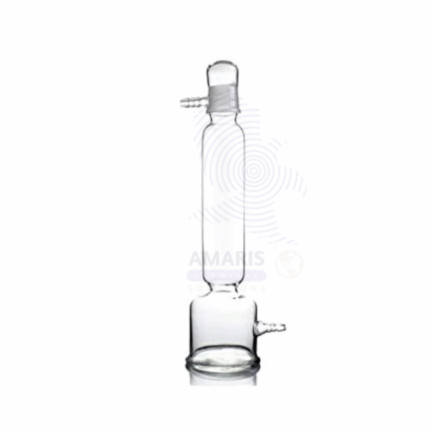
Drying Tower
Drying Tower is a vertical apparatus designed for moisture removal from gases in laboratory and industrial settings. It typically contains desiccants that absorb water vapor to supply dry gases necessary for sensitive chemical processes, gas purification, and environmental applications. Constructed from chemically resistant materials, Drying Towers maintain controlled humidity levels critical for consistent laboratory and industrial operations.
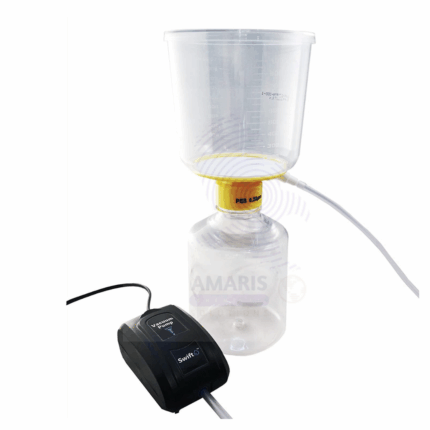
Filter Pump
Filter Pump is a laboratory device designed to create a vacuum using water or air flow to assist in filtration processes. Typically made from corrosion-resistant metal, plastic, or a combination of both, it operates by utilizing the Venturi effect to generate negative pressure. This suction power is ideal for accelerating vacuum filtration by drawing liquid through filter media quickly and efficiently. Filter pumps are commonly used in chemical, biological, environmental, and industrial laboratories where rapid and effective liquid-solid separation is required. They are a cost-effective and reliable alternative to mechanical vacuum pumps in many low-to-moderate vacuum applications.
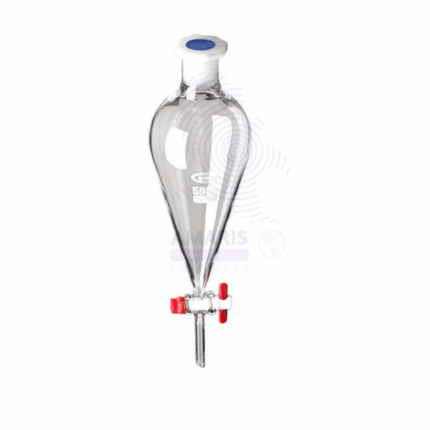
Separating funnel
Separating Funnels are essential laboratory glassware designed for liquid-liquid extraction and phase separation procedures. Constructed from chemically resistant borosilicate glass, these funnels feature a conical body with a stopcock at the base and a ground glass stopper at the top for secure sealing. They are used to separate immiscible liquids based on their densities, allowing precise and safe transfer of liquid layers during chemical extractions, washing, or purification. Available in 60ml and 125ml volumes, these funnels provide versatility for various scales of laboratory applications, widely employed in organic synthesis, pharmaceutical labs, and research facilities.

U Tube Lab Glass With Side Arms
U Tube Lab Glass with Side Arms is a specialized U-shaped borosilicate glass apparatus featuring additional side arms for fluid or gas connections. Designed for laboratory experiments involving pressure measurement, fluid flow, and gas displacement, this device offers enhanced versatility. Made from chemically resistant, durable glass, it withstands temperature fluctuations and chemical exposure. The side arms facilitate easy integration with tubing and other equipment, enabling complex experimental setups in physics, chemistry, and engineering labs. It is widely used in manometer applications, vacuum experiments, and fluid dynamics research.

Visking Tube
Visking Tube is a high-quality dialysis tubing made from regenerated cellulose, designed for laboratory use in separation and diffusion experiments. This semi-permeable membrane allows the selective passage of small molecules and ions while retaining larger molecules, making it ideal for dialysis, osmosis, and molecular weight determination studies. The tubing is durable, chemically resistant, and flexible, facilitating easy handling and secure sealing during experiments. Commonly used in biochemistry, molecular biology, and clinical laboratories, Visking Tube 1 Metre is essential for applications requiring molecular separation and purification.












