

 Preservatives(food)
 Flavor Enhancers
 Acidulants
 Sweeteners
 Antioxidants
 Colorants(food)
 Nutraceutical Ingredients (food)
 Nutrient Supplements
 Emulsifiers
 Collectors
 Dust Suppressants
 Explosives and Blasting Agents
 Flocculants and Coagulants
 Frothers
 Leaching Agents
 pH Modifiers
 Precious Metal Extraction Agents
 Antioxidants(plastic)
 Colorants (Pigments, Dyes)
 Fillers and Reinforcements
 Flame Retardants
 Monomers
 Plasticizers
 Polymerization Initiators
 Stabilizers (UV, Heat)
 Antifoaming Agents
 Chelating Agents
 Coagulants and Flocculants
 Corrosion Inhibitors
 Disinfectants and Biocides
 Oxidizing Agents
 pH Adjusters
 Scale Inhibitors( water)
 Antioxidants(cosmetic)
 Emollients
 Fragrances and Essential Oils
 Humectants
 Preservatives
 Surfactants(cosmetic)
 Thickeners
 UV Filters
 Fertilizers
 Soil Conditioners
 Plant Growth Regulators
 Animal Feed Additives
 Biostimulants
 Pesticides (Herbicides, Insecticides, Fungicides)
 Active Pharmaceutical Ingredients (APIs)
 Excipients
 Solvents(pharmaceutical)
 Antibiotics
 Antiseptics and Disinfectants
 Vaccine Adjuvants
 Nutraceutical Ingredients (pharmaceutical)
 Analgesics & Antipyretics
 Analytical Reagents
 Solvents(lab)
 Chromatography Chemicals
 Spectroscopy Reagents
 microbiology-and-cell-culture-reagents
 Molecular Biology Reagents
 Biochemical Reagents
 Inorganic and Organic Standards
 Laboratory Safety Chemicals
 Specialty Laboratory Chemicals(Special Laboratory Equipment)
 Demulsifiers
 Hydraulic Fracturing Fluids
 Scale Inhibitors(oil)
 Surfactants(oil)
 Drilling Fluids
 Dyes and Pigments
 Bleaching Agents
 Softening Agents
 Finishing Agents
 Antistatic Agents
 Admixtures
 Waterproofing Agents
 Sealants and Adhesives
 Curing Compounds
 Concrete Repair Chemicals
 Anti-Corrosion Coatings
 Surfactants(cleaning)
 Builders
 Enzymes
 Solvents (Cleaning)
 Fragrances
 Electronic Chemicals
 Catalysts
 Lubricants
 Photographic Chemicals
 Refrigerants
 Automotive chemicals
 Pyrotechnic Chemicals
 Biodegradable Surfactants
 Bio-based Solvents
 Renewable Polymers
 Carbon Capture Chemicals
 Wastewater Treatment Chemicals
 Pigments
 Solvents(paint)
 Specialty Coatings
 Binders/Resins
 Additives
 Driers
 Anti-Corrosion Agents
 Functional Coatings
 Application-Specific Coatings
 Leavening Agents
 Dough Conditioners
 Flour Treatments
 Fat Replacers
 Decoratives
 Preservatives(baking)
 Plasticizers & Softeners
 Reinforcing Agents
 Adhesion Promoters
 Vulcanizing Agents
 Antidegradants
 Blowing Agents
 Fillers & Extenders
 Accelerators & Retarders



Disodium Phosphate
Original price was: $ 1.34.$ 1.32Current price is: $ 1.32.
Disodium Phosphate, also known as sodium phosphate dibasic, is an inorganic compound widely used for its buffering, emulsifying, and chelating properties. It commonly appears as a white, odorless crystalline powder or granules that are highly soluble in water and alkaline in nature. Disodium Phosphate plays a vital role in regulating pH, improving stability in formulations, and providing essential sodium and phosphate ions. It finds extensive use across food processing, pharmaceuticals, water treatment, agriculture, and industrial applications.
Disodium Phosphate
Primary Uses
- Food & Beverage Industry
- Functions as a pH regulator and buffering agent in processed foods and beverages.
- Used as an emulsifier and stabilizer in dairy products such as cheese and powdered milk.
- Acts as a sequestrant to prevent metal ion-catalyzed oxidation and rancidity.
- Enhances moisture retention and improves the texture of meat and seafood products.
- Serves as a leavening agent in baking powders when combined with acidic components.
- Added to nutritional supplements and fortified foods as a source of sodium and phosphate.
- Pharmaceuticals & Healthcare
- Used as a buffering agent in injectable drugs, oral solutions, and rehydration salts.
- Functions as an excipient in tablets to improve compressibility and release characteristics.
- Incorporated into parenteral nutrition formulations to deliver essential electrolytes.
- Applied in dental hygiene products like toothpaste and mouthwash for tartar control.
- Water Treatment
- Helps control pH and prevents scaling and corrosion in boiler water and cooling systems.
- Used to soften water by sequestering calcium and magnesium ions.
- Serves as a dispersing agent to maintain even particle distribution in water systems.
- Agriculture & Fertilizers
- Supplies essential phosphate nutrients in fertilizers and soil conditioners.
- Utilized in hydroponic systems to maintain phosphate levels for optimal plant growth.
- Industrial Applications
- Employed in detergents and cleaners as a builder to enhance cleaning efficiency and pH balance.
- Used in ceramic and textile industries as a dispersing and buffering agent.
- Assists in paper manufacturing by improving the brightness and retention of pigments.
Secondary Uses
- Laboratory Reagent
- Used to prepare buffer solutions in biochemical, enzymatic, and molecular biology research.
- Maintains pH during analytical and diagnostic procedures.
- Cosmetics & Personal Care
- Functions as a pH adjuster and chelating agent in formulations like creams, shampoos, and lotions.
- Helps stabilize emulsions and prevent degradation of active ingredients.
- Animal Feed
- Added to animal feed premixes to provide a bioavailable source of phosphate and sodium.
- Supports bone development and metabolic processes in livestock and poultry.
| PACK SIZE | 50kg |
|---|
1. Basic Identification Attributes
- Chemical Name (IUPAC): Disodium hydrogen phosphate
- Common/Trade Name: Disodium Phosphate
- CAS Number: 7558-79-4
- HS Code: 2835.25.00
- Molecular Formula: Na₂HPO₄·xH₂O (can be anhydrous or hydrated: dihydrate, heptahydrate, etc.)
- Synonyms:
- Sodium phosphate dibasic
- Disodium hydrogen phosphate
- Sodium hydrogen phosphate
2. Physical & Chemical Properties
- Physical State: White crystalline powder or granules
- Odor: Odorless
- Melting Point: Decomposes at ~100–200°C depending on hydration
- Solubility: Highly soluble in water; insoluble in alcohol
- pH (1% aqueous solution): Approximately 8.0–10.0
- Stability: Stable under recommended storage; hygroscopic in nature
3. Safety & Hazard Attributes
- Hazard Class (GHS): Not classified as hazardous
- Toxicity: Low toxicity; generally recognized as safe (GRAS) for food use
- Exposure Limits: No specific occupational exposure limits defined
4. Storage & Handling Attributes
- Storage Conditions: Store in a cool, dry, well-ventilated area; protect from moisture
- Container Type: Paper or fiber bags with polyethylene liners, HDPE drums
- Shelf Life: Typically 2–3 years if properly stored
- Handling Precautions: Minimize dust formation; avoid contact with eyes and skin
5. Regulatory & Compliance Attributes
- Approved for use in food, pharmaceuticals, and personal care products worldwide
- Listed in USP, EP, BP, and FCC (Food Chemicals Codex)
- Compliant with REACH, FDA, and other international chemical standards
6. Environmental & Health Impact
- Ecotoxicity: Low potential for aquatic toxicity
- Persistence: Biodegradable and not persistent in the environment
- Bioaccumulation: Not expected
- Carcinogenicity/Mutagenicity: Not classified as carcinogenic or mutagenic
Safety Handling Precautions
PPE Required:
- Dust mask or respirator (for dusty environments)
- Safety goggles
- Gloves (nitrile or latex)
- Protective lab coat or apron
Handling Guidelines:
- Work in a well-ventilated space
- Avoid inhaling dust or allowing it to contact eyes or skin
- Use appropriate containment during transfer
Storage Measures:
- Keep container sealed and dry
- Avoid exposure to moisture and strong acids
- Store in a corrosion-resistant area away from incompatible substances
Hygiene Practices:
- Wash hands thoroughly after use
- Avoid eating, drinking, or smoking while handling
- Maintain a clean workspace to prevent contamination
First Aid Measures
- Inhalation: Move to fresh air; seek medical attention if irritation persists
- Skin Contact: Wash thoroughly with soap and water; seek medical help if irritation occurs
- Eye Contact: Flush eyes with plenty of water for at least 15 minutes; consult a physician if irritation continues
- Ingestion: Rinse mouth with water; generally non-toxic in small amounts, but seek medical attention if large quantities are ingested
Firefighting Measures
- Fire Hazards: Non-combustible; does not support combustion
- Extinguishing Media: Use water spray, foam, dry chemical, or CO₂ depending on the surrounding fire
- Special Precautions: Use appropriate protective gear
- Decomposition Products: May release sodium oxides and phosphorus oxides under extreme heat
Related products
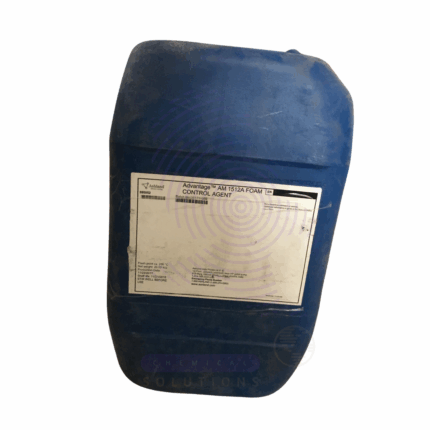
Anti Foam
Anti foams are chemical additives designed to reduce or prevent the formation of foam in industrial processes, manufacturing, and various formulations. Foam can interfere with operations such as mixing, filling, pumping, and heat transfer, leading to reduced efficiency or defects in products. Anti foams work by destabilizing foam bubbles, causing them to coalesce and collapse rapidly. They are widely used in industries including food and beverage, pharmaceuticals, wastewater treatment, paints and coatings, and chemical manufacturing. Different types of anti foams include silicone-based, mineral oil-based, and organic polymer-based formulations, chosen according to the specific application and process conditions.
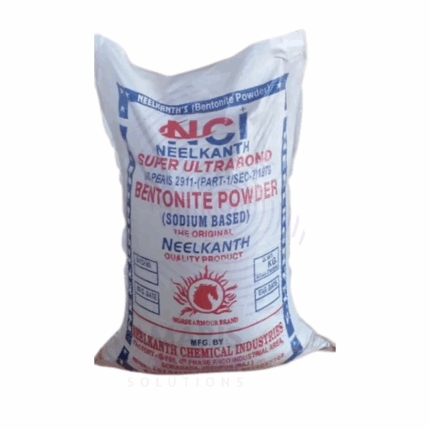
Bentonite Powder
Bentonite powder is a naturally occurring absorbent clay primarily composed of montmorillonite, a type of smectite clay mineral. It exhibits excellent swelling and water absorption properties, making it highly versatile in industrial and commercial applications. Bentonite forms a gel-like substance when mixed with water, which imparts viscosity and plasticity. It is used extensively for its binding, sealing, and adsorptive characteristics. Its fine powder form allows for easy incorporation in various processes including drilling, foundry, cosmetics, pharmaceuticals, and agriculture.

Calcium Chloride
Calcium Chloride is an inorganic salt composed of calcium and chlorine with the chemical formula CaCl₂. It typically appears as a white crystalline solid or granular powder, highly soluble in water and exhibiting strong hygroscopic properties. Calcium Chloride is widely used for its moisture-absorbing ability, de-icing, dust control, and as a firming agent in food processing. It finds extensive applications across industrial, pharmaceutical, agricultural, and food sectors due to its efficacy in modifying physical and chemical properties of products and environments.

CMC Sodium Blanose
CMC Sodium Blanose is a high-purity, pharmaceutical- and food-grade Sodium Carboxymethyl Cellulose (CMC), manufactured under the Blanose® brand by Ashland or equivalent producers. It is a water-soluble, anionic cellulose ether derived from natural cellulose, designed for superior consistency, clarity, and performance. CMC Blanose serves as a thickening agent, stabilizer, binder, film former, and emulsifier in a wide variety of applications. Known for its excellent rheological control and water retention, it is widely used across the food, pharmaceutical, personal care, and industrial sectors, offering reliable performance with batch-to-batch consistency.
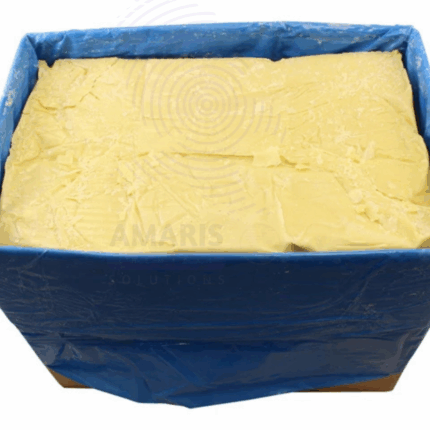
Cocoa Butter
Cocoa Butter, also known as Theobroma oil, is a pale-yellow, edible fat extracted from cocoa beans, primarily from Theobroma cacao. It has a smooth, creamy texture and a mild, characteristic chocolate aroma. Cocoa Butter is solid at room temperature but melts near body temperature, which gives it a luxurious feel when applied to skin or consumed. It is highly valued for its emollient, moisturizing, and protective properties. Cocoa Butter is widely used in cosmetics, pharmaceuticals, food, and confectionery industries. Its stable composition rich in fatty acids such as stearic, palmitic, and oleic acids imparts excellent oxidative stability and a long shelf life.
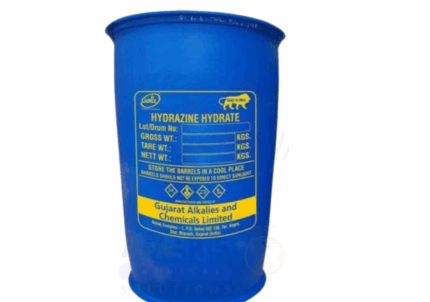
Hydrazine Food Grade
Hydrazine Food Grade is a high-purity form of hydrazine (N₂H₄), a highly reactive, colorless, and fuming liquid with a pungent ammonia-like odor. It is a powerful reducing agent and chemical intermediate widely used in industrial applications. The food-grade specification ensures purity and controlled impurity levels suitable for limited and specialized food industry uses, primarily as a processing aid or sterilizing agent. Hydrazine exhibits strong nucleophilic and reducing properties, enabling various chemical transformations and sterilization processes.
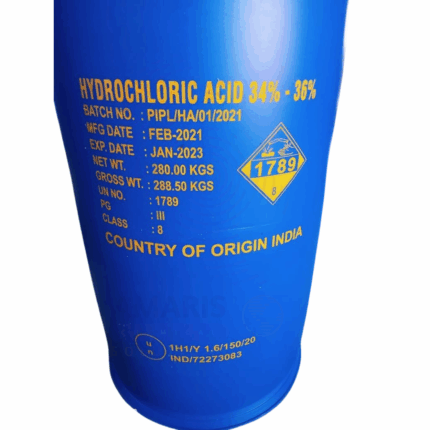
Hydrochloric Acid
Hydrochloric Acid HCL is a highly corrosive, strong mineral acid consisting of hydrogen chloride gas dissolved in water to a concentration of approximately 33% by weight. It appears as a clear, colorless to slightly yellow liquid with a sharp, pungent odor. HCl 33% is widely used in industrial, chemical, and laboratory applications due to its strong acidic properties, high reactivity, and versatility. It plays a crucial role in pH control, metal processing, chemical synthesis, and cleaning processes across numerous sectors.
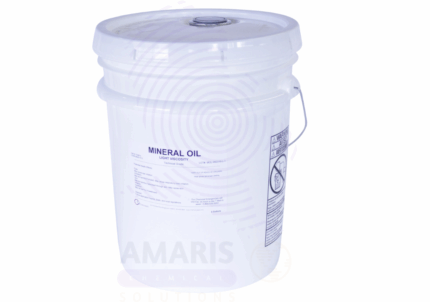
Light White Mineral Oil Tech Grade
Light White Mineral Oil Tech Grade is a highly refined, colorless, odorless, and tasteless petroleum-derived oil. It is characterized by its low viscosity and excellent lubricating properties. This technical-grade mineral oil undergoes stringent purification processes to remove impurities, making it suitable for various industrial, cosmetic, pharmaceutical, and food-related applications. Its chemical stability, non-reactivity, and safety profile make it a versatile ingredient and lubricant in many manufacturing and processing sectors.












