

 Preservatives(food)
 Flavors
 Acidulants
 Sweeteners
 Antioxidants
 Colorants(food)
 Nutraceutical Ingredients (food)
 Nutrient Supplements
 Emulsifiers
 Collectors
 Dust Suppressants
 Explosives and Blasting Agents
 Flocculants and Coagulants
 Frothers
 Leaching Agents
 pH Modifiers
 Precious Metal Extraction Agents
 Antioxidants(plastic)
 Colorants (Pigments, Dyes)
 Fillers and Reinforcements
 Flame Retardants
 Monomers
 Plasticizers
 Polymerization Initiators
 Stabilizers (UV, Heat)
 Antifoaming Agents
 Chelating Agents
 Coagulants and Flocculants
 Corrosion Inhibitors
 Disinfectants and Biocides
 Oxidizing Agents
 pH Adjusters
 Scale Inhibitors( water)
 Antioxidants(cosmetic)
 Emollients
 Oils
Oils Carrier Oills
 Essential Oils
 Humectants
 Preservatives
 Surfactants(cosmetic)
 Thickeners
 UV Filters
 Fragrance (Cosmetics)
 Fertilizers
 Soil Conditioners
 Plant Growth Regulators
 Animal Feed Additives
 Biostimulants
 Pesticides (Herbicides, Insecticides, Fungicides)
 Active Pharmaceutical Ingredients (APIs)
 Excipients
 Solvents(pharmaceutical)
 Antibiotics
 Antiseptics and Disinfectants
 Vaccine Adjuvants
 Nutraceutical Ingredients (pharmaceutical)
 Analgesics & Antipyretics
 Analytical Reagents
 Solvents(lab)
 Chromatography Chemicals
 Spectroscopy Reagents
 microbiology-and-cell-culture-reagents
 Molecular Biology Reagents
 Biochemical Reagents
 Inorganic and Organic Standards
 Laboratory Safety Chemicals
 Specialty Laboratory Chemicals(Special Laboratory Equipment)
 Demulsifiers
 Hydraulic Fracturing Fluids
 Scale Inhibitors(oil)
 Surfactants(oil)
 Drilling Fluids
 Dyes and Pigments
 Bleaching Agents
 Softening Agents
 Finishing Agents
 Antistatic Agents
 Admixtures
 Waterproofing Agents
 Sealants and Adhesives
 Curing Compounds
 Concrete Repair Chemicals
 Anti-Corrosion Coatings
 Surfactants(cleaning)
 Builders
 Enzymes
 Solvents (Cleaning)
 Electronic Chemicals
 Catalysts
 Lubricants
 Photographic Chemicals
 Refrigerants
 Automotive chemicals
 Pyrotechnic Chemicals
 Biodegradable Surfactants
 Bio-based Solvents
 Renewable Polymers
 Carbon Capture Chemicals
 Wastewater Treatment Chemicals
 Pigments
 Solvents(paint)
 Specialty Coatings
 Binders/Resins
 Additives
 Driers
 Anti-Corrosion Agents
 Functional Coatings
 Application-Specific Coatings
 Leavening Agents
 Dough Conditioners
 Flour Treatments
 Fat Replacers
 Decoratives
 Preservatives(baking)
 Plasticizers & Softeners
 Reinforcing Agents
 Adhesion Promoters
 Vulcanizing Agents
 Antidegradants
 Blowing Agents
 Fillers & Extenders
 Accelerators & Retarders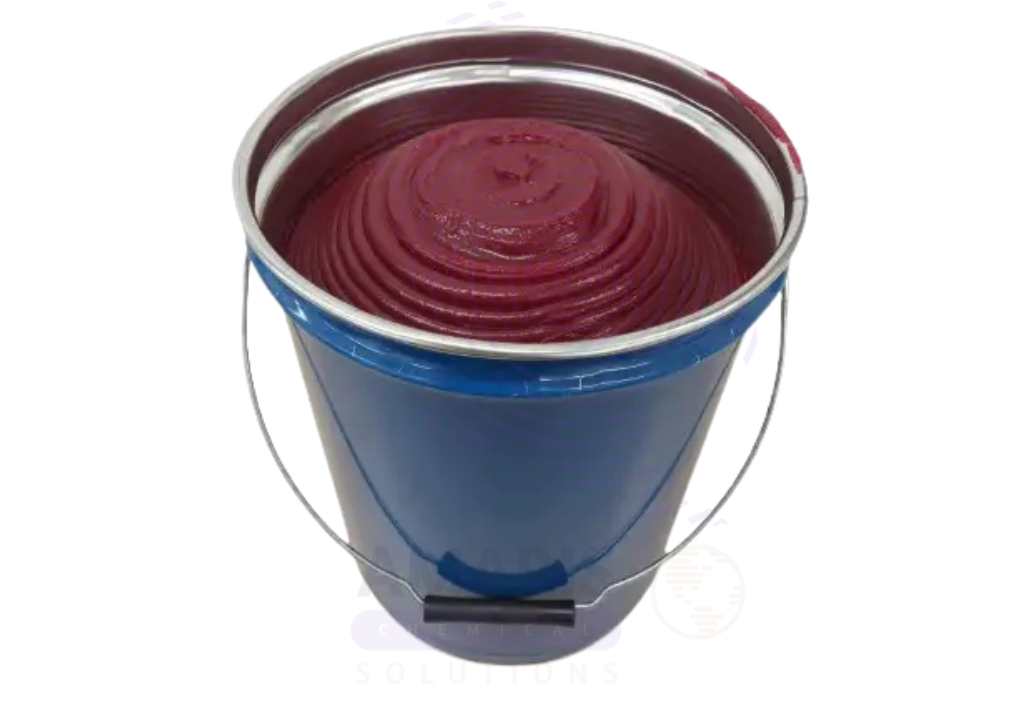


High Temperature Grease Extra Pure
Original price was: $ 18.15.$ 18.09Current price is: $ 18.09.
High Temperature Grease Extra Pure is a premium-grade lubricant formulated to perform reliably under extreme heat and pressure conditions. It is designed for use in high-temperature environments where conventional greases may break down, such as in bearings, ovens, kilns, and heavy industrial machinery. With excellent thermal stability, water resistance, and oxidation resistance, this grease ensures long-lasting protection against wear, corrosion, and metal-to-metal contact. Its extra pure formulation makes it ideal for laboratory, precision engineering, and specialty manufacturing applications where contamination control and performance are critical.
High Temperature Grease Extra Pure
Primary Uses
- Lubrication of high-temperature equipment joints and seals:
Essential for greasing ground glass joints, stopcocks, valves, and other moving parts in vacuum systems and ovens, where conventional lubricants would degrade. - Thermal stability in vacuum or reaction apparatus:
Maintains its consistency and lubricating properties at elevated temperatures, making it ideal for autoclaves, furnaces, and reflux systems.
Secondary Uses
- Sealing joints in chemical apparatus to prevent gas leaks:
Commonly applied to ensure airtight seals in setups involving inert gas environments or sensitive reactions. - Protection of metal surfaces from corrosion or oxidation:
Used to coat exposed metal parts to protect against chemical vapors or moisture during prolonged experiments. - Insulation barrier in electrical setups exposed to heat:
Serves as a non-conductive thermal barrier in high-temperature electronic instruments and lab sensors.
1. Basic Identification Attributes
- Product Name: High Temperature Grease
- Grade: Extra Pure (Laboratory/Technical Grade)
- Type: Typically synthetic or semi-synthetic lubricant thickened with a metal soap (e.g., lithium complex, calcium sulfonate)
- Appearance: Smooth, viscous paste; usually off-white, tan, or red in color
- Odor: Mild hydrocarbon-like or odorless
2. Physical & Chemical Properties
- Dropping Point: >250 °C (varies with formulation)
- Working Temperature Range: -20 °C to +250 °C (can vary higher depending on type)
- NLGI Grade (typical): 2 (semi-solid consistency)
- Base Oil Viscosity: High (commonly synthetic esters or PAO)
- Water Resistance: Excellent (depending on thickener and additives)
- Solubility:
- Insoluble in water
- Slightly soluble in hydrocarbons or solvents
3. Safety & Hazard Attributes
- GHS Classification:
⚠️ Not typically classified as hazardous, but may contain additives that are irritants or toxic at high concentrations - Hazard Statements (if applicable):
- H315: Causes skin irritation (if contact is prolonged)
- H319: Causes eye irritation
- H336: May cause drowsiness or dizziness (from vapors during heating)
- H411: Toxic to aquatic life with long-lasting effects (if zinc- or lead-based additives present)
- PPE Requirements:
- Safety goggles
- Chemical-resistant gloves
- Protective clothing (lab coat)
- Avoid inhaling fumes if heated
- First Aid Measures:
- Skin Contact: Wash with soap and water
- Eye Contact: Rinse thoroughly with water
- Inhalation (heated fumes): Move to fresh air
- Ingestion: Seek medical advice
4. Storage & Handling Attributes
- Storage Conditions:
- Store in a cool, dry, well-ventilated area
- Keep container tightly closed
- Avoid contamination with dirt or water
- Handling Notes:
- Avoid contact with hot surfaces or open flames
- Clean spills promptly—can cause slip hazard
5. Regulatory & Compliance Attributes
- DOT Classification: Non-regulated
- Labeling: General chemical hygiene labeling if used in labs
- Disposal Considerations: Dispose of in accordance with local environmental regulations (often as used oil or lubricant waste)
6. Laboratory Applications
- Primary Uses:
- Lubrication of mechanical equipment operating at elevated temperatures
- Bearings, bushings, and joints in high-friction environments
- Maintenance of high-speed centrifuges and lab equipment
- Secondary Uses:
- Preventing corrosion in metal joints
- Insulating grease in thermal setups
- Benchmarking performance of other lubricants under thermal stress
SAFETY PRECAUTIONS
Personal Protective Equipment (PPE):
- Wear a lab coat, nitrile gloves, and chemical splash goggles.
- Use a face shield if splashing is likely.
- Use in a well-ventilated area or under a fume hood.
Handling:
- Avoid prolonged or repeated contact with skin and eyes.
- Do not inhale vapors or mists.
- Do not eat, drink, or smoke when handling.
- Wash hands thoroughly after use.
Storage:
- Store in a cool, dry, and well-ventilated area.
- Keep the container tightly closed when not in use.
- Keep away from sources of ignition and strong oxidizing agents.
FIRST AID MEASURES
Inhalation:
- Move the person to fresh air immediately.
- Seek medical attention if symptoms like coughing or dizziness occur.
Skin Contact:
- Wash thoroughly with soap and water.
- Remove contaminated clothing.
- If irritation or redness develops, seek medical advice.
Eye Contact:
- Rinse cautiously with water for at least 15 minutes.
- Remove contact lenses if present and easy to do.
- Continue rinsing and get medical attention if irritation persists.
Ingestion:
- Rinse mouth. Do not induce vomiting.
- Seek immediate medical attention.
- Never give anything by mouth to an unconscious person.
FIRE FIGHTING MEASURES
Flammability:
- Grease is combustible at high temperatures.
- Vapors may form flammable mixtures with air if overheated.
Extinguishing Media:
- Use dry chemical, foam, or carbon dioxide (CO₂).
- Do not use a direct water jet—may cause grease to spread.
Hazardous Combustion Products:
- May release smoke, carbon monoxide, and carbon dioxide.
Firefighter Protection:
- Wear full protective gear and a self-contained breathing apparatus (SCBA).
- Cool surrounding containers with water spray to prevent rupture.
Related products
Formaldehyde (Formalin) Extra Pure
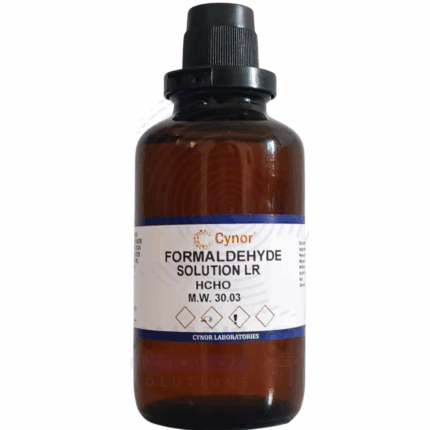
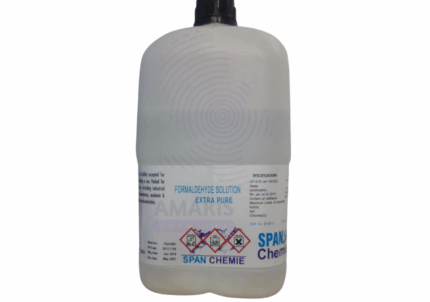
Formaldehyde (Formalin) Extra Pure is a highly concentrated and refined aqueous solution of formaldehyde gas, commonly used in laboratories, industrial processes, and research applications. Renowned for its potent disinfectant and preservative properties, it is widely employed in histology for tissue fixation, in microbiology for sterilization, and in various chemical syntheses as a versatile reagent and building block. Its extra pure grade ensures minimal impurities, making it suitable for sensitive analytical procedures, formulation work, and high-precision chemical reactions. This product must be handled with care due to its volatility and toxic nature, especially in enclosed environments.
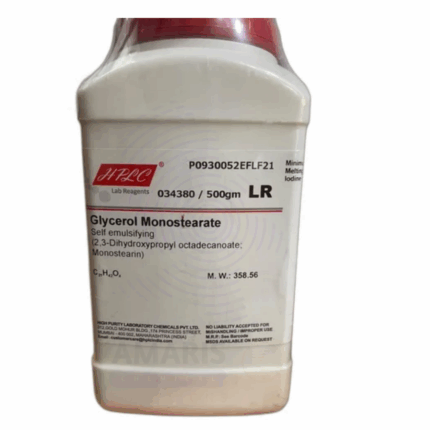
Glycerol Monostearate Extra Pure
Glycerol Monostearate Extra Pure is a high-purity, white, odorless, and tasteless powder or flake widely used as an emulsifier, thickening agent, and stabilizer. In laboratory and industrial settings, it is particularly valuable for its role in forming stable emulsions in aqueous and oily systems. Commonly used in food science experiments, pharmaceutical formulations, and cosmetic product development, GMS improves consistency and shelf-life. It also serves as a dispersing agent and plasticizer in various polymer applications. Its extra pure grade ensures reliable performance where precision and chemical cleanliness are required.
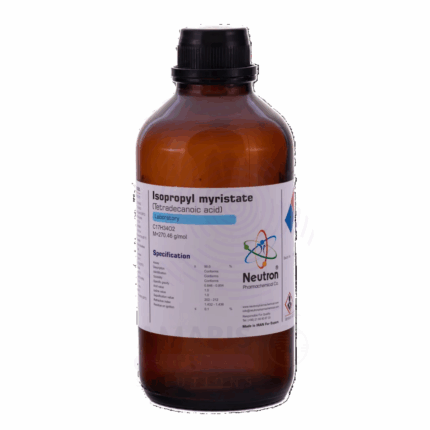
Isopropyl Myristate Extra Pure
Isopropyl Myristate Extra Pure is a high-purity ester derived from isopropyl alcohol and myristic acid, commonly used for its excellent solvent and emollient properties. It appears as a colorless to slightly yellow, oily liquid with a faint odor. In laboratory and cosmetic settings, it serves as a solvent and carrier for active ingredients, particularly in topical formulations, where it enhances skin absorption without leaving a greasy residue. Its purity makes it suitable for precise formulation work in pharmaceutical, cosmetic, and personal care research. Isopropyl Myristate is also used in the preparation of perfumes and as a penetration enhancer in transdermal drug delivery systems.
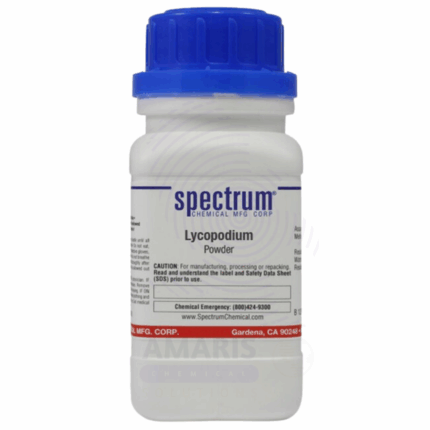
Lycopodium Powder Extra Pure
Lycopodium Powder Extra Pure is a fine, yellowish powder derived from the spores of club moss plants, prized for its exceptional purity and versatility in both scientific and industrial applications. In laboratories, it is frequently used to demonstrate Brownian motion, study spore dispersion, or simulate particulate flow in airflow experiments. Due to its high flammability, Lycopodium powder also serves as a dramatic visual aid in physics demonstrations involving flame propagation or combustion. Outside the lab, it has niche applications in pharmaceuticals, cosmetics, and even pyrotechnics. It should be handled with care and stored in a dry, cool, and non-igniting environment.
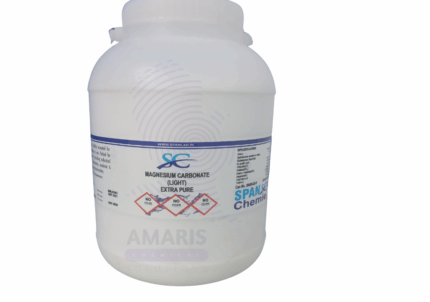
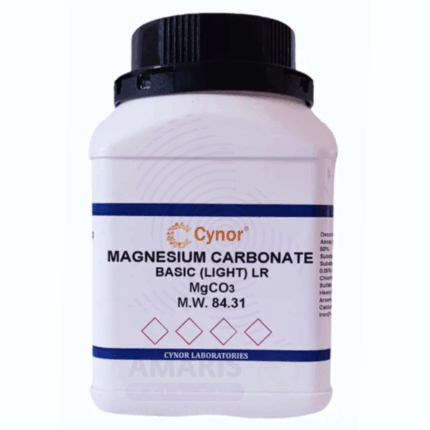
Magnesium Carbonate Light Extra Pure
Magnesium Carbonate Light Extra Pure is a fine, white, odorless powder known for its excellent absorbent, drying, and antacid properties. It is widely used in pharmaceutical formulations, cosmetics, food additives, and laboratory reagents. Its “light” form refers to its low bulk density, making it ideal for applications requiring a fluffy, easily dispersible powder. In personal care products, it serves as a filler and opacifier, while in pharmaceuticals, it acts as a mild antacid and magnesium supplement. Its high purity ensures consistent performance in analytical procedures and specialty chemical processes.
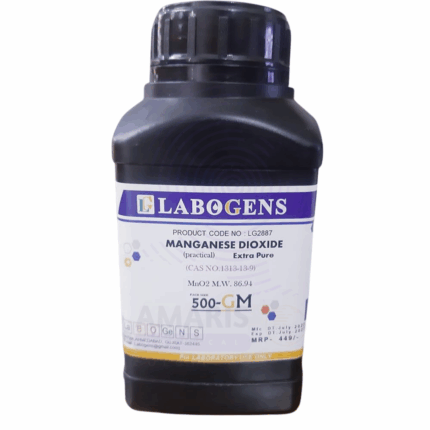
Manganese Dioxide Extra Pure
Manganese Dioxide Extra Pure is a high-purity, dark brown or black powder widely used in laboratories and industrial processes for its strong oxidizing properties. In analytical chemistry, it serves as an effective oxidizing agent and is often involved in the decomposition of hydrogen peroxide and other redox reactions. It is also used in the preparation of oxygen and chlorine gases in laboratory settings. Beyond the lab, manganese dioxide plays a crucial role in battery manufacturing, particularly in dry cell batteries, and in ceramics and glass production for coloring and decolorizing. Its consistent purity makes it ideal for sensitive experiments and formulations.
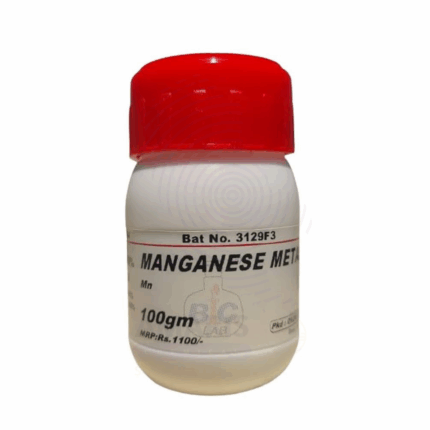
Manganese Metal Powder Extra Pure
Manganese Metal Powder Extra Pure is a fine, silvery-gray metallic powder known for its high reactivity and essential role in various chemical and metallurgical applications. In the laboratory, it is frequently used in redox reactions, alloy synthesis, and as a reagent for preparing manganese compounds. Its high surface area makes it particularly effective in catalysis and experimental procedures requiring fast reactivity. Industrially, manganese metal powder is integral to producing specialty steels and alloys, where it improves hardness, strength, and wear resistance. Its exceptional purity ensures consistent performance in research, metal refining, and advanced materials development.

Mineral Lick Rock Salt Extra Pure
Mineral Lick Rock Salt Extra Pure is a high-purity, natural crystalline salt product specially processed for scientific, veterinary, and nutritional applications. Composed primarily of sodium chloride (NaCl), this form of rock salt may also contain trace essential minerals such as calcium, magnesium, and potassium in controlled amounts. Its extra pure grade ensures minimal contaminants, making it ideal for controlled laboratory experiments, animal nutrition studies, and formulation testing where purity and consistency are critical.
In agricultural research and veterinary science, Mineral Lick is commonly used to study electrolyte balance, mineral supplementation, and livestock behavior related to mineral intake. The solid, stable nature of the product allows for long shelf life and ease of handling, and it may also be used in comparative tests involving natural versus synthetic mineral supplements. For best results, it should be stored in a dry, cool place away from moisture.












