

 Preservatives(food)
 Flavor Enhancers
 Acidulants
 Sweeteners
 Antioxidants
 Colorants(food)
 Nutraceutical Ingredients (food)
 Nutrient Supplements
 Emulsifiers
 Collectors
 Dust Suppressants
 Explosives and Blasting Agents
 Flocculants and Coagulants
 Frothers
 Leaching Agents
 pH Modifiers
 Precious Metal Extraction Agents
 Antioxidants(plastic)
 Colorants (Pigments, Dyes)
 Fillers and Reinforcements
 Flame Retardants
 Monomers
 Plasticizers
 Polymerization Initiators
 Stabilizers (UV, Heat)
 Antifoaming Agents
 Chelating Agents
 Coagulants and Flocculants
 Corrosion Inhibitors
 Disinfectants and Biocides
 Oxidizing Agents
 pH Adjusters
 Scale Inhibitors( water)
 Antioxidants(cosmetic)
 Emollients
 Fragrances and Essential Oils
 Humectants
 Preservatives
 Surfactants(cosmetic)
 Thickeners
 UV Filters
 Fertilizers
 Soil Conditioners
 Plant Growth Regulators
 Animal Feed Additives
 Biostimulants
 Pesticides (Herbicides, Insecticides, Fungicides)
 Active Pharmaceutical Ingredients (APIs)
 Excipients
 Solvents(pharmaceutical)
 Antibiotics
 Antiseptics and Disinfectants
 Vaccine Adjuvants
 Nutraceutical Ingredients (pharmaceutical)
 Analgesics & Antipyretics
 Analytical Reagents
 Solvents(lab)
 Chromatography Chemicals
 Spectroscopy Reagents
 microbiology-and-cell-culture-reagents
 Molecular Biology Reagents
 Biochemical Reagents
 Inorganic and Organic Standards
 Laboratory Safety Chemicals
 Specialty Laboratory Chemicals(Special Laboratory Equipment)
 Demulsifiers
 Hydraulic Fracturing Fluids
 Scale Inhibitors(oil)
 Surfactants(oil)
 Drilling Fluids
 Dyes and Pigments
 Bleaching Agents
 Softening Agents
 Finishing Agents
 Antistatic Agents
 Admixtures
 Waterproofing Agents
 Sealants and Adhesives
 Curing Compounds
 Concrete Repair Chemicals
 Anti-Corrosion Coatings
 Surfactants(cleaning)
 Builders
 Enzymes
 Solvents (Cleaning)
 Fragrances
 Electronic Chemicals
 Catalysts
 Lubricants
 Photographic Chemicals
 Refrigerants
 Automotive chemicals
 Pyrotechnic Chemicals
 Biodegradable Surfactants
 Bio-based Solvents
 Renewable Polymers
 Carbon Capture Chemicals
 Wastewater Treatment Chemicals
 Pigments
 Solvents(paint)
 Specialty Coatings
 Binders/Resins
 Additives
 Driers
 Anti-Corrosion Agents
 Functional Coatings
 Application-Specific Coatings
 Leavening Agents
 Dough Conditioners
 Flour Treatments
 Fat Replacers
 Decoratives
 Preservatives(baking)
 Plasticizers & Softeners
 Reinforcing Agents
 Adhesion Promoters
 Vulcanizing Agents
 Antidegradants
 Blowing Agents
 Fillers & Extenders
 Accelerators & Retarders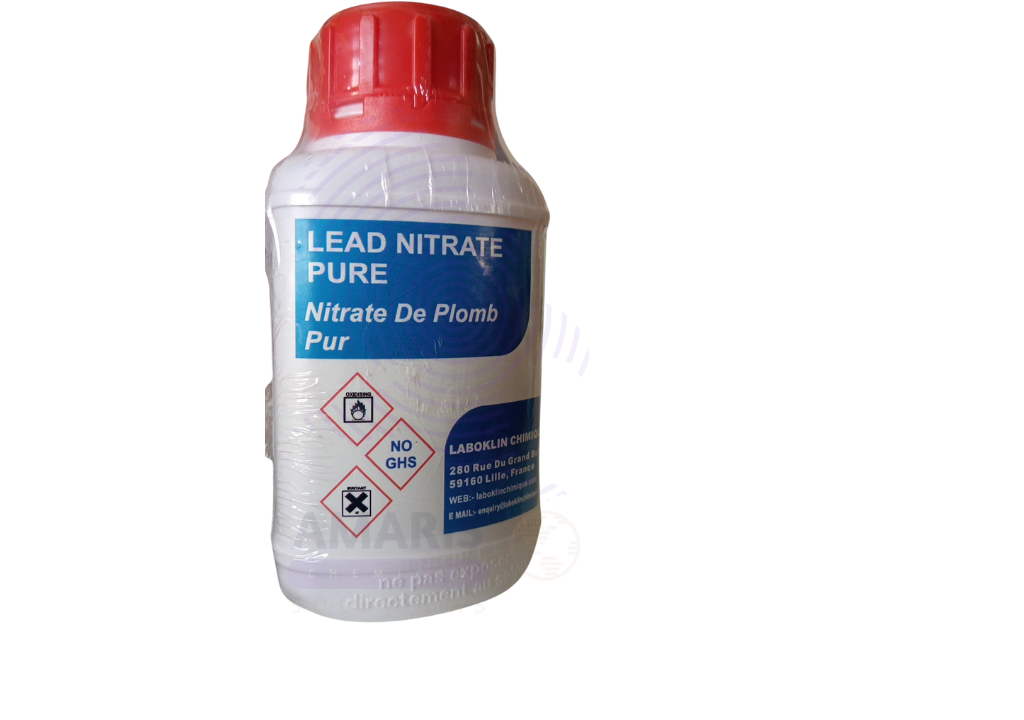
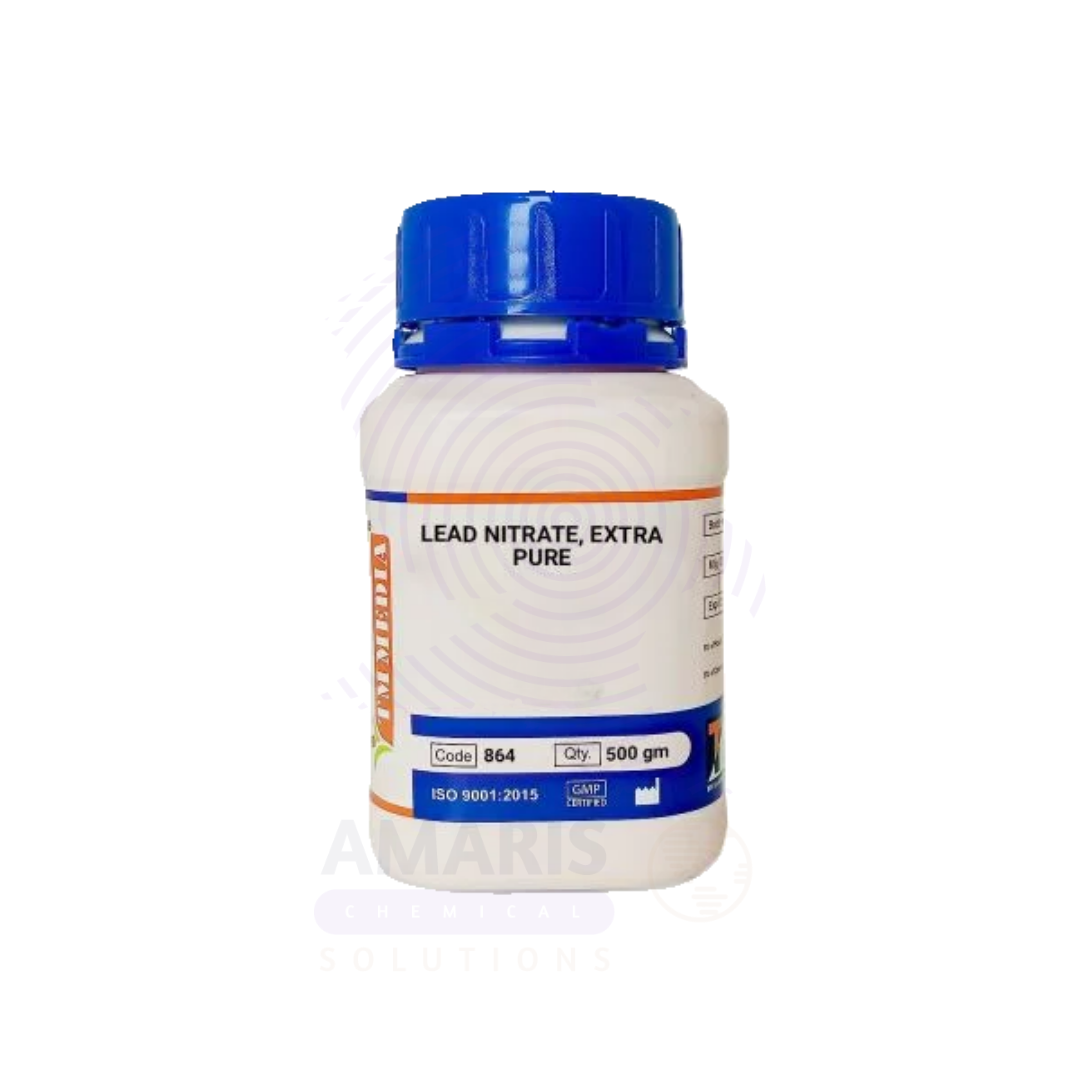
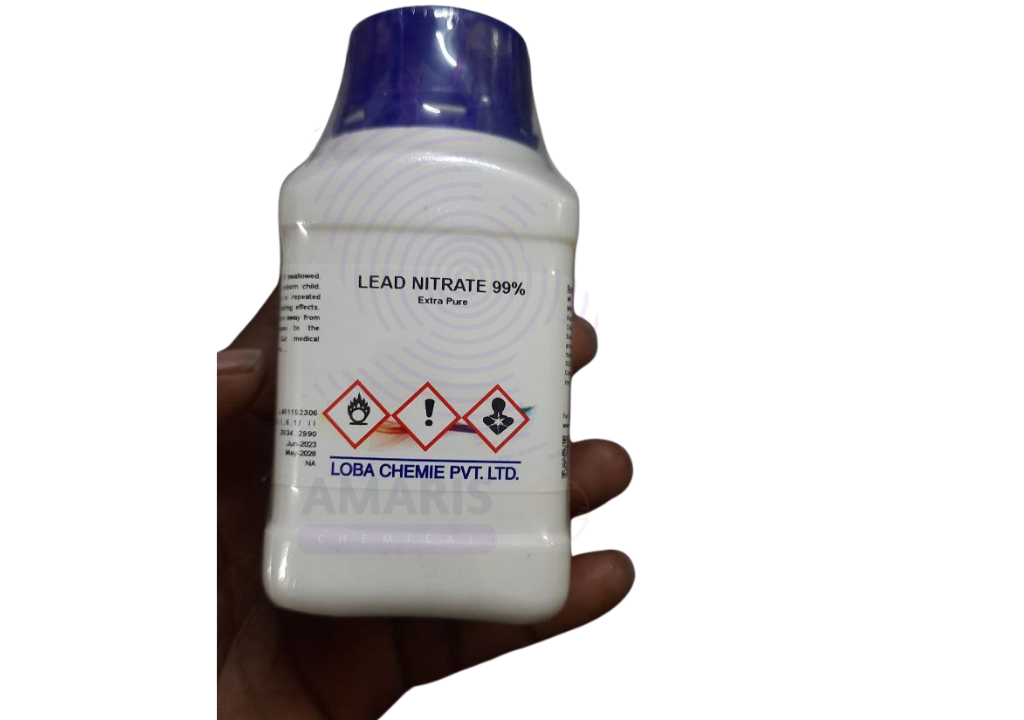
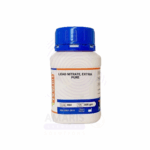
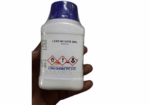


Lead Nitrate Extra Pure
Original price was: $ 17.98.$ 17.86Current price is: $ 17.86.
Lead Nitrate Extra Pure is a white crystalline compound (Pb(NO₃)₂) known for its excellent solubility in water and reliable reactivity, making it a key reagent in analytical and industrial chemistry. It is frequently used in laboratory synthesis, qualitative analysis, and in the production of other lead compounds. In pyrotechnics, it’s valued for its role as an oxidizing agent, while in metallurgy, it assists in gold leaching and ore processing. Its high purity ensures consistent performance in controlled experiments and manufacturing. Due to its toxic and oxidizing nature, it must be handled with careful PPE protocols and stored securely away from organics or combustible materials.
Lead Nitrate Extra Pure
Primary Uses
- Oxidizing Agent in Synthesis:
- Widely used as a strong oxidizer in various inorganic reactions, especially for preparing lead-based compounds.
- Precursor to Other Lead Salts:
- Serves as a starting material in the preparation of other lead compounds like lead chromate, lead carbonate, and lead azide.
- Analytical Chemistry:
- Employed in qualitative analysis and precipitation reactions, particularly to test for halide ions and other anions.
Secondary Uses
- Heat Decomposition Studies:
- Studied in decomposition reactions to understand thermal breakdown into lead oxide, nitrogen dioxide, and oxygen.
- Explosive and Pyrotechnic Research:
- Occasionally used in research settings for pyrotechnic formulations or the synthesis of lead azide, a detonating agent.
- Crystal Growth Experiments:
- Used to grow lead nitrate crystals in controlled crystallography or solubility studies.
- Used to grow lead nitrate crystals in controlled crystallography or solubility studies.
| PACK SIZE | 250 grams Plastic Tin |
|---|
1. Basic Identification Attributes
- Chemical Name: Lead(II) Nitrate
- Synonyms: Plumbous nitrate
- Chemical Formula: Pb(NO₃)₂
- CAS Number: 10099-74-8
- Molecular Weight: 331.2 g/mol
- Grade: Extra Pure (analytical/laboratory use)
- Appearance: White crystalline solid
- Odor: Odorless
- Solubility: Soluble in water, slightly soluble in alcohol
- Melting Point: 470 °C (decomposes)
2. Safety & Hazard Attributes
- GHS Classification:
- Oxidizing solids – Category 2
- Acute toxicity (oral) – Category 4
- Reproductive toxicity – Category 1A
- Specific target organ toxicity – Repeated exposure, Category 2
- Aquatic chronic toxicity – Category 1
- Hazard Statements:
- H272: May intensify fire; oxidizer
- H302: Harmful if swallowed
- H360: May damage fertility or the unborn child
- H373: May cause damage to organs through prolonged or repeated exposure
- H410: Very toxic to aquatic life with long lasting effects
- Precautionary Statements:
- P210: Keep away from heat/sparks/open flames
- P220: Keep away from combustible materials
- P280: Wear protective gloves/clothing/eye protection
- P301+P312: IF SWALLOWED: Call a POISON CENTER
- P273: Avoid release to the environment
- Personal Protective Equipment (PPE):
- Safety goggles
- Chemical-resistant gloves
- Lab coat
- Use in fume hood
- First Aid Measures:
- Inhalation: Move to fresh air; seek medical advice
- Skin Contact: Wash with soap and water
- Eye Contact: Rinse thoroughly with water for several minutes
- Ingestion: Rinse mouth and seek medical attention; do not induce vomiting
- Fire Hazards:
- Strong oxidizer – enhances combustion of flammable materials
- Decomposes on heating to emit toxic lead oxides and nitrogen oxides
- Use water spray, dry chemical, or foam
3. Storage & Handling Attributes
- Storage Conditions:
- Store in a cool, dry, well-ventilated area
- Keep container tightly sealed
- Keep away from organic materials, reducing agents, and heat sources
- Handling Tips:
- Minimize dust generation
- Avoid contact with combustible materials
- Handle under a fume hood
- Wash thoroughly after handling
4. Laboratory Applications
- Primary Uses:
- Source of lead ions in analytical chemistry
- Reagent in qualitative inorganic analysis
- Oxidizing agent in laboratory synthesis
- Secondary Uses:
- Used in pyrotechnics for colored flames (educational demos only)
- Demonstration of double displacement and precipitation reactions
- Preparation of other lead compounds for controlled laboratory studies
SAFETY PRECAUTIONS
Personal Protective Equipment (PPE):
- Wear a lab coat, chemical‑resistant gloves (nitrile or neoprene), and chemical splash goggles.
- Use a NIOSH‑approved particulate respirator or work in a fume hood to avoid inhaling dust.
Handling:
- Handle with extreme caution—toxic and a strong oxidizer.
- Avoid generating or breathing dust; prevent all contact with skin, eyes, and clothing.
- Keep away from combustible/organic materials, reducing agents, and acids.
- Do not eat, drink, or smoke when using this product. Wash hands thoroughly after handling.
Storage:
- Store tightly closed in a cool, dry, well‑ventilated area.
- Segregate from fuels, organics, powdered metals, sulfur, and other incompatibles.
- Clearly label as TOXIC / OXIDIZER and restrict access.
FIRST AID MEASURES
Inhalation:
- Move person to fresh air immediately.
- If symptoms (cough, shortness of breath) occur, seek urgent medical attention; provide oxygen if needed.
Skin Contact:
- Remove contaminated clothing.
- Wash skin with soap and plenty of water for at least 15 minutes.
- Get medical advice if irritation or systemic symptoms occur.
Eye Contact:
- Rinse cautiously with water for ≥15 minutes while holding eyelids apart.
- Remove contact lenses if easy to do. Seek immediate medical attention.
Ingestion:
- Do NOT induce vomiting. Rinse mouth with water.
- Seek immediate medical attention—lead compounds are highly toxic.
FIRE FIGHTING MEASURES
Flammability:
- Not combustible, but oxidizer—can intensify fire and cause combustible materials to ignite.
Extinguishing Media:
- Water spray/fog is preferred for materials involved in fire and for cooling containers.
- Use dry chemical or CO₂ only for surrounding materials; do not use smothering agents on the oxidizer itself.
Hazardous Combustion Products:
- Lead oxides and nitrogen oxides (NOₓ); toxic metal fumes.
Firefighter Protection:
- Wear self‑contained breathing apparatus (SCBA) and full protective gear.
- Avoid inhalation of fumes; prevent contaminated runoff from entering waterways.
Related products
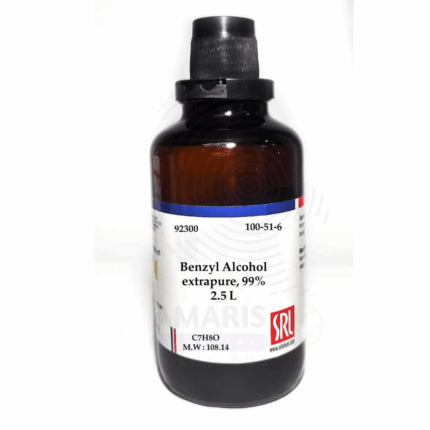
Benzyl Alcohol Extra Pure
Benzyl Alcohol Extra Pure is a high-purity, clear, colorless liquid with a mild aromatic odor, widely used in laboratory chemistry for analytical, synthetic, and preparative applications. It functions as a versatile solvent for inks, resins, waxes, and dyes, and plays a key role in organic synthesis, particularly in esterification and benzylation reactions. Its moderate polarity and low volatility make it valuable in sample preparation, chromatography, and pharmaceutical research. The extra pure grade guarantees minimal levels of impurities, ensuring reliable performance in high-precision laboratory procedures. Benzyl alcohol should be handled with care and stored in a tightly sealed container in a cool, dry place, away from strong oxidizing agents.
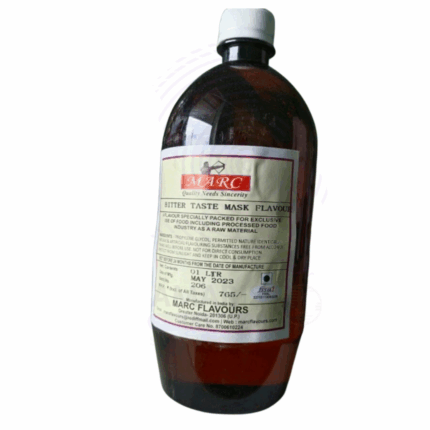
Bitter Masking Pharmaceutical Liquid Flavors Extra Pure
Bitter Masking Pharmaceutical Liquid Flavors Extra Pure is a high-quality formulation designed to effectively mask unpleasant or bitter tastes in oral pharmaceutical preparations during laboratory research and development. This flavoring agent is essential in the compounding of liquid medications, syrups, and suspensions, particularly for pediatric and geriatric studies, where palatability is crucial for compliance. It is crafted to maintain chemical compatibility with active ingredients while preserving the stability and efficacy of the formulation. The extra pure grade ensures low impurity levels, consistent performance, and safety in sensitive pharmaceutical applications. It should be stored in a tightly sealed container, away from light and heat, to preserve its flavor integrity and quality.
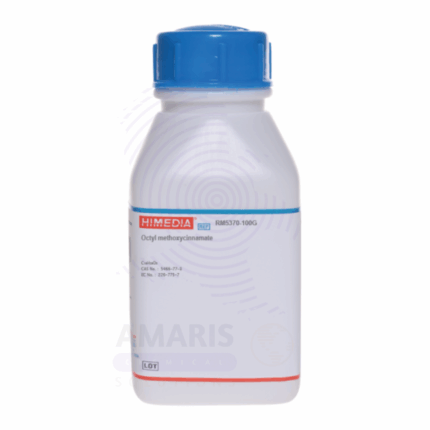
Octyl Methoxycinnamate Extra Pure
Octyl Methoxycinnamate Extra Pure is a high-purity organic compound widely used as a UV-B filter in sunscreen formulations and personal care products. Known chemically as Ethylhexyl Methoxycinnamate, it functions by absorbing ultraviolet light in the 280–320 nm range, thereby protecting skin from sunburn and photoaging.
In its Extra Pure form, OMC offers exceptional quality for cosmetic-grade applications, pharmaceutical formulations, and research requiring stringent purity levels. It is typically a clear, oily liquid with good solubility in oils and alcohols, making it ideal for incorporation into emulsions, creams, and lotions. Aside from its cosmetic uses, it is occasionally used in plastic and polymer stabilization where UV protection is needed. It should be stored in cool, dark conditions to maintain its stability and efficacy.
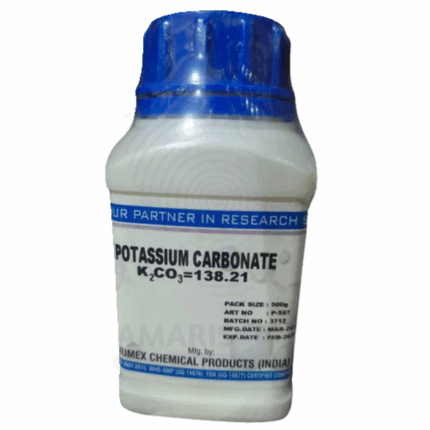
Potassium Carbonate Extra Pure
Potassium Carbonate Extra Pure is a high-purity, white, hygroscopic, water-soluble salt with the chemical formula K₂CO₃. It is known for its alkaline properties and exceptional solubility in water, forming a strongly basic solution that is widely used in laboratory and industrial processes. Its Extra Pure grade ensures it meets stringent standards for research, analytical, and high-spec formulation work.
This compound is essential in buffer preparation, pH adjustment, and titration analysis in laboratory chemistry. It also serves as a drying agent for certain solvents and gases due to its moisture-absorbing nature. In industrial applications, Potassium Carbonate is a key ingredient in the manufacture of glass, soaps, and dyes, and is also used in fermentation processes to control acidity. In the food industry, it functions as a food additive (E501), commonly used as a buffering or raising agent in baking.
To maintain its quality, Potassium Carbonate Extra Pure should be stored in a tightly sealed container, in a dry and cool environment, away from acids and moisture, as it readily absorbs water and carbon dioxide from the air. Proper handling using protective gloves and eye protection is advised, especially in concentrated solutions, due to its caustic nature.
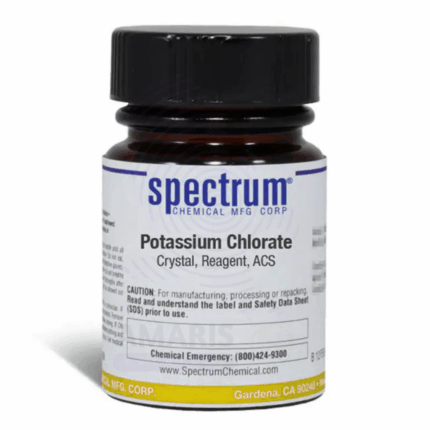
Potassium Chlorate Extra Pure
Potassium Chlorate Extra Pure is a high-purity, crystalline compound with the chemical formula KClO₃. It appears as a white, odorless solid and is well known for its strong oxidizing properties. In its Extra Pure form, it meets analytical-grade standards, making it suitable for sensitive laboratory and controlled industrial applications.
This chemical is extensively used in analytical chemistry, especially in oxygen production experiments and thermal decomposition studies, as it decomposes to release oxygen when heated. It is also used as a reagent in pyrotechnics, match compositions, and explosive formulations, where a powerful oxidizer is needed. In botanical tissue culture, potassium chlorate is sometimes used to induce flowering in certain plant species.
Due to its reactive and potentially explosive nature, Potassium Chlorate must be handled with extreme caution. It should be stored away from combustible materials, acids, and heat sources, in a cool, dry, well-ventilated area, in tightly sealed containers. Personal protective equipment such as gloves, goggles, and lab coats must be worn during handling, and it should never be ground or mixed with sulfur, phosphorus, or organic matter unless under strictly controlled conditions.
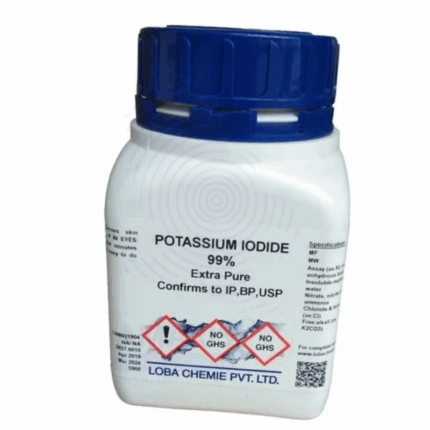
Potassium Iodide Extra Pure
Potassium Iodide Extra Pure is a high-purity, white crystalline salt widely recognized for its excellent solubility in water and its versatile applications. In laboratories, it is commonly used as a reagent in iodometric titrations and for preparing iodine solutions. In the medical field, it serves as a key source of iodine and is used for thyroid protection against radioactive iodine exposure. Its antioxidant properties also make it valuable in pharmaceutical formulations and as a stabilizer in various chemical processes. The extra pure grade ensures maximum consistency and reliability for precise experimental and industrial outcomes.
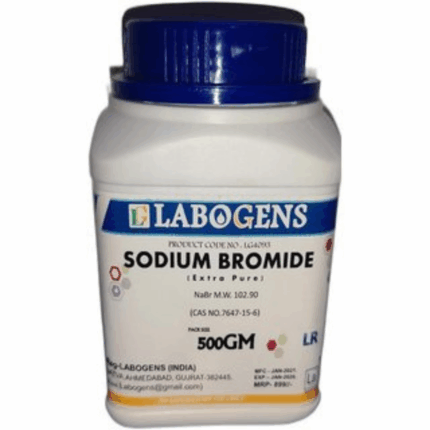
Sodium Bromide Extra Pure
Sodium Bromide Extra Pure is a high-purity, white crystalline inorganic salt used extensively in analytical chemistry, photography, pharmaceutical manufacturing, and water treatment. It serves as a source of bromide ions in various laboratory and industrial applications. Highly soluble in water and chemically stable, sodium bromide is an important specialty reagent with a wide range of uses requiring consistent, high-grade purity. It is non-flammable and safe under recommended handling conditions.

Sodium Oxalate Extra Pure
Sodium Oxalate Extra Pure is a high-purity, white crystalline powder widely used as a primary standard in analytical chemistry, particularly for titrations involving potassium permanganate. It serves as a reducing agent and precipitant for metal ions, with additional applications in chemical synthesis and textile processing. The compound requires careful handling due to its irritant properties and should be stored away from oxidizing agents in a dry environment. Sodium Oxalate Extra Pure’s stable nature and moderate solubility make it valuable for precise laboratory applications.












