

 Preservatives(food)
 Flavor Enhancers
 Acidulants
 Sweeteners
 Antioxidants
 Colorants(food)
 Nutraceutical Ingredients (food)
 Nutrient Supplements
 Emulsifiers
 Collectors
 Dust Suppressants
 Explosives and Blasting Agents
 Flocculants and Coagulants
 Frothers
 Leaching Agents
 pH Modifiers
 Precious Metal Extraction Agents
 Antioxidants(plastic)
 Colorants (Pigments, Dyes)
 Fillers and Reinforcements
 Flame Retardants
 Monomers
 Plasticizers
 Polymerization Initiators
 Stabilizers (UV, Heat)
 Antifoaming Agents
 Chelating Agents
 Coagulants and Flocculants
 Corrosion Inhibitors
 Disinfectants and Biocides
 Oxidizing Agents
 pH Adjusters
 Scale Inhibitors( water)
 Antioxidants(cosmetic)
 Emollients
 Fragrances and Essential Oils
 Humectants
 Preservatives
 Surfactants(cosmetic)
 Thickeners
 UV Filters
 Fertilizers
 Soil Conditioners
 Plant Growth Regulators
 Animal Feed Additives
 Biostimulants
 Pesticides (Herbicides, Insecticides, Fungicides)
 Active Pharmaceutical Ingredients (APIs)
 Excipients
 Solvents(pharmaceutical)
 Antibiotics
 Antiseptics and Disinfectants
 Vaccine Adjuvants
 Nutraceutical Ingredients (pharmaceutical)
 Analgesics & Antipyretics
 Analytical Reagents
 Solvents(lab)
 Chromatography Chemicals
 Spectroscopy Reagents
 microbiology-and-cell-culture-reagents
 Molecular Biology Reagents
 Biochemical Reagents
 Inorganic and Organic Standards
 Laboratory Safety Chemicals
 Specialty Laboratory Chemicals(Special Laboratory Equipment)
 Demulsifiers
 Hydraulic Fracturing Fluids
 Scale Inhibitors(oil)
 Surfactants(oil)
 Drilling Fluids
 Dyes and Pigments
 Bleaching Agents
 Softening Agents
 Finishing Agents
 Antistatic Agents
 Admixtures
 Waterproofing Agents
 Sealants and Adhesives
 Curing Compounds
 Concrete Repair Chemicals
 Anti-Corrosion Coatings
 Surfactants(cleaning)
 Builders
 Enzymes
 Solvents (Cleaning)
 Fragrances
 Electronic Chemicals
 Catalysts
 Lubricants
 Photographic Chemicals
 Refrigerants
 Automotive chemicals
 Pyrotechnic Chemicals
 Biodegradable Surfactants
 Bio-based Solvents
 Renewable Polymers
 Carbon Capture Chemicals
 Wastewater Treatment Chemicals
 Pigments
 Solvents(paint)
 Specialty Coatings
 Binders/Resins
 Additives
 Driers
 Anti-Corrosion Agents
 Functional Coatings
 Application-Specific Coatings
 Leavening Agents
 Dough Conditioners
 Flour Treatments
 Fat Replacers
 Decoratives
 Preservatives(baking)
 Plasticizers & Softeners
 Reinforcing Agents
 Adhesion Promoters
 Vulcanizing Agents
 Antidegradants
 Blowing Agents
 Fillers & Extenders
 Accelerators & Retarders
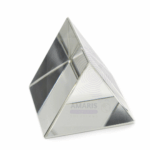

Microscope mirror
Original price was: $ 9.99.$ 9.89Current price is: $ 9.89.
A Microscope Mirror is an optical accessory used to direct and focus external light onto the specimen being examined under a microscope. Traditionally mounted beneath the microscope stage, the mirror reflects ambient or artificial light upward through the condenser and specimen to illuminate the sample. Microscope mirrors typically have one flat and one concave reflective surface, allowing users to adjust the intensity and focus of the light beam. Made from highly polished glass or metal with reflective coatings, these mirrors are essential in microscopes lacking built-in illumination systems or as backup lighting aids. They enhance visibility, contrast, and detail, making them valuable in educational, medical, and research laboratory settings.
Microscope mirror
Primary Uses
- Laboratory and Medical Applications
- Reflecting natural or artificial light to illuminate specimens for clearer observation.
- Enhancing contrast and image quality in brightfield microscopy.
- Providing adjustable lighting for improved visualization of transparent or thin samples.
Secondary Uses
- Research and Industrial Applications
- Supplementary lighting source for microscopes without integrated illumination.
- Used in field or remote laboratory settings where electrical power is limited.
1.Basic Identification Attributes
- Material: Polished glass or metal with reflective coatings.
- Surfaces: Usually one flat and one concave reflective side.
- Size: Various diameters to fit different microscope models.
2.Physical & Chemical Properties
- Reflectivity: High reflectance for efficient light redirection.
- Durability: Fragile glass requires careful handling; metal variants are more durable.
3.Safety & Hazard Attributes
- Fragile; risk of breakage and cuts.
- Reflective surface can cause glare if misused.
4.Storage & Handling Attributes
- Store in protective cases or padded containers to prevent scratches or breakage.
- Handle by edges to avoid fingerprints on reflective surfaces.
5.Regulatory & Compliance Attributes
- Manufactured in compliance with optical and laboratory safety standards.
6.Environmental & Health Impact
- Glass and metal components recyclable.
- No hazardous substances in normal use.
Safety Handling Precautions
- Avoid direct reflection into eyes to prevent glare injury.
- Use gloves or clean hands when handling to maintain surface quality.
First Aid Measures
- For cuts from broken glass, clean wounds and seek medical attention if necessary.
Firefighting Measures
- Non-flammable.
- Use appropriate extinguishing methods for surrounding fires.
Related products
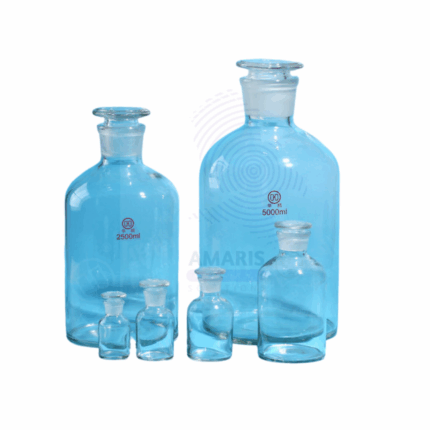
Clear laboratory reagent bottles
Product Description
Clear Laboratory Reagent Bottles are high-quality, transparent containers designed specifically for storing, transporting, and dispensing chemical reagents and solutions in laboratory settings. Made from durable borosilicate glass or high-grade plastic materials, these bottles offer excellent chemical resistance, clarity for easy identification of contents, and airtight sealing to maintain reagent integrity. They are essential in analytical, biochemical, and industrial laboratories for safe and organized chemical storage.
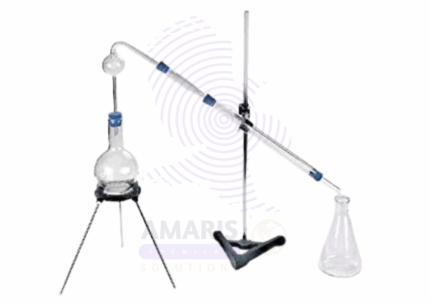
Complete Liebigs Distillation Apparatus
Complete Liebigs Distillation Apparatus is a classic laboratory setup used for the distillation of liquids by heating and subsequent condensation. It consists of a distillation flask, Liebig condenser, receiving flask, and necessary connecting joints. The Liebig condenser efficiently cools vapor back into liquid form using a water jacket. This apparatus is widely used in chemistry labs for purifying liquids, separating mixtures, and studying boiling points.

Dropper
Dropper is a small laboratory tool used to transfer precise volumes of liquids in drops. Typically composed of a glass or plastic tube with a squeezable rubber bulb at one end, the dropper allows controlled dispensing of liquids for experiments, titrations, or sample preparations. Its simple design enables easy handling and measurement of small quantities, making it indispensable in chemical, biological, pharmaceutical, and educational laboratories. Droppers are ideal for adding reagents dropwise, conducting qualitative tests, or transferring liquids without contamination.
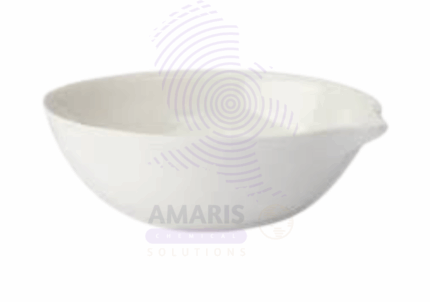
Evaporation Dish
Evaporation Dish is a shallow laboratory container typically made from chemically resistant materials such as porcelain, borosilicate glass, or metal. It is designed to hold liquids for evaporation processes where solvents are removed by heating, leaving behind solid residues or concentrated solutions. The dish provides a wide surface area to facilitate rapid evaporation and is widely used in chemical, pharmaceutical, and educational laboratories. Its durable construction allows it to withstand thermal stress and chemical exposure during repetitive heating and cooling cycles.

Expansion of Liquid Apparatus
Expansion of Liquid Apparatus is a laboratory device designed to measure the volumetric expansion of liquids when subjected to temperature changes. It consists of a graduated glass tube connected to a bulb containing the test liquid. As the liquid heats and expands, the change in volume is observed and recorded through the graduated scale. This apparatus is essential in physical chemistry and materials science for studying thermal expansion coefficients and understanding liquid behavior under varying thermal conditions. It is commonly made from chemically resistant borosilicate glass to withstand thermal stress and chemical exposure.
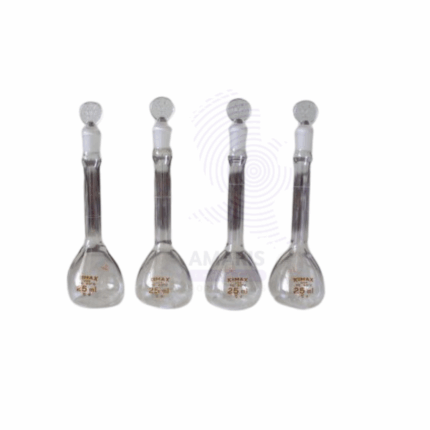
laboratory glass Volumetric flask with glass stopper
Laboratory Glass Volumetric Flask with Glass Stopper is a precision laboratory container used for preparing and measuring exact volumes of liquid solutions. Made from chemically resistant borosilicate glass, it features a flat bottom and a narrow neck with a precise calibration mark. The glass stopper ensures an airtight seal, preventing evaporation or contamination. Essential in analytical chemistry, pharmaceutical labs, and research, this flask allows accurate dilution, standard solution preparation, and volumetric analysis with high reliability and chemical stability.
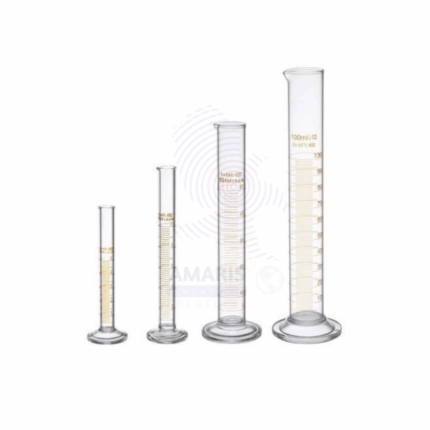
measuring cylinder glass
The Measuring Cylinder Glass is a fundamental laboratory apparatus specifically engineered for the precise measurement of liquid volumes. Constructed from high-quality, chemically resistant borosilicate glass, it ensures durability, resistance to chemical corrosion, and clarity for optimal visibility of liquid levels. The cylindrical shape provides a stable base and ergonomic design for ease of handling and pouring. Graduated volume markings, typically etched or printed with high contrast, allow accurate reading of liquid quantities down to the milliliter, supporting quantitative experiments and solution preparations. The transparent nature of the glass facilitates observation of the meniscus, which is critical for accuracy in volume measurement. Measuring cylinders vary in size, commonly ranging from small (10 mL) to large capacities (1000 mL or more), meeting diverse laboratory needs. They are widely used across chemical, biological, medical, educational, and industrial laboratories for tasks including volumetric analysis, solution preparation, and quality control. Their ability to withstand thermal fluctuations and autoclaving processes also makes them suitable for sterilized environments. Measuring Cylinder Glass is essential for maintaining precision and reproducibility in experimental and routine laboratory procedures.

U Tube Lab Glass With Side Arms
U Tube Lab Glass with Side Arms is a specialized U-shaped borosilicate glass apparatus featuring additional side arms for fluid or gas connections. Designed for laboratory experiments involving pressure measurement, fluid flow, and gas displacement, this device offers enhanced versatility. Made from chemically resistant, durable glass, it withstands temperature fluctuations and chemical exposure. The side arms facilitate easy integration with tubing and other equipment, enabling complex experimental setups in physics, chemistry, and engineering labs. It is widely used in manometer applications, vacuum experiments, and fluid dynamics research.












