

 Preservatives(food)
 Flavor Enhancers
 Acidulants
 Sweeteners
 Antioxidants
 Colorants(food)
 Nutraceutical Ingredients (food)
 Nutrient Supplements
 Emulsifiers
 Collectors
 Dust Suppressants
 Explosives and Blasting Agents
 Flocculants and Coagulants
 Frothers
 Leaching Agents
 pH Modifiers
 Precious Metal Extraction Agents
 Antioxidants(plastic)
 Colorants (Pigments, Dyes)
 Fillers and Reinforcements
 Flame Retardants
 Monomers
 Plasticizers
 Polymerization Initiators
 Stabilizers (UV, Heat)
 Antifoaming Agents
 Chelating Agents
 Coagulants and Flocculants
 Corrosion Inhibitors
 Disinfectants and Biocides
 Oxidizing Agents
 pH Adjusters
 Scale Inhibitors( water)
 Antioxidants(cosmetic)
 Emollients
 Fragrances and Essential Oils
 Humectants
 Preservatives
 Surfactants(cosmetic)
 Thickeners
 UV Filters
 Fertilizers
 Soil Conditioners
 Plant Growth Regulators
 Animal Feed Additives
 Biostimulants
 Pesticides (Herbicides, Insecticides, Fungicides)
 Active Pharmaceutical Ingredients (APIs)
 Excipients
 Solvents(pharmaceutical)
 Antibiotics
 Antiseptics and Disinfectants
 Vaccine Adjuvants
 Nutraceutical Ingredients (pharmaceutical)
 Analgesics & Antipyretics
 Analytical Reagents
 Solvents(lab)
 Chromatography Chemicals
 Spectroscopy Reagents
 microbiology-and-cell-culture-reagents
 Molecular Biology Reagents
 Biochemical Reagents
 Inorganic and Organic Standards
 Laboratory Safety Chemicals
 Specialty Laboratory Chemicals(Special Laboratory Equipment)
 Demulsifiers
 Hydraulic Fracturing Fluids
 Scale Inhibitors(oil)
 Surfactants(oil)
 Drilling Fluids
 Dyes and Pigments
 Bleaching Agents
 Softening Agents
 Finishing Agents
 Antistatic Agents
 Admixtures
 Waterproofing Agents
 Sealants and Adhesives
 Curing Compounds
 Concrete Repair Chemicals
 Anti-Corrosion Coatings
 Surfactants(cleaning)
 Builders
 Enzymes
 Solvents (Cleaning)
 Fragrances
 Electronic Chemicals
 Catalysts
 Lubricants
 Photographic Chemicals
 Refrigerants
 Automotive chemicals
 Pyrotechnic Chemicals
 Biodegradable Surfactants
 Bio-based Solvents
 Renewable Polymers
 Carbon Capture Chemicals
 Wastewater Treatment Chemicals
 Pigments
 Solvents(paint)
 Specialty Coatings
 Binders/Resins
 Additives
 Driers
 Anti-Corrosion Agents
 Functional Coatings
 Application-Specific Coatings
 Leavening Agents
 Dough Conditioners
 Flour Treatments
 Fat Replacers
 Decoratives
 Preservatives(baking)
 Plasticizers & Softeners
 Reinforcing Agents
 Adhesion Promoters
 Vulcanizing Agents
 Antidegradants
 Blowing Agents
 Fillers & Extenders
 Accelerators & Retarders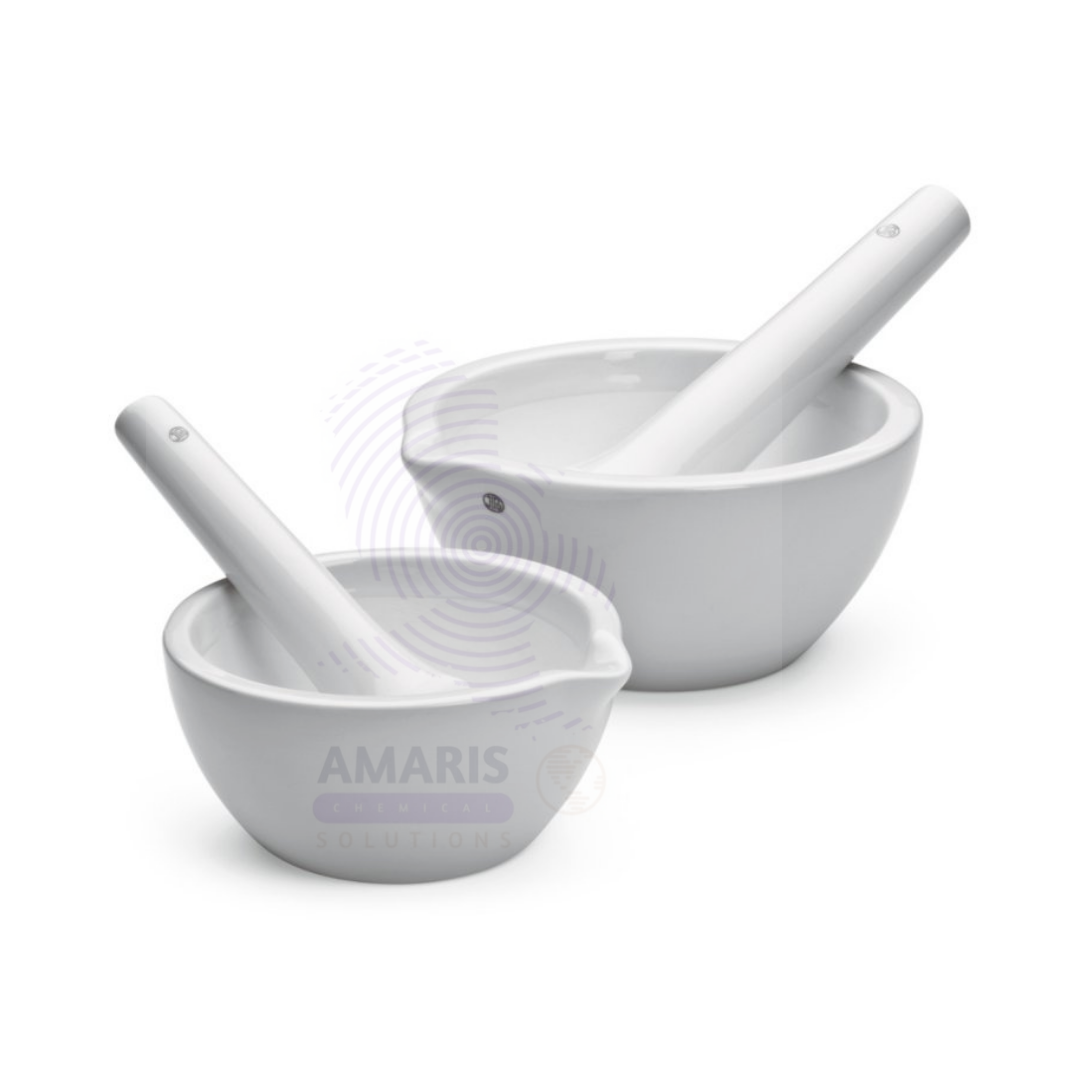


Mortar and pestle
Original price was: $ 11.78.$ 11.62Current price is: $ 11.62.
Mortar and Pestle is a traditional laboratory apparatus consisting of a bowl (mortar) and a heavy club-shaped tool (pestle) used to manually grind, crush, and mix solid substances into fine powders or pastes. Made from durable materials such as ceramic, glass, porcelain, or stone, this tool facilitates the preparation of samples for chemical analysis, pharmaceutical compounding, and food laboratory testing. The mortar’s thick walls and the pestle’s sturdy design allow effective pulverization without contamination. Mortar and pestle sets are essential in laboratories for homogenizing powders, breaking down crystals, and preparing reagents and mixtures. Their simplicity and reliability make them a staple in chemistry, biology, pharmacology, and food science labs worldwide.
Mortar and pestle
Primary Uses
- Laboratory and Pharmaceutical Applications
- Grinding and pulverizing solid chemicals into fine powders for analysis.
- Mixing compounds to prepare reagents, medications, or formulations.
- Crushing crystals and granules to enhance dissolution rates.
- Preparing samples for spectroscopic or chromatographic testing.
Secondary Uses
- Food and Research Applications
- Grinding spices, herbs, or food samples for nutritional or quality analysis.
- Facilitating research requiring finely ground material for extraction or reaction.
1.Basic Identification Attributes
- Material: Ceramic, glass, porcelain, stone, or borosilicate glass.
- Design: Bowl-shaped mortar with a matching pestle for effective grinding.
- Size: Available in various volumes depending on application requirements.
2.Physical & Chemical Properties
- Durability: Resistant to abrasion and chemical corrosion.
- Non-reactive: Materials selected to prevent contamination or reaction with samples.
- Ease of cleaning: Smooth surfaces for easy washing and sterilization.
3.Safety & Hazard Attributes
- Potential for breakage with heavy or improper use; handle with care.
- Risk of inhaling fine powders; use in well-ventilated areas or with appropriate PPE.
4.Storage & Handling Attributes
- Store in a clean, dry place to avoid contamination.
- Handle carefully to prevent chipping or cracking.
- Clean thoroughly after each use to avoid cross-contamination.
5.Regulatory & Compliance Attributes
- Manufactured to meet laboratory safety and quality standards.
- Suitable for use in GMP and GLP compliant laboratories.
6.Environmental & Health Impact
- Made from recyclable and environmentally sustainable materials.
- Proper disposal of residual powders recommended to minimize environmental impact.
Safety Handling Precautions
- Use gloves and masks when grinding hazardous materials.
- Avoid excessive force to prevent damage or injury.
First Aid Measures
- In case of cuts from broken mortar or pestle, clean wound and seek medical attention if severe.
- For inhalation of dust, move to fresh air and seek medical help if symptoms persist.
Firefighting Measures
- Non-flammable materials.
- Use appropriate extinguishing methods for surrounding fires.
Related products
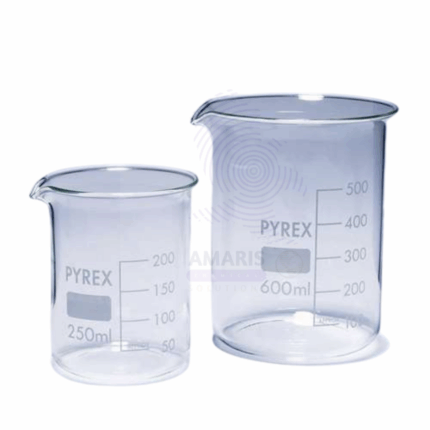
Beaker Pyrex
Beaker Pyrex is a high-quality laboratory container made from borosilicate glass known for its excellent thermal resistance, chemical durability, and mechanical strength. It is widely used for mixing, heating, and holding liquids in laboratories and industrial applications. Pyrex beakers can withstand rapid temperature changes without cracking, making them ideal for heating and cooling processes. They feature clear, transparent walls with easy-to-read graduated markings for volume measurement.
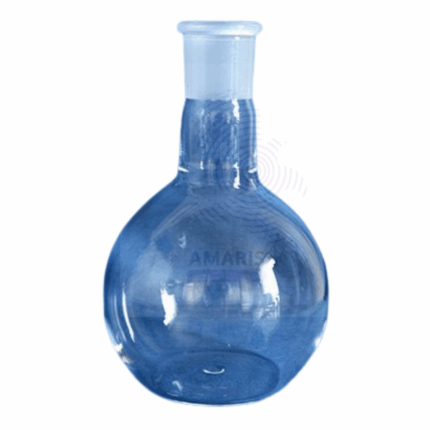
Boiling Flask Flat Bottom
The Boiling Flask Flat Bottom is a laboratory glassware item designed for heating, boiling, and mixing chemical solutions. It features a flat base that allows it to stand independently on lab benches or heating surfaces. Made from high-quality borosilicate glass, it provides excellent thermal resistance and chemical durability. The flask’s wide mouth facilitates easy pouring, filling, and cleaning. It is commonly used in laboratories for distillation, reflux, and other heating applications requiring uniform heat distribution.

Borosilicate Glass Tubings
Borosilicate Glass Tubings are high-quality glass tubes made from borosilicate material, known for excellent thermal resistance and chemical durability. These tubes are used extensively in laboratories and industries for transporting gases and liquids, conducting experiments, and fabricating custom glass apparatus. Their high resistance to thermal shock and chemical corrosion makes them ideal for harsh lab environments and industrial processes. Available in various diameters and lengths, these tubings can be cut or bent to suit specific experimental setups.
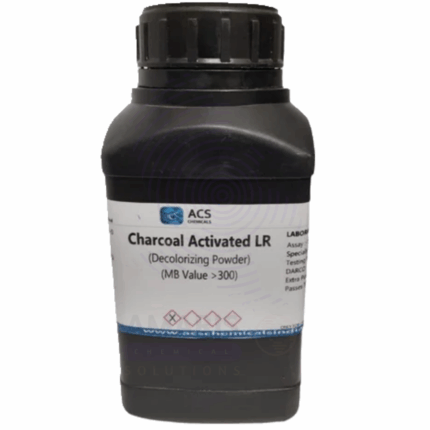
Charcoal Decolourising Powder Extra Pure
Charcoal Decolourising Powder Extra Pure is a high-grade activated carbon used in laboratory settings for purification and clarification processes. Its exceptional adsorptive properties make it ideal for removing color impurities, organic contaminants, and unwanted residues from chemical solutions, solvents, and extracts. This extra pure form is especially suited for sensitive analytical work, pharmaceutical preparations, and biochemical applications where high purity and minimal contamination are critical. It is commonly used in filtration experiments and in the refinement of reagents and compounds. The powder should be handled in a dry environment and stored in airtight containers to maintain its effectiveness.
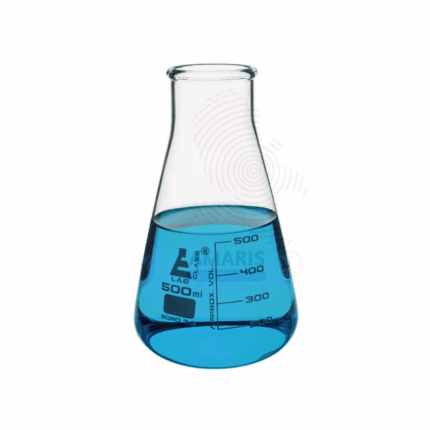
conical flask
Conical flasks, also known as Erlenmeyer flasks, are widely used laboratory glassware characterized by a flat bottom, conical body, and a narrow neck. Made typically from borosilicate glass, they are designed to hold, mix, and heat liquids safely. The narrow neck helps reduce evaporation and splashing during experiments. Conical flasks are essential for titrations, culturing microorganisms, and general solution preparation in laboratories and industrial settings.

Distillation Apparatus
Distillation Apparatus is a laboratory setup designed for the separation, purification, and collection of liquid mixtures based on differences in boiling points. It typically consists of components such as a distillation flask, condenser, receiving flask, and connecting tubes, often made from chemically resistant borosilicate glass. This apparatus allows controlled heating, vaporization, condensation, and collection of volatile substances. Widely used in chemical laboratories, pharmaceutical manufacturing, food and beverage processing, and research, the distillation apparatus is essential for isolating pure liquids, removing impurities, and analyzing complex mixtures.

Expansion of Liquid Apparatus
Expansion of Liquid Apparatus is a laboratory device designed to measure the volumetric expansion of liquids when subjected to temperature changes. It consists of a graduated glass tube connected to a bulb containing the test liquid. As the liquid heats and expands, the change in volume is observed and recorded through the graduated scale. This apparatus is essential in physical chemistry and materials science for studying thermal expansion coefficients and understanding liquid behavior under varying thermal conditions. It is commonly made from chemically resistant borosilicate glass to withstand thermal stress and chemical exposure.

Microscope cover slips
Microscope Cover Slips are thin, flat pieces of transparent glass or plastic used in microscopy to cover specimens placed on microscope slides. They serve to protect the specimen from contamination, prevent drying, and provide a uniform thickness for improved optical clarity during examination. Cover slips help to flatten the specimen, ensuring even focus and minimizing distortion under the microscope lens. They are typically made from high-quality borosilicate or soda-lime glass to offer excellent optical transparency and chemical resistance. Available in various sizes and thicknesses, cover slips are essential in biological, medical, and research laboratories for preparing wet mounts, fixed samples, and stained slides. Their use enhances image resolution and protects both the specimen and microscope objective lenses.












