

 Preservatives(food)
 Flavors
 Acidulants
 Sweeteners
 Antioxidants
 Colorants(food)
 Nutraceutical Ingredients (food)
 Nutrient Supplements
 Emulsifiers
 Collectors
 Dust Suppressants
 Explosives and Blasting Agents
 Flocculants and Coagulants
 Frothers
 Leaching Agents
 pH Modifiers
 Precious Metal Extraction Agents
 Antioxidants(plastic)
 Colorants (Pigments, Dyes)
 Fillers and Reinforcements
 Flame Retardants
 Monomers
 Plasticizers
 Polymerization Initiators
 Stabilizers (UV, Heat)
 Antifoaming Agents
 Chelating Agents
 Coagulants and Flocculants
 Corrosion Inhibitors
 Disinfectants and Biocides
 Oxidizing Agents
 pH Adjusters
 Scale Inhibitors( water)
 Antioxidants(cosmetic)
 Emollients
 Oils
Oils Carrier Oills
 Essential Oils
 Humectants
 Preservatives
 Surfactants(cosmetic)
 Thickeners
 UV Filters
 Fragrance (Cosmetics)
 Fertilizers
 Soil Conditioners
 Plant Growth Regulators
 Animal Feed Additives
 Biostimulants
 Pesticides (Herbicides, Insecticides, Fungicides)
 Active Pharmaceutical Ingredients (APIs)
 Excipients
 Solvents(pharmaceutical)
 Antibiotics
 Antiseptics and Disinfectants
 Vaccine Adjuvants
 Nutraceutical Ingredients (pharmaceutical)
 Analgesics & Antipyretics
 Analytical Reagents
 Solvents(lab)
 Chromatography Chemicals
 Spectroscopy Reagents
 microbiology-and-cell-culture-reagents
 Molecular Biology Reagents
 Biochemical Reagents
 Inorganic and Organic Standards
 Laboratory Safety Chemicals
 Specialty Laboratory Chemicals(Special Laboratory Equipment)
 Demulsifiers
 Hydraulic Fracturing Fluids
 Scale Inhibitors(oil)
 Surfactants(oil)
 Drilling Fluids
 Dyes and Pigments
 Bleaching Agents
 Softening Agents
 Finishing Agents
 Antistatic Agents
 Admixtures
 Waterproofing Agents
 Sealants and Adhesives
 Curing Compounds
 Concrete Repair Chemicals
 Anti-Corrosion Coatings
 Surfactants(cleaning)
 Builders
 Enzymes
 Solvents (Cleaning)
 Electronic Chemicals
 Catalysts
 Lubricants
 Photographic Chemicals
 Refrigerants
 Automotive chemicals
 Pyrotechnic Chemicals
 Biodegradable Surfactants
 Bio-based Solvents
 Renewable Polymers
 Carbon Capture Chemicals
 Wastewater Treatment Chemicals
 Pigments
 Solvents(paint)
 Specialty Coatings
 Binders/Resins
 Additives
 Driers
 Anti-Corrosion Agents
 Functional Coatings
 Application-Specific Coatings
 Leavening Agents
 Dough Conditioners
 Flour Treatments
 Fat Replacers
 Decoratives
 Preservatives(baking)
 Plasticizers & Softeners
 Reinforcing Agents
 Adhesion Promoters
 Vulcanizing Agents
 Antidegradants
 Blowing Agents
 Fillers & Extenders
 Accelerators & Retarders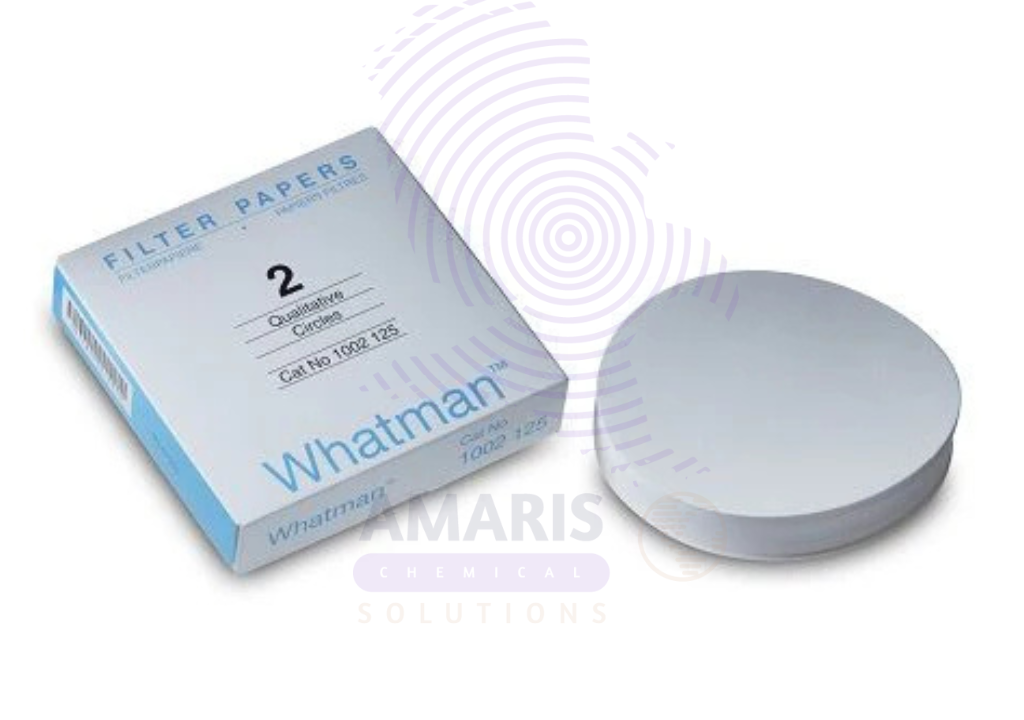

Whatman Qualitative filter paper
Whatman Qualitative Filter Paper is a high-quality laboratory filtration medium designed for the efficient separation of solids from liquids in qualitative analytical procedures. Manufactured from pure cellulose fibers, this filter paper offers excellent flow rates and particle retention, ensuring clear filtrates and reliable results. It is widely used in chemical, biological, and environmental laboratories for routine filtration tasks. Available in various grades and sizes, Whatman Qualitative Filter Paper is essential for tasks such as precipitate filtration, sample clarification, and general laboratory filtration processes.
Whatman Qualitative filter paper
Primary Uses
- Laboratory and Medical Applications
- Used for general qualitative analysis to separate solids from liquids in laboratory samples.
- Facilitates filtration of precipitates formed during chemical reactions.
- Employed in biological labs for filtering cell debris or particulate matter from suspensions.
- Used in clinical labs for sample clarification prior to further analysis.
- Supports environmental testing by filtering particulates from water and soil extracts.
Secondary Uses
- Research and Industrial Applications
- Applied in pharmaceutical labs for sample preparation and impurity removal.
- Used in industrial quality control for filtration of process liquids and suspensions.
- Supports food and beverage laboratories in filtering suspensions and clarifying extracts.
Utilized in educational laboratories for teaching filtration techniques and principles.
1.Basic Identification Attributes
- Material: Pure cellulose fiber
- Grades: Multiple grades available (e.g., Grade 1, 2, 3) for varying flow rates and retention
- Sizes: Available in various diameters and formats (circles, sheets, strips)
2.Physical & Chemical Properties
- Filtration Efficiency: High retention of particles typically above 2-25 microns depending on grade
- Flow Rate: Optimized for fast filtration with minimal clogging
- Chemical Compatibility: Resistant to mild acids and bases; not suitable for strong oxidizers or solvents
3.Safety & Hazard Attributes
- Generally safe to handle; avoid inhalation of fine dust from cutting or handling dry paper
- Non-toxic and non-reactive under normal laboratory conditions
4.Storage & Handling Attributes
- Store in a cool, dry place away from moisture and contaminants
- Handle with clean hands or gloves to prevent contamination
- Avoid folding or creasing to maintain filtration efficiency
5.Regulatory & Compliance Attributes
- Manufactured according to ISO and laboratory quality standards
- Suitable for use in GLP, GMP, and environmental testing laboratories
6.Environmental & Health Impact
- Biodegradable and environmentally friendly material
- Dispose of used filter paper according to local laboratory waste regulations
Safety Handling Precautions
- Use appropriate PPE such as gloves when handling samples and filter paper
- Avoid creating dust during handling to minimize inhalation risk
First Aid Measures
- No specific first aid necessary; in case of irritation from dust, move to fresh air
Firefighting Measures
- Combustible paper material; use water spray, foam, or dry chemical extinguishers
Related products
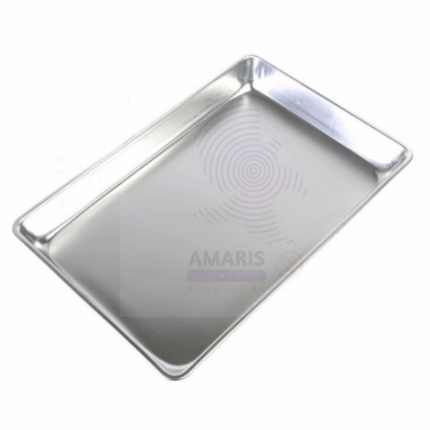
Aluminum Dissecting Pan with wax
Aluminum Dissecting Pan with Wax is a durable, lightweight pan designed specifically for dissection and specimen preparation in laboratory, educational, and research settings. The pan features a sturdy aluminum base combined with a layer of wax that securely holds biological specimens in place during dissection. This design provides an easy-to-clean, reusable workspace that enhances precision and control for students, educators, and scientists. Its corrosion-resistant aluminum construction ensures longevity and resistance to chemicals typically used in dissection.
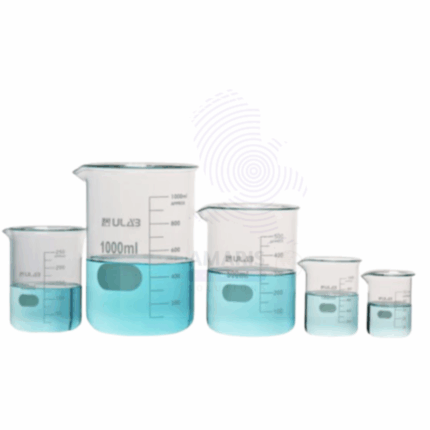
Beaker Hysil
Beaker Hysil is a high-quality borosilicate glass laboratory beaker known for its excellent thermal resistance, chemical durability, and mechanical strength. It is designed for use in various scientific and industrial laboratory applications requiring heating, mixing, and measuring of liquids. The clear, transparent body allows easy observation of contents, and graduated markings provide approximate volume measurements. Beaker Hysil is widely used in educational, research, and industrial laboratories.
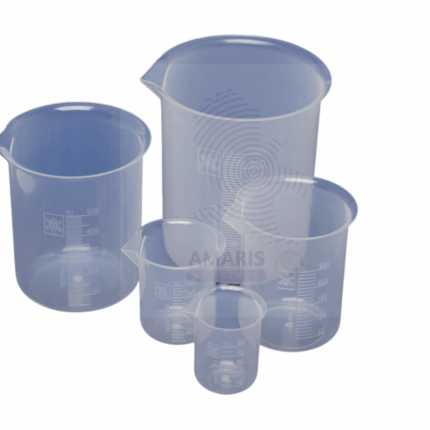
Beaker Plastic
Beaker Plastic is a durable laboratory container made from high-quality, chemical-resistant plastic materials such as polypropylene or polystyrene. It is designed for mixing, measuring, and holding liquids in laboratory and industrial settings. The plastic beaker offers lightweight, shatter-resistant performance, making it ideal for routine lab work, sample preparation, and general handling of non-corrosive chemicals. It features clear or translucent walls with graduated markings for approximate volume measurement.
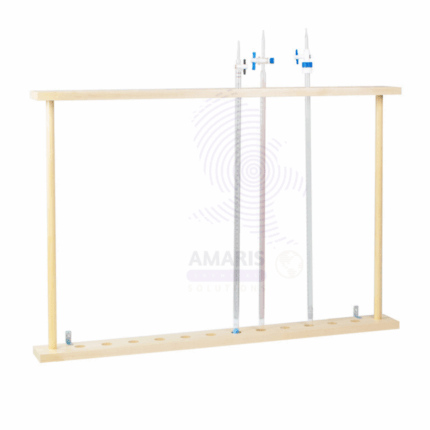
Burette stand for drying
The Burette Stand for Drying is a laboratory accessory designed to securely hold burettes in an upright position during drying and storage. Made from durable, corrosion-resistant materials such as stainless steel or coated metal, the stand ensures stability and prevents damage or contamination of delicate glassware. Its design facilitates proper air circulation, promoting efficient drying and maintaining the cleanliness of burettes between uses.
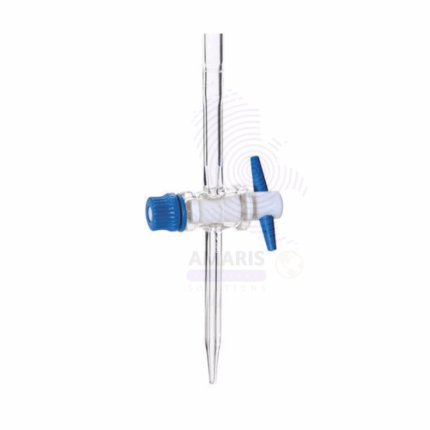
Burette Stop cork
Product Description
The Burette Stop Cork is a laboratory accessory designed to securely seal the open end of a burette, preventing liquid leakage and contamination during titration and other laboratory procedures. Made from high-quality, chemical-resistant cork or synthetic materials like rubber or silicone, it offers a snug fit for various burette sizes. The stop cork ensures controlled flow and precise measurement by allowing easy manipulation of the burette’s liquid contents.

Condenser liebig
The Liebig Condenser is a straight glass tube surrounded by a water jacket used to cool and condense vapors back into liquids during distillation processes. It is a fundamental laboratory apparatus designed for efficient heat exchange, allowing vapors to lose heat and convert back to liquid form. Constructed from durable borosilicate glass, the Liebig condenser withstands thermal stress and chemical corrosion, making it suitable for repeated use in various laboratory and industrial distillation and reflux applications.
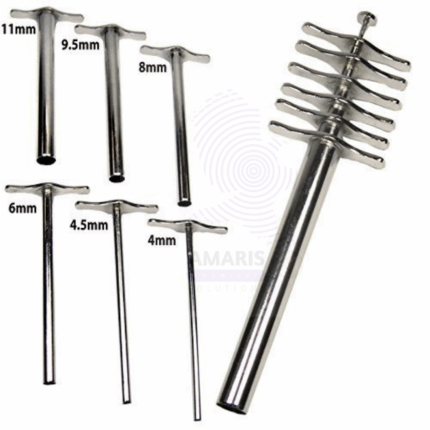
Cork borer set
The Cork Borer Set is a precision instrument set used in laboratories for cutting uniform cylindrical holes through corks, rubber stoppers, and soft polymers. Typically made of durable stainless steel, the set includes multiple hollow borers of varying diameters with sharpened edges, along with a cleaning rod or handle. It is essential for creating accurate openings to insert glass tubing or thermometers into stoppers for experimental setups involving sealed vessels or distillation systems.
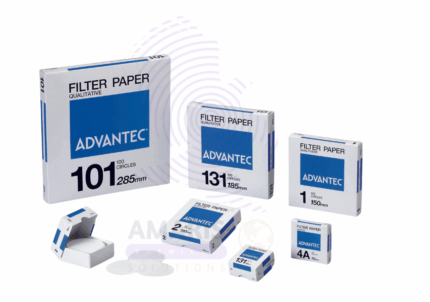
Filter Paper Schleicher and Schuell
Filter Paper Schleicher and Schuell is a premium quality, high-performance cellulose-based filter paper manufactured by Schleicher and Schuell. It is specifically engineered to provide consistent pore size distribution, excellent wet strength, and chemical resistance suitable for demanding laboratory filtration tasks. This filter paper is widely used in analytical, chemical, biological, pharmaceutical, and environmental laboratories for the separation of solids from liquids. Its precise manufacturing standards ensure reliable retention efficiency and reproducibility in filtration results. Available in multiple grades tailored for quantitative, qualitative, and special filtration requirements, this filter paper is essential for sample clarification, particulate removal, and gravimetric analysis.












