

 Preservatives(food)
 Flavors
 Acidulants
 Sweeteners
 Antioxidants
 Colorants(food)
 Nutraceutical Ingredients (food)
 Nutrient Supplements
 Emulsifiers
 Collectors
 Dust Suppressants
 Explosives and Blasting Agents
 Flocculants and Coagulants
 Frothers
 Leaching Agents
 pH Modifiers
 Precious Metal Extraction Agents
 Antioxidants(plastic)
 Colorants (Pigments, Dyes)
 Fillers and Reinforcements
 Flame Retardants
 Monomers
 Plasticizers
 Polymerization Initiators
 Stabilizers (UV, Heat)
 Antifoaming Agents
 Chelating Agents
 Coagulants and Flocculants
 Corrosion Inhibitors
 Disinfectants and Biocides
 Oxidizing Agents
 pH Adjusters
 Scale Inhibitors( water)
 Antioxidants(cosmetic)
 Emollients
 Oils
Oils Carrier Oills
 Essential Oils
 Humectants
 Preservatives
 Surfactants(cosmetic)
 Thickeners
 UV Filters
 Fragrance (Cosmetics)
 Fertilizers
 Soil Conditioners
 Plant Growth Regulators
 Animal Feed Additives
 Biostimulants
 Pesticides (Herbicides, Insecticides, Fungicides)
 Active Pharmaceutical Ingredients (APIs)
 Excipients
 Solvents(pharmaceutical)
 Antibiotics
 Antiseptics and Disinfectants
 Vaccine Adjuvants
 Nutraceutical Ingredients (pharmaceutical)
 Analgesics & Antipyretics
 Analytical Reagents
 Solvents(lab)
 Chromatography Chemicals
 Spectroscopy Reagents
 microbiology-and-cell-culture-reagents
 Molecular Biology Reagents
 Biochemical Reagents
 Inorganic and Organic Standards
 Laboratory Safety Chemicals
 Specialty Laboratory Chemicals(Special Laboratory Equipment)
 Demulsifiers
 Hydraulic Fracturing Fluids
 Scale Inhibitors(oil)
 Surfactants(oil)
 Drilling Fluids
 Dyes and Pigments
 Bleaching Agents
 Softening Agents
 Finishing Agents
 Antistatic Agents
 Admixtures
 Waterproofing Agents
 Sealants and Adhesives
 Curing Compounds
 Concrete Repair Chemicals
 Anti-Corrosion Coatings
 Surfactants(cleaning)
 Builders
 Enzymes
 Solvents (Cleaning)
 Electronic Chemicals
 Catalysts
 Lubricants
 Photographic Chemicals
 Refrigerants
 Automotive chemicals
 Pyrotechnic Chemicals
 Biodegradable Surfactants
 Bio-based Solvents
 Renewable Polymers
 Carbon Capture Chemicals
 Wastewater Treatment Chemicals
 Pigments
 Solvents(paint)
 Specialty Coatings
 Binders/Resins
 Additives
 Driers
 Anti-Corrosion Agents
 Functional Coatings
 Application-Specific Coatings
 Leavening Agents
 Dough Conditioners
 Flour Treatments
 Fat Replacers
 Decoratives
 Preservatives(baking)
 Plasticizers & Softeners
 Reinforcing Agents
 Adhesion Promoters
 Vulcanizing Agents
 Antidegradants
 Blowing Agents
 Fillers & Extenders
 Accelerators & Retarders

Proof Plane
Original price was: $ 7.90.$ 7.74Current price is: $ 7.74.
A Proof Plane is a flat, thin, and smooth metallic or plastic tool used in laboratory and educational settings primarily for transferring small amounts of powdered substances or samples. Its precise, rigid surface enables the easy lifting and placement of powders onto other surfaces such as balances, microscope slides, or reaction vessels without contamination. Often used in qualitative analysis, the Proof Plane facilitates accurate handling of chemicals, minimizing spillage and waste. Available in various sizes and materials, it is an essential apparatus for fine sample manipulation in analytical and teaching laboratories.
Proof Plane
Primary Uses
- Laboratory and Educational Applications
- Transferring powdered chemicals accurately to balances for weighing.
- Collecting and moving small solid samples during qualitative tests.
- Applying powders evenly on microscope slides or other surfaces.
- Assisting in sample preparation in analytical chemistry.
- Avoiding contamination by providing a clean, dedicated tool for powders.
Secondary Uses
- Research and Industrial Uses
- Used in pharmaceutical labs for handling fine powders during formulation.
- Employed in quality control labs for sample handling.
1.Basic Identification Attributes
- Material: Usually stainless steel, aluminum, or durable plastic.
- Shape: Flat, thin, rectangular or slightly curved blade attached to a handle.
- Size: Small and lightweight for precise control.
- Finish: Smooth, polished surface to prevent powder adherence.
2.Physical & Chemical Properties
- Chemical Resistance: Resistant to most laboratory chemicals (metal or plastic grade dependent).
- Durability: Sturdy yet lightweight for ease of use.
- Surface: Smooth and non-porous to prevent sample contamination.
3.Safety & Hazard Attributes
- Sharp edges may cause minor cuts; handle carefully.
- Must be cleaned regularly to avoid cross-contamination.
4.Storage & Handling Attributes
- Store in a clean, dry place to prevent corrosion (if metal).
- Clean thoroughly after each use with suitable solvents or detergents.
- Inspect for damage or corrosion before use.
5.Regulatory & Compliance Attributes
- Manufactured to laboratory equipment standards.
- Suitable for use in GMP and GLP compliant laboratories.
6.Environmental & Health Impact
- Materials are generally recyclable (metal/plastic).
- Durable design reduces frequent replacement and waste.
Safety Handling Precautions
- Handle with care to avoid cuts from edges.
- Use gloves if handling hazardous powders.
First Aid Measures
- For minor cuts, clean wound and apply antiseptic.
- Seek medical attention for deeper injuries.
Firefighting Measures
- Non-flammable tool.
- Use appropriate fire control for surrounding hazards.
Related products
Barlows Wheel Apparatus
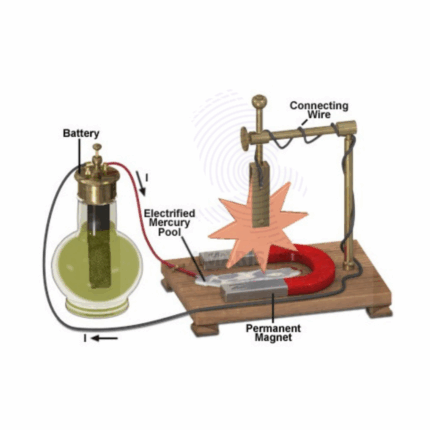
Barlows Wheel Apparatus is a classic physics demonstration device used to illustrate electromagnetic effects, specifically the principles of electric motors and the interaction between magnetic fields and electric current. It consists of a rotating wheel in contact with an electric circuit and a magnetic field, demonstrating motion generated by electromagnetic forces. The apparatus is widely used in educational laboratories to teach fundamental concepts of electromagnetism and motor action, as well as in industrial training for understanding motor components and operation.
Bio-Waste Digester Kit
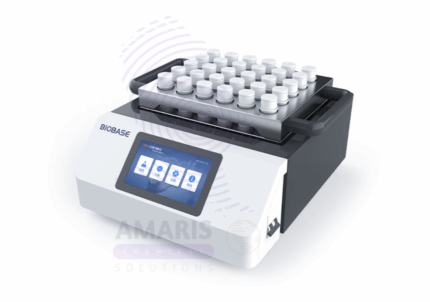
The Bio-Waste Digester Kit (1 Liter) is a compact, ready-to-use microbial solution designed to accelerate the decomposition of organic waste through natural biodegradation. This kit contains a high-activity blend of non-pathogenic microorganisms and enzymes capable of breaking down a wide range of biodegradable materials including food scraps, plant matter, and organic sludge. It is formulated for efficient use in laboratory-scale digestion experiments as well as small-scale industrial or institutional bio-waste treatment systems. The product supports environmentally responsible waste management by reducing organic load, minimizing odors, and converting waste into more manageable byproducts such as methane, carbon dioxide, and stabilized compost.

Boyle’s Law Apparatus
Boyle’s Law Apparatus is a precision laboratory instrument designed to demonstrate and verify Boyle’s Law, which states that the pressure of a given mass of gas is inversely proportional to its volume at constant temperature. The apparatus typically consists of a sealed cylinder with a movable piston or syringe, pressure gauge, and volume scale, allowing students and researchers to observe and measure the relationship between pressure and volume in gases. It is widely used in educational and research laboratories to teach fundamental gas laws and perform experimental validation of theoretical principles.
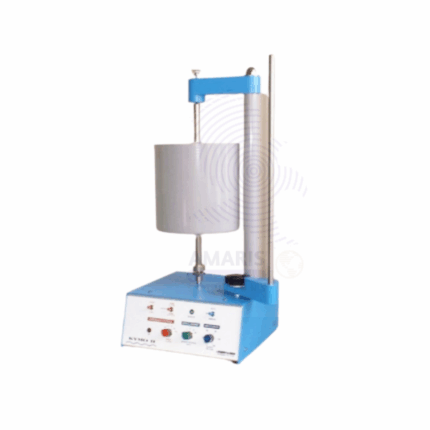
complete kymograph equipment
Complete Kymograph Equipment is a precision instrument used primarily in physiology and biological research to record changes in pressure, motion, or other physiological phenomena over time. It consists of a rotating drum wrapped with a recording paper and various attachments such as levers, pens, and sensors to capture mechanical movements or biological signals. This equipment is essential for experiments involving muscle contractions, blood pressure measurements, and other dynamic biological processes.
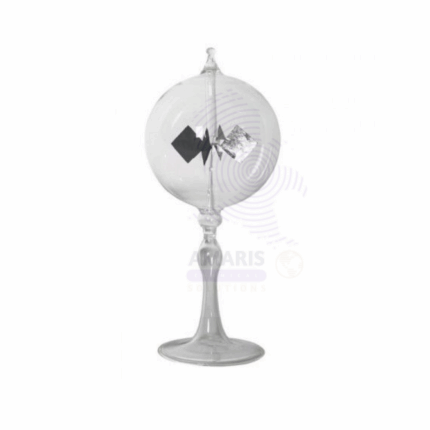
Crookes radiometer
The Crookes Radiometer, also known as a light mill, is a scientific apparatus consisting of a glass bulb containing a partial vacuum and a rotor with vanes coated black on one side and white or silver on the other. When exposed to light or radiant energy, the vanes rotate due to differential thermal transpiration, demonstrating principles of gas kinetics and energy conversion. It is commonly used for educational demonstrations of light pressure and thermodynamics.
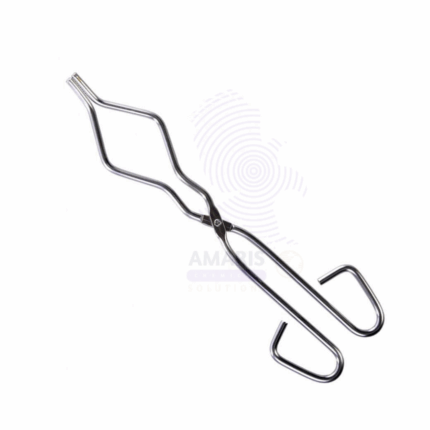
Crucible Tongs
Crucible Tongs are specialized metal tools designed for safely handling hot crucibles, evaporating dishes, and other laboratory apparatus exposed to high temperatures. Made from durable, heat-resistant metals such as stainless steel or nickel-plated steel, these tongs provide a firm grip, ensuring the safe transfer of heated items during laboratory procedures, including heating, melting, and chemical reactions.
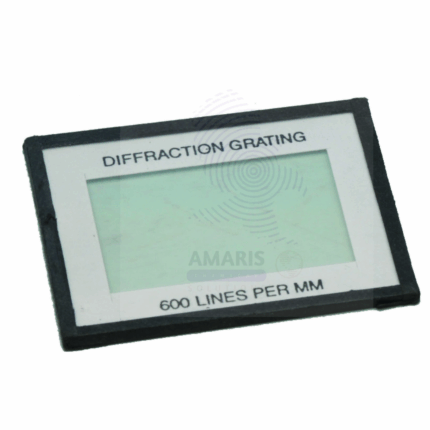
Diffraction Gratings
Diffraction Gratings are precision optical components used to disperse light into its component wavelengths for spectral analysis. These gratings consist of a surface with a series of closely spaced lines or grooves that diffract incoming light at specific angles depending on wavelength, enabling separation and measurement of spectral bands. Available in transmission or reflection formats, diffraction gratings are made from materials like glass or quartz and are often coated for enhanced optical performance. They are widely used in laboratories, research institutions, and industrial applications involving spectroscopy, photonics, and laser systems.
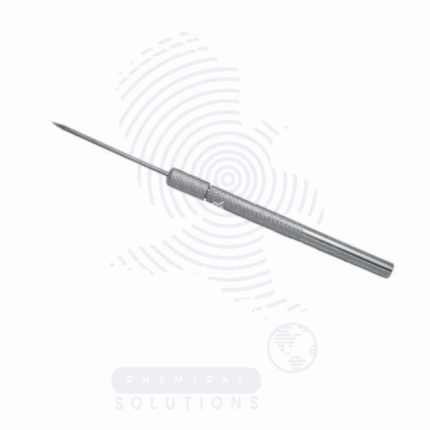
Dissecting Needle
A Dissecting Needle is a fine, pointed instrument used in biological and medical dissections to tease apart tissues, separate layers, and manipulate small structures. Typically constructed from stainless steel or surgical-grade metal, the needle has a sharp tip mounted on a rigid handle, providing precision and control during delicate procedures. Dissecting needles are essential tools in anatomy labs, research facilities, and surgical settings for detailed tissue work, facilitating clearer visibility and accurate separation without causing unnecessary damage.












