

 Preservatives(food)
 Flavors
 Acidulants
 Sweeteners
 Antioxidants
 Colorants(food)
 Nutraceutical Ingredients (food)
 Nutrient Supplements
 Emulsifiers
 Collectors
 Dust Suppressants
 Explosives and Blasting Agents
 Flocculants and Coagulants
 Frothers
 Leaching Agents
 pH Modifiers
 Precious Metal Extraction Agents
 Antioxidants(plastic)
 Colorants (Pigments, Dyes)
 Fillers and Reinforcements
 Flame Retardants
 Monomers
 Plasticizers
 Polymerization Initiators
 Stabilizers (UV, Heat)
 Antifoaming Agents
 Chelating Agents
 Coagulants and Flocculants
 Corrosion Inhibitors
 Disinfectants and Biocides
 Oxidizing Agents
 pH Adjusters
 Scale Inhibitors( water)
 Antioxidants(cosmetic)
 Emollients
 Oils
Oils Carrier Oills
 Essential Oils
 Humectants
 Preservatives
 Surfactants(cosmetic)
 Thickeners
 UV Filters
 Fragrance (Cosmetics)
 Fertilizers
 Soil Conditioners
 Plant Growth Regulators
 Animal Feed Additives
 Biostimulants
 Pesticides (Herbicides, Insecticides, Fungicides)
 Active Pharmaceutical Ingredients (APIs)
 Excipients
 Solvents(pharmaceutical)
 Antibiotics
 Antiseptics and Disinfectants
 Vaccine Adjuvants
 Nutraceutical Ingredients (pharmaceutical)
 Analgesics & Antipyretics
 Analytical Reagents
 Solvents(lab)
 Chromatography Chemicals
 Spectroscopy Reagents
 microbiology-and-cell-culture-reagents
 Molecular Biology Reagents
 Biochemical Reagents
 Inorganic and Organic Standards
 Laboratory Safety Chemicals
 Specialty Laboratory Chemicals(Special Laboratory Equipment)
 Demulsifiers
 Hydraulic Fracturing Fluids
 Scale Inhibitors(oil)
 Surfactants(oil)
 Drilling Fluids
 Dyes and Pigments
 Bleaching Agents
 Softening Agents
 Finishing Agents
 Antistatic Agents
 Admixtures
 Waterproofing Agents
 Sealants and Adhesives
 Curing Compounds
 Concrete Repair Chemicals
 Anti-Corrosion Coatings
 Surfactants(cleaning)
 Builders
 Enzymes
 Solvents (Cleaning)
 Electronic Chemicals
 Catalysts
 Lubricants
 Photographic Chemicals
 Refrigerants
 Automotive chemicals
 Pyrotechnic Chemicals
 Biodegradable Surfactants
 Bio-based Solvents
 Renewable Polymers
 Carbon Capture Chemicals
 Wastewater Treatment Chemicals
 Pigments
 Solvents(paint)
 Specialty Coatings
 Binders/Resins
 Additives
 Driers
 Anti-Corrosion Agents
 Functional Coatings
 Application-Specific Coatings
 Leavening Agents
 Dough Conditioners
 Flour Treatments
 Fat Replacers
 Decoratives
 Preservatives(baking)
 Plasticizers & Softeners
 Reinforcing Agents
 Adhesion Promoters
 Vulcanizing Agents
 Antidegradants
 Blowing Agents
 Fillers & Extenders
 Accelerators & Retarders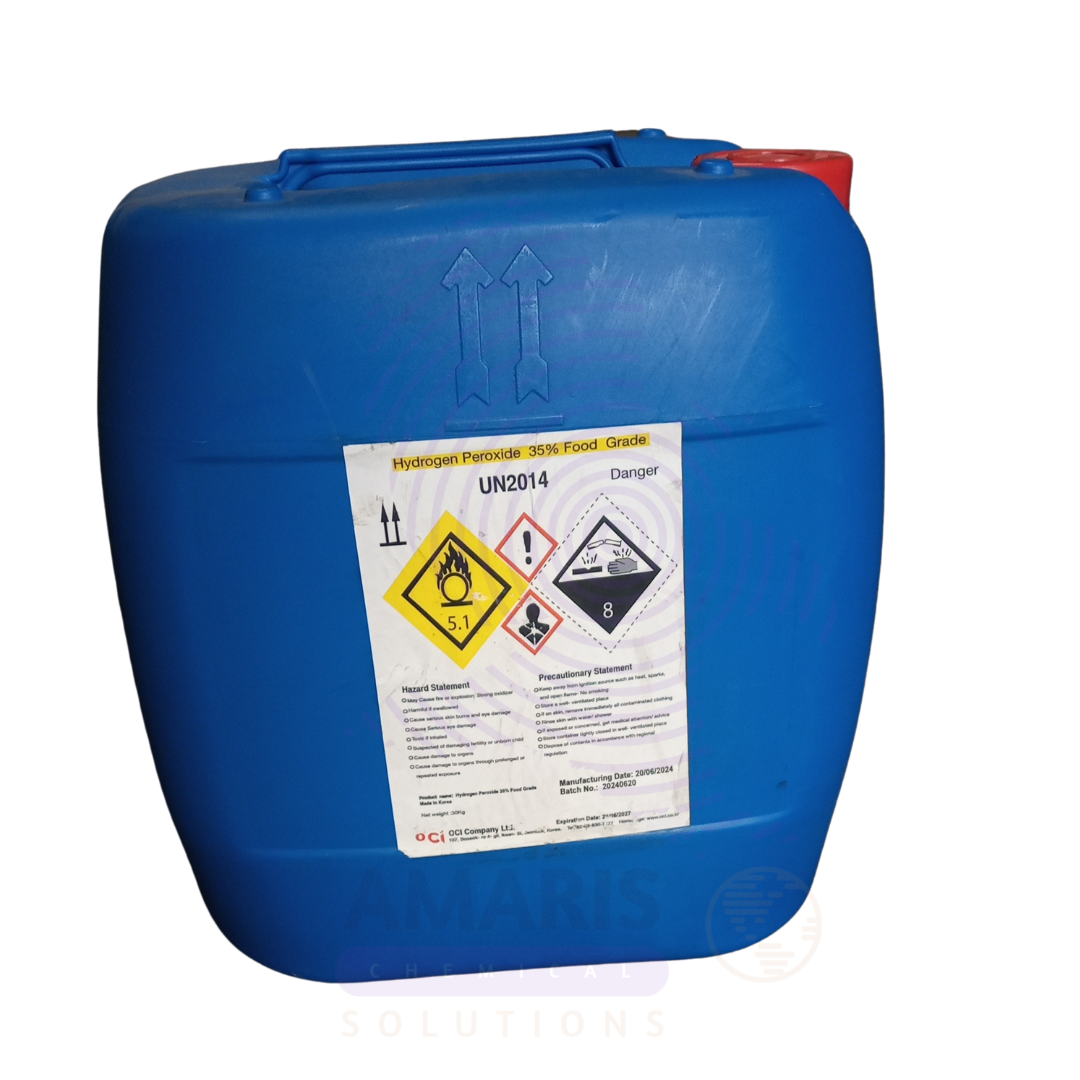
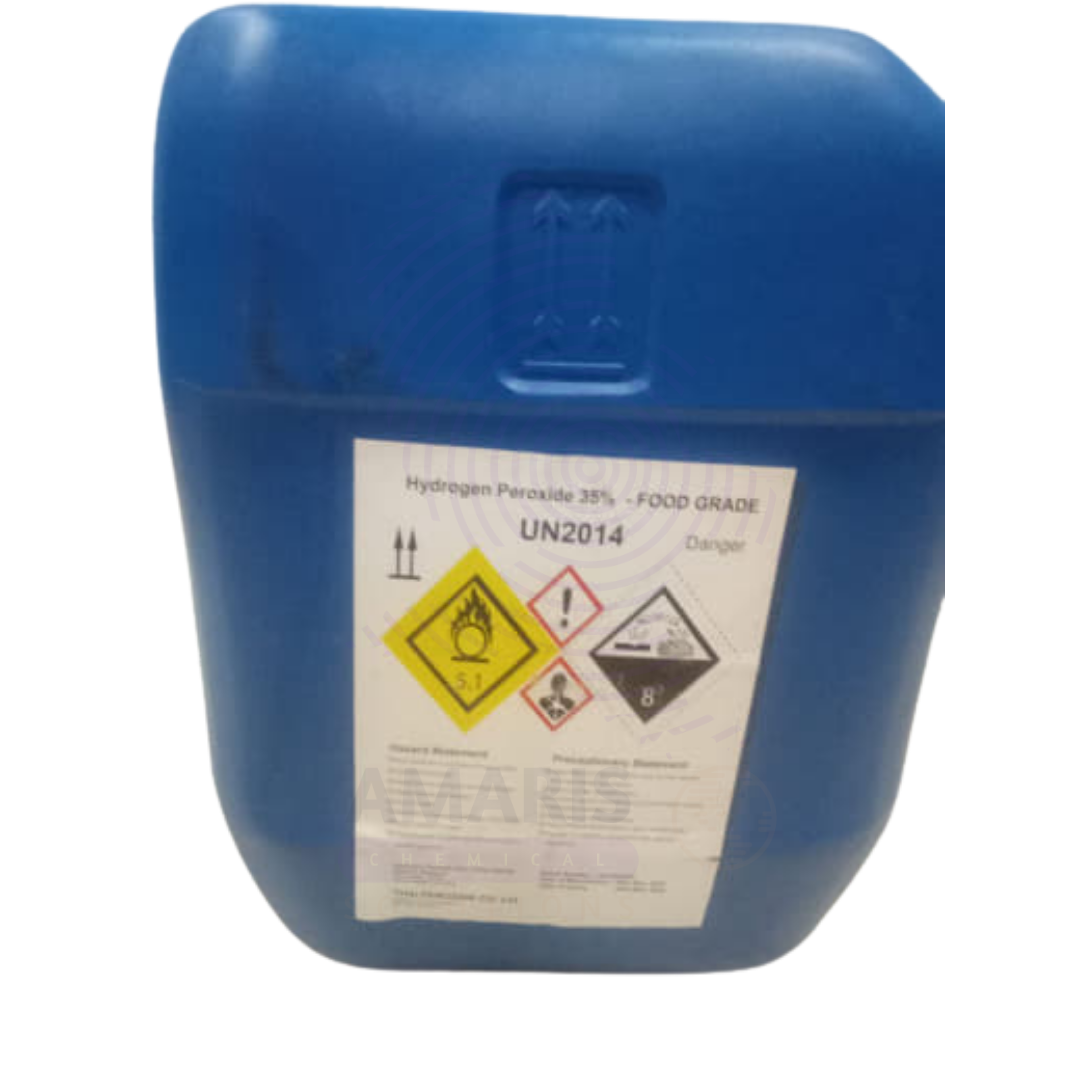
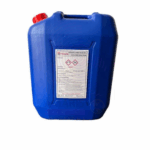

Hydrogen Peroxide Food Grade
Original price was: $ 1.55.$ 1.44Current price is: $ 1.44.
Hydrogen Peroxide Food Grade is a highly concentrated aqueous solution of hydrogen peroxide (H₂O₂), formulated specifically for use in food processing and related applications. It appears as a clear, colorless liquid with a slightly sharp, acrid odor. Renowned for its powerful oxidizing and bleaching properties, hydrogen peroxide is a strong antimicrobial agent and environmentally friendly disinfectant that decomposes into water and oxygen, leaving no harmful residues. The food-grade designation ensures compliance with strict purity standards, making it suitable for direct and indirect food contact uses, including sterilization, sanitation, and preservation.
Hydrogen Peroxide Food Grade
Primary Uses
- Food Industry
- Sanitization and Disinfection: Used extensively for sterilizing food contact surfaces, equipment, and packaging materials to reduce microbial contamination and extend shelf life without chemical residues.
- Food Preservation: Employed as a bleaching and oxidizing agent in processing flour, cheese, and other food products to improve texture, color, and shelf stability.
- Bottle and Packaging Sterilization: Vital in aseptic packaging processes to sanitize containers and ensure product safety, especially for dairy, beverages, and liquid foods.
- Washing Agent: Used to sanitize fruits, vegetables, and other raw food materials by reducing microbial load and removing pesticide residues.
- Dairy Processing: Used in cleaning-in-place (CIP) systems for sterilization of milking equipment and dairy processing lines to prevent spoilage and contamination.
- Pharmaceutical and Cosmetic Industries
- Utilized in the production and sterilization of pharmaceutical products and personal care items, ensuring microbial control while complying with food-grade safety standards.
- Water Treatment
- Applied for disinfection and oxidation of drinking water and wastewater in food production facilities to maintain hygiene and comply with regulatory standards.
- Agriculture
- Used for seed treatment and crop sanitation to reduce fungal and bacterial pathogens, promoting healthier growth and yield.
Secondary Uses
- Textile Industry
- Used as a bleaching and disinfecting agent in the production of food-grade textiles such as packaging fabrics and food wrapping materials.
- Laboratory Applications
- Employed as an oxidizing agent and sterilizer in microbiology and food safety testing laboratories.
- Cleaning and Maintenance
- Used in sanitary cleaning agents for food processing plants, hospitals, and other sensitive environments requiring residue-free disinfection.
1. Basic Identification Attributes
- Chemical Name (IUPAC): Hydrogen peroxide (aqueous solution)
- Common/Trade Name: Hydrogen Peroxide 35% Food Grade
- CAS Number: 7722-84-1
- HS Code: 2847.00.00
- Molecular Formula: H₂O₂
- Synonyms: Peroxide, Hydrogen peroxide solution, HP 35% FG
2. Physical & Chemical Properties
- Physical State: Clear, colorless liquid
- Odor: Slightly sharp, acrid
- Boiling Point: Approximately 108 °C (decomposes before boiling)
- Density: ~1.13 g/cm³ (35% concentration)
- Solubility: Miscible with water
- pH: Slightly acidic (typically 3.5 to 4.5)
- Stability: Decomposes slowly releasing oxygen; stabilized with trace amounts of inhibitors
3. Safety & Hazard Attributes
- GHS Classification:
- Oxidizing liquid: Category 1
- Skin corrosion/irritation: Category 1B
- Serious eye damage/eye irritation: Category 1
- Toxicity: Moderate irritant; harmful if swallowed or in contact with skin/eyes
- Exposure Limits: OSHA PEL 1 ppm (Ceiling) for vapor (varies with jurisdiction)
4. Storage & Handling Attributes
- Container Type: High-density polyethylene (HDPE) or stainless steel containers
- Storage Conditions: Store in cool, ventilated, shaded areas away from direct sunlight, heat, and incompatible materials such as organic substances and metals
- Shelf Life: Typically 6-12 months under recommended storage
- Handling Notes: Use with adequate ventilation; avoid contact with combustible materials
5. Regulatory & Compliance Attributes
- Complies with FDA and other food safety regulatory standards for food-grade hydrogen peroxide
- Approved for direct and indirect contact with food processing and packaging equipment
- Registered and monitored under relevant chemical safety laws (REACH, OSHA, EPA)
6. Environmental & Health Impact
- Biodegradability: Breaks down rapidly into water and oxygen, environmentally friendly
- Ecotoxicity: Low toxicity to aquatic organisms at typical use concentrations
- Bioaccumulation: Not expected to bioaccumulate
- Carcinogenicity/Mutagenicity: Not classified
Safety Handling Precautions
- PPE Required: Chemical-resistant gloves, safety goggles, face shield, protective apron
- Handling Guidelines: Use in well-ventilated areas; avoid inhalation of vapors and contact with skin or eyes; do not mix with incompatible substances such as organic materials or strong reducing agents
- Hygiene Practices: Wash hands thoroughly after handling; no eating or smoking in handling areas
First Aid Measures
- Inhalation: Move affected person to fresh air; seek medical attention if symptoms persist
- Skin Contact: Rinse immediately with plenty of water for at least 15 minutes; remove contaminated clothing; seek medical advice if irritation occurs
- Eye Contact: Flush eyes with water for at least 15 minutes; seek immediate medical attention
- Ingestion: Do not induce vomiting; rinse mouth and seek medical help immediately
Firefighting Measures
- Fire Hazards: Not flammable but supports combustion of other materials; can increase fire intensity
- Extinguishing Media: Use water spray, foam, or dry chemical; avoid using combustible materials for extinguishing
- Special Precautions: Firefighters should wear full protective gear and self-contained breathing apparatus
- Decomposition Products: Oxygen gas and water vapor, may accelerate burning of other materials
Related products
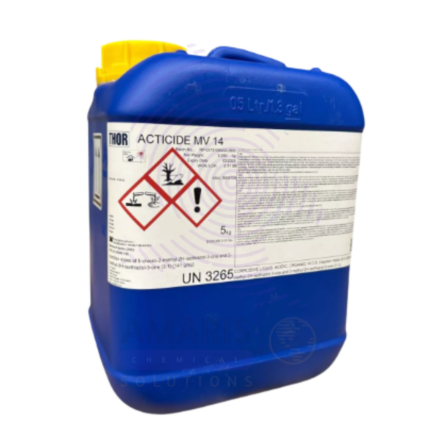
Acticide EPW (Dry Film)
Acticide EPW is a VOC-free, water-based dry film biocide manufactured by Thor Group specifically formulated to protect exterior and interior water-based coatings, paints, and inks from surface fungal and algal growth. It appears as a white to off-white milky dispersion or suspension with a mild odor. The product is based on a synergistic blend of active ingredients including benzimidazole carbamate, 2-n-octyl-4-isothiazolin-3-one (OIT), and a urea derivative with AMME™ technology. This alkali-stable and UV-stable formulation is free from AOX (Adsorbable Organic Halogens) and VOC (Volatile Organic Compounds), making it suitable for low-VOC and environmentally conscious product formulations. Acticide EPW is manufactured for industrial use and is not intended for direct human consumption, medical applications, or food preservation.
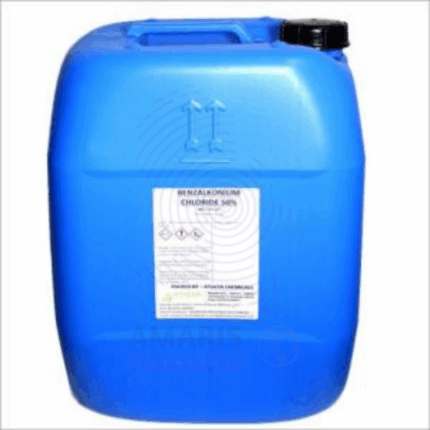
Benzyl Konium Chloride
Benzyl Konium Chloride (BAC) 50% is a quaternary ammonium compound with potent antimicrobial and disinfectant properties. It is a cationic surfactant widely used for its bactericidal, fungicidal, and virucidal effects. This clear to pale yellow liquid concentrate is highly soluble in water and is commonly used in healthcare, sanitation, and industrial hygiene applications. BAC 50% solutions serve as active ingredients in disinfectants, sanitizers, and antiseptics due to their effectiveness against a broad spectrum of microorganisms.
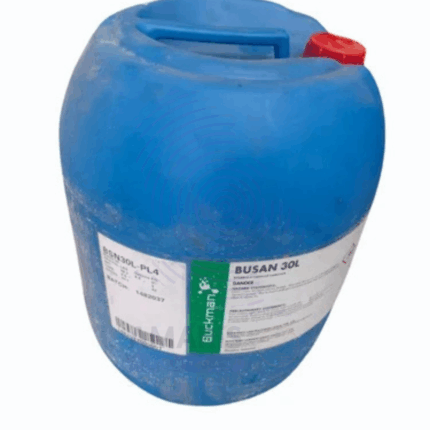
Busan
Busan is a brand name associated with a comprehensive range of specialty chemicals, primarily including surfactants, dispersants, and performance additives. These products are engineered to optimize the properties of coatings, paints, inks, adhesives, and other industrial formulations. Busan specialty chemicals enhance formulation stability, improve pigment dispersion, control rheology, and boost wetting and flow characteristics, leading to superior application and end-use performance. Designed for versatility and efficiency, Busan products are widely used across the coatings, printing, plastics, and chemical manufacturing industries.
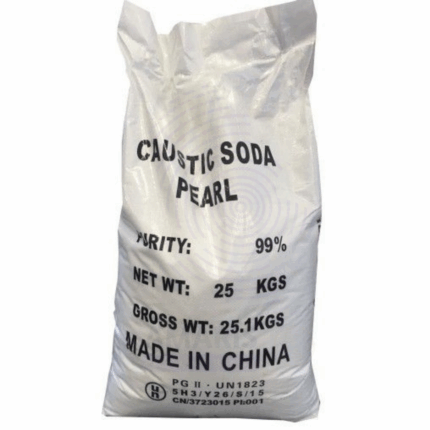
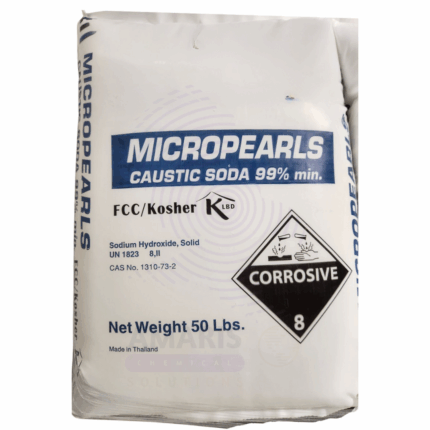
Caustic Soda Pearls
Caustic Soda Pearls are small, solid, spherical particles of sodium hydroxide (NaOH) produced by a controlled cooling and solidification process. These pearls offer superior flowability, uniform size distribution, and reduced dust generation compared to flake or powder forms. They are highly soluble in water, exhibiting a strong alkaline nature with vigorous exothermic dissolution. Caustic Soda Pearls are widely used across industries including chemical manufacturing, water treatment, pulp and paper processing, and detergents due to their purity, ease of handling, and efficient dissolution characteristics.
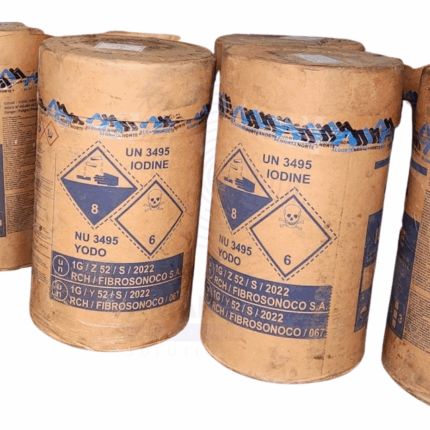
Iodine Crystals
Iodine Crystals are high-purity elemental iodine in solid crystalline form. These dark violet-black crystals have a characteristic pungent odor and sublime easily at room temperature, releasing violet iodine vapors. Iodine is a halogen element widely used for its antiseptic, oxidizing, and chemical reagent properties in pharmaceutical, industrial, and laboratory applications.

Nyclone (Chlorine)
Nyclone (Chlorine) is a high-purity chlorine-based chemical used primarily as a disinfectant and bleaching agent. It delivers effective sanitization in water treatment, industrial cleaning, and chemical manufacturing. Known for its strong oxidizing properties, Nyclone (Chlorine) is widely applied to control microbial contamination, remove stains, and support various chemical synthesis processes.
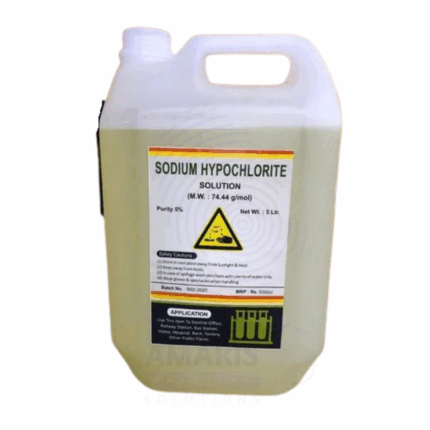
Sodium Hypochlorite
Sodium Hypochlorite 10-12% (commonly known as Jik) is a clear to pale greenish-yellow liquid with a strong chlorine odor. It is a widely used disinfectant and bleaching agent, known for its powerful oxidizing properties. This grade is commonly employed in household cleaning, water treatment, and industrial sanitation processes. It is effective against a broad spectrum of microorganisms, making it a popular choice for disinfection and sterilization.

Tricide 30E
Tricide 30E is a versatile emulsifiable concentrate formulation primarily used as a broad-spectrum biocide. It is designed to control bacterial, fungal, and algal growth in industrial water treatment, cooling towers, paper mills, and oilfield applications. The product combines potent antimicrobial agents to effectively inhibit microbial contamination, biofilm formation, and corrosion, thereby enhancing system efficiency and longevity. Tricide 30E is favored for its ease of use, stability in diverse water chemistries, and strong efficacy against a wide range of microorganisms.












