

 Preservatives(food)
 Flavors
 Acidulants
 Sweeteners
 Antioxidants
 Colorants(food)
 Nutraceutical Ingredients (food)
 Nutrient Supplements
 Emulsifiers
 Collectors
 Dust Suppressants
 Explosives and Blasting Agents
 Flocculants and Coagulants
 Frothers
 Leaching Agents
 pH Modifiers
 Precious Metal Extraction Agents
 Antioxidants(plastic)
 Colorants (Pigments, Dyes)
 Fillers and Reinforcements
 Flame Retardants
 Monomers
 Plasticizers
 Polymerization Initiators
 Stabilizers (UV, Heat)
 Antifoaming Agents
 Chelating Agents
 Coagulants and Flocculants
 Corrosion Inhibitors
 Disinfectants and Biocides
 Oxidizing Agents
 pH Adjusters
 Scale Inhibitors( water)
 Antioxidants(cosmetic)
 Emollients
 Oils
Oils Carrier Oills
 Essential Oils
 Humectants
 Preservatives
 Surfactants(cosmetic)
 Thickeners
 UV Filters
 Fragrance (Cosmetics)
 Fertilizers
 Soil Conditioners
 Plant Growth Regulators
 Animal Feed Additives
 Biostimulants
 Pesticides (Herbicides, Insecticides, Fungicides)
 Active Pharmaceutical Ingredients (APIs)
 Excipients
 Solvents(pharmaceutical)
 Antibiotics
 Antiseptics and Disinfectants
 Vaccine Adjuvants
 Nutraceutical Ingredients (pharmaceutical)
 Analgesics & Antipyretics
 Analytical Reagents
 Solvents(lab)
 Chromatography Chemicals
 Spectroscopy Reagents
 microbiology-and-cell-culture-reagents
 Molecular Biology Reagents
 Biochemical Reagents
 Inorganic and Organic Standards
 Laboratory Safety Chemicals
 Specialty Laboratory Chemicals(Special Laboratory Equipment)
 Demulsifiers
 Hydraulic Fracturing Fluids
 Scale Inhibitors(oil)
 Surfactants(oil)
 Drilling Fluids
 Dyes and Pigments
 Bleaching Agents
 Softening Agents
 Finishing Agents
 Antistatic Agents
 Admixtures
 Waterproofing Agents
 Sealants and Adhesives
 Curing Compounds
 Concrete Repair Chemicals
 Anti-Corrosion Coatings
 Surfactants(cleaning)
 Builders
 Enzymes
 Solvents (Cleaning)
 Electronic Chemicals
 Catalysts
 Lubricants
 Photographic Chemicals
 Refrigerants
 Automotive chemicals
 Pyrotechnic Chemicals
 Biodegradable Surfactants
 Bio-based Solvents
 Renewable Polymers
 Carbon Capture Chemicals
 Wastewater Treatment Chemicals
 Pigments
 Solvents(paint)
 Specialty Coatings
 Binders/Resins
 Additives
 Driers
 Anti-Corrosion Agents
 Functional Coatings
 Application-Specific Coatings
 Leavening Agents
 Dough Conditioners
 Flour Treatments
 Fat Replacers
 Decoratives
 Preservatives(baking)
 Plasticizers & Softeners
 Reinforcing Agents
 Adhesion Promoters
 Vulcanizing Agents
 Antidegradants
 Blowing Agents
 Fillers & Extenders
 Accelerators & Retarders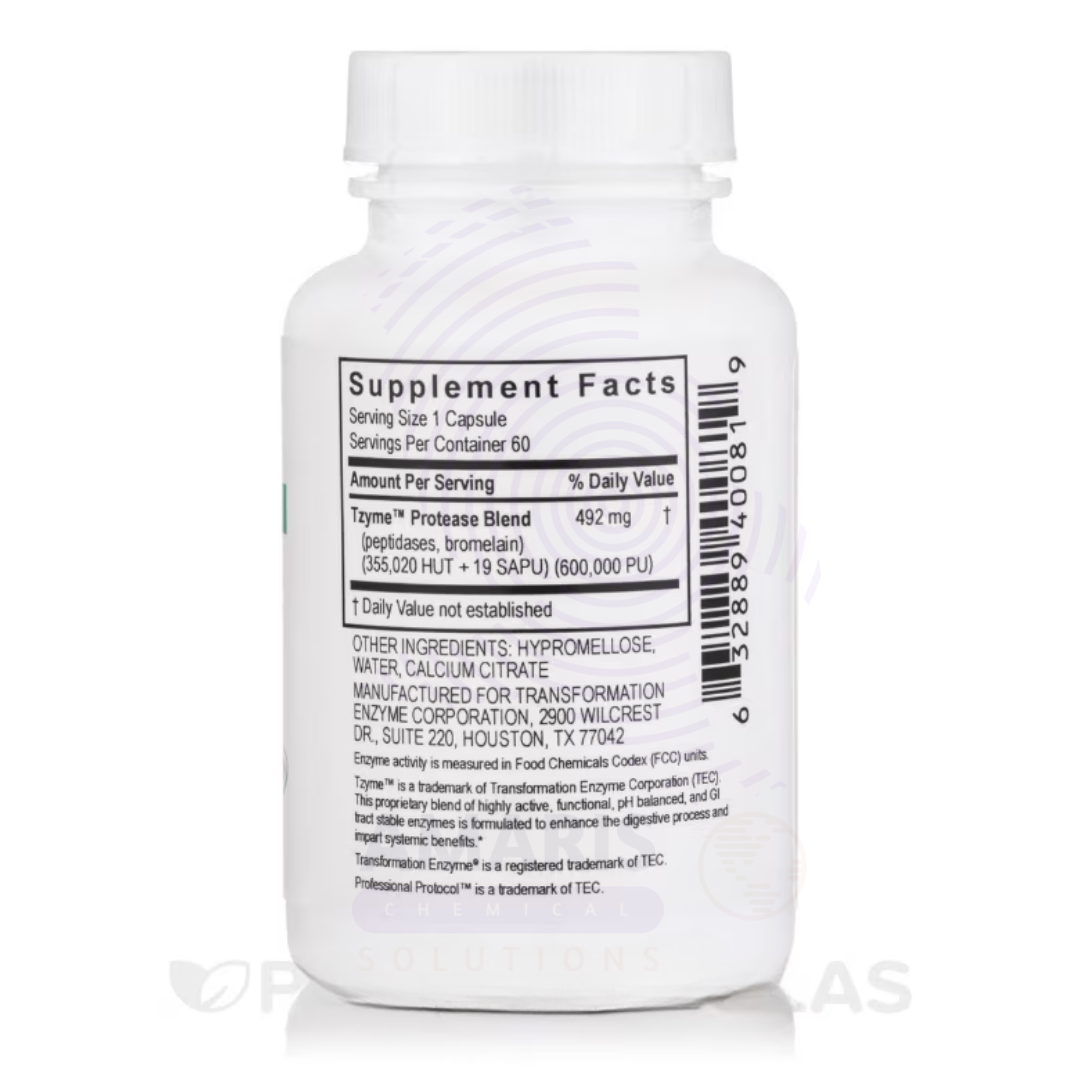


Protease Baking Enzymes Extra Pure
Original price was: $ 18.00.$ 17.87Current price is: $ 17.87.
Protease Baking Enzymes Extra Pure are highly refined biological catalysts used to break down proteins into peptides and amino acids during baking and food processing. This extra pure grade ensures high activity and minimal impurities, making it ideal for enhancing dough handling, improving crumb texture, and increasing bread volume. In industrial baking, these enzymes support consistent product quality, while also contributing to shorter mixing times and improved shelf life. Their precision performance also makes them suitable for controlled applications in food research and enzymatic hydrolysis studies.
Protease Baking Enzymes Extra Pure
PRIMARY USES
- Baking Industry
- Enhances dough handling, extensibility, and machinability by breaking down gluten protein.
- Improves crumb softness, volume, and texture of bread and baked goods.
- Reduces mixing time and increases production efficiency in commercial baking.
- Food Processing
- Used in the production of protein hydrolysates for flavor enhancement or nutritional value.
- Facilitates tenderization in meat products by hydrolyzing muscle proteins.
SECONDARY USES
- Detergent Formulations
- Acts as a protein-degrading enzyme in laundry detergents for removing stains such as blood, eggs, and grass.
- Biotechnology & Research
- Used in protein extraction, cell lysis protocols, and peptide mapping.
- Supports studies in enzymology and protein digestion kinetics.
- Animal Feed Additive
- Improves protein digestibility in animal nutrition formulations, especially in poultry and swine diets.
1. Basic Identification Attributes
- Chemical Name: Protease Enzyme (Baking Grade)
- Common Source: Typically derived from Aspergillus oryzae, Bacillus subtilis, or papaya (papain)
- CAS Number: 9014-01-1
- HS Code: 3507.90.90
- Molecular Nature: Protein-based enzyme complex
- Synonyms:
- Proteinase
- Peptidase
- Endopeptidase
- Proteolytic enzyme
2. Physical & Chemical Properties
- Physical State: Fine powder or granulated enzyme blend
- Color & Odor: Beige to light brown; mild fermentation odor
- Boiling/Melting Point: Not applicable (decomposes)
- Solubility:
- Soluble in water
- Insoluble in organic solvents
- pH Range:
- Optimal activity between pH 5.0–7.5 (depending on type)
- Temperature Stability:
- Optimum activity: 40–60 °C
- Denatures above 70 °C
- Stability: Sensitive to moisture, heat, and pH extremes
- Enzymatic Activity: Typically expressed in HUT or SAPU units
3. Safety & Hazard Attributes
- Hazard Class (GHS Classification):
- Health Hazard: May cause allergic reactions or respiratory irritation
- Not toxic in small quantities but should be handled with care
- NFPA Ratings:
- Health: 1
- Flammability: 0
- Reactivity: 0
- Exposure Limits:
- Avoid dust inhalation; no specific OSHA limit but enzyme dusts should be minimized
- Reactivity:
- Stable in dry form
- May react with oxidizing agents or strong acids
4. Storage & Handling Attributes
- Storage Conditions:
- Store in a cool (below 25°C), dry, and well-ventilated area
- Avoid moisture exposure and high humidity
- Incompatible Materials:
- Strong acids, bases, and oxidizers
- Container Type:
- Airtight plastic or laminated enzyme-safe pouches
- Shelf Life:
- 12–18 months under proper conditions
- Handling Precautions:
- Avoid creating dust
- Use personal protective equipment (mask, gloves)
- Wash hands thoroughly after use
5. Regulatory & Compliance Attributes
- Regulatory Status:
- Approved for food use by FDA, EFSA, and other global food safety bodies
- Classified as GRAS (Generally Recognized As Safe) for baking applications
- Transportation:
- Not regulated as a hazardous material
- Disposal Considerations:
- Dispose of according to local waste authority guidelines
- Avoid releasing large quantities into drains or watercourses
6. Environmental & Health Impact
- Ecotoxicity:
- Low toxicity to aquatic and terrestrial life
- Readily biodegradable
- Persistence:
- Deactivates quickly in the environment
- Carcinogenicity/Mutagenicity:
- Not known to be carcinogenic or mutagenic
- Health Risks:
- Risk mainly from dust inhalation; may trigger allergic responses in sensitized individuals
- Biodegradability:
- Fully biodegradable, breaks down into amino acids and peptides
SAFETY PRECAUTIONS
Personal Protective Equipment (PPE):
• Wear gloves, safety goggles, and protective clothing
• Use dust mask or respirator if dust is generated
Handling:
• Handle in a well-ventilated area
• Avoid inhalation and contact with skin and eyes
Storage:
• Store in tightly sealed containers away from light and moisture
FIRST AID MEASURES
Inhalation:
• Move to fresh air immediately
• Seek medical attention if breathing difficulties occur
Skin Contact:
• Wash with soap and water
• Remove contaminated clothing
• Seek medical attention if irritation develops
Eye Contact:
• Rinse eyes with water for at least 15 minutes
• Seek medical attention if irritation persists
Ingestion:
• Rinse mouth with water
• Do not induce vomiting unless directed by medical personnel
• Seek medical attention if symptoms appear
FIRE FIGHTING MEASURES
Flammability:
• Combustible solid
Extinguishing Media:
• Use water spray, foam, dry chemical, or CO₂
Hazardous Combustion Products:
• May emit carbon monoxide, carbon dioxide, and other toxic fumes
Firefighter Protection:
• Wear self-contained breathing apparatus and protective clothing
Related products
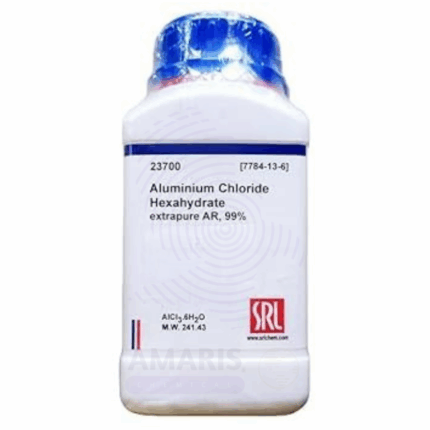
Aluminium Chloride Hydrated Extra Pure
Aluminium Chloride Hydrated Extra Pure is a high-purity, white to pale yellow crystalline compound containing bound water molecules, making it less reactive than its anhydrous counterpart but still highly effective in various laboratory applications. It is commonly used in aqueous-phase reactions, coordination chemistry, and as a reagent for studying aluminum ion behavior in solution. The hydrated form offers enhanced stability and ease of handling, making it suitable for educational experiments, buffer formulations, and inorganic synthesis where precise aluminum content is required. Its extra pure grade ensures minimal interference from impurities, supporting accurate and reproducible results in analytical and research settings. Proper storage in a cool, dry place is essential to prevent further hydration or contamination.
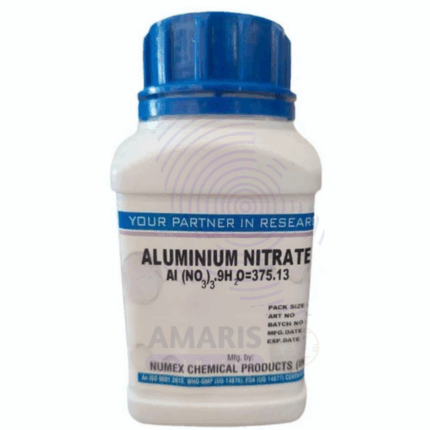
Aluminium Nitrate Extra Pure
Aluminium Nitrate Extra Pure is a high-purity, white crystalline compound that is highly soluble in water and widely used in laboratory chemistry for analytical, synthesis, and research purposes. It serves as a reliable source of aluminum ions in solution, making it valuable in qualitative analysis, coordination chemistry, and materials science studies. This compound is often utilized in the preparation of other aluminum salts, as a nitrating agent, and in controlled oxidation reactions. Its extra pure grade guarantees minimal interference from contaminants, ensuring accurate, reproducible results in sensitive experimental work. Aluminium Nitrate should be stored in tightly sealed containers, away from moisture and incompatible substances, due to its oxidizing nature and hygroscopicity.
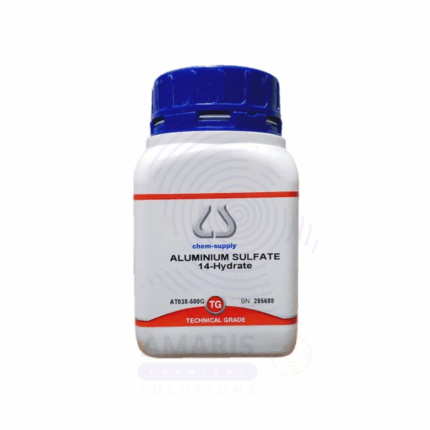
Aluminium Sulphate Hydrous Extra Pure
Aluminium Sulphate Hydrous Extra Pure is a high-purity, white to slightly off-white crystalline compound containing bound water molecules, commonly used in laboratory settings for analytical, inorganic, and coordination chemistry. It serves as a reliable source of aluminum ions in aqueous solutions and is frequently employed in precipitation reactions, dye fixation studies, and flocculation experiments. The hydrous form offers improved solubility and ease of handling, making it suitable for educational labs and controlled research environments. Its extra pure grade ensures minimal interference from impurities, enabling accurate, reproducible results in sensitive analytical procedures. To maintain its stability and prevent further hydration or contamination, it should be stored in well-sealed containers in a cool, dry place.
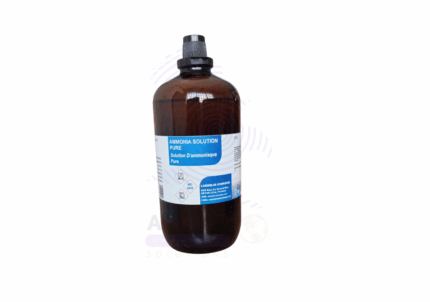
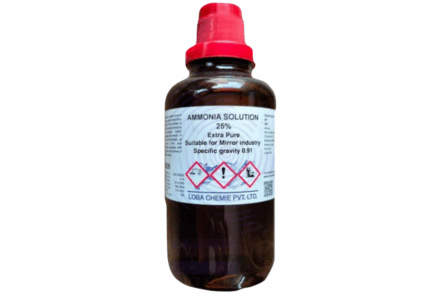
Ammonia Solution Extra Pure
Ammonia Solution Extra Pure is a high-purity, clear, colorless liquid composed of ammonia gas dissolved in water, emitting a strong, characteristic pungent odor. Widely used in laboratory chemistry, it serves as a crucial reagent in acid-base titrations, complexometric analysis, and the preparation of ammonium salts and metal-ammonia complexes. Its alkaline nature makes it valuable for pH adjustment, cleaning of laboratory glassware, and as a reducing agent in certain analytical procedures. The extra pure grade ensures low levels of impurities, supporting reliable results in sensitive experimental work. Due to its volatility and corrosiveness, it should be handled in well-ventilated areas and stored in tightly sealed, chemically resistant containers.
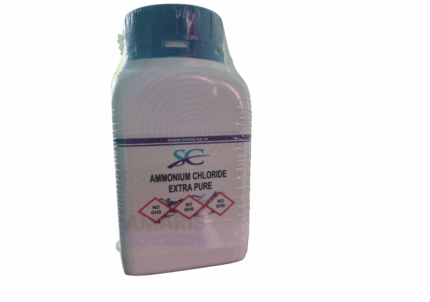
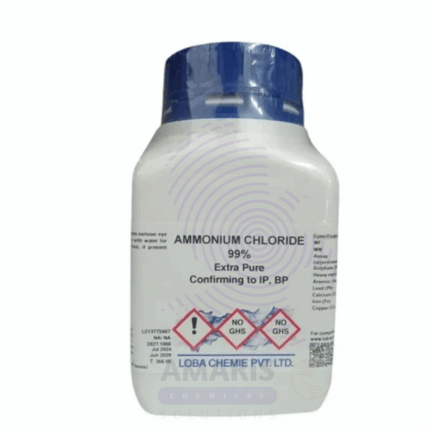
Ammonium Chloride Extra Pure
Ammonium Chloride Extra Pure is a high-purity, white crystalline salt widely used in laboratory chemistry as a source of ammonium ions and chloride ions for analytical, inorganic, and biochemical applications. It plays a key role in preparing buffer solutions, especially in conjunction with ammonia, and is commonly used in qualitative analysis, electrochemical studies, and metal treatment experiments. In addition, it serves as a reagent in synthesis reactions and as a nitrogen source in microbial culture media. The extra pure grade ensures high consistency and minimal contaminants, making it suitable for precise and sensitive laboratory work. It should be stored in a cool, dry place in well-sealed containers to maintain stability and prevent moisture absorption.
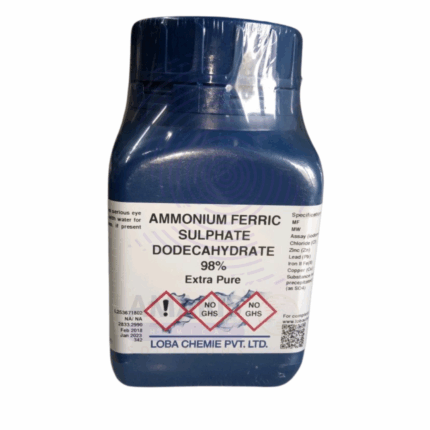
Ammonium Ferric Sulphate Extra Pure
Ammonium Ferric Sulphate Extra Pure, also known as ferric ammonium sulfate or iron alum, is a high-purity, violet to light purple crystalline compound used extensively in laboratory settings for analytical and inorganic chemistry. It serves as a reliable oxidizing agent and a standard in redox titrations, particularly in permanganometry. Its stable and non-hygroscopic nature makes it ideal for preparing standard iron solutions, studying coordination complexes, and teaching laboratory procedures involving iron(III) salts. The extra pure grade ensures minimal interference from impurities, enabling accurate and reproducible results in sensitive experiments. It should be stored in a dry, cool environment in well-sealed containers to preserve its chemical integrity.
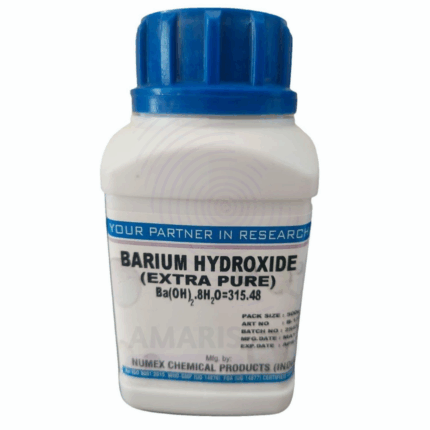
Barium Hydroxide Hydrate Extra Pure
Barium Hydroxide Hydrate Extra Pure is a high-purity, white crystalline compound containing eight molecules of water of crystallization. It is widely used in laboratory chemistry as a strong base in titration, qualitative analysis, and inorganic synthesis. Its high solubility in water and strong alkalinity make it valuable for neutralization reactions, preparation of barium salts, and as a reagent for detecting sulfates, carbonates, and phosphates. In analytical applications, it is often used where precise pH control and minimal contamination are critical. The extra pure grade ensures consistent performance in high-accuracy experiments. It should be handled with care and stored in a tightly sealed container in a cool, dry place, as it is caustic and sensitive to carbon dioxide in the air, which can lead to carbonate formation.
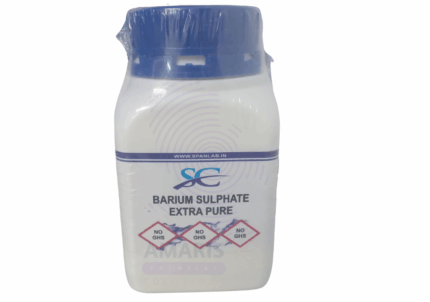
Barium Sulphate Extra pure
Barium Sulphate Extra Pure is a high-purity, white, odorless crystalline powder known for its extreme insolubility in water and chemical inertness, making it highly useful in laboratory settings for qualitative analysis and gravimetric determinations. It is commonly employed in the detection and quantification of sulfate ions through precipitation reactions, as well as in studies involving solubility equilibria and surface chemistry. Its high density and stability also make it valuable in preparing calibration standards and radiopaque materials in research. The extra pure grade ensures minimal contamination, providing consistent and reliable results in sensitive analytical procedures. It should be stored in a dry, tightly sealed container to maintain its quality and prevent contamination.












