

 Preservatives(food)
 Flavors
 Acidulants
 Sweeteners
 Antioxidants
 Colorants(food)
 Nutraceutical Ingredients (food)
 Nutrient Supplements
 Emulsifiers
 Collectors
 Dust Suppressants
 Explosives and Blasting Agents
 Flocculants and Coagulants
 Frothers
 Leaching Agents
 pH Modifiers
 Precious Metal Extraction Agents
 Antioxidants(plastic)
 Colorants (Pigments, Dyes)
 Fillers and Reinforcements
 Flame Retardants
 Monomers
 Plasticizers
 Polymerization Initiators
 Stabilizers (UV, Heat)
 Antifoaming Agents
 Chelating Agents
 Coagulants and Flocculants
 Corrosion Inhibitors
 Disinfectants and Biocides
 Oxidizing Agents
 pH Adjusters
 Scale Inhibitors( water)
 Antioxidants(cosmetic)
 Emollients
 Oils
Oils Carrier Oills
 Essential Oils
 Humectants
 Preservatives
 Surfactants(cosmetic)
 Thickeners
 UV Filters
 Fertilizers
 Soil Conditioners
 Plant Growth Regulators
 Animal Feed Additives
 Biostimulants
 Pesticides (Herbicides, Insecticides, Fungicides)
 Active Pharmaceutical Ingredients (APIs)
 Excipients
 Solvents(pharmaceutical)
 Antibiotics
 Antiseptics and Disinfectants
 Vaccine Adjuvants
 Nutraceutical Ingredients (pharmaceutical)
 Analgesics & Antipyretics
 Analytical Reagents
 Solvents(lab)
 Chromatography Chemicals
 Spectroscopy Reagents
 microbiology-and-cell-culture-reagents
 Molecular Biology Reagents
 Biochemical Reagents
 Inorganic and Organic Standards
 Laboratory Safety Chemicals
 Specialty Laboratory Chemicals(Special Laboratory Equipment)
 Demulsifiers
 Hydraulic Fracturing Fluids
 Scale Inhibitors(oil)
 Surfactants(oil)
 Drilling Fluids
 Dyes and Pigments
 Bleaching Agents
 Softening Agents
 Finishing Agents
 Antistatic Agents
 Admixtures
 Waterproofing Agents
 Sealants and Adhesives
 Curing Compounds
 Concrete Repair Chemicals
 Anti-Corrosion Coatings
 Surfactants(cleaning)
 Builders
 Enzymes
 Solvents (Cleaning)
 Fragrances (Cleaning)
 Electronic Chemicals
 Catalysts
 Lubricants
 Photographic Chemicals
 Refrigerants
 Automotive chemicals
 Pyrotechnic Chemicals
 Biodegradable Surfactants
 Bio-based Solvents
 Renewable Polymers
 Carbon Capture Chemicals
 Wastewater Treatment Chemicals
 Pigments
 Solvents(paint)
 Specialty Coatings
 Binders/Resins
 Additives
 Driers
 Anti-Corrosion Agents
 Functional Coatings
 Application-Specific Coatings
 Leavening Agents
 Dough Conditioners
 Flour Treatments
 Fat Replacers
 Decoratives
 Preservatives(baking)
 Plasticizers & Softeners
 Reinforcing Agents
 Adhesion Promoters
 Vulcanizing Agents
 Antidegradants
 Blowing Agents
 Fillers & Extenders
 Accelerators & Retarders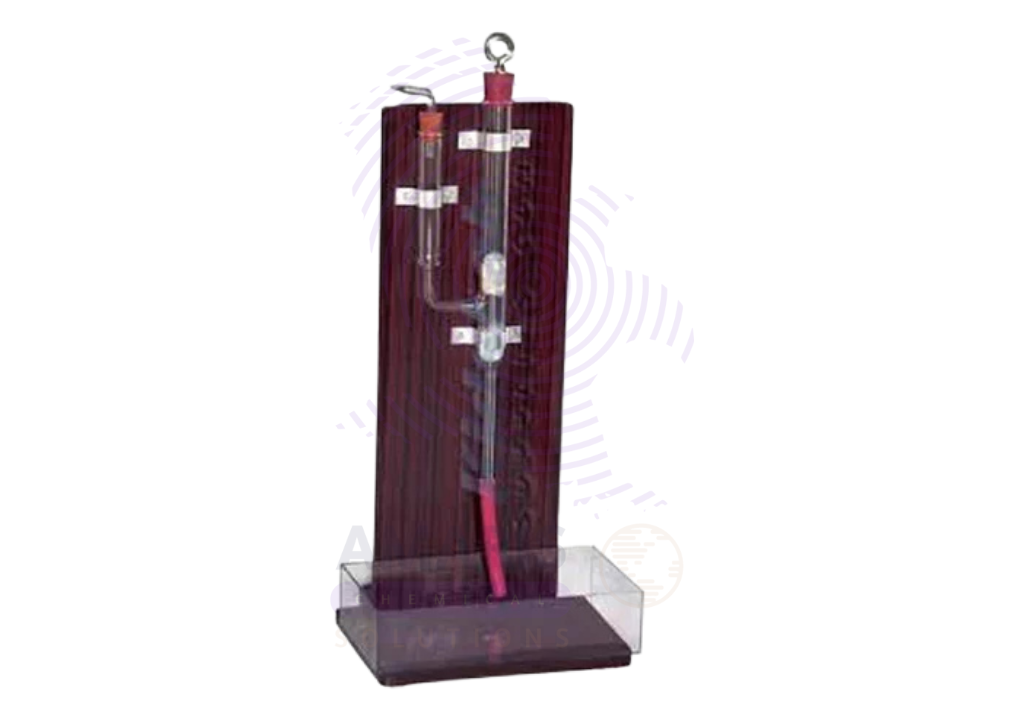

Force Pump
Original price was: $ 18.96.$ 18.87Current price is: $ 18.87.
Force Pump is a mechanical device designed to transfer fluids by applying manual force through a piston or plunger mechanism. Unlike lift pumps that only raise liquids to limited heights, force pumps are capable of delivering fluids at higher pressures and over greater vertical distances. Constructed from corrosion-resistant metal or durable plastic, force pumps are widely used in educational demonstrations, physics experiments, and small-scale fluid transfer systems. This apparatus illustrates fundamental hydraulic principles and is essential in laboratories, training workshops, and prototype testing environments.
Force Pump
Primary Uses
- Educational and Demonstration Applications
- Demonstration of Pascal’s Law for explaining the transmission of pressure in confined fluids.
- Used in physics labs to teach fluid mechanics and pressure-related principles.
- Supports practical illustrations of hydraulic lift and force multiplication concepts.
- Assists in demonstrating the relationship between force, pressure, and area in liquid systems.
- Facilitates hands-on learning in science and engineering education.
2.Laboratory and Research Applications
- Employed in controlled lab setups to create pressurized flow of fluids.
- Used in testing seals, valves, and small-scale hydraulic components.
- Provides pressurized fluid displacement without the need for electrical power.
- Ideal for portable fluid movement in field experiments or temporary setups.
- Supports low-volume pressurized liquid transfer in experimental systems.
Secondary Uses
- Industrial and Prototype Applications
- Used in industrial training centers for demonstrating pump mechanisms and hydraulic theory.
- Assists in prototype testing of custom hydraulic systems and devices.
- Utilized in emergency fluid transfer where mechanical simplicity is preferred.
- Serves as a manual backup in systems requiring pressurized fluid flow.
- Applied in teaching environments for industrial mechanics and vocational skills.
1.Basic Identification Attributes
- Material: Corrosion-resistant metal (e.g., brass, stainless steel) or high-strength plastic
- Operation: Manual piston or plunger action
- Components: Cylinder, piston, inlet and outlet valves, pressure delivery pipe
2.Physical & Chemical Properties
- Pressure Range: Capable of generating moderate to high liquid pressure
- Flow Rate: Dependent on cylinder size and piston speed
- Durability: Designed for repeated use and long service life
3.Safety & Hazard Attributes
- Risk of mechanical injury from moving parts if used improperly
- Ensure seals are intact to avoid fluid leaks under pressure
- Fluids under pressure may spray unexpectedly if fittings are loose
4.Storage & Handling Attributes
- Store in dry, clean area away from corrosive substances
- Lubricate piston mechanism regularly to ensure smooth operation
- Inspect for cracks, corrosion, or seal degradation before each use
5.Regulatory & Compliance Attributes
- Manufactured according to laboratory and instructional safety standards
- Suitable for classroom, laboratory, and vocational training use
6.Environmental & Health Impact
- No electricity required—manual operation is energy-efficient and eco-friendly
- Should not be used with hazardous fluids unless proper containment is ensured
Safety Handling Precautions
- Use gloves and eye protection when handling pressurized systems
- Operate steadily to avoid pressure surges or mechanical strain
First Aid Measures
- For fluid contact with skin or eyes, rinse thoroughly with water
- Treat mechanical injuries (e.g., pinched fingers) with first aid and seek help if necessary
Firefighting Measures
- Non-flammable device; only flammable if used with combustible fluids
- Use suitable extinguishing agent based on the liquid being pumped
Related products

Centrifudge Electrical
Centrifudge Electrical, is a laboratory instrument designed to separate components of mixtures based on density by spinning samples at high speeds. Equipped with an electric motor, it offers controlled and consistent centrifugal force, enabling efficient separation of solids from liquids, blood components, or chemical substances. Widely used in medical, research, and industrial laboratories, this device ensures precise sample processing with adjustable speed and timer settings. Its robust design includes safety features such as imbalance detection and secure lids to protect users during operation.
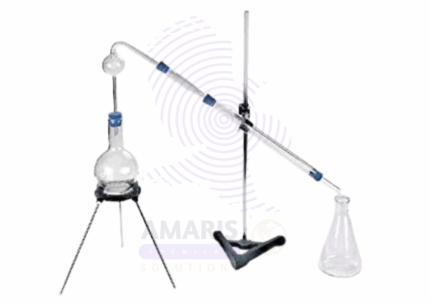
Complete Liebigs Distillation Apparatus
Complete Liebigs Distillation Apparatus is a classic laboratory setup used for the distillation of liquids by heating and subsequent condensation. It consists of a distillation flask, Liebig condenser, receiving flask, and necessary connecting joints. The Liebig condenser efficiently cools vapor back into liquid form using a water jacket. This apparatus is widely used in chemistry labs for purifying liquids, separating mixtures, and studying boiling points.

Contact key
Product Description
The Contact Key is a fundamental switching device used in electrical circuits to manually open or close the flow of current. Commonly used in physics laboratories for demonstration and experimentation with circuits, it enables controlled activation of current for brief or sustained durations. Made from durable, conductive metals with insulating bases, Contact Keys are essential components in circuit testing, timing devices, and low-voltage experimental setups.
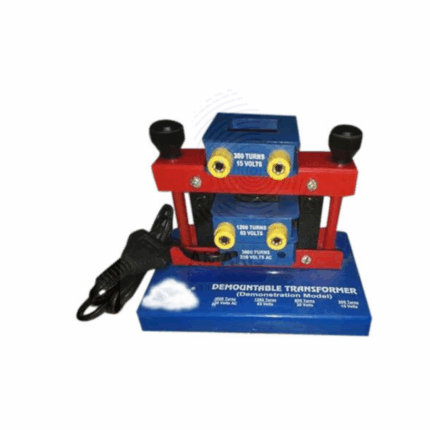
Demonstration transformer
The Demonstration Transformer is an educational and laboratory device designed to illustrate the principles of electromagnetic induction, voltage transformation, and mutual inductance. Typically composed of a laminated iron core with interchangeable primary and secondary coils, it allows for hands-on experiments involving step-up and step-down voltage transformation. Ideal for both laboratory demonstrations and industrial training settings, it supports a range of voltage and current inputs and can safely demonstrate real-time transformer behavior using AC power sources.

Diffraction Gratings
Diffraction Gratings are precision optical components used to disperse light into its component wavelengths for spectral analysis. These gratings consist of a surface with a series of closely spaced lines or grooves that diffract incoming light at specific angles depending on wavelength, enabling separation and measurement of spectral bands. Available in transmission or reflection formats, diffraction gratings are made from materials like glass or quartz and are often coated for enhanced optical performance. They are widely used in laboratories, research institutions, and industrial applications involving spectroscopy, photonics, and laser systems.
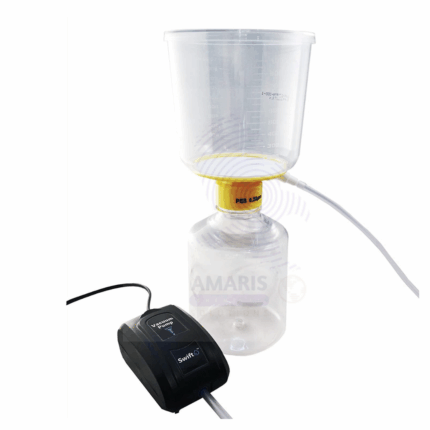
Filter Pump
Filter Pump is a laboratory device designed to create a vacuum using water or air flow to assist in filtration processes. Typically made from corrosion-resistant metal, plastic, or a combination of both, it operates by utilizing the Venturi effect to generate negative pressure. This suction power is ideal for accelerating vacuum filtration by drawing liquid through filter media quickly and efficiently. Filter pumps are commonly used in chemical, biological, environmental, and industrial laboratories where rapid and effective liquid-solid separation is required. They are a cost-effective and reliable alternative to mechanical vacuum pumps in many low-to-moderate vacuum applications.
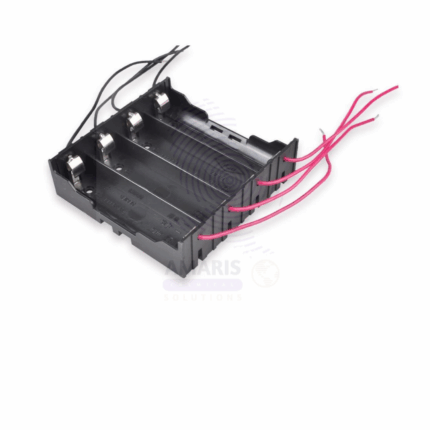
Plastic Cell Holder
A Plastic Cell Holder is a laboratory accessory used to securely hold electrochemical or dry cells (batteries) in place during physics or electrical experiments. It is typically made from non-conductive, durable plastic and may feature metal terminals or spring-loaded clips for electrical connections. These holders provide a stable and safe platform to integrate batteries into circuits for educational demonstrations, testing setups, or prototyping purposes. Designed for use with common battery sizes (such as D, C, AA, or specialized cells), the holder ensures easy insertion, removal, and reliable connection of power sources without short-circuiting. It is widely used in physics labs, electronics training, and school science kits.

Visking Tube
Visking Tube is a high-quality dialysis tubing made from regenerated cellulose, designed for laboratory use in separation and diffusion experiments. This semi-permeable membrane allows the selective passage of small molecules and ions while retaining larger molecules, making it ideal for dialysis, osmosis, and molecular weight determination studies. The tubing is durable, chemically resistant, and flexible, facilitating easy handling and secure sealing during experiments. Commonly used in biochemistry, molecular biology, and clinical laboratories, Visking Tube 1 Metre is essential for applications requiring molecular separation and purification.












