

 Preservatives(food)
 Flavor Enhancers
 Acidulants
 Sweeteners
 Antioxidants
 Colorants(food)
 Nutraceutical Ingredients (food)
 Nutrient Supplements
 Emulsifiers
 Collectors
 Dust Suppressants
 Explosives and Blasting Agents
 Flocculants and Coagulants
 Frothers
 Leaching Agents
 pH Modifiers
 Precious Metal Extraction Agents
 Antioxidants(plastic)
 Colorants (Pigments, Dyes)
 Fillers and Reinforcements
 Flame Retardants
 Monomers
 Plasticizers
 Polymerization Initiators
 Stabilizers (UV, Heat)
 Antifoaming Agents
 Chelating Agents
 Coagulants and Flocculants
 Corrosion Inhibitors
 Disinfectants and Biocides
 Oxidizing Agents
 pH Adjusters
 Scale Inhibitors( water)
 Antioxidants(cosmetic)
 Emollients
 Fragrances and Essential Oils
 Humectants
 Preservatives
 Surfactants(cosmetic)
 Thickeners
 UV Filters
 Fertilizers
 Soil Conditioners
 Plant Growth Regulators
 Animal Feed Additives
 Biostimulants
 Pesticides (Herbicides, Insecticides, Fungicides)
 Active Pharmaceutical Ingredients (APIs)
 Excipients
 Solvents(pharmaceutical)
 Antibiotics
 Antiseptics and Disinfectants
 Vaccine Adjuvants
 Nutraceutical Ingredients (pharmaceutical)
 Analgesics & Antipyretics
 Analytical Reagents
 Solvents(lab)
 Chromatography Chemicals
 Spectroscopy Reagents
 microbiology-and-cell-culture-reagents
 Molecular Biology Reagents
 Biochemical Reagents
 Inorganic and Organic Standards
 Laboratory Safety Chemicals
 Specialty Laboratory Chemicals(Special Laboratory Equipment)
 Demulsifiers
 Hydraulic Fracturing Fluids
 Scale Inhibitors(oil)
 Surfactants(oil)
 Drilling Fluids
 Dyes and Pigments
 Bleaching Agents
 Softening Agents
 Finishing Agents
 Antistatic Agents
 Admixtures
 Waterproofing Agents
 Sealants and Adhesives
 Curing Compounds
 Concrete Repair Chemicals
 Anti-Corrosion Coatings
 Surfactants(cleaning)
 Builders
 Enzymes
 Solvents (Cleaning)
 Fragrances
 Electronic Chemicals
 Catalysts
 Lubricants
 Photographic Chemicals
 Refrigerants
 Automotive chemicals
 Pyrotechnic Chemicals
 Biodegradable Surfactants
 Bio-based Solvents
 Renewable Polymers
 Carbon Capture Chemicals
 Wastewater Treatment Chemicals
 Pigments
 Solvents(paint)
 Specialty Coatings
 Binders/Resins
 Additives
 Driers
 Anti-Corrosion Agents
 Functional Coatings
 Application-Specific Coatings
 Leavening Agents
 Dough Conditioners
 Flour Treatments
 Fat Replacers
 Decoratives
 Preservatives(baking)
 Plasticizers & Softeners
 Reinforcing Agents
 Adhesion Promoters
 Vulcanizing Agents
 Antidegradants
 Blowing Agents
 Fillers & Extenders
 Accelerators & Retarders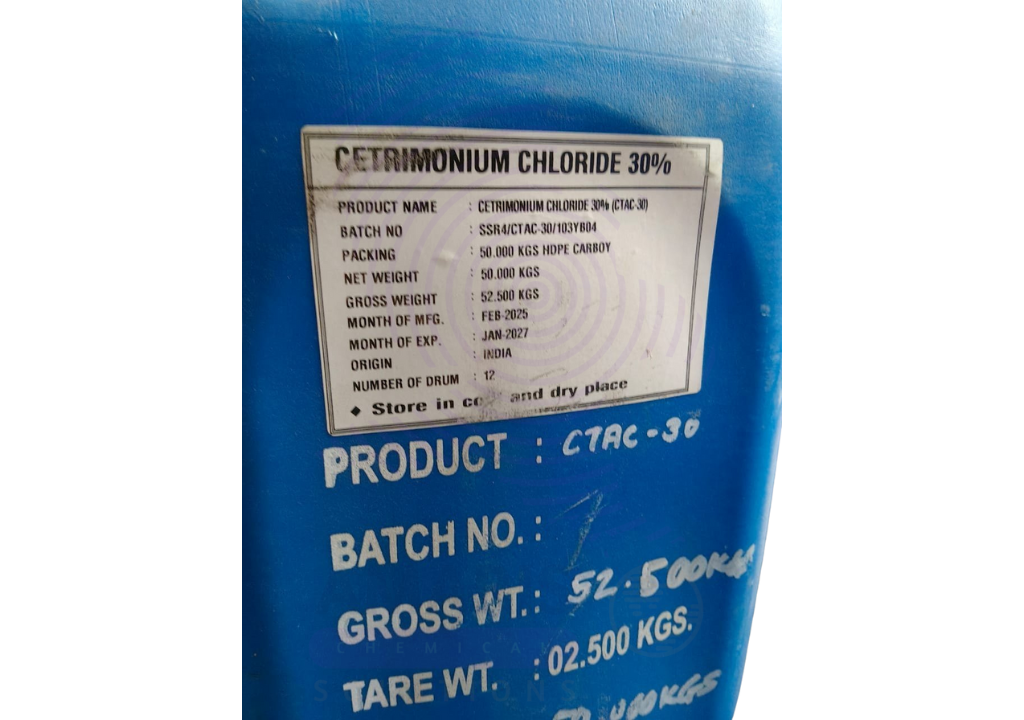

Centrimonium Chloride Solution
Centrimonium Chloride Solution (also known as Cetyltrimethylammonium Chloride), with the chemical formula C₁₉H₄₂ClN, is a quaternary ammonium compound presented here as a 30% aqueous solution. It is a cationic surfactant widely used as an antistatic agent, conditioner, and emulsifier in personal care and industrial applications. This 25kg packaged solution is highly soluble and stable, providing excellent conditioning and antimicrobial properties in hair care formulations, fabric softeners, and disinfectants.
Centrimonium Chloride Solution
Primary Uses
- Personal Care Industry
- Hair Conditioner: Acts as a conditioning agent in shampoos, conditioners, and hair treatment products to reduce static and improve manageability.
- Antistatic Agent: Prevents static buildup in hair and textiles.
- Emulsifier: Stabilizes emulsions in creams, lotions, and other cosmetic formulations.
- Textile Industry
- Fabric Softener: Used in textile softening formulations to improve fabric feel and reduce static cling.
- Antistatic Agent: Applied in textile processing to minimize static electricity.
- Industrial & Household Cleaning
- Disinfectant: Exhibits antimicrobial properties, making it useful in surface disinfectants and sanitizers.
- Emulsifying Agent: Stabilizes cleaning formulations and emulsifies oils and greases.
- Pharmaceuticals
- Topical Preparations: Used in antiseptic and antimicrobial creams and lotions.
Secondary Uses
- Paper Industry
- Retention Aid: Improves retention of fillers and fines during paper manufacturing.
- Water Treatment
- Biocide: Controls microbial growth in water treatment systems.
1. Basic Identification Attributes
- Chemical Name (IUPAC): Cetyltrimethylammonium chloride
- Common/Trade Name: Cetrimonium chloride, CTAC
- CAS Number: 112-02-7
- HS Code: 2923.29.90
- Synonyms: Hexadecyltrimethylammonium chloride
2. Physical & Chemical Properties
- Physical State: Clear to pale yellow aqueous solution (30%)
- Color & Odor: Clear to slightly yellow; mild characteristic odor
- Solubility: Completely soluble in water
- Density: Approx. 0.97 g/cm³ at 20°C
- pH (10% solution): 5.5 – 7.5 (slightly acidic to neutral)
- Viscosity: Low viscosity liquid
3. Safety & Hazard Attributes
- GHS Classification: Skin Irritant (Category 2), Eye Irritant (Category 2A)
- Toxicity: Moderate toxicity; oral LD₅₀ ~200 – 500 mg/kg (rat)
- Exposure Limits: No specific limits; use general industrial hygiene practices
- Corrosivity: Non-corrosive but irritating to eyes and skin
4. Storage & Handling Attributes
- Storage Conditions: Store in cool, dry, well-ventilated area away from incompatible substances
- Container Type: 25kg plastic drums or containers
- Shelf Life: 12 months if stored properly
- Handling Precautions: Avoid contact with eyes and skin; use PPE including gloves and goggles
5. Regulatory & Compliance Attributes
- REACH Registered
- Complies with OSHA Hazard Communication Standard
- Not classified as dangerous goods for transport
6. Environmental & Health Impact
- Biodegradability: Readily biodegradable
- Ecotoxicity: Toxic to aquatic life; avoid release to environment
- Bioaccumulation: Low potential
- Aquatic Impact: Harmful if discharged in large quantities
Safety Handling Precautions
- PPE Required: Gloves, goggles, protective clothing
- Handling Guidelines: Use local exhaust ventilation; avoid inhalation and contact
- Storage Measures: Keep containers tightly closed and stored away from incompatible materials
First Aid Measures
- Inhalation: Move to fresh air; seek medical attention if breathing difficulty occurs
- Skin Contact: Wash immediately with plenty of water; seek medical attention if irritation persists
- Eye Contact: Rinse cautiously with water for 15 minutes; seek immediate medical attention
- Ingestion: Rinse mouth; do NOT induce vomiting; seek medical attention immediately
Firefighting Measures
- Fire Hazards: Non-flammable but may decompose on heating producing toxic fumes
- Extinguishing Media: Use water spray, foam, dry chemical, or CO₂ as appropriate
- Hazardous Combustion Products: Carbon oxides, nitrogen oxides, hydrochloric acid vapors
Related products
Amphoteric Surfactants
Amphoteric surfactants are unique surface-active agents that can act as either anionic or cationic surfactants depending on the pH of the solution. These molecules contain both acidic (carboxyl or sulfonic) and basic (amine or quaternary ammonium) functional groups, giving them high versatility, mildness, and compatibility with other surfactants. Amphoteric surfactants are widely used in personal care, household cleaning, industrial applications, pharmaceuticals, and specialty formulations where low irritation and effective cleansing are critical. Common examples include Cocamidopropyl Betaine and Lauryl Betaine.
![Diethanolamine [C4H11NO2 or (CH2CH2OH)2NH] Amaris Chemicals](https://amarischemicalsolutions.com/wp-content/uploads/2025/07/Diethanolamine-C4H11NO2-or-CH2CH2OH2NH-Amaris-Chemicals-430x430.png)
Diethanolamine
Diethanolamine is a colorless to pale yellow, viscous liquid with a mild ammonia-like odor. It is a secondary amine and diol, widely used in various industrial, pharmaceutical, and cosmetic applications. DEA is highly soluble in water and many organic solvents. It acts as an intermediate in the synthesis of surfactants, emulsifiers, corrosion inhibitors, and pharmaceuticals. It is valued for its alkalinity, emulsifying properties, and ability to form stable complexes with fatty acids.
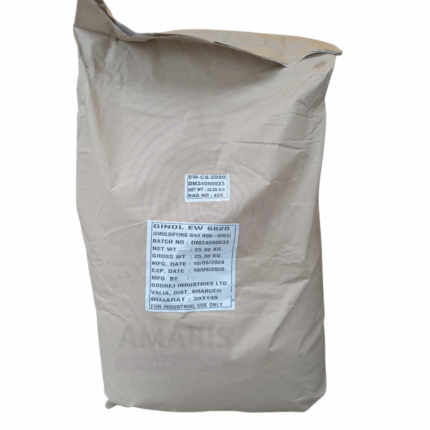
Emulsifying Wax Non ionic
Emulsifying Wax Non ionic is a self-emulsifying, non-ionic wax blend composed primarily of fatty alcohols (typically cetostearyl alcohol or stearyl alcohol) and non-ionic surfactants like polyethylene glycol (PEG) derivatives. It is used to stabilize oil-in-water (O/W) emulsions without relying on ionic charges, making it highly compatible with a wide range of ingredients, including both cationic and anionic components. This wax is commonly found in white, odorless solid flakes or pellets and is dispersible in hot water to form smooth, stable emulsions. It is widely used in cosmetic, pharmaceutical, and industrial applications where gentle emulsification, stability, and broad pH compatibility are needed.
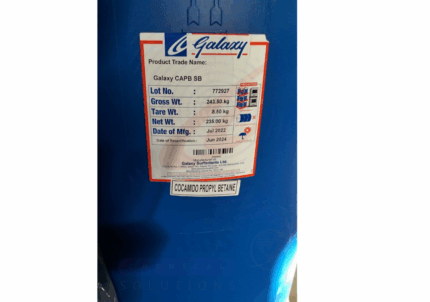
Galaxy CAPB
Galaxy CAPB is a high-performance amphoteric surfactant based on Cocamidopropyl Betaine, produced from coconut fatty acids. It appears as a translucent to pale yellow liquid with mild viscosity and a mild coconut-like odor. As a zwitterionic surfactant, it provides exceptional foaming, mildness, and synergistic compatibility with other surfactants, making it ideal for personal care, household, and industrial formulations.
Galaxy MW 257( Lutensol A07)
Galaxy MW 257( Lutensol A07), also known commercially as Lutensol A07, is a nonionic surfactant belonging to the class of ethoxylated alcohols. It is synthesized by ethoxylation of C7 fatty alcohols, resulting in a hydrophilic-lipophilic balance (HLB) suitable for versatile applications in detergency, emulsification, wetting, and dispersing. This liquid surfactant is valued for its excellent surface-active properties, biodegradability, low toxicity, and compatibility with other formulation ingredients. It is widely used in industrial, household, agricultural, and personal care products to improve formulation stability and performance.
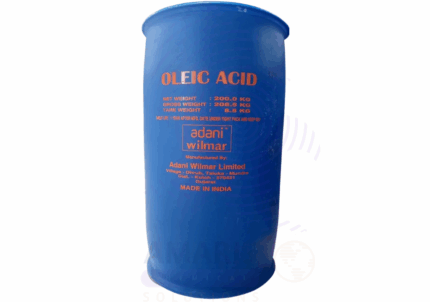
Oleic Acid
Oleic Acid is a naturally occurring monounsaturated fatty acid commonly derived from vegetable oils such as olive, sunflower, and canola oils. This oily liquid is widely used in the chemical, pharmaceutical, cosmetic, and food industries due to its excellent emollient, surfactant, and stabilizing properties. Oleic Acid 75% is a key raw material in manufacturing soaps, detergents, lubricants, and personal care products. Its amphiphilic nature makes it an effective emulsifier and penetration enhancer.
Polyglyceryl
Polyglyceryl refers to a family of non-ionic surfactants and emulsifiers made by the polymerization of glycerol units. Depending on the number of glycerol units (e.g., Polyglyceryl-2, -3, -6, -10) and fatty acid esterification (e.g., laurate, oleate, stearate), they offer different emulsifying and solubilizing properties. These compounds are biodegradable, mild, and skin-friendly, making them ideal for use in cosmetics, food, pharmaceuticals, and personal care products. Polyglyceryl esters are often chosen in natural and organic product formulations due to their origin and non-toxic profile.

Triethanolamine (TEA)
Triethanolamine (TEA) is a viscous, colorless to pale yellow liquid with a mild ammonia-like odor. It is a multifunctional organic compound widely used in cosmetics, pharmaceuticals, and industrial applications as a pH adjuster, emulsifier, surfactant, and corrosion inhibitor. Triethanolamine neutralizes fatty acids to form soaps and helps stabilize emulsions, making it essential in personal care formulations and various chemical manufacturing processes. Its versatility and compatibility with other ingredients make it a valuable additive in numerous industries.












