

 Preservatives(food)
 Flavors
 Acidulants
 Sweeteners
 Antioxidants
 Colorants(food)
 Nutraceutical Ingredients (food)
 Nutrient Supplements
 Emulsifiers
 Collectors
 Dust Suppressants
 Explosives and Blasting Agents
 Flocculants and Coagulants
 Frothers
 Leaching Agents
 pH Modifiers
 Precious Metal Extraction Agents
 Antioxidants(plastic)
 Colorants (Pigments, Dyes)
 Fillers and Reinforcements
 Flame Retardants
 Monomers
 Plasticizers
 Polymerization Initiators
 Stabilizers (UV, Heat)
 Antifoaming Agents
 Chelating Agents
 Coagulants and Flocculants
 Corrosion Inhibitors
 Disinfectants and Biocides
 Oxidizing Agents
 pH Adjusters
 Scale Inhibitors( water)
 Antioxidants(cosmetic)
 Emollients
 Oils
Oils Carrier Oills
 Essential Oils
 Humectants
 Preservatives
 Surfactants(cosmetic)
 Thickeners
 UV Filters
 Fragrance (Cosmetics)
 Fertilizers
 Soil Conditioners
 Plant Growth Regulators
 Animal Feed Additives
 Biostimulants
 Pesticides (Herbicides, Insecticides, Fungicides)
 Active Pharmaceutical Ingredients (APIs)
 Excipients
 Solvents(pharmaceutical)
 Antibiotics
 Antiseptics and Disinfectants
 Vaccine Adjuvants
 Nutraceutical Ingredients (pharmaceutical)
 Analgesics & Antipyretics
 Analytical Reagents
 Solvents(lab)
 Chromatography Chemicals
 Spectroscopy Reagents
 microbiology-and-cell-culture-reagents
 Molecular Biology Reagents
 Biochemical Reagents
 Inorganic and Organic Standards
 Laboratory Safety Chemicals
 Specialty Laboratory Chemicals(Special Laboratory Equipment)
 Demulsifiers
 Hydraulic Fracturing Fluids
 Scale Inhibitors(oil)
 Surfactants(oil)
 Drilling Fluids
 Dyes and Pigments
 Bleaching Agents
 Softening Agents
 Finishing Agents
 Antistatic Agents
 Admixtures
 Waterproofing Agents
 Sealants and Adhesives
 Curing Compounds
 Concrete Repair Chemicals
 Anti-Corrosion Coatings
 Surfactants(cleaning)
 Builders
 Enzymes
 Solvents (Cleaning)
 Electronic Chemicals
 Catalysts
 Lubricants
 Photographic Chemicals
 Refrigerants
 Automotive chemicals
 Pyrotechnic Chemicals
 Biodegradable Surfactants
 Bio-based Solvents
 Renewable Polymers
 Carbon Capture Chemicals
 Wastewater Treatment Chemicals
 Pigments
 Solvents(paint)
 Specialty Coatings
 Binders/Resins
 Additives
 Driers
 Anti-Corrosion Agents
 Functional Coatings
 Application-Specific Coatings
 Leavening Agents
 Dough Conditioners
 Flour Treatments
 Fat Replacers
 Decoratives
 Preservatives(baking)
 Plasticizers & Softeners
 Reinforcing Agents
 Adhesion Promoters
 Vulcanizing Agents
 Antidegradants
 Blowing Agents
 Fillers & Extenders
 Accelerators & Retarders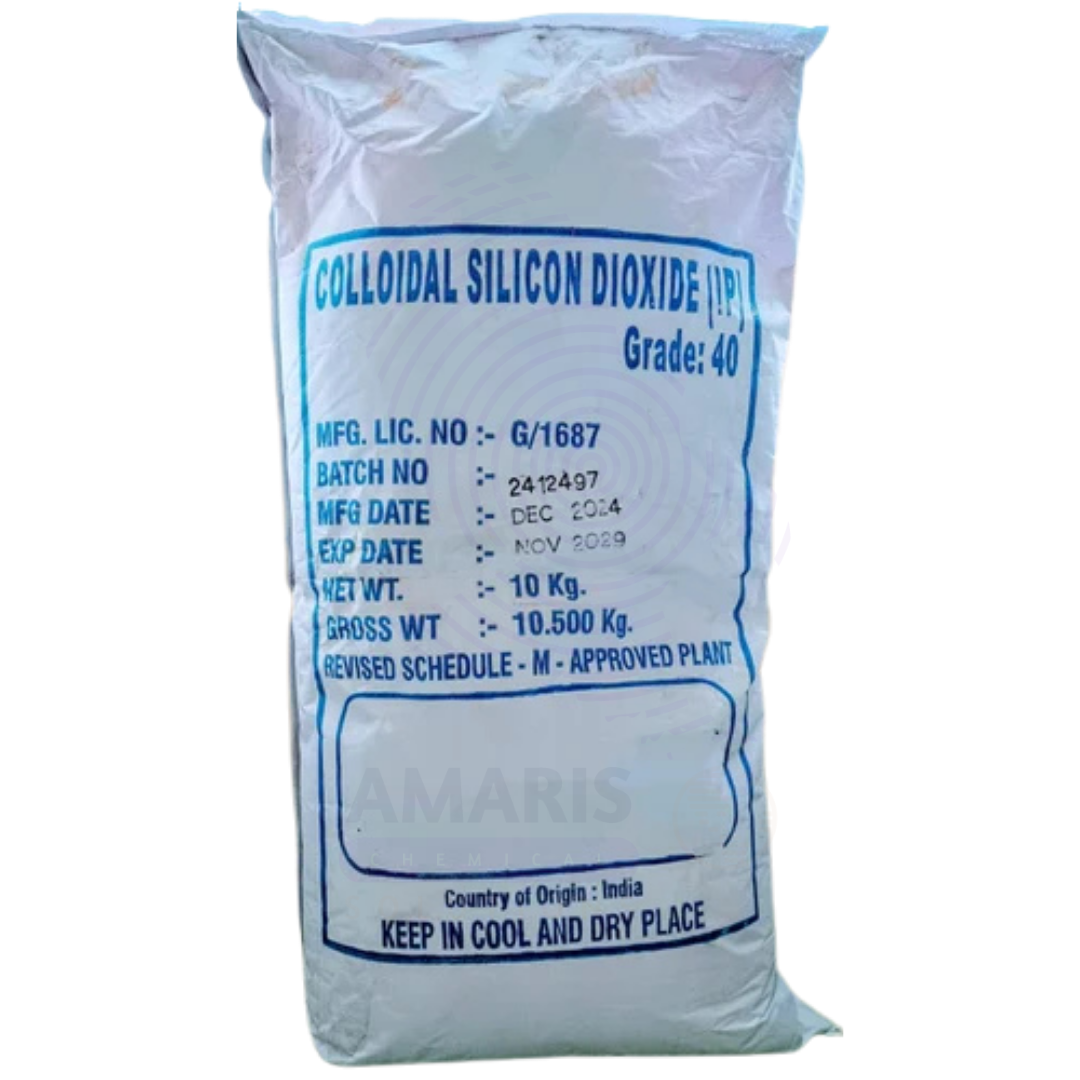

Silicon Dioxide
Silicon Dioxide (SiO₂), commonly known as silica, is a naturally occurring inorganic compound found abundantly in the Earth’s crust. In its refined, powdered form, it is used as an anti-caking agent, filler, absorbent, and thickener across a wide range of industries. It is odorless, tasteless, chemically inert, and stable under normal conditions. Packaged in 10kg units, silicon dioxide is highly versatile and widely accepted for use in food, pharmaceutical, cosmetic, and industrial applications.
Silicon Dioxide
Primary Uses
- Food & Beverage Industry
- Acts as an anti-caking agent in powdered foods such as spices, coffee creamers, and drink mixes.
- Prevents clumping and improves flow properties of dry food products.
- Used in beer and wine clarification processes.
- Serves as a food additive (E551) in baking powder and salt.
- Pharmaceuticals
- Used as a glidant in tablet and capsule manufacturing to improve powder flow.
- Acts as a filler and disintegrant in oral solid dosage forms.
- Included in topical formulations for its absorbent and thickening properties.
- Cosmetics & Personal Care
- Used in lotions, creams, and powders for oil absorption and texture enhancement.
- Provides a smooth, silky feel in skincare and makeup products.
- Functions as a thickening agent in toothpaste and gels.
- Industrial Applications
- Used as a reinforcing filler in rubber and plastics to enhance strength and durability.
- Functions as a polishing agent in the production of silicon wafers and precision optics.
- Used in coatings and paints to improve matting and viscosity control.
- Functions as an insulating material in electrical and thermal applications.
- Construction & Building Materials
- Included in cement and concrete formulations to improve strength and resistance.
- Used in tile adhesives, grouts, and sealants for improved rheology and stability.
Secondary Uses
- Laboratory & Research
- Used as a stationary phase in chromatography and filtration media.
- Acts as a reagent and substrate in chemical reactions.
- Agriculture
- Added to animal feed as an anti-caking agent and flow enhancer.
- Included in fertilizers to improve handling and prevent moisture absorption.
- Electronics
- Used in semiconductor fabrication as a dielectric and substrate material.
- Found in various components for insulation and thermal management.
- Packaging
- Used in moisture-absorbing sachets to maintain product integrity during storage and transport. (In amorphous silica gel form)
1. Basic Identification Attributes
- Chemical Name (IUPAC): Silicon dioxide
- Common/Trade Name: Silicon Dioxide
- CAS Number: 7631-86-9
- HS Code: 2811.22.00
- Synonyms: Silica, silica powder, SiO₂
2. Physical & Chemical Properties
- Physical State: Fine powder or granules
- Color & Odor: White; odorless
- Particle Size: Typically <50 µm (varies by grade)
- Density: 2.2 – 2.7 g/cm³
- Melting Point: ~1,710°C
- Solubility: Insoluble in water and organic solvents
- pH (10% slurry): ~6–8
3. Safety & Hazard Attributes
- GHS Classification: Not classified as hazardous in amorphous form
- Toxicity: Low; avoid inhaling fine dust
- Exposure Limits: Follow OSHA and ACGIH guidelines (especially for crystalline silica variants)
4. Storage & Handling Attributes
- Storage Conditions: Store in a dry, cool, well-ventilated area away from moisture
- Container Type: 10kg sealed bags, drums, or pails
- Shelf Life: Indefinite if kept dry and uncontaminated
- Handling Precautions: Use dust control methods; wear respiratory protection if airborne dust is present
5. Regulatory & Compliance Attributes
- Approved as a food additive (E551) by FDA, EFSA, and other regulatory bodies
- Complies with USP/NF, FCC, and food/pharma-grade specifications when applicable
- REACH and RoHS compliant
- Meets GMP and HACCP standards when used in food and pharma industries
- Not classified as hazardous unless in crystalline form (which is regulated for inhalation risk)
6. Environmental & Health Impact
- Biodegradability: Inert and non-biodegradable
- Ecotoxicity: Very low; considered environmentally safe in amorphous form
- Bioaccumulation: Not significant
- Environmental Impact: Minimal under controlled disposal; avoid inhaling dust
Safety Handling Precautions
- PPE Required: Dust mask or respirator, gloves, goggles
- Handling Guidelines: Avoid generating dust; use in well-ventilated areas
- Storage Measures: Keep containers tightly closed and stored in a dry environment
First Aid Measures
- Inhalation: Move to fresh air; seek medical attention if respiratory irritation occurs
- Skin Contact: Wash with soap and water; no significant hazards
- Eye Contact: Rinse thoroughly with water; consult a doctor if irritation persists
- Ingestion: Rinse mouth; non-toxic in small amounts; seek medical attention if discomfort occurs
Firefighting Measures
- Fire Hazards: Non-flammable and non-combustible
- Extinguishing Media: Use appropriate media for surrounding fire
- Special Precautions: Use protective gear; silica is inert but may carry residues
- Hazardous Combustion Products: None
Related products
Binder
A binder is a broad category of substances—organic or inorganic—used to hold different materials together in a cohesive mass. Common binders include natural polymers (starch, cellulose derivatives, proteins), synthetic resins (PVA, acrylics, phenolics), and inorganic binders (clays, cement, lime). They are essential in industries such as pharmaceuticals, construction, coatings, ceramics, adhesives, and printing, where they provide structural integrity, adhesion, and controlled release properties.
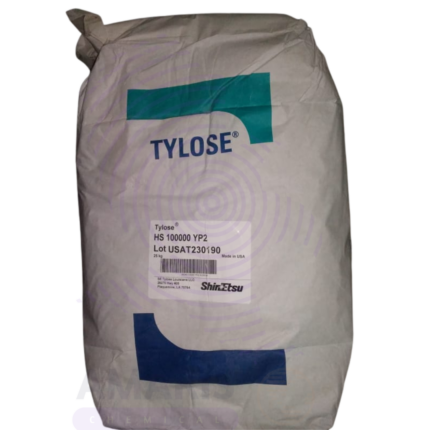
Cellozize Tylose
Cellozize Tylose, commonly known by the trade name Tylose, is a brand of hydroxyethyl cellulose (HEC), a non-ionic, water-soluble cellulose ether derived from natural cellulose. It appears as a white to off-white powder with excellent thickening, binding, and film-forming properties. Tylose is widely used as a rheology modifier, stabilizer, and thickener in various industries including construction, pharmaceuticals, cosmetics, and food. It provides viscosity control, improves texture, and enhances water retention in formulations. Due to its inert, non-toxic, and biodegradable nature, Tylose is favored as a versatile polymer in many applications.
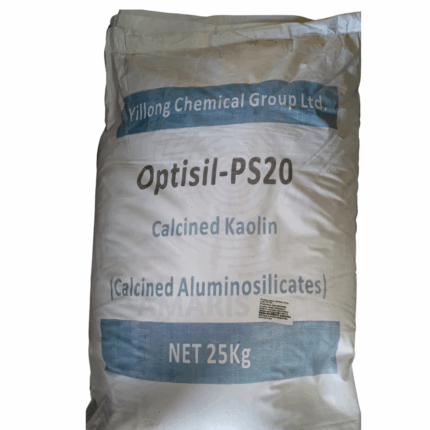
Kaolin
Kaolin is a naturally occurring, fine white clay mineral primarily composed of kaolinite. It features a soft, powdery texture and excellent absorbency. Kaolin is widely used across ceramics, paper, rubber, paint, and cosmetics industries due to its chemical inertness, whiteness, and plasticity. It acts as a filler, coating agent, and extender to enhance product quality and performance.
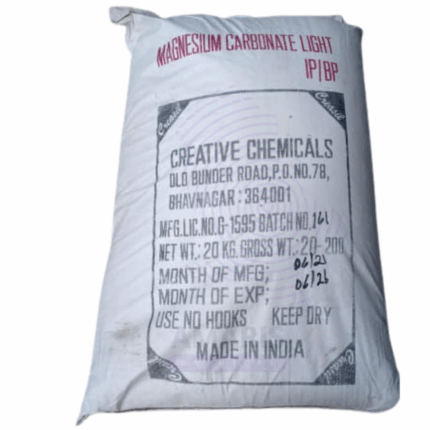
Magnesium Carbonate Light
Magnesium Carbonate Light is a fine, white, odorless powder primarily composed of magnesium carbonate (MgCO₃). It is characterized by its light texture and high purity. This mineral compound is widely used across various industries due to its excellent absorption properties, mild alkalinity, and non-toxic nature. Magnesium Carbonate Light is commonly employed as an antacid, drying agent, filler, and flow aid in food, pharmaceutical, cosmetic, and industrial applications.
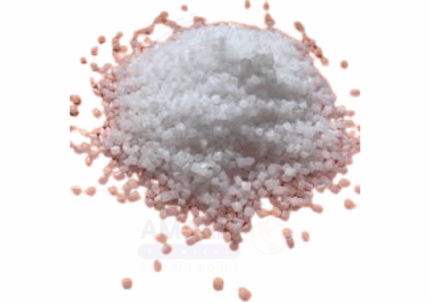
Polymer Fiber
Polymer Fiber refers to a wide range of synthetic fibers made from polymer materials such as polypropylene, polyester, nylon, polyethylene, and acrylics. These fibers are engineered for high tensile strength, durability, flexibility, and resistance to chemicals and moisture. Polymer fibers are widely used in construction, textiles, filtration, composites, and industrial applications to improve mechanical properties, enhance structural integrity, and provide specialized functional benefits.
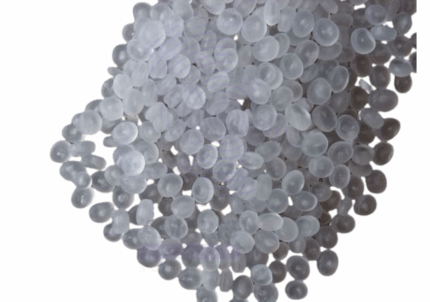
PP Raffia RH03( Wooven)
PP Raffia RH03( Wooven) is a woven polypropylene fabric made from homopolymer polypropylene resin, designed for high strength, durability, and excellent dimensional stability. It is widely used in the manufacturing of woven sacks, bags, and other flexible packaging solutions. The woven structure enhances tear resistance and load-bearing capacity, making it suitable for industrial and agricultural packaging applications.

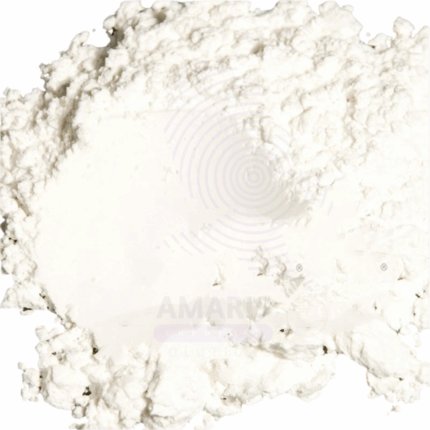
Whiting
Whiting is a finely ground, white, chalky substance primarily composed of calcium carbonate (CaCO₃). It is widely used as a pigment, filler, and extender in various industrial and commercial applications. Whiting provides opacity, brightness, and smoothness to products, enhancing their appearance and physical properties. Its natural abundance and versatility make it an economical additive in multiple manufacturing processes.
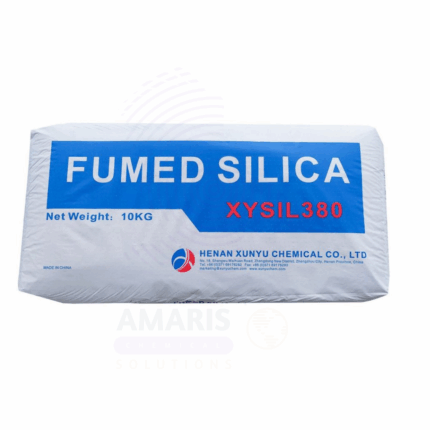
Xysil Fumed Silica
Xysil Fumed Silica is a high-purity fumed silica produced through flame hydrolysis of silicon tetrachloride. It is an ultra-fine, amorphous, white powder with a very high surface area and low bulk density. Xysil 200 is widely used as a reinforcing filler, thickening agent, anti-caking agent, and rheology modifier in various industrial applications. Its unique physical properties improve the mechanical strength, viscosity, and stability of formulated products.












