

 Preservatives(food)
 Flavor Enhancers
 Acidulants
 Sweeteners
 Antioxidants
 Colorants(food)
 Nutraceutical Ingredients (food)
 Nutrient Supplements
 Emulsifiers
 Collectors
 Dust Suppressants
 Explosives and Blasting Agents
 Flocculants and Coagulants
 Frothers
 Leaching Agents
 pH Modifiers
 Precious Metal Extraction Agents
 Antioxidants(plastic)
 Colorants (Pigments, Dyes)
 Fillers and Reinforcements
 Flame Retardants
 Monomers
 Plasticizers
 Polymerization Initiators
 Stabilizers (UV, Heat)
 Antifoaming Agents
 Chelating Agents
 Coagulants and Flocculants
 Corrosion Inhibitors
 Disinfectants and Biocides
 Oxidizing Agents
 pH Adjusters
 Scale Inhibitors( water)
 Antioxidants(cosmetic)
 Emollients
 Fragrances and Essential Oils
 Humectants
 Preservatives
 Surfactants(cosmetic)
 Thickeners
 UV Filters
 Fertilizers
 Soil Conditioners
 Plant Growth Regulators
 Animal Feed Additives
 Biostimulants
 Pesticides (Herbicides, Insecticides, Fungicides)
 Active Pharmaceutical Ingredients (APIs)
 Excipients
 Solvents(pharmaceutical)
 Antibiotics
 Antiseptics and Disinfectants
 Vaccine Adjuvants
 Nutraceutical Ingredients (pharmaceutical)
 Analgesics & Antipyretics
 Analytical Reagents
 Solvents(lab)
 Chromatography Chemicals
 Spectroscopy Reagents
 microbiology-and-cell-culture-reagents
 Molecular Biology Reagents
 Biochemical Reagents
 Inorganic and Organic Standards
 Laboratory Safety Chemicals
 Specialty Laboratory Chemicals(Special Laboratory Equipment)
 Demulsifiers
 Hydraulic Fracturing Fluids
 Scale Inhibitors(oil)
 Surfactants(oil)
 Drilling Fluids
 Dyes and Pigments
 Bleaching Agents
 Softening Agents
 Finishing Agents
 Antistatic Agents
 Admixtures
 Waterproofing Agents
 Sealants and Adhesives
 Curing Compounds
 Concrete Repair Chemicals
 Anti-Corrosion Coatings
 Surfactants(cleaning)
 Builders
 Enzymes
 Solvents (Cleaning)
 Fragrances
 Electronic Chemicals
 Catalysts
 Lubricants
 Photographic Chemicals
 Refrigerants
 Automotive chemicals
 Pyrotechnic Chemicals
 Biodegradable Surfactants
 Bio-based Solvents
 Renewable Polymers
 Carbon Capture Chemicals
 Wastewater Treatment Chemicals
 Pigments
 Solvents(paint)
 Specialty Coatings
 Binders/Resins
 Additives
 Driers
 Anti-Corrosion Agents
 Functional Coatings
 Application-Specific Coatings
 Leavening Agents
 Dough Conditioners
 Flour Treatments
 Fat Replacers
 Decoratives
 Preservatives(baking)
 Plasticizers & Softeners
 Reinforcing Agents
 Adhesion Promoters
 Vulcanizing Agents
 Antidegradants
 Blowing Agents
 Fillers & Extenders
 Accelerators & Retarders


Deionized Water
Original price was: $ 0.49.$ 0.38Current price is: $ 0.38.
Deionized Water (DI Water), also known as demineralized water, is highly purified water that has had almost all of its mineral ions (such as sodium, calcium, iron, copper, chloride, and sulfate) removed through ion exchange, reverse osmosis, or other purification methods. It is a clear, colorless, odorless liquid with extremely low electrical conductivity and is considered chemically pure. Deionized water is used in applications where water purity is critical, including pharmaceuticals, electronics, cosmetics, laboratory use, and various industrial processes. Its lack of minerals makes it highly reactive with contaminants, which makes it both useful and sensitive in technical applications.
Deionized Water
Primary Uses
- Pharmaceuticals & Biotechnology
- Used in the formulation of non-parenteral and topical pharmaceutical preparations.
- Employed in the cleaning of pharmaceutical equipment to prevent mineral deposits or microbial growth.
- Acts as a diluent for drug production and analysis where ionic purity is essential.
- Cosmetics & Personal Care
- Serves as the primary solvent in formulations for creams, lotions, serums, shampoos, and conditioners.
- Ensures product stability and purity by eliminating contaminants that can interact with active ingredients.
- Laboratory & Analytical Applications
- Used as a solvent and rinse agent in analytical chemistry, titrations, and spectroscopy.
- Critical for preparing standards, reagents, and sample dilutions in analytical and research laboratories.
- Electronics Manufacturing
- Utilized in the rinsing and cleaning of semiconductors, circuit boards, and other electronic components.
- Prevents ionic contamination that can disrupt the performance of microelectronic devices.
- Automotive & Battery Production
- Used as electrolyte preparation water in lead-acid and lithium-ion battery manufacturing.
- Included in radiator coolants and windshield washer fluids to prevent mineral scaling and corrosion.
Secondary Uses
- Industrial & Power Generation
- Employed in boiler feedwater and steam turbines to reduce scaling and corrosion in high-pressure systems.
- Used in cooling towers and heat exchangers where mineral content must be strictly controlled.
- Food & Beverage Industry
- Used for equipment cleaning and ingredient water in beverage production (non-consumption).
- Provides a controlled medium in flavor and aroma testing or concentration standardization.
- Medical Devices & Hospitals
- Rinsing agent for surgical instruments and sterilized equipment to prevent residue buildup.
- Used in autoclaves and as a base for preparation of antiseptic solutions.
- Textile & Dyeing Industry
- Used in dye formulations and rinsing to prevent interaction of minerals with textile dyes.
- Ensures consistent color fastness and fabric quality.
- Photographic & Printing
- Used in developing and fixing photographic films and printing plates.
- Prevents streaking, spotting, or haze caused by dissolved salts.
1. Basic Identification Attributes
- Chemical Name (IUPAC): Water (H₂O)
- Common/Trade Name: Deionized Water
- CAS Number: 7732-18-5
- HS Code: 2853.90.90
- Molecular Formula: H₂O
- Synonyms:
- DI Water
- Demineralized Water
- Purified Water (non-sterile)
- Ultrapure Water (depending on grade)
2. Physical & Chemical Properties
- Physical State: Liquid
- Color & Odor: Clear, colorless, odorless
- Melting Point: 0°C
- Boiling Point: 100°C at 1 atm
- Density: ~1.00 g/cm³ at 25°C
- Solubility: Miscible with all solvents
- Electrical Conductivity: <1 µS/cm (depending on grade; ultrapure can be <0.1 µS/cm)
- pH: 5.5–7.0 (slightly acidic due to dissolved CO₂)
- Stability: Chemically stable; highly reactive with contaminants and air-exposed surfaces
3. Safety & Hazard Attributes
- Hazard Class (GHS): Not classified as hazardous
- NFPA Ratings:
- Health: 0
- Flammability: 0
- Reactivity: 0
- Exposure Limits: None established
- Toxicity: Non-toxic; however, not suitable for direct human consumption if not microbiologically treated
- Reactivity: May leach ions and metals from piping or containers due to high purity
4. Storage & Handling Attributes
- Storage Conditions: Store in clean, inert, and non-reactive containers (e.g., HDPE or glass)
- Container Type: Closed, non-leaching, sterile or non-sterile containers depending on application
- Shelf Life: 6 to 12 months if sealed and uncontaminated
- Special Handling: Protect from microbial contamination and airborne particles; use sterile techniques where applicable
5. Regulatory & Compliance Attributes
- FDA Status: Complies with USP/NF for Purified Water if validated
- Pharmacopoeia Grades:
- USP: Purified Water
- EP: Aqua purificata
- JP: Purified Water
- REACH Status: Not classified as a dangerous substance
- Transportation: Not regulated
- Waste Disposal: Dispose of as non-hazardous liquid; no special handling required
6. Environmental & Health Impact
- Ecotoxicity: No known environmental toxicity
- Persistence: Fully miscible and naturally integrated into the hydrological cycle
- Bioaccumulation: None
- Carcinogenicity/Mutagenicity: None
- Biodegradability: Not applicable; water is a natural component of the environment
Safety Handling Precautions
Personal Protective Equipment (PPE):
- Typically not required under normal conditions
- In cleanroom or sterile environments, use gloves and closed systems to prevent contamination
Handling Measures:
- Use clean tools and equipment to avoid contamination
- Avoid exposure to ambient air for prolonged periods
Storage Measures:
- Store in closed, sterile containers if used in pharmaceutical or medical applications
- Label containers clearly to avoid confusion with other liquids
Hygiene Practices:
- Use aseptic techniques where purity is critical
- Avoid reusing containers unless properly sterilized
First Aid Measures
- Inhalation: Not applicable
- Skin Contact: No irritation expected
- Eye Contact: No irritation expected
- Ingestion: Non-toxic; not suitable for regular consumption due to lack of essential minerals
Firefighting Measures
- Fire Hazards: Non-flammable
- Extinguishing Media: Not applicable
- Special Precautions: None required
- Decomposition Products: None; water remains stable under fire conditions
Related products
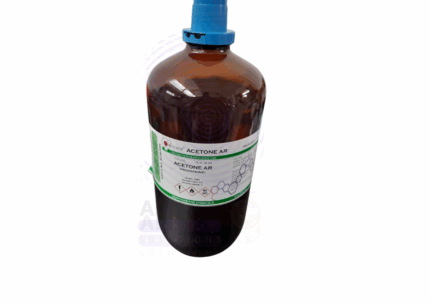
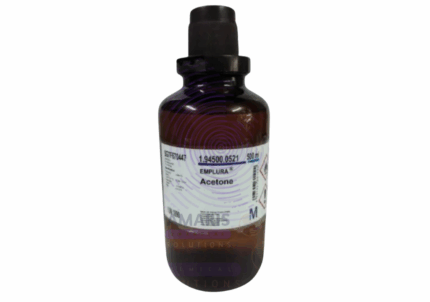
Acetone Extra Pure
Acetone Extra Pure is a highly volatile, flammable, and colorless liquid widely used as a powerful solvent in laboratory and industrial applications. Known for its exceptional ability to dissolve a wide range of substances, it is commonly employed for cleaning laboratory glassware, thinning resins, and removing organic residues. In the cosmetics and pharmaceutical industries, acetone is used in nail polish removers and formulation processes. Its high evaporation rate and purity make it suitable for analytical procedures and synthesis work, especially where contaminant-free solvents are essential. With a distinct odor and low boiling point, Acetone Extra Pure is an indispensable reagent for both routine and specialized chemical operations.
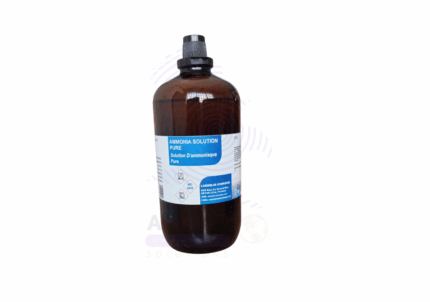
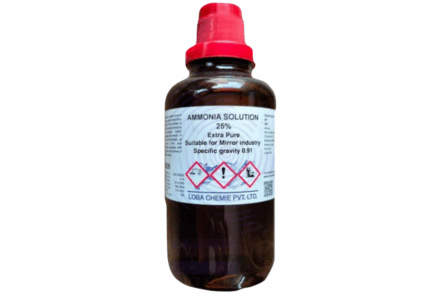
Ammonia Solution Extra Pure
Ammonia Solution Extra Pure is a high-purity, clear, colorless liquid composed of ammonia gas dissolved in water, emitting a strong, characteristic pungent odor. Widely used in laboratory chemistry, it serves as a crucial reagent in acid-base titrations, complexometric analysis, and the preparation of ammonium salts and metal-ammonia complexes. Its alkaline nature makes it valuable for pH adjustment, cleaning of laboratory glassware, and as a reducing agent in certain analytical procedures. The extra pure grade ensures low levels of impurities, supporting reliable results in sensitive experimental work. Due to its volatility and corrosiveness, it should be handled in well-ventilated areas and stored in tightly sealed, chemically resistant containers.
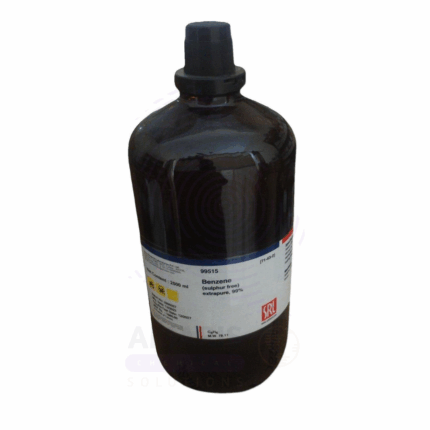
Benzene Extra Pure
Benzene Extra Pure is a high-purity, clear, highly volatile, and flammable liquid with a characteristic aromatic odor, used extensively in laboratory settings for analytical, organic, and physical chemistry applications. It serves as a non-polar solvent for a wide range of chemical reactions, particularly in the study of aromatic compounds, electrophilic substitution mechanisms, and polymer chemistry. Its stability and solvency make it suitable for sample preparation, purification processes, and spectral analysis. The extra pure grade ensures minimal impurities, delivering consistent results in precision research. Due to its toxic and carcinogenic nature, benzene must be handled in a well-ventilated fume hood with appropriate protective equipment and stored in tightly sealed containers away from heat, sparks, and oxidizers.

Loperamide HCL
Loperamide HCL is a synthetic opioid-receptor agonist used primarily as an antidiarrheal medication. It acts on the µ-opioid receptors in the intestinal wall to decrease gut motility, prolonging transit time and allowing increased absorption of fluids and electrolytes. Loperamide HCL is widely used in pharmaceutical formulations to treat acute and chronic diarrhea, including travelers’ diarrhea and diarrhea associated with inflammatory bowel disease. It is a white to off-white crystalline powder, highly soluble in water and commonly supplied in pharmaceutical grade for oral dosage forms.
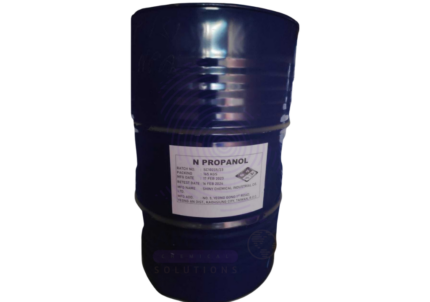
N-Propanol
N-Propanol, also known as n-Propyl Alcohol or 1-Propanol, is a clear, colorless, low-viscosity liquid with a characteristic mild alcohol-like odor. It is a primary alcohol with the molecular formula C₃H₈O, fully miscible with water and common organic solvents such as alcohols, ketones, ethers, glycols, and hydrocarbons. This high-purity, semi-volatile, polar solvent serves as both a versatile solvent and a chemical intermediate across multiple industrial sectors. N-Propanol has a flash point of 15–23°C and is classified as a highly flammable liquid. Technical grade N-Propanol is manufactured for industrial applications and is not intended for direct human consumption unless specifically certified as USP or Food Grade.

Polysorbates
Polysorbates are a class of nonionic surfactants derived from sorbitol and fatty acids, commonly used as emulsifiers, solubilizers, and dispersing agents in a wide range of industries. They improve the mixing of oil and water phases, stabilize emulsions, and enhance the texture and consistency of formulations. Polysorbates are widely used in pharmaceuticals, cosmetics, food products, and industrial applications due to their biocompatibility, low toxicity, and effectiveness at low concentrations.
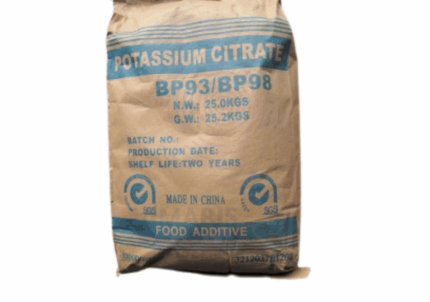
Potassium Citrate
Potassium Citrate is a potassium salt of citric acid, appearing as a white, crystalline, water-soluble powder. It is widely used in food, pharmaceutical, agricultural, and industrial applications due to its buffering, alkalizing, and sequestrant properties. Potassium Citrate helps regulate acidity and provides potassium ions critical for various biochemical and physiological functions.
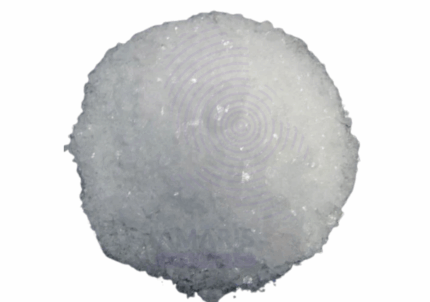
Sulfadiazine Base BP
Sulfadiazine Base BP is a broad-spectrum sulfonamide antibiotic used primarily in veterinary and human medicine to treat bacterial infections. It functions by inhibiting bacterial synthesis of folic acid, thereby preventing bacterial growth and proliferation. The British Pharmacopoeia (BP) grade ensures pharmaceutical-grade purity and quality suitable for formulation into tablets, suspensions, and topical preparations.












