

 Preservatives(food)
 Flavors
 Acidulants
 Sweeteners
 Antioxidants
 Colorants(food)
 Nutraceutical Ingredients (food)
 Nutrient Supplements
 Emulsifiers
 Collectors
 Dust Suppressants
 Explosives and Blasting Agents
 Flocculants and Coagulants
 Frothers
 Leaching Agents
 pH Modifiers
 Precious Metal Extraction Agents
 Antioxidants(plastic)
 Colorants (Pigments, Dyes)
 Fillers and Reinforcements
 Flame Retardants
 Monomers
 Plasticizers
 Polymerization Initiators
 Stabilizers (UV, Heat)
 Antifoaming Agents
 Chelating Agents
 Coagulants and Flocculants
 Corrosion Inhibitors
 Disinfectants and Biocides
 Oxidizing Agents
 pH Adjusters
 Scale Inhibitors( water)
 Antioxidants(cosmetic)
 Emollients
 Oils
Oils Carrier Oills
 Essential Oils
 Humectants
 Preservatives
 Surfactants(cosmetic)
 Thickeners
 UV Filters
 Fragrance (Cosmetics)
 Fertilizers
 Soil Conditioners
 Plant Growth Regulators
 Animal Feed Additives
 Biostimulants
 Pesticides (Herbicides, Insecticides, Fungicides)
 Active Pharmaceutical Ingredients (APIs)
 Excipients
 Solvents(pharmaceutical)
 Antibiotics
 Antiseptics and Disinfectants
 Vaccine Adjuvants
 Nutraceutical Ingredients (pharmaceutical)
 Analgesics & Antipyretics
 Analytical Reagents
 Solvents(lab)
 Chromatography Chemicals
 Spectroscopy Reagents
 microbiology-and-cell-culture-reagents
 Molecular Biology Reagents
 Biochemical Reagents
 Inorganic and Organic Standards
 Laboratory Safety Chemicals
 Specialty Laboratory Chemicals(Special Laboratory Equipment)
 Demulsifiers
 Hydraulic Fracturing Fluids
 Scale Inhibitors(oil)
 Surfactants(oil)
 Drilling Fluids
 Dyes and Pigments
 Bleaching Agents
 Softening Agents
 Finishing Agents
 Antistatic Agents
 Admixtures
 Waterproofing Agents
 Sealants and Adhesives
 Curing Compounds
 Concrete Repair Chemicals
 Anti-Corrosion Coatings
 Surfactants(cleaning)
 Builders
 Enzymes
 Solvents (Cleaning)
 Electronic Chemicals
 Catalysts
 Lubricants
 Photographic Chemicals
 Refrigerants
 Automotive chemicals
 Pyrotechnic Chemicals
 Biodegradable Surfactants
 Bio-based Solvents
 Renewable Polymers
 Carbon Capture Chemicals
 Wastewater Treatment Chemicals
 Pigments
 Solvents(paint)
 Specialty Coatings
 Binders/Resins
 Additives
 Driers
 Anti-Corrosion Agents
 Functional Coatings
 Application-Specific Coatings
 Leavening Agents
 Dough Conditioners
 Flour Treatments
 Fat Replacers
 Decoratives
 Preservatives(baking)
 Plasticizers & Softeners
 Reinforcing Agents
 Adhesion Promoters
 Vulcanizing Agents
 Antidegradants
 Blowing Agents
 Fillers & Extenders
 Accelerators & Retarders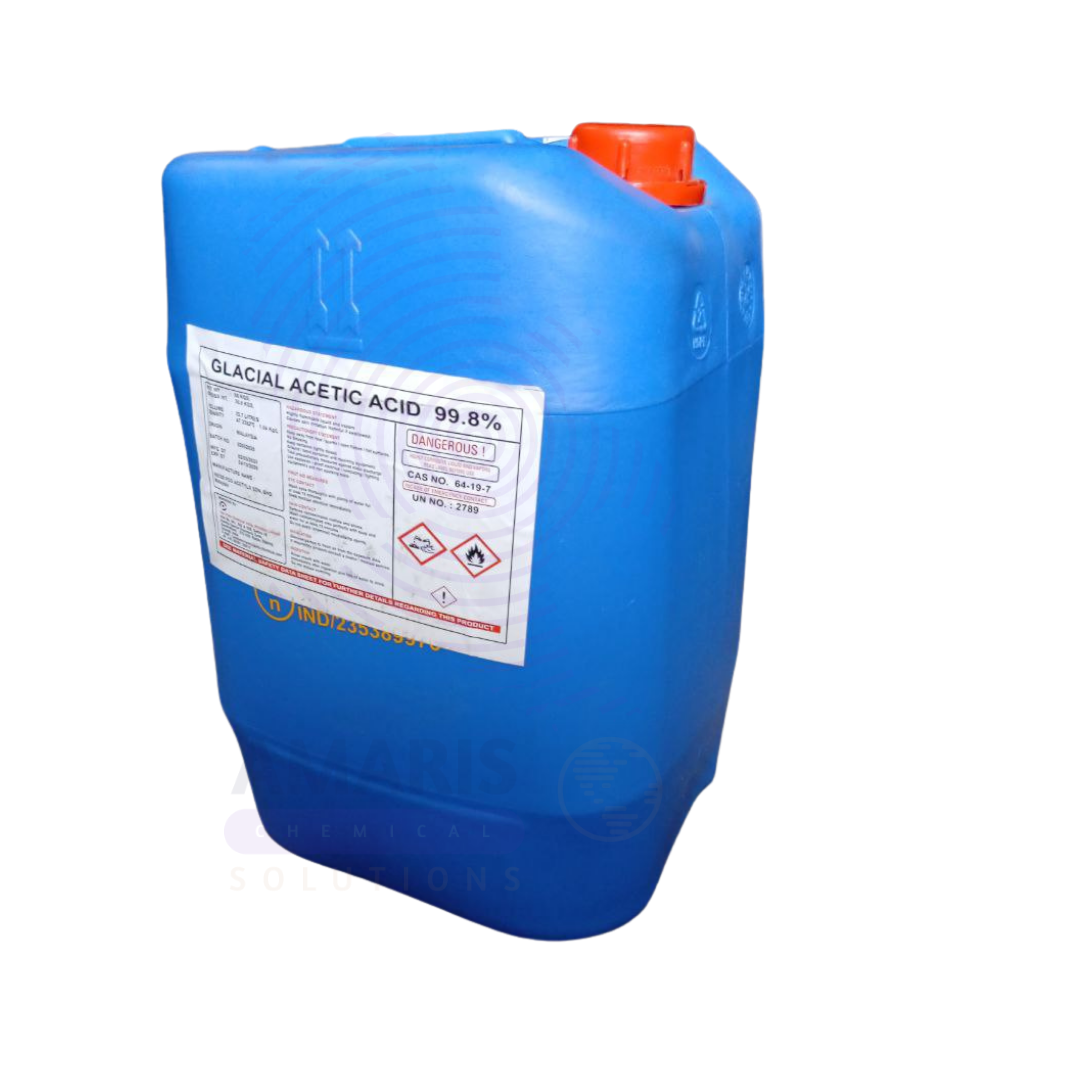

Glacial Acetic Acid Food Grade
Original price was: $ 2.29.$ 2.17Current price is: $ 2.17.
Glacial Acetic Acid Food Grade is a clear, colorless liquid organic compound with a pungent vinegar-like odor. It is a high-purity form of acetic acid specifically produced and processed for safe use in food applications. As the main component of vinegar (after dilution), it serves as a critical flavoring agent, pH adjuster, and preservative in the food industry. Food-grade acetic acid typically has a concentration of 80-100% (glacial acetic acid) or is diluted to lower concentrations (4-20%) for specific applications.
Glacial Acetic Acid Food Grade
Primary Uses
- Vinegar Production
- The most common use; diluted acetic acid (4-8%) is sold as white vinegar, apple cider vinegar, and wine vinegar.
- Used in pickling, sauces, dressings, and condiments (ketchup, mustard, mayonnaise)
- Food Preservation & Pickling
- Acts as a natural preservative (inhibits bacterial/fungal growth) in pickled vegetables, olives, and canned foods.
- Flavor Enhancer & Acidulant
- Adds tangy/sour taste to snacks, chips, candies, and processed foods.
- Used in baked goods (as a leavening agent when combined with baking soda).
- Bakery & Confectionery
- Helps in dough conditioning and pH adjustment in bread and pastry production.
- Used in candy glazes and gelatin desserts for texture control.
- Dairy & Cheese Processing
- Used in cheese making (e.g., mozzarella, cottage cheese) for curd formation.
Secondary Uses
- Beverage Industry
- Adjusts acidity in soft drinks, fruit juices, and alcoholic beverages.
- Meat & Seafood Processing
- Helps in meat curing and marination (enhances tenderness and shelf life).
- Used in seafood preservation to prevent spoilage.
- Food Packaging & Sanitization
- Applied as a disinfectant for food-contact surfaces in factories.
- Used in biodegradable food packaging materials.
- Dietary Supplements
- Found in apple cider vinegar (ACV) capsules for health benefits.
- Animal Feed Additive
- Used in livestock feed to improve digestion and prevent microbial growth.
1. Basic Identification Attributes
- Chemical Name (IUPAC): Ethanoic acid
- Common/Trade Names:
- Food-grade acetic acid
- Vinegar acid (when diluted)
- Glacial acetic acid (concentrated, ≥99%)
- CAS Number: 64-19-7
- HS Code: 2915.21.00 (varies by country)
- Molecular Formula: C₂H₄O₂ (CH₃COOH)
- Synonyms:
- Methanecarboxylic acid
- Ethylic acid
- E260 (EU food additive code)
2. Physical & Chemical Properties
- Physical State: Clear, colorless liquid (concentrated form is "glacial" due to freezing tendency)
- Color & Odor: Pungent vinegar-like odor
- Melting Point: 16.6°C (61.9°F) (solidifies at low temps)
- Boiling Point: 118.1°C (244.6°F)
- Density: 1.049 g/cm³ (25°C)
- Solubility:
- Miscible in water, ethanol, ether
- Insoluble in nonpolar solvents (e.g., hexane)
- pH Level: Strongly acidic (~2.4 at 1.0 M)
- Vapor Pressure: 15.7 mmHg (25°C)
- Flash Point: 39°C (102°F) (closed cup)
- Autoignition Temperature: 427°C (801°F)
- Viscosity: 1.22 mPa·s (25°C)
3. Safety & Hazard Attributes
- Hazard Class (GHS):
- Corrosive (Category 1B)
- Flammable (Category 3)
- Skin/Eye Irritant (Category 1)
- NFPA Ratings:
- Health: 3
- Flammability: 2
- Reactivity: 0
- Exposure Limits:
- OSHA PEL: 10 ppm (25 mg/m³)
- ACGIH TLV: 10 ppm (25 mg/m³)
- Reactivity:
- Corrosive to metals (releases hydrogen gas)
- Reacts violently with oxidizers (e.g., perchlorates, chromic acid)
4. Storage & Handling Attributes
- Storage Conditions:
- Store in a cool, ventilated area (<25°C)
- Keep containers tightly sealed (prevents absorption of moisture)
- Avoid stainless steel (316 grade recommended for tanks)
- Incompatible Materials:
- Strong bases (e.g., NaOH), oxidizers, cyanides
- Container Type:
- Food-grade polyethylene (HDPE) or glass
- Stainless steel (for bulk storage)
- Shelf Life: Indefinite if stored properly (but may absorb water over time)
- Special Handling:
- Use chemical-resistant gloves (nitrile), goggles, and ventilation
- Food-grade handling requires FDA-compliant equipment
5. Regulatory & Compliance Attributes
- Regulatory Status:
- FDA (USA): GRAS (21 CFR 184.1005)
- EFSA (EU): Approved (E260)
- JECFA: ADI = "Not specified" (safe at typical use levels)
- Hazard Symbols (GHS):
- Corrosion
- Flame (for concentrated forms)
- Transportation Restrictions:
- UN Number: 2789 (for >80% acetic acid)
- Hazard Class: 8 (Corrosive)
- Packing Group: II
- Waste Disposal:
- Neutralize with baking soda before disposal
- Follow EPA/RCRA guidelines (D002 for corrosivity)
6. Environmental & Health Impact
- Ecotoxicity:
- Low toxicity to aquatic life (LC50 > 100 mg/L for fish)
- Readily biodegradable
- Persistence in Environment:
- Breaks down rapidly in water/soil (days)
- Carcinogenicity/Mutagenicity:
- IARC: Not classified
- NTP/OSHA: No carcinogenic risk
- Biodegradability: >90% in 28 days (OECD 301B)
Safety Handling Precautions
Personal Protective Equipment (PPE):
- Gloves (nitrile or neoprene for concentrated solutions).
- Safety goggles or face shield (essential for glacial acetic acid).
- Lab coat or apron to prevent skin contact.
- Respirator (if handling concentrated vapors in poorly ventilated areas).
Handling & Storage:
- Work in a well-ventilated area (use fume hood for glacial acetic acid).
- Avoid contact with strong oxidizers (e.g., hydrogen peroxide, nitric acid) → risk of violent reaction.
- Store in corrosion-resistant containers (HDPE, stainless steel, or glass).
- Keep away from heat and ignition sources (glacial acetic acid is flammable at high concentrations).
- Label containers clearly to prevent misuse.
Hygiene Measures:
- No eating, drinking, or smoking in handling areas.
- Wash hands thoroughly after use.
- Avoid inhalation of vapors (can irritate respiratory tract).
First Aid Measures
Inhalation (Vapors):
- Move to fresh air immediately.
- If breathing is difficult, give oxygen and seek medical attention.
Skin Contact:
- Dilute acetic acid (<10%): Rinse with water for several minutes.
- Glacial acetic acid (concentrated):
- Remove contaminated clothing.
- Rinse immediately with copious water for at least 15 minutes.
- Seek medical attention if burns or severe irritation occur.
Eye Contact:
- Flush eyes with water for at least 15 minutes (hold eyelids open).
- Seek immediate medical help (risk of corneal damage).
Ingestion:
- Do NOT induce vomiting (risk of re-exposure and esophageal damage).
- Rinse mouth with water.
- Drink milk or water to dilute (if conscious).
- Seek emergency medical attention immediately.
Firefighting Measures
Fire Hazards:
- Glacial acetic acid (≥99%) is flammable (flash point: 39°C / 102°F).
- Vapors can form explosive mixtures with air.
- Reacts violently with oxidizers (e.g., chromic acid, hydrogen peroxide).
Suitable Extinguishing Media:
- Alcohol-resistant foam
- CO₂
- Dry chemical powder
- Water spray (to cool containers, but do not use water jet—may spread flames).
Firefighting Precautions:
- Wear SCBA (self-contained breathing apparatus) and full protective gear.
- Cool nearby containers with water spray to prevent rupture.
- Ventilate area to prevent vapor accumulation.
Related products
Ammonium Acetate
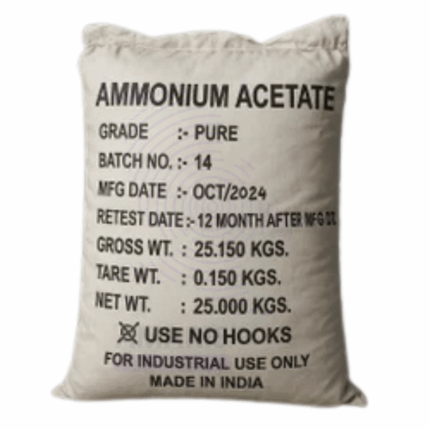
Ammonium acetate is a white crystalline solid or granular powder that is highly soluble in water. It is the ammonium salt of acetic acid and commonly appears as a colorless, odorless compound. Ammonium acetate is widely used in laboratories, chemical synthesis, food industry, pharmaceuticals, and industrial applications due to its buffering capacity and ability to provide both ammonium and acetate ions in solution. It functions as a neutral salt and is valued for its role as a pH buffer, reagent, and stabilizer.
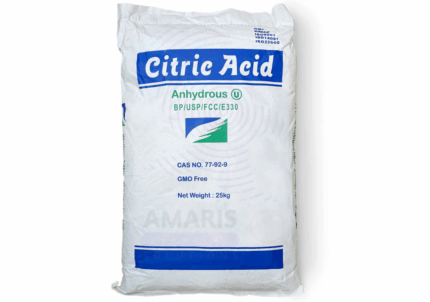
Citric Acid Anhydrous
Citric Acid Anhydrous is a white, crystalline organic acid widely used across food, pharmaceutical, cosmetic, and industrial sectors. It is the anhydrous form of citric acid, meaning it contains no water molecules in its crystal lattice, resulting in higher purity and more concentrated acidic properties compared to its monohydrate form. Derived from natural sources like citrus fruits or produced via microbial fermentation, citric acid anhydrous is valued for its sour taste, excellent chelating ability, and buffering capacity. It serves as a natural preservative, pH adjuster, antioxidant synergist, and cleaning agent, making it a versatile ingredient in many formulations.
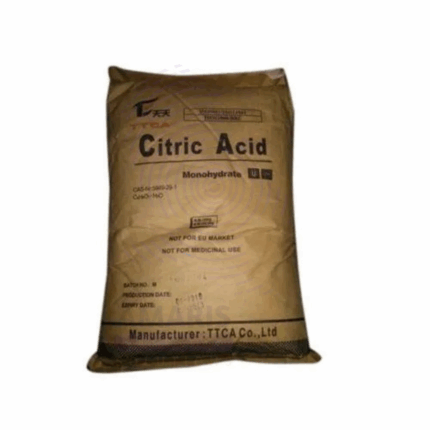
Citric Acid Monohydrate
Citric Acid Monohydrate is a white, crystalline powder or granule form of citric acid containing one molecule of water per molecule of acid. It is a natural organic acid commonly derived from citrus fruits or produced by fermentation processes. Citric Acid Monohydrate is widely used as an acidulant, preservative, and chelating agent in various industries. Compared to the anhydrous form, it has a slightly lower acid concentration due to the water molecule but offers excellent solubility and stability. It is prized for its sour flavor, buffering capacity, and ability to bind metal ions, making it indispensable in food, pharmaceutical, cosmetic, and industrial applications.
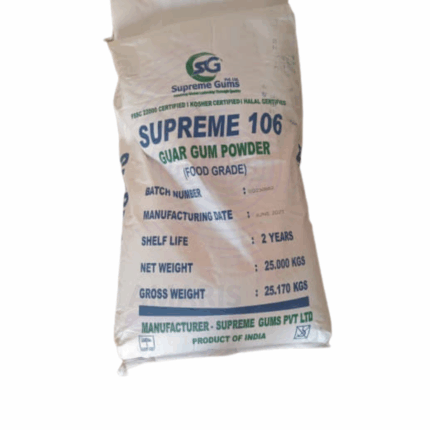
Guar Gum
Guar Gum is a natural polysaccharide extracted from the endosperm of the guar bean (Cyamopsis tetragonoloba). It appears as an off-white to cream-colored powder with a neutral odor and bland taste. Guar Gum is a galactomannan composed mainly of mannose and galactose units, known for its excellent water-binding, thickening, and stabilizing properties. It forms highly viscous solutions even at low concentrations, making it a versatile hydrocolloid used widely across food, pharmaceutical, cosmetic, oilfield, and industrial applications.
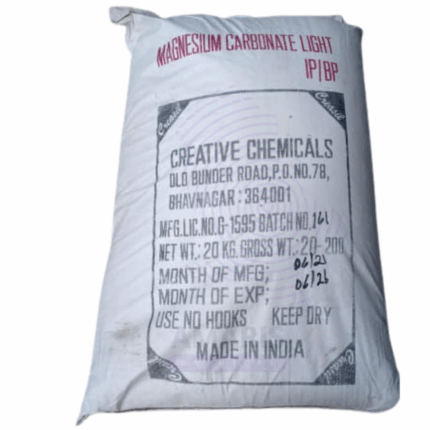
Magnesium Carbonate Light
Magnesium Carbonate Light is a fine, white, odorless powder primarily composed of magnesium carbonate (MgCO₃). It is characterized by its light texture and high purity. This mineral compound is widely used across various industries due to its excellent absorption properties, mild alkalinity, and non-toxic nature. Magnesium Carbonate Light is commonly employed as an antacid, drying agent, filler, and flow aid in food, pharmaceutical, cosmetic, and industrial applications.

Magnesium Chloride
Magnesium Chloride is a white crystalline salt or granular solid composed of magnesium and chloride ions, commonly found as the hexahydrate form (MgCl₂·6H₂O). It is highly soluble in water, forming a clear, colorless solution with a slightly bitter saline taste. Magnesium Chloride is valued for its hygroscopic properties and is widely used across multiple industries including de-icing, chemical manufacturing, agriculture, food, pharmaceutical, and textile applications. It acts as a source of magnesium, a vital mineral for various biological and industrial processes.
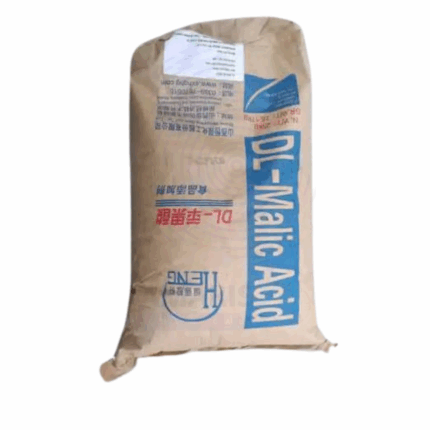
Malic Acid
Malic Acid is a naturally occurring dicarboxylic acid found in many fruits, particularly apples, and is commonly used as a food additive, flavor enhancer, and acidulant. It is available in crystalline or powder form and has a strong, tart taste. Commercially, it is produced synthetically or extracted from natural sources. Malic Acid exists in two isomeric forms: L-malic acid (naturally occurring and biologically active) and DL-malic acid (synthetic racemic mixture). It is highly soluble in water and widely used in food, beverage, cosmetics, and pharmaceutical industries.
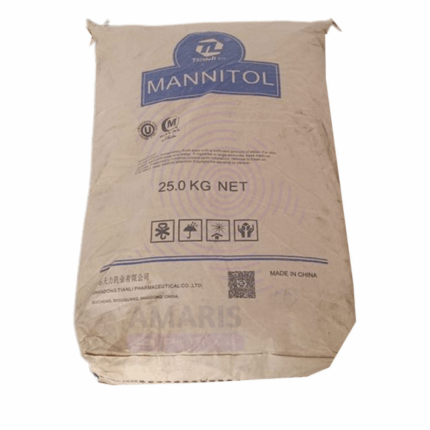
Maninitol BP
Maninitol BP is a white, crystalline, sugar alcohol derived from mannose, widely used in pharmaceutical, food, and cosmetic industries. It functions as a sweetener, humectant, and excipient. Mannitol BP is non-hygroscopic and has low sweetness compared to sucrose, making it ideal for sugar-free formulations. It is commonly employed in tablet manufacturing as a filler and binder, and in medical settings as an osmotic diuretic to reduce intracranial pressure. The British Pharmacopoeia (BP) grade ensures compliance with pharmacopeial standards for purity and quality.












