

 Preservatives(food)
 Flavors
 Acidulants
 Sweeteners
 Antioxidants
 Colorants(food)
 Nutraceutical Ingredients (food)
 Nutrient Supplements
 Emulsifiers
 Collectors
 Dust Suppressants
 Explosives and Blasting Agents
 Flocculants and Coagulants
 Frothers
 Leaching Agents
 pH Modifiers
 Precious Metal Extraction Agents
 Antioxidants(plastic)
 Colorants (Pigments, Dyes)
 Fillers and Reinforcements
 Flame Retardants
 Monomers
 Plasticizers
 Polymerization Initiators
 Stabilizers (UV, Heat)
 Antifoaming Agents
 Chelating Agents
 Coagulants and Flocculants
 Corrosion Inhibitors
 Disinfectants and Biocides
 Oxidizing Agents
 pH Adjusters
 Scale Inhibitors( water)
 Antioxidants(cosmetic)
 Emollients
 Oils
Oils Carrier Oills
 Essential Oils
 Humectants
 Preservatives
 Surfactants(cosmetic)
 Thickeners
 UV Filters
 Fragrance (Cosmetics)
 Fertilizers
 Soil Conditioners
 Plant Growth Regulators
 Animal Feed Additives
 Biostimulants
 Pesticides (Herbicides, Insecticides, Fungicides)
 Active Pharmaceutical Ingredients (APIs)
 Excipients
 Solvents(pharmaceutical)
 Antibiotics
 Antiseptics and Disinfectants
 Vaccine Adjuvants
 Nutraceutical Ingredients (pharmaceutical)
 Analgesics & Antipyretics
 Analytical Reagents
 Solvents(lab)
 Chromatography Chemicals
 Spectroscopy Reagents
 microbiology-and-cell-culture-reagents
 Molecular Biology Reagents
 Biochemical Reagents
 Inorganic and Organic Standards
 Laboratory Safety Chemicals
 Specialty Laboratory Chemicals(Special Laboratory Equipment)
 Demulsifiers
 Hydraulic Fracturing Fluids
 Scale Inhibitors(oil)
 Surfactants(oil)
 Drilling Fluids
 Dyes and Pigments
 Bleaching Agents
 Softening Agents
 Finishing Agents
 Antistatic Agents
 Admixtures
 Waterproofing Agents
 Sealants and Adhesives
 Curing Compounds
 Concrete Repair Chemicals
 Anti-Corrosion Coatings
 Surfactants(cleaning)
 Builders
 Enzymes
 Solvents (Cleaning)
 Electronic Chemicals
 Catalysts
 Lubricants
 Photographic Chemicals
 Refrigerants
 Automotive chemicals
 Pyrotechnic Chemicals
 Biodegradable Surfactants
 Bio-based Solvents
 Renewable Polymers
 Carbon Capture Chemicals
 Wastewater Treatment Chemicals
 Pigments
 Solvents(paint)
 Specialty Coatings
 Binders/Resins
 Additives
 Driers
 Anti-Corrosion Agents
 Functional Coatings
 Application-Specific Coatings
 Leavening Agents
 Dough Conditioners
 Flour Treatments
 Fat Replacers
 Decoratives
 Preservatives(baking)
 Plasticizers & Softeners
 Reinforcing Agents
 Adhesion Promoters
 Vulcanizing Agents
 Antidegradants
 Blowing Agents
 Fillers & Extenders
 Accelerators & Retarders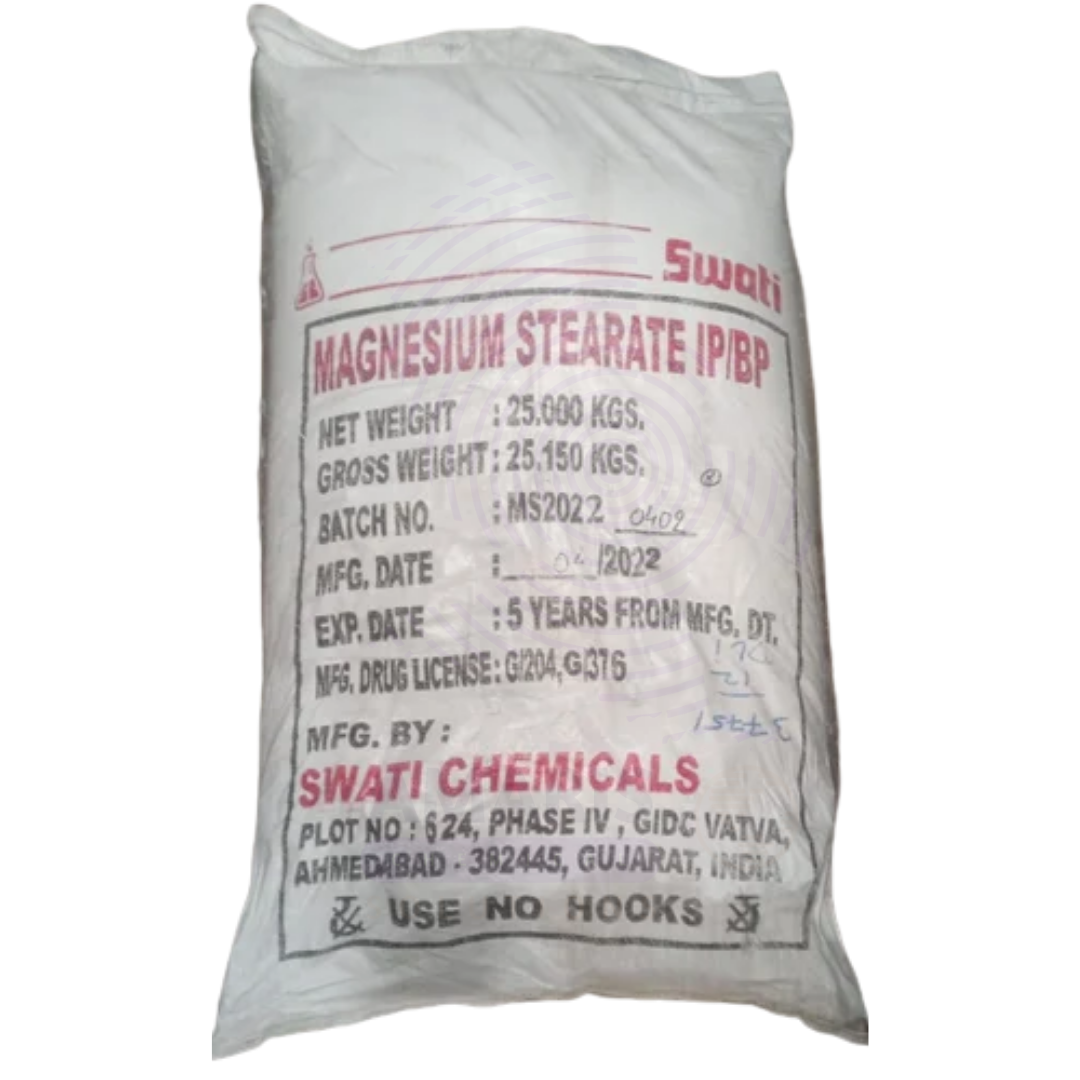


Magnesium Stearate BP
Magnesium Stearate BP is a fine, white, hydrophobic powder composed of the magnesium salt of stearic acid. It is widely used in the pharmaceutical industry as a lubricant and anti-adherent in tablet and capsule manufacturing. Due to its excellent flow-enhancing properties, Magnesium Stearate BP improves powder flowability and prevents ingredients from sticking to equipment during processing. It is also used in cosmetics, food, and various industrial applications for its emulsifying and stabilizing properties.
Magnesium Stearate BP
Primary Uses
- Pharmaceutical Industry
- Acts as a lubricant in tablet and capsule formulation to prevent sticking to punches and dies during compression.
- Used as a glidant to improve powder flow during manufacturing processes.
- Serves as an anti-caking agent to enhance the uniformity of powders.
- Cosmetics and Personal Care
- Employed as a thickener and stabilizer in creams, lotions, and powders.
- Used as a lubricant in cosmetic stick formulations (e.g., lipstick).
- Food Industry
- Functions as an anti-caking and flow agent in powdered food products.
- Used as a release agent in food processing.
- Industrial Applications
- Incorporated in plastics, rubber, and adhesives to improve processing and reduce friction.
- Used as a mold release agent in the production of molded goods.
Secondary Uses
- Dietary Supplements
- Used as an excipient and lubricant in the manufacture of dietary and nutritional supplements.
- Textile Industry
- Occasionally used as a softening agent in fabric processing.
1. Basic Identification Attributes
- Chemical Name (IUPAC): Magnesium octadecanoate
- Common/Trade Name: Magnesium Stearate BP
- CAS Number: 557-04-0
- HS Code: 2915.70.00
- Synonyms: Magnesium octadecanoate; Mg Stearate; Magnesium distearate
2. Physical & Chemical Properties
- Physical State: Fine powder
- Color & Odor: White; odorless or slight fatty odor
- Melting Point: 88–90 °C
- Solubility: Insoluble in water; soluble in hot ethanol and ether
- Density: Approx. 1.0 g/cm³
- Appearance: Hydrophobic, free-flowing powder
3. Safety & Hazard Attributes
- GHS Classification: Not classified as hazardous
- Toxicity: Low toxicity; generally recognized as safe (GRAS) for pharmaceutical and food use
- Exposure Limits: No specific occupational exposure limit; avoid inhalation of dust
4. Storage & Handling Attributes
- Storage Conditions: Store in a cool, dry, well-ventilated area away from heat and moisture
- Container Type: Supplied in sealed polyethylene or paper bags
- Shelf Life: Typically 2–3 years if stored properly
- Handling Precautions: Avoid generation of dust; use PPE such as dust masks and gloves if needed
5. Regulatory & Compliance Attributes
- Complies with BP (British Pharmacopoeia) standards and relevant food and pharmaceutical regulations
- Approved as a pharmaceutical excipient and food additive under applicable guidelines
6. Environmental & Health Impact
- Biodegradability: Readily biodegradable
- Ecotoxicity: Low aquatic toxicity
- Bioaccumulation: Not significant
- Carcinogenicity/Mutagenicity: Not classified as carcinogenic or mutagenic
Safety Handling Precautions
- PPE Required: Dust mask or respirator, gloves, safety goggles when handling large quantities
- Handling Guidelines: Use in well-ventilated areas; avoid inhalation and prolonged skin contact
- Storage Measures: Keep containers tightly closed and dry
First Aid Measures
- Inhalation: Move to fresh air; seek medical attention if respiratory irritation develops
- Skin Contact: Wash with soap and water; seek medical advice if irritation occurs
- Eye Contact: Rinse immediately with water for 15 minutes; consult a physician if irritation persists
- Ingestion: Rinse mouth; seek medical attention if large amounts ingested
Firefighting Measures
- Fire Hazards: Combustible under high heat, but generally stable
- Extinguishing Media: Use water spray, foam, dry chemical, or CO₂ extinguishers
- Special Precautions: Wear protective gear and avoid inhalation of smoke or fumes
- Hazardous Combustion Products: Carbon oxides and magnesium oxides may be produced
Related products
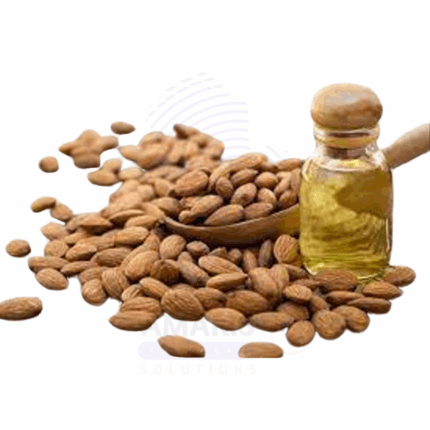
Almond Bitter Oil
Almond Bitter Oil, derived from the kernels of bitter almonds (Prunus amygdalus var. amara), is an essential oil known for its sharp, nutty, and marzipan-like aroma. This oil is produced through steam distillation of crushed bitter almond kernels and contains a naturally occurring compound called benzaldehyde, which gives it its characteristic scent. In purified form (free of hydrogen cyanide), bitter almond oil is used in fragrance, flavoring, and pharmaceutical applications.
Due to its potent aroma and biochemical properties, it is widely used in perfumery, baked goods flavoring (in controlled quantities), aromatherapy, and traditional topical remedies. It is important to distinguish between natural bitter almond oil, which must be detoxified, and synthetic benzaldehyde, which is commonly used as a substitute in commercial formulations.
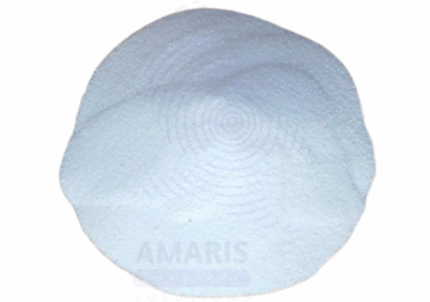
Ammonia Acetate
Ammonia Acetate is a white crystalline solid or granular powder with a mild ammoniacal odor. It is a salt formed from ammonia and acetic acid, widely used in laboratories, industrial processes, and some niche food and pharmaceutical applications. Ammonium Acetate is highly soluble in water and often utilized as a buffer solution in biochemical and analytical chemistry due to its ability to maintain pH. It also serves as a precursor in the synthesis of various chemicals and acts as a neutralizing agent in several industrial applications.

Cross Carmellose Sodium BP
Cross Carmellose Sodium BP (also known as Croscarmellose Sodium or CCS) is a cross-linked sodium carboxymethyl cellulose polymer. It is a highly efficient, super-disintegrant commonly used in pharmaceutical tablet and capsule formulations. This white to off-white, odorless, and tasteless powder exhibits excellent swelling properties and rapid water uptake, which facilitates fast tablet disintegration and improves drug bioavailability. It is chemically stable, non-toxic, and compatible with a wide range of active pharmaceutical ingredients (APIs).
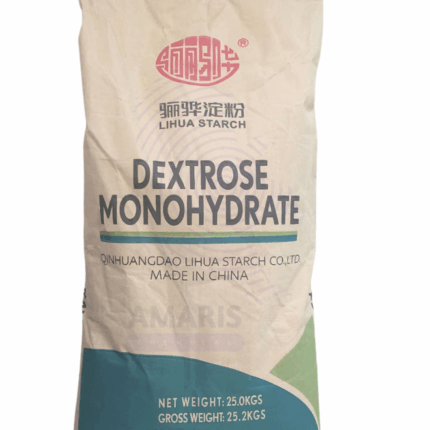
Dextrose Monohydrate
Dextrose Monohydrate is a crystalline form of glucose containing one molecule of water (monohydrate). It is a primary carbohydrate source widely used in pharmaceutical, food, and clinical nutrition applications. It provides readily available energy, serves as a sweetening agent, and acts as an osmotic agent in formulations. Dextrose Monohydrate meets pharmacopoeial standards (such as BP, USP) ensuring high purity, consistency, and safety for use in medical and food-grade products. Its solubility and stable crystalline form make it suitable for intravenous fluids, oral rehydration solutions, and food industry applications.
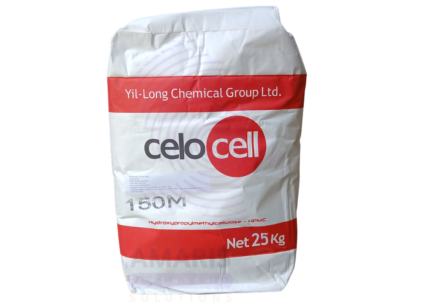
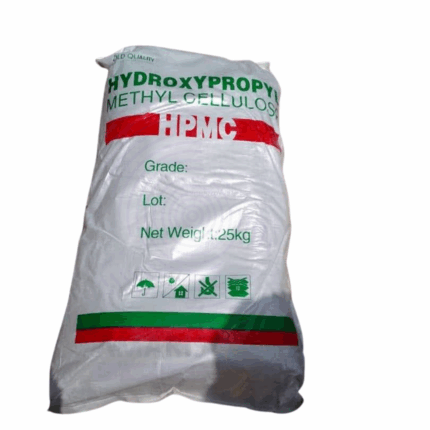
Hydroxypropyl Methylcellulose
Hydroxypropyl Methylcellulose HPMC, also known as hypromellose, is a semi-synthetic, non-ionic cellulose ether derived by chemically modifying cellulose through methylation and hydroxypropylation. It is a white to off-white, odorless, tasteless powder that dissolves in cold water to form clear, viscous solutions. HPMC is renowned for its thickening, film-forming, emulsifying, and controlled-release properties. It is widely used in pharmaceuticals, food, cosmetics, construction, and industrial applications due to its safety profile, versatility, and compatibility with various ingredients.
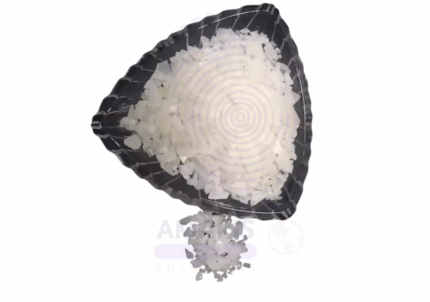
Polyethyl Glycol( PEG 6000)
Polyethyl Glycol( PEG 6000) is a high-molecular-weight polymer derived from ethylene oxide. It appears as a white, waxy solid or flake and is non-toxic, water-soluble, and chemically stable. PEG 6000 is widely used in pharmaceuticals, cosmetics, food processing, industrial formulations, and biotechnology, valued for its lubricating, solubilizing, binding, and moisturizing properties. It is odorless and tasteless, making it suitable for sensitive formulations.
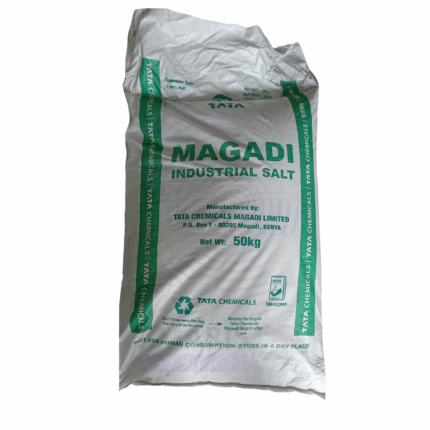
Sodium Chloride (Industrial Salt)
Sodium Chloride (Industrial Salt) is a highly purified, sterile, and non-pyrogenic salt intended for intravenous, intramuscular, and subcutaneous administration. It is commonly used in medical and pharmaceutical settings as a key component of intravenous fluids, for rehydration therapy, electrolyte replenishment, and as a diluent for injectable drugs. This grade meets stringent pharmacopoeial standards (British Pharmacopoeia) ensuring safety and compatibility with parenteral use.
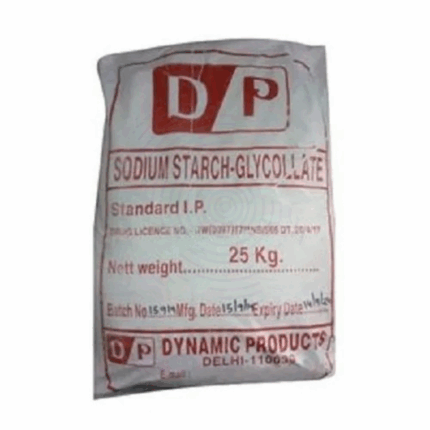
Sodium Starch Glycolate
Sodium Starch Glycolate (SSG) is a white to off-white, odorless, tasteless powder derived from potato or maize starch and chemically modified with carboxymethylation and cross-linking. It has the chemical formula (C₆H₁₀O₅)nNa and is widely used in solid dosage pharmaceutical formulations as a superdisintegrant. This 25kg grade is supplied in high-purity pharmaceutical and food-grade quality, offering excellent swelling capacity and rapid disintegration properties even at low concentrations.












