

 Preservatives(food)
 Flavors
 Acidulants
 Sweeteners
 Antioxidants
 Colorants(food)
 Nutraceutical Ingredients (food)
 Nutrient Supplements
 Emulsifiers
 Collectors
 Dust Suppressants
 Explosives and Blasting Agents
 Flocculants and Coagulants
 Frothers
 Leaching Agents
 pH Modifiers
 Precious Metal Extraction Agents
 Antioxidants(plastic)
 Colorants (Pigments, Dyes)
 Fillers and Reinforcements
 Flame Retardants
 Monomers
 Plasticizers
 Polymerization Initiators
 Stabilizers (UV, Heat)
 Antifoaming Agents
 Chelating Agents
 Coagulants and Flocculants
 Corrosion Inhibitors
 Disinfectants and Biocides
 Oxidizing Agents
 pH Adjusters
 Scale Inhibitors( water)
 Antioxidants(cosmetic)
 Emollients
 Oils
Oils Carrier Oills
 Essential Oils
 Humectants
 Preservatives
 Surfactants(cosmetic)
 Thickeners
 UV Filters
 Fragrance (Cosmetics)
 Fertilizers
 Soil Conditioners
 Plant Growth Regulators
 Animal Feed Additives
 Biostimulants
 Pesticides (Herbicides, Insecticides, Fungicides)
 Active Pharmaceutical Ingredients (APIs)
 Excipients
 Solvents(pharmaceutical)
 Antibiotics
 Antiseptics and Disinfectants
 Vaccine Adjuvants
 Nutraceutical Ingredients (pharmaceutical)
 Analgesics & Antipyretics
 Analytical Reagents
 Solvents(lab)
 Chromatography Chemicals
 Spectroscopy Reagents
 microbiology-and-cell-culture-reagents
 Molecular Biology Reagents
 Biochemical Reagents
 Inorganic and Organic Standards
 Laboratory Safety Chemicals
 Specialty Laboratory Chemicals(Special Laboratory Equipment)
 Demulsifiers
 Hydraulic Fracturing Fluids
 Scale Inhibitors(oil)
 Surfactants(oil)
 Drilling Fluids
 Dyes and Pigments
 Bleaching Agents
 Softening Agents
 Finishing Agents
 Antistatic Agents
 Admixtures
 Waterproofing Agents
 Sealants and Adhesives
 Curing Compounds
 Concrete Repair Chemicals
 Anti-Corrosion Coatings
 Surfactants(cleaning)
 Builders
 Enzymes
 Solvents (Cleaning)
 Electronic Chemicals
 Catalysts
 Lubricants
 Photographic Chemicals
 Refrigerants
 Automotive chemicals
 Pyrotechnic Chemicals
 Biodegradable Surfactants
 Bio-based Solvents
 Renewable Polymers
 Carbon Capture Chemicals
 Wastewater Treatment Chemicals
 Pigments
 Solvents(paint)
 Specialty Coatings
 Binders/Resins
 Additives
 Driers
 Anti-Corrosion Agents
 Functional Coatings
 Application-Specific Coatings
 Leavening Agents
 Dough Conditioners
 Flour Treatments
 Fat Replacers
 Decoratives
 Preservatives(baking)
 Plasticizers & Softeners
 Reinforcing Agents
 Adhesion Promoters
 Vulcanizing Agents
 Antidegradants
 Blowing Agents
 Fillers & Extenders
 Accelerators & Retarders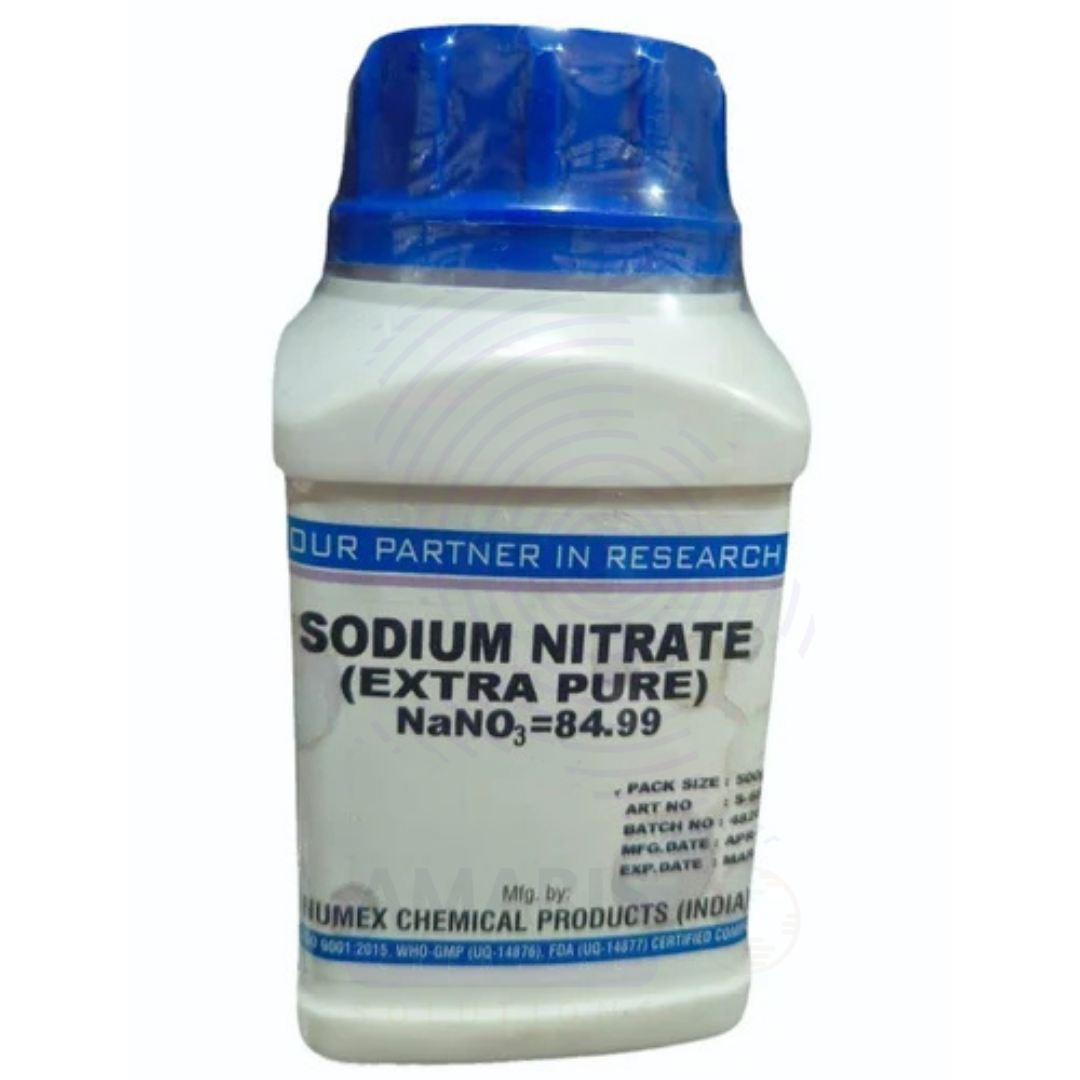
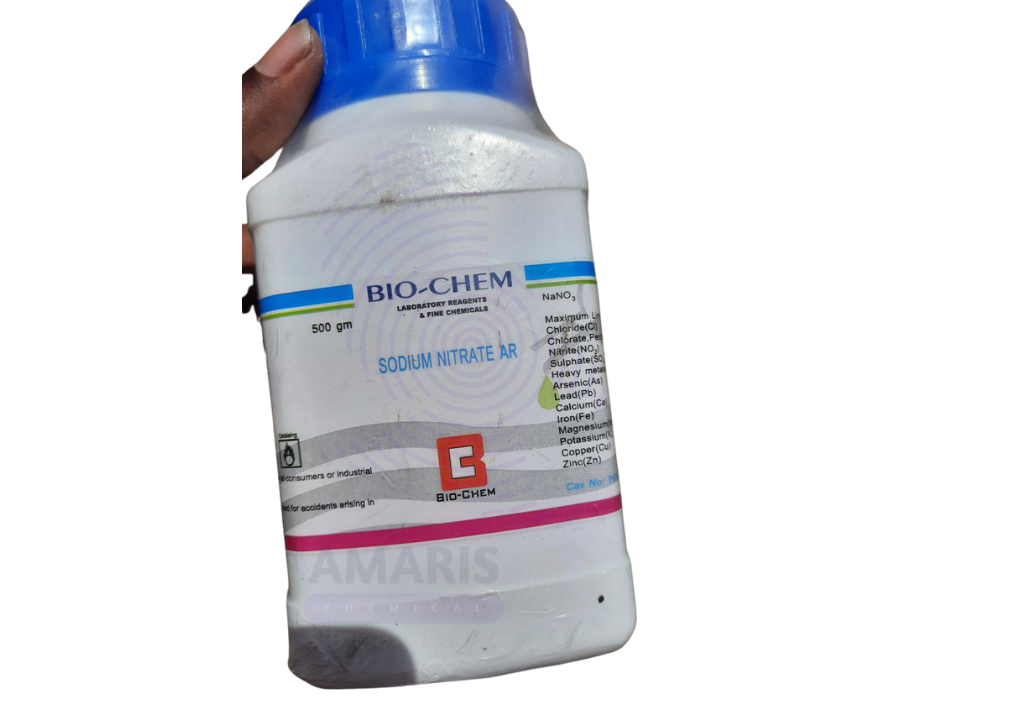

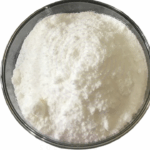

Sodium Nitrate Extra Pure
$ 18.21
Sodium Nitrate Extra Pure is a high-purity, white crystalline solid widely used as an oxidizing agent in laboratories and industries. It serves as a source of nitrate ions in chemical synthesis, analytical applications, and fertilizers. Its strong oxidizing properties make it valuable in explosives and pyrotechnic manufacturing. It is also used as a preservative in the food industry and in water treatment processes. Sodium Nitrate Extra Pure must be stored carefully away from heat and combustible materials and handled with appropriate safety measures due to its oxidizing nature.
Sodium Nitrate Extra Pure
PRIMARY USES
- Analytical Reagent & Laboratory Applications:
Used as a strong oxidizing agent in chemical analysis and synthesis
• Employed in nitrate ion standard solutions and quantitative analysis
• Acts as a preservative and stabilizer in laboratory settings - Chemical Manufacturing:
Intermediate in the production of nitric acid and other nitrogen compounds
• Used in the manufacture of explosives, pyrotechnics, and fertilizers - Agriculture:
Source of nitrogen fertilizer for crops to promote plant growth - Food Industry:
Used as a curing agent and preservative for meats and processed foods
SECONDARY USES
- Glass & Ceramic Industry:
Used as a fluxing agent to improve melting and clarity in glass manufacturing - Pharmaceutical Industry:
Utilized in pharmaceutical formulations for controlled release of nitrate ions - Water Treatment:
Used in water treatment to prevent bacterial growth and corrosion
1. Basic Identification Attributes
- Chemical Name: Sodium Nitrate
• CAS Number: 7631-99-4
• HS Code: 2834.21.00
• Molecular Formula: NaNO₃
• Synonyms:
- Chile saltpeter
- Soda niter
2. Physical & Chemical Properties
- Physical State: Solid, crystalline powder or granules
Color & Odor: White, odorless
• Melting Point: 308 °C (decomposes)
• Boiling Point: Decomposes before boiling
• Density: 2.26 g/cm³
• Solubility:
- Highly soluble in water (88 g/100 mL at 20 °C)
- Insoluble in alcohol and ether
• pH Level: Neutral to slightly alkaline in aqueous solution
• Vapor Pressure: Negligible
• Flash Point: Non-flammable
3. Safety & Hazard Attributes
Hazard Class (GHS Classification):
- Oxidizing solids (Category 3)
- May intensify fire; oxidizer
- May cause respiratory irritation (Category 3)
• NFPA Ratings: - Health: 2
- Flammability: 0
- Reactivity: 1
• Exposure Limits: - No specific OSHA PEL, avoid dust inhalation
• Reactivity: - Stable under normal conditions
- Strong oxidizer; avoid contact with combustible materials
4. Storage & Handling Attributes
Storage Conditions:
- Store in a cool, dry, well-ventilated area away from heat and flammable substances
- Keep container tightly closed
• Incompatible Materials: - Reducing agents, combustibles, organic materials
• Container Type: - Plastic or metal sealed containers
• Shelf Life: - Stable for several years if kept dry and sealed
• Special Handling Requirements: - Use gloves, eye protection
- Avoid dust generation and inhalation
5. Regulatory & Compliance Attributes
Regulatory Status:
- Listed under REACH, OSHA, EPA inventories
- Approved for use in food preservation (regulated amounts)
• Transportation Restrictions: - Classified as oxidizing agent; follow hazardous material transport regulations
• Waste Disposal Method: - Dispose in accordance with local environmental regulations
6. Environmental & Health Impact
Ecotoxicity:
- Low toxicity but may contribute to nutrient pollution in water bodies
• Persistence in Environment: - Readily soluble and mobile in water, can cause eutrophication
• Carcinogenicity/Mutagenicity: - Not classified as carcinogenic or mutagenic
• Biodegradability: - Inorganic; not biodegradable but readily disperses
SAFETY PRECAUTIONS
Personal Protective Equipment (PPE):
• Wear chemical-resistant gloves
• Use safety goggles or face shield
• Wear protective clothing and dust mask if dust is present
Handling:
• Handle in well-ventilated area
• Avoid dust formation and inhalation
• Wash hands after handling
Storage:
• Store in tightly sealed containers
• Keep away from heat sources and combustible materials
FIRST AID MEASURES
Inhalation:
• Move to fresh air immediately
• Seek medical attention if respiratory irritation persists
Skin Contact:
• Wash thoroughly with soap and water
• Seek medical advice if irritation develops
Eye Contact:
• Rinse immediately with plenty of water for at least 15 minutes
• Seek medical attention if irritation persists
Ingestion:
• Rinse mouth with water
• Seek medical attention if symptoms appear
FIRE FIGHTING MEASURES
Flammability:
• Non-flammable solid
Extinguishing Media:
• Use water spray, foam, dry chemical, or CO₂ extinguisher
Hazardous Combustion Products:
• May release toxic nitrogen oxides if heated strongly
Firefighter Protection:
• Wear full protective gear and self-contained breathing apparatus (SCBA)
Related products
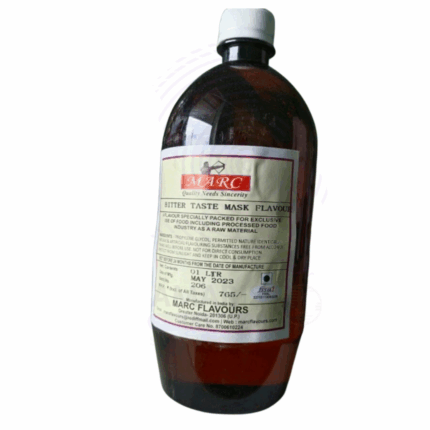
Bitter Masking Pharmaceutical Liquid Flavors Extra Pure
Bitter Masking Pharmaceutical Liquid Flavors Extra Pure is a high-quality formulation designed to effectively mask unpleasant or bitter tastes in oral pharmaceutical preparations during laboratory research and development. This flavoring agent is essential in the compounding of liquid medications, syrups, and suspensions, particularly for pediatric and geriatric studies, where palatability is crucial for compliance. It is crafted to maintain chemical compatibility with active ingredients while preserving the stability and efficacy of the formulation. The extra pure grade ensures low impurity levels, consistent performance, and safety in sensitive pharmaceutical applications. It should be stored in a tightly sealed container, away from light and heat, to preserve its flavor integrity and quality.

Bitumen Primer Extra Pure
Bitumen Primer Extra Pure is a high-purity, low-viscosity liquid used in laboratory and industrial research involving adhesion studies, waterproofing technologies, and material compatibility testing. It consists primarily of refined bitumen dissolved in a suitable solvent, allowing it to penetrate and seal porous substrates like concrete, masonry, or metal. In laboratory contexts, it is used to study the behavior of protective coatings, surface treatments, and corrosion resistance. The extra pure grade ensures minimal impurities and uniform consistency, supporting accurate and reproducible test results. Bitumen Primer should be stored in a tightly closed container in a well-ventilated area, away from heat sources, sparks, and open flames
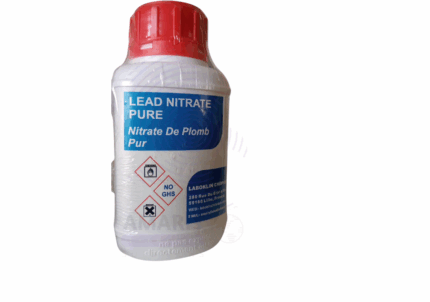
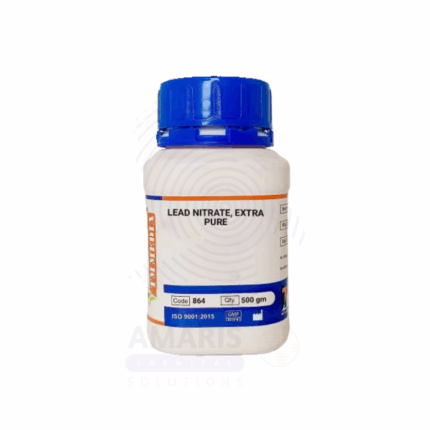
Lead Nitrate Extra Pure
Lead Nitrate Extra Pure is a white crystalline compound (Pb(NO₃)₂) known for its excellent solubility in water and reliable reactivity, making it a key reagent in analytical and industrial chemistry. It is frequently used in laboratory synthesis, qualitative analysis, and in the production of other lead compounds. In pyrotechnics, it's valued for its role as an oxidizing agent, while in metallurgy, it assists in gold leaching and ore processing. Its high purity ensures consistent performance in controlled experiments and manufacturing. Due to its toxic and oxidizing nature, it must be handled with careful PPE protocols and stored securely away from organics or combustible materials.
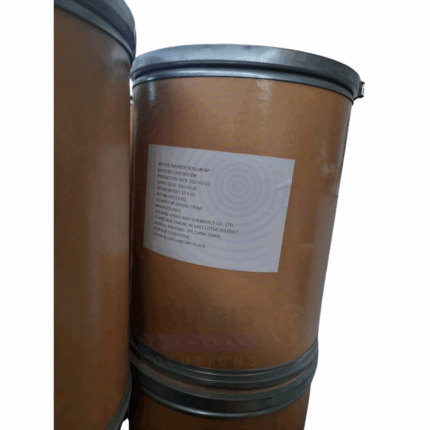
Methlyl Paraben Sodium BP
Methlyl Paraben Sodium BP is the sodium salt form of methyl paraben, a widely used preservative in pharmaceuticals, cosmetics, and food products. It exhibits excellent antimicrobial properties, particularly against molds, yeasts, and some bacteria, extending the shelf life and safety of formulations. It is a white to off-white crystalline powder, highly soluble in water, and stable across a range of pH levels.
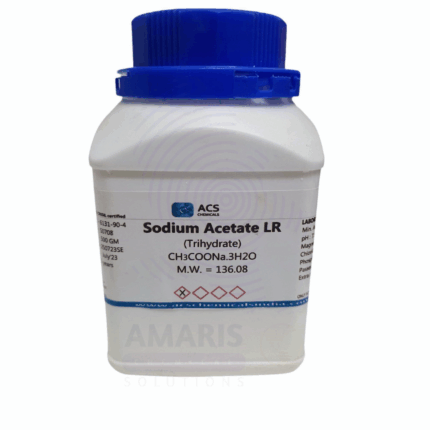
Sodium Acetate Trihydrate Extra Pure
Sodium Acetate Trihydrate Extra Pure is a white crystalline solid with the formula C₂H₃NaO₂·3H₂O. It serves primarily as a buffering agent in laboratory and biochemical applications and is widely used in food as a preservative and flavor enhancer (E262). This compound is essential in molecular biology for protein and nucleic acid precipitation and serves as a stabilizer in pharmaceutical and cosmetic formulations. It should be stored dry and handled with proper protective equipment due to its mildly irritating nature.
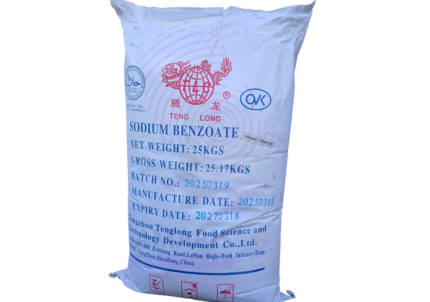
Sodium Benzoate
Sodium Benzoate is the sodium salt of benzoic acid, appearing as a white, crystalline powder that is highly soluble in water. It is widely used as a preservative due to its antimicrobial properties, especially effective against yeast and bacteria in acidic conditions. Sodium Benzoate is commonly employed in the food, beverage, pharmaceutical, and cosmetic industries to extend shelf life and maintain product quality. It meets food-grade and pharmaceutical-grade purity standards, ensuring safety for consumption and topical use.
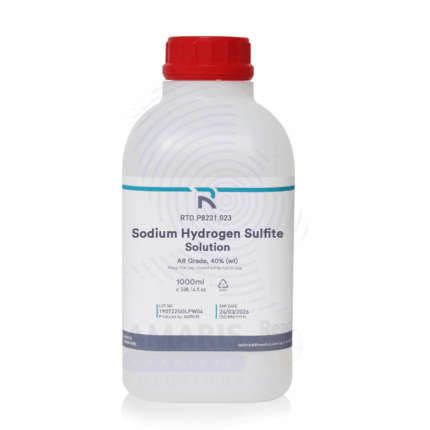
Sodium Hydrogen Sulphite Extra Pure
Sodium Hydrogen Sulphite Extra Pure is a white to pale yellow crystalline powder with a pungent sulfur dioxide odor. It is a versatile reducing agent widely used in laboratory, industrial, and food applications for its antioxidant, preservative, and dechlorinating properties. In laboratories, it serves as a reagent for redox reactions and oxygen scavenging. It is also used in water treatment for chlorine removal and in food processing as an antimicrobial and antioxidant agent (E221). Due to its ability to release sulfur dioxide gas, careful handling and storage in sealed containers are essential to maintain quality and ensure safety. The Extra Pure grade ensures high purity suitable for analytical, pharmaceutical, and food industry applications.
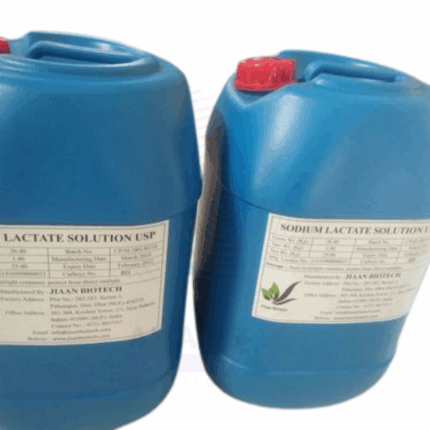
Sodium Lactate
Sodium Lactate is a clear to slightly yellowish, viscous liquid obtained by neutralizing lactic acid with sodium hydroxide. It is widely used as a food additive, pharmaceutical excipient, and in cosmetic formulations due to its humectant, buffering, and antimicrobial properties. This grade is valued for its ability to retain moisture, regulate acidity, and act as a preservative in various industries. It also finds applications in the medical field as an electrolyte replenisher and pH stabilizer.












